

Key Highlights
- Discover effective back squat alternatives that build lower body strength and muscle.
- These leg exercises target key muscle groups like the quads, hamstrings, and glutes.
- Find options that are gentler on your back and knees than the traditional barbell back squat.
- The list includes exercises using a barbell, dumbbells, machines, and just your body weight.
- Learn how to add variety to your routine for continuous muscle growth and strength gains.
- These back squat alternatives are perfect for different fitness levels and training goals.
Introduction
Building lower body strength is a cornerstone of any effective strength training routine, and for many, the barbell back squat is the go-to exercise. It’s renowned for its ability to work multiple muscle groups simultaneously. However, what if this classic move isn't for you due to back issues, knee pain, or simply a desire for variety in your leg exercises? Don't worry, you can still build powerful legs. This guide will introduce you to fantastic alternatives that deliver similar results without the strain.
7 Effective Barbell Back Squat Alternative
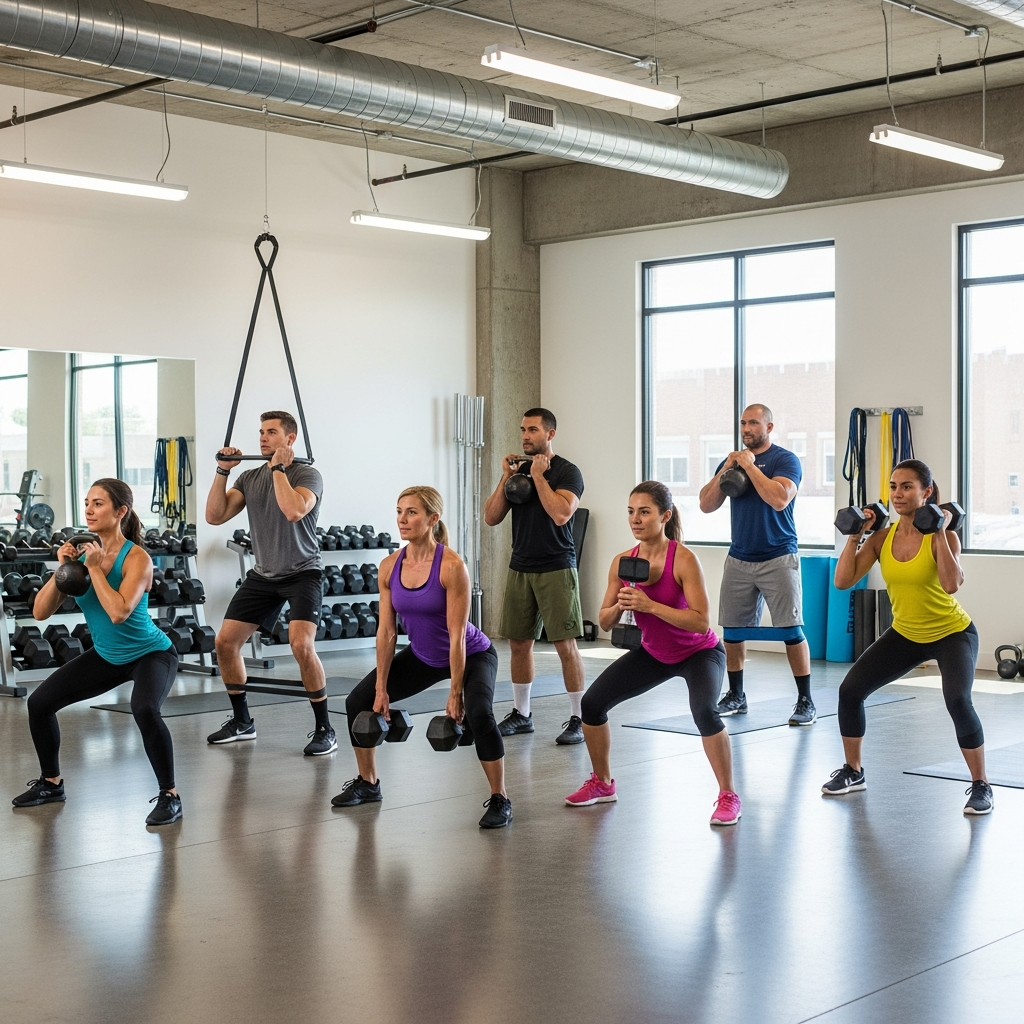
If you’re looking for effective squat alternatives, you’ve come to the right place. We've compiled a list of seven of the best lower body exercises to add to your training program. These back squat alternatives are perfect for building leg strength and promoting muscle growth, whether you're dealing with an injury or just want to mix things up.
Each of these barbell squat alternatives offers unique benefits, targeting various muscle groups in your lower body. From machine-based movements to single-leg challenges, you'll find an option that fits your goals and keeps your workouts exciting and effective.
1. Front Squat
The front squat is a top-tier choice for leg training and one of the best back-friendly exercises to replace the barbell back squat. By holding the barbell across the front of your shoulders, you naturally maintain a more upright torso. This shift in weight distribution significantly reduces the compressive forces on your spine, making it a safer option for those with back concerns.
What makes the front squat so effective is its impressive muscle activation. Even with lighter weights compared to a back squat, it heavily engages your quads. The starting position also demands more from your core to keep you stable.
Here are some key benefits:
- Reduced Spinal Strain: The upright posture protects your lower back.
- Enhanced Quad Development: It places a greater emphasis on your quadriceps.
- Improved Core Strength: Your core works overtime to keep your torso stable throughout the movement.
2. Bulgarian Split Squat
The Bulgarian split squat is one of the most challenging yet rewarding single-leg exercises you can do. This movement is fantastic for building lower body strength and stimulating muscle growth because it isolates one leg at a time, allowing for a greater range of motion and focus on each limb.
Working one leg at a time helps identify and correct any muscle imbalances you might have between your right and left sides. This unilateral training also enhances your stability and balance, which is beneficial for both athletic performance and everyday activities. You'll feel this exercise in your quads, glutes, and hamstrings.
For proper form, keep these tips in mind:
- Stand 2-3 feet in front of a bench to find your starting position.
- Keep your front foot planted firmly and your chest up as you lower your body.
- Ensure your front knee tracks in line with your foot and doesn't go past your toes.
3. Trap Bar Deadlift
If you're looking for a powerful alternative for your leg day, the trap bar deadlift is a fantastic choice. The unique hexagonal shape of the trap bar allows you to stand in the center of the weight, which creates a more upright lifting posture compared to a conventional deadlift. This significantly reduces stress on the lower back.
The movement is a hybrid between a squat and a deadlift, making it an excellent exercise for targeting the quads, glutes, and hamstrings. It’s also easier to learn than a traditional barbell squat or deadlift, and the neutral grip handles are more comfortable for your shoulders and wrists.
Here’s why it’s a great addition to your routine:
- Safer for the Lower Back: The central weight distribution and upright posture minimize spinal stress.
- Engages Multiple Muscle Groups: It effectively works your quads, glutes, and the entire posterior chain.
- Allows for Heavy Lifting: The design makes it easier to lift heavy weights safely, promoting strength gains.
4. Goblet Squat
The goblet squat is a simple, accessible, and highly effective movement that's perfect for everyone from beginners to advanced lifters. By holding a single dumbbell or kettlebell in front of your chest, you create a counterbalance that makes it easier to maintain an upright torso and execute the proper squat form.
This exercise is excellent for reinforcing the fundamentals of a good squatting motion. Because the weight is held at your chest, it forces you to engage your core strength to stay stable and upright. It’s a fantastic way to build a solid foundation before moving on to heavier or more complex lifts. Even with lighter weights, it's a great tool for muscle activation.
Check out these benefits:
- Teaches Proper Squat Form: The front-loaded weight encourages an upright chest and deep squat.
- Boosts Core Strength: Holding the weight engages your core muscles throughout the movement.
- Improves Mobility: It helps increase hip and ankle mobility.
5. Leg Press Machine
For those who want to lift heavy without loading their spine, the leg press is an outstanding option. As one of the most popular machine squats, it allows you to simulate a squatting motion while your back is fully supported. This significantly reduces the risk of injury, especially for individuals with back issues or those new to lifting.
The leg press is exceptional for isolating the lower body muscles, allowing you to focus on pushing heavy weight to stimulate muscle growth. You can also adjust your foot placement to emphasize different muscles, such as the quads or glutes. Just be sure to use a full range of motion without letting your lower back lift off the pad.
|
Feature |
Barbell Back Squat |
Leg Press |
|---|---|---|
|
Muscle Groups |
Full body (quads, glutes, hamstrings, core, back) |
Primarily lower body (quads, glutes, hamstrings) |
|
Equipment |
Barbell, squat rack |
Leg press machine |
|
Safety |
Requires a spotter for heavy lifts, higher injury risk if form is poor |
Generally safer, back is supported, lower risk of injury |
- Effective Use: Aim for a deep range of motion, bringing your knees toward your chest.
- Variations: A higher foot placement targets the glutes and hamstrings more, while a lower placement hits the quads.
6. Step-Up
The step-up is a powerful single-leg exercise for building functional, athletic lower body strength. This movement mimics a natural action—stepping onto a higher surface—making it highly practical for everyday life. It’s a fantastic way to improve lower body development without requiring a lot of heavy weight.
From the start position, you drive through one leg to lift your entire body, which challenges your strength, balance, and coordination all at once. This unilateral focus is great for correcting muscle imbalances and can lead to significant gains in both muscle size and athletic performance.
Here are some key benefits of the step-up:
- Builds Functional Strength: It directly translates to real-world movements.
- Improves Balance and Coordination: Working one leg at a time forces your stabilizer muscles to work harder.
- Targets Key Muscles: It effectively engages your quads, glutes, and hamstrings for balanced development.
7. Romanian Deadlift
While many squat alternatives focus on the quads, the Romanian Deadlift (RDL) is the king of posterior chain development. This exercise places a tremendous emphasis on your hamstrings and glutes, making it an essential movement for balanced lower body strength and promoting muscle growth.
Unlike a conventional deadlift, the RDL focuses on the eccentric (lowering) phase of the lift, creating a deep stretch in the hamstrings. This controlled movement not only builds muscle but also improves flexibility. When performed correctly, it strengthens the lower back without overloading it, which is crucial for overall spinal health.
Keep these form cues in mind:
- Hinge at the Hips: The movement should come from your hips, not your waist.
- Keep a Flat Back: Maintain a neutral spine throughout the exercise to protect your lower back.
- Slight Bend in Knees: Your knees should be slightly bent but not actively bending during the lift.
(ALSO READ: Barbell Hack Squat: A Hidden Gem for Leg Day Gains)
How These Alternatives Target Lower Body Muscles
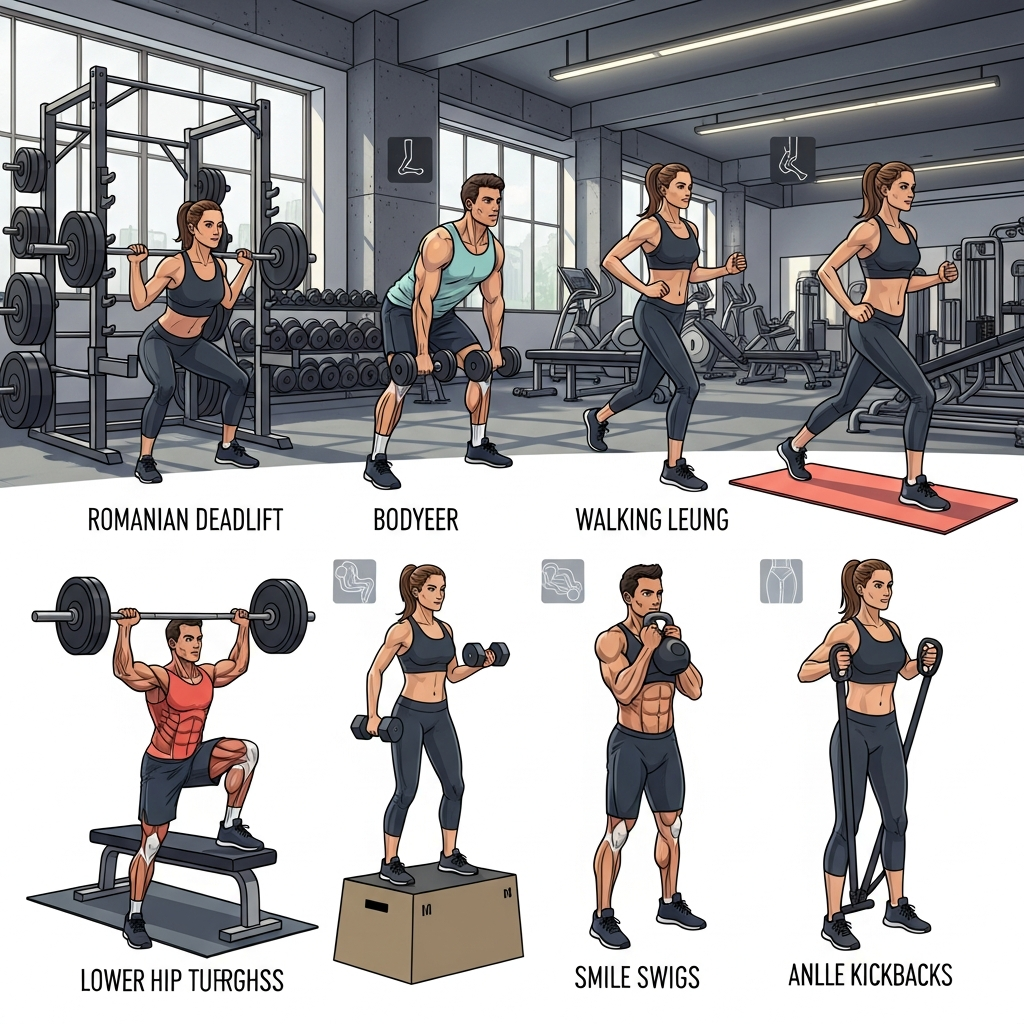
You might be wondering how these squat variations effectively work your lower body. Each alternative offers a unique pattern of muscle activation, allowing you to target specific muscle groups with precision. For example, some exercises are better for your quads, while others excel at building your glutes and hamstrings.
By incorporating a variety of these movements into your training program, you can ensure a well-rounded approach to lower body development. This not only helps prevent muscle imbalances but also keeps your workouts engaging. Let's look closer at how these alternatives target different parts of your legs.
Quadriceps Engagement in Squat Variations
When it comes to building powerful quads, certain back squat alternatives are exceptionally effective. Exercises that promote a more upright torso and greater knee flexion tend to provide the highest level of quadriceps engagement. The front squat, for example, is famous for its ability to target the quads due to the anterior placement of the barbell.
Similarly, the leg press and Bulgarian split squat allow for a deep range of motion, which is crucial for maximizing muscle activation in the quads. By focusing on these movements, you can effectively stimulate the same muscle groups as a traditional back squat, leading to significant strength and size gains.
For maximum quad focus, try these alternatives:
- Front Squat: The upright posture places direct emphasis on the quads.
- Leg Press: A narrower foot placement on the platform will hammer your quads.
- Bulgarian Split Squat: The deep stretch and single-leg focus are great for quad development.
Glute and Hamstring Activation with Back-Friendly Exercises
If you're dealing with back issues but still want to build a strong posterior chain, there are plenty of great options. Many back-friendly exercises are fantastic for glute activation and hamstring activation without putting unnecessary strain on your spine. Movements that emphasize a hip hinge are particularly effective.
The Romanian deadlift is a prime example, as it directly targets the hamstrings and glutes with minimal spinal loading when done correctly. Trap bar deadlifts also allow for a more upright posture, making them a safer choice for engaging the posterior chain. Even the leg press can be adjusted to increase hamstring and glute involvement.
To target your glutes and hamstrings safely, consider these exercises:
- Romanian Deadlift: The ultimate move for hamstring and glute development.
- Trap Bar Deadlift: Builds a powerful posterior chain with less lower-back stress.
- Glute-Focused Leg Press: A high and wide foot placement shifts the emphasis to your glutes and hamstrings.
Conclusion
In summary, exploring alternatives to the barbell back squat can breathe new life into your workout routine while still effectively targeting your lower body muscles. From front squats to Bulgarian split squats, each of these exercises offers unique benefits that can enhance strength, stability, and overall performance. Remember, variety not only keeps your training engaging but also helps prevent plateaus and injuries. So why not mix things up and give these alternatives a try? Your body will appreciate it, you'll be grateful in the long run. If you’re eager to dive deeper into creating a personalized fitness plan, reach out to us for a free consultation.
Frequently Asked Questions
Are machine squats a good substitute for the barbell back squat?
Yes, machine squats like the leg press can be a great substitute. They allow you to target your lower body muscles with heavy weight while providing back support, which can reduce the risk of injury. While they don't engage stabilizer muscles as much as a barbell back squat, they are excellent for building mass.
Can single-leg exercises replace barbell back squats for leg development?
Absolutely. Single-leg exercises like the Bulgarian split squat and step-up are fantastic for leg development. They help correct muscle imbalances, improve stability, and allow for a greater range of motion, all of which contribute to significant muscle growth and strength gains in each leg.
What bodyweight movements can effectively target the same muscles as barbell back squats?
While true bodyweight squats are an option, a movement like the goblet squat is highly effective. Holding a weight at your chest helps perfect the squatting motion and increases muscle activation in your lower body and core, making it a great alternative for practicing form and building foundational strength.
REFERENCE:
https://pubmed.ncbi.nlm.nih.gov/34423289
https://pubmed.ncbi.nlm.nih.gov/18545207/
https://biotest.net/products/p-well
https://biotest.net/pages/daily-dose