


Key Highlights
- The barbell bench press is a key exercise for building upper body strength, mainly targeting the chest. For best results, include it in your routine 1–3 times per week with enough recovery between sessions. Use proper form: lie on a flat bench, plant your feet, and keep your back slightly arched.
- Mastering the bench press requires proper form, including lying on a flat bench with your feet planted and back slightly arched.
- This exercise targets the chest, shoulders, and triceps, with stabilizing muscles also engaged. Proper technique and avoiding mistakes like elbow flare prevent injury and boost results. For chest strength with the barbell bench press, do 4 sets of 8–12 reps, resting 90 seconds between sets. Begin with a weight you can handle with good form and increase gradually. Always warm up with lighter weight to prepare muscles and reduce injury risk.
- Using correct technique and avoiding common mistakes like elbow flare can prevent injury and maximize results.
- Progressive overload and adjusting your reps and sets are crucial for consistent strength and muscle growth.
Introduction
If you've ever stepped into a gym, you've likely seen someone doing a barbell bench press. It’s an iconic exercise, often seen as a measure of strength. But it's more than just a gym-culture staple. This powerful compound exercise is one of the most effective ways of building strength in your upper body. Whether you're a seasoned athlete or just starting your fitness journey, the bench press is a fantastic tool to help you reach your goals.
Introducing the Barbell Bench Press Workout
The bench press is considered an essential chest exercise for anyone focused on building muscle or strength. It effectively targets your upper body and delivers clear results, making it a cornerstone of many workout routines. For many, it's one of the most efficient pushing exercises you can do.
While it's not a mandatory exercise for everyone, few other movements provide the same opportunity to move heavy weight with your upper body. It's time to explore why this exercise is so popular and how you can add it to your routine.
What Makes the Barbell Bench Press a Chest Strength Staple
The barbell bench press stands out because it allows you to target your chest muscles with significant weight. This ability to lift heavier weights is a key driver of muscle growth and maximal strength development. The stability of the barbell enables better control, especially during the lowering phase, which puts targeted tension on your chest.
To get the best results, proper form is essential. You should lie on the bench with your feet on the floor, retract your shoulder blades, and grip the bar just outside shoulder-width. Lower the bar to your mid-chest with control, pause, and then drive it back up powerfully. This ensures you're engaging the right muscle group and building upper body strength safely.
This controlled movement path is especially valuable for building strength efficiently. The barbell provides a natural stop at your chest, helping you maintain control without the risk of one side collapsing, which can happen with other equipment.
Why Beginners Should Prioritize Bench Pressing
For those new to lifting, bench pressing is a great place to start. A key benefit is that it delivers significant strength gains with relatively low demands on coordination compared to more complex lifts. This makes it a highly efficient way to build upper-body pushing power, no matter your current fitness level.
From your starting position on the flat bench, you learn to create tension throughout your entire body. Driving your feet into the floor and engaging your back and glutes teaches you how to generate force effectively. This foundational skill translates well to other exercises and even everyday activities like pushing a heavy door.
Bench pressing helps you understand the basics of a horizontal push, a fundamental movement pattern in strength training. Mastering this early on sets a solid foundation for more advanced training and helps you progress safely and consistently in your fitness journey
(ALSO READ: 8 Must-Try Barbell Workouts for Total Body Strength)
The Muscles Worked During Barbell Bench Press Workout

At its heart, the bench press is a compound exercise, meaning it works multiple joints and different muscles all at once. When you perform a bench press, you are primarily working three major upper body muscle groups.
Using proper bench press form ensures that you effectively target these muscles. Understanding which muscles are doing the work can help you create a better mind-muscle connection, leading to more effective workouts and better results in your chest muscles and beyond.
Primary Muscle Groups Targeted
The main muscles worked during a barbell bench press are your chest, shoulders, and triceps. These are the primary movers that drive the weight up from your chest. Your chest muscles, or pectorals, are responsible for bringing your arms toward the center of your body during the press.
The triceps brachii, located on the back of your upper arms, play a crucial role in extending your elbows, especially during the top portion of the lift as you lock out your arms. Your anterior deltoids, the muscles on the front of your shoulders, assist in pressing the weight upward and stabilizing the bar throughout the movement. Using an incline bench can shift more focus to the upper pecs.
Knowing these correct muscles helps you focus your effort. Here’s a quick breakdown of the primary movers:
|
Muscle Group |
Function in the Bench Press |
|---|---|
|
Chest (Pectorals) |
Drives the weight up by bringing your arms inward. |
|
Triceps Brachii |
Extends the elbow to straighten the arms at the top. |
|
Anterior Deltoids |
Assists in pressing the weight up and stabilizes the bar. |
Secondary Muscles Engaged
While the chest, shoulders, and triceps do most of the heavy lifting, several secondary muscles are engaged to provide stability and support. Your upper back muscles, including the latissimus dorsi (lats), play a key role. Pulling your shoulder blades together and down creates a stable base on the bench, which is essential for a strong press.
This tension in your upper back not only protects your shoulder muscles but also contributes to better posture and control during the lift. Your core muscles also work hard to stabilize your trunk, and a slight arch in your lower back is recommended for optimal power transfer when braced correctly.
Even your biceps get some work, helping to stabilize your arms as you lower the bar. This full-body muscle activity is what makes the bench press such an effective compound movement for overall strength development.
Benefits of Barbell Bench Press Workout for Strength and Growth
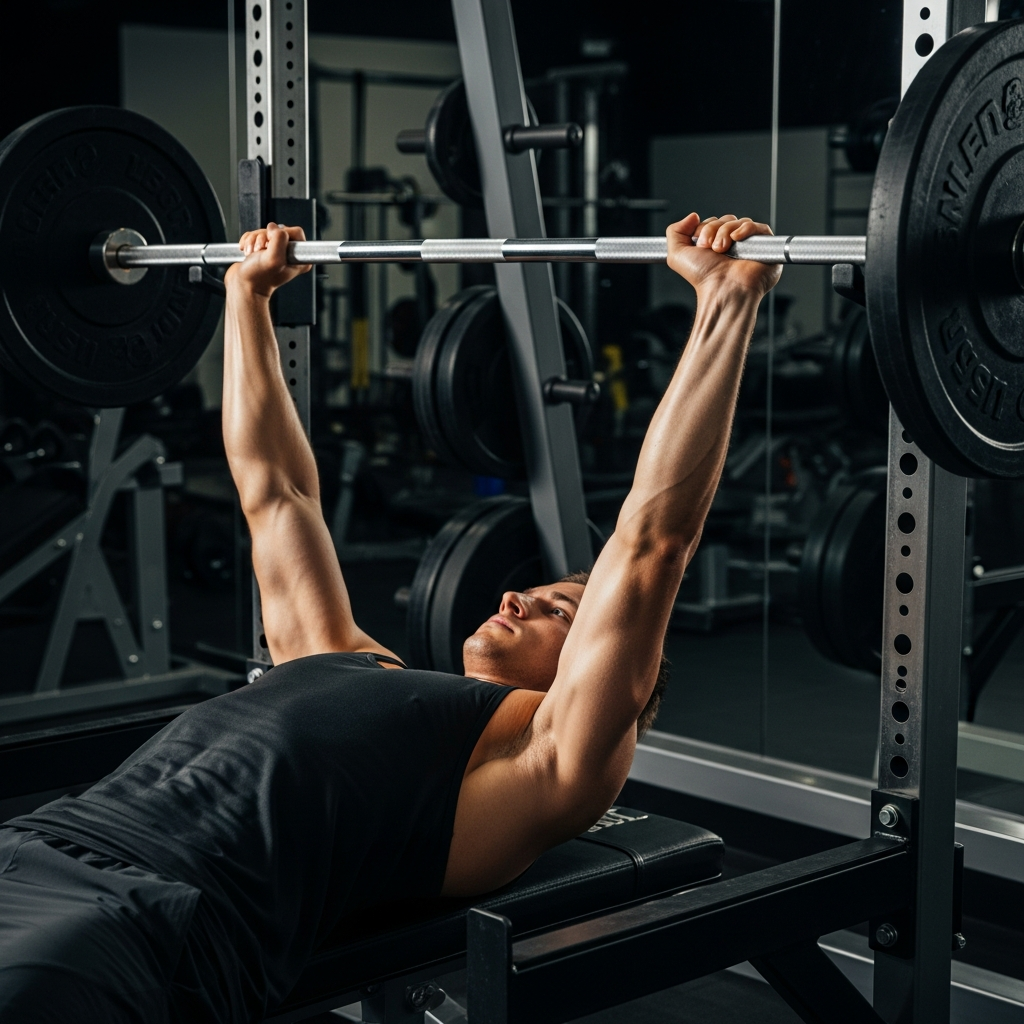
The barbell bench press is a powerhouse for developing upper body strength and promoting muscle growth. Because it allows you to lift heavier weight compared to many other exercises, it creates greater mechanical tension, which is a primary driver for muscle hypertrophy.
Incorporating the bench press into your routine can lead to significant gains in both strength and size. Let's look at how this classic lift contributes to building power and enhancing muscle mass.
Building Upper Body Power
The bench press is exceptional for building raw power in your upper body. The ability to progressively add heavier loads is what makes it so effective for building strength. The stable nature of the barbell allows you to focus on moving as much weight as possible through a fixed path.
This development of pushing strength has practical applications in sports and daily life. It can improve performance in activities like punching in combat sports or the pulling phase of a swimming stroke. It enables you to generate and apply force effectively through your entire upper body.
By consistently challenging yourself with heavier loads, you stimulate your muscles and nervous system to adapt and become stronger. This process of progressive overload is the cornerstone of building strength, and the bench press is an ideal exercise to apply this principle.
Enhancing Muscle Mass and Endurance
Beyond pure strength, the bench press is fantastic for increasing muscle mass. The mechanical tension created by lifting heavy weight is a key trigger for muscle hypertrophy, the process of muscle growth. The barbell press is superior in this regard because you can typically lift more weight compared to dumbbells.
Training with different rep ranges can also target different goals. Higher reps can improve muscular endurance, while lower reps with heavier weights are ideal for strength and size. Variations like the incline bench press can also be used to target different parts of the chest, leading to more balanced muscle development.
Ultimately, the bench press benefits overall strength and muscle growth by providing a highly effective stimulus. Whether your goal is to get bigger, stronger, or both, this exercise offers a reliable path to achieving significant upper-body development.
Essential Equipment and Setup for Beginners
Getting started with the barbell bench press doesn't require a lot of fancy equipment, but having the right gear is crucial for safety and effectiveness. You'll need a sturdy weight bench and an Olympic barbell as your primary tools.
Beyond the basics, some safety gear can help you lift with confidence, especially as you begin to push your limits. Let's go over the essential items you'll need to set up your starting position correctly and safely.
Choosing the Right Bench and Barbell
When selecting a bench, width is an important factor. A wider bench provides better support for your shoulders, preventing them from hanging off the sides. Preventing injuries heavily relies on this essential protection. Whether you choose a flat bench or an adjustable one that allows for an incline bench press, make sure it's stable.
The standard for bench pressing is an Olympic barbell, which weighs 45 pounds (20 kg) on its own. This is a good starting point for many, but if it's too heavy, you can begin with just the bar or a lighter training bar. The key is to start with an amount of weight you can control with good form.
Here's what you'll need:
- A stable weight bench, preferably a wide one for shoulder support.
- An Olympic barbell for standard pressing.
- Weight plates to progressively add resistance.
Safety Gear and Accessories You Need
Safety should always be your top priority, especially when you're new to bench pressing. The most important piece of safety gear isn't an item, but a person: a spotter. Having someone there to help you if you can't complete a lift is highly recommended, especially when lifting heavy or going to failure.
Accessories like wrist wraps can also be beneficial. They provide extra support for your wrists, helping to keep them in a stable position and allowing the bar to sit optimally over your elbows. This can prevent strain and help you maintain proper bench press form.
To bench press safely as a beginner, always remember these key points:
- Always try to have a spotter, especially when lifting heavy.
- Use wrist wraps for added wrist support if needed.
- Start with a lighter weight to master the form before adding more plates.
Warm-Up Exercises for Effective Bench Pressing
A proper warm-up is non-negotiable before you start your bench press workout routine. It prepares your muscles and joints for the work ahead, reducing the risk of injury and improving your performance. A good warm-up increases blood flow to the muscles and gets your shoulder joints ready for the full range of motion.
Focus on dynamic chest stretches and mobility drills that mimic the movements you'll be performing. This primes your body for action and ensures you can lift effectively from your very first set.
Dynamic Chest Activation Movements
To activate your chest muscles before a bench press session, you want to perform movements that get the blood flowing and prepare the muscle fibers for contraction. Dynamic stretches are much better than static holds before a workout. Taking a deep breath before each movement can also help prepare your body.
A great way to start is with light sets of push-ups. They use the same horizontal pushing pattern as the bench press and engage the same muscles. You can also use a pair of dumbbells for light activation work, such as a light incline dumbbell press or flat dumbbell flies.
Here are a few effective warm-up exercises:
- Push-ups: 2 sets of 10-15 reps.
- Light dumbbell flies: 2 sets of 12-15 reps.
- Arm circles: Forward and backward to warm up the shoulders.
- Band pull-aparts: To activate the upper back and shoulder stabilizers.
Mobility Drills for Shoulders and Arms
Preparing your shoulders for bench pressing involves improving their mobility and stability. Your shoulder blades need to be able to retract and stay stable on the bench, so activating the muscles around them is key. Good arm mobility ensures you can move through the full range of motion without pain.
Drills that focus on thoracic spine (upper back) rotation and shoulder joint mobility are excellent choices. These movements help open up your chest and improve the flexibility needed for a deep and controlled press.
Try these mobility drills before you bench:
- Cat-Cow Stretch: To mobilize the spine.
- Thoracic spine rotations help increase mobility in your upper back.
- Shoulder Dislocates with a band: To increase shoulder range of motion.
- Wall Slides: To practice proper shoulder blade movement and activation.
Step-by-Step Guide to Barbell Bench Press Workout Technique
Now that you're warmed up and ready to go, it's time to nail the technique for the barbell bench press. Mastering the form of this classic bench press exercise is crucial for both safety and effectiveness.
We'll break down the flat bench press into four simple steps, from getting into the starting position to completing your set. Following these guidelines will help you build a strong and efficient press.
Step 1: Setting Up Your Bench and Position
Your setup is the foundation of a successful lift. Lie face-up on the bench so the bar is directly over your eyes. Plant your feet firmly on the ground with your knees bent. This creates three points of contact: your head, upper back, and glutes.
Next, focus on your back. While you don't want an exaggerated arch, a slight arch in your lower back is ideal for power and safety, so avoid a completely flat back. The goal is to maintain a neutral spine. Squeeze your shoulder blades together and pull them down, creating a stable base for the press. This elevates your chest and shortens the bar's path.
Driving through your heels helps create full-body tension, which is essential for transferring power. This stable starting position sets the stage for a strong and controlled lift, ensuring you get the best results from your press.
Step 2: Proper Grip and Hand Placement
Your grip width significantly impacts which muscles are emphasized during the lift It is advised to use a grip slightly wider than shoulder width when performing a traditional bench press.This position allows you to effectively target the chest while keeping your shoulders safe.
Wrap your thumbs around the bar for a secure grip. A common mistake is to place the bar across the top of the palm near the fingers. Instead, position the bar lower, just above the thumb, so your palm is loaded and your wrists can stay stacked directly over your elbows. This prevents your wrists from bending back under the weight.
Different grips can be used for different goals:
- Standard Grip: Just outside shoulder width, ideal for overall chest development.
- Wide Grip: Engages more of the chest but can put more stress on the shoulders.
- Narrow Grip: Also known as a close grip, this shifts more emphasis to the triceps.
Step 3: Unracking, Lowering, and Pressing the Bar
With your setup and grip secure, take a deep breath and lift the bar out of the rack. Keep your shoulder blades tightly pressed together.
From here, lower the bar with control toward your lower chest, aiming for a spot just above or below your nipple line. Avoid lowering it to your upper chest, as this can strain your shoulders.
As you lower the bar, keep your elbows tucked at about a 45-degree angle from your torso. Think of pulling the bar down, not just letting it drop. Pause for a moment when the bar lightly touches your chest. This ensures you maintain control and tension.
To press the bar, drive it up and slightly back toward your eyes, following a reverse-J path rather than a perfectly straight line. Maintain tension throughout your body and press until your elbows are fully locked out. This completes one rep of the barbell bench press with proper form.
Step 4: Controlled Breathing and Finishing the Set
Controlled breathing is key to maintaining stability and power. Before you unrack the bar, take a deep breath, filling your diaphragm with air. Imagine your stomach is a can you're trying to fill, creating internal pressure and tightness.
Hold this breath as you lower the bar to your chest. This intra-abdominal pressure helps stabilize your core and increases muscle activity. As you drive the bar up from your chest, you can begin to exhale forcefully. Hold your breath until you complete the rep and are back in the finishing position.
For your next rep, take another deep breath before lowering the bar again. This pattern of controlled breathing ensures you stay tight and powerful throughout the entire set, maximizing your performance and safety.
Top Tips to Improve Your Barbell Bench Press Workout Performance
If you feel like your bench press performance has hit a plateau, don't worry. There are several strategies you can use to break through and continue building strength. Focusing on consistent improvement is the key to long-term progress.
By implementing smart training principles and adjusting your routine, you can stimulate new growth in your chest strength and challenge every muscle group involved. Let's explore some top tips to help you lift more.
Progressive Overload Strategies
Progressive overload is the fundamental principle of getting stronger. It means gradually increasing the demand on your muscles over time. The most straightforward way to do this is by adding heavier loads to the bar, but it's not the only way.
To increase your weight safely, make small jumps. Don't try to add 20 pounds to your lift overnight. Instead, focus on adding a little more weight each week or every other week while maintaining perfect form. This consistent, gradual increase is what stimulates long-term muscle growth.
Several methods exist for implementing progressive overload:
- Increase the weight: Add a small amount of weight to the bar while keeping your reps the same.
- Increase the reps: Lift the same weight for more repetitions than you did last time.
- Add one more set to your routine by increasing the number of sets in your workout.
Adjusting Reps and Sets for Chest Strength Gains
How you structure your reps and sets plays a huge role in the results you see. Your goals should dictate your approach. For pure chest strength gains, lower rep ranges are generally more effective.
If your primary goal is muscle hypertrophy (size), a moderate rep range is often recommended. You can incorporate both styles into your weekly routine to get the benefits of both strength and size. For example, you might have one heavy day with low reps and another day with higher reps.
Consider these guidelines for your sets and reps:
- For strength: Aim for 1-6 reps per set with heavy weight.
- For muscle hypertrophy: Aim for 8-12 reps per set with moderate weight.
- Make it count: Whatever range you choose, each set should be challenging, leaving you with only 1-2 reps left in the tank.
Common Barbell Bench Press Workout Mistakes and How to Avoid Them
The bench press is a technical lift, and small errors in bench press form can reduce its effectiveness or even lead to injury. Many common bench press mistakes can be easily corrected once you know what to look for.
From flaring your elbows to not using a full range of motion, these errors can hold you back from reaching your full potential. Let's identify these issues and learn how to fix them so you can press with confidence and avoid a sticking point.
Incorrect Form and Elbow Flare
One of the most common mistakes is letting your elbows flare out to the sides. This puts unnecessary stress on your shoulder joints and can lead to shoulder pain. Instead, keep your elbows tucked at a 45-degree angle to your body. This engages your lats and protects your shoulders.
Another frequent issue is not using a full range of motion. Stopping the bar several inches above your chest cheats you out of the most effective part of the lift. Unless an injury prevents it, you should always lower the bar until it touches your chest to maximize muscle growth and keep your joints mobile.
To avoid these common mistakes in your bench press form:
- Keep elbows tucked, not flared out to 90 degrees.
- Lower the bar all the way to your chest.
- Maintain a stable upper back by keeping your shoulder blades retracted.
Overestimating Weight or Neglecting Spotters
Ego lifting is a common trap in the gym. Trying to lift an amount of weight that's too heavy for you compromises form and drastically increases your risk of injury. It's always better to lift a lighter weight with perfect technique than to struggle with a heavy weight and poor form.
This is where having a spotter becomes crucial. A spotter is your most important piece of safety gear when you're pushing yourself with heavy weight. They can provide assistance if you fail a rep, preventing the bar from getting stuck on your chest. Neglecting to use a spotter, especially when lifting to failure, is a serious safety risk.
Key takeaways for safety:
- Select a weight that allows you to maintain proper form throughout the exercise.
- Always use a spotter when lifting heavy or trying for a new personal record.
- Don't be afraid to ask for a spot; most people in the gym are happy to help.
- How do you structure your bench press workout? : r/StartingStrength
A well-structured Barbell Bench Press Workout includes warming up, followed by multiple sets of the bench press with varying reps and weights. Start with lighter weights to build form, then gradually increase intensity. Incorporate accessory exercises like push-ups or dumbbell presses for balanced chest development and strength.
Conclusion
In conclusion, the barbell bench press is not just a classic exercise; it's a cornerstone of any effective chest strength training regimen. By understanding its benefits and adhering to proper techniques, you can maximize your performance and achieve significant gains in strength and muscle mass. Remember to incorporate essential warm-up exercises, focus on your form, and avoid common mistakes to ensure a safe and effective workout. Whether you're a beginner or an experienced lifter, mastering the bench press will undoubtedly elevate your fitness journey. Ready to take your training to the next level? Get started today!
reference:
https://www.ncbi.nlm.nih.gov/pmc/articles/PMC7579505/
https://www.ncbi.nlm.nih.gov/pmc/articles/PMC2465431/
https://www.ncbi.nlm.nih.gov/pmc/articles/PMC6950543/
https://www.issaonline.com/blog/index.cfm/2010/11/1/training-tips--the-pectoralis-major
https://www.issaonline.com/blog/post/bench-press-variations-for-any-client
https://www.issaonline.com/blog/post/bench-press-essentials-master-your-moves
https://www.issaonline.com/blog/post/6-solid-deltoid-exercises-for-strong-shoulders
https://www.issaonline.com/blog/post/how-to-maximize-your-pushups
https://journals.lww.com/acsm-healthfitness/Fulltext/2018/11000/The_Bench_Press_Exercise.12.aspx
https://journals.lww.com/nsca-jscr/pages/articleviewer.aspx