


Key Highlights
- The barbell lunge is a great exercise for building strength and definition in your lower body.
- It targets major muscle groups, including the quadriceps, glutes, and hamstrings.
- Mastering proper form is crucial to maximize benefits and prevent injury.
- This incredible compound exercise also improves your balance, coordination, and core stability.
- You can try different variations like the reverse or walking lunge to challenge your muscles in new ways.
- Correct setup and a good warm-up are essential for safe and effective barbell lunges.
- Introduction
Are you looking to add a powerful movement to your leg day routine? The barbell lunge is a great lower body exercise and an incredible compound exercise that targets multiple muscles in your lower body simultaneously. It's more than just a strength builder; it’s a test of balance, coordination, and stability. By adding a barbell, you increase the tension on your muscles, paving the way for significant gains in the future of your exercise journey. If you're ready to challenge your lower body and see impressive results, let's explore how to master this effective exercise.
Understanding Barbell Lunges
The barbell lunge involves holding a barbell across your shoulders while stepping into a lunge position. This unilateral movement, which trains one leg at a time, is excellent for identifying and correcting muscle imbalances, which can be a huge obstacle, between your left and right sides.
You can adjust different variables to suit your fitness goals, from the type of lunge to the weight on the bar. Whether you alternate legs with each rep or focus on one side at a time, the core movement involves stepping, lowering your body, and pushing back up with the front leg.
What is a Barbell Lunge and How Does It Differ from Other Lunge Variations?
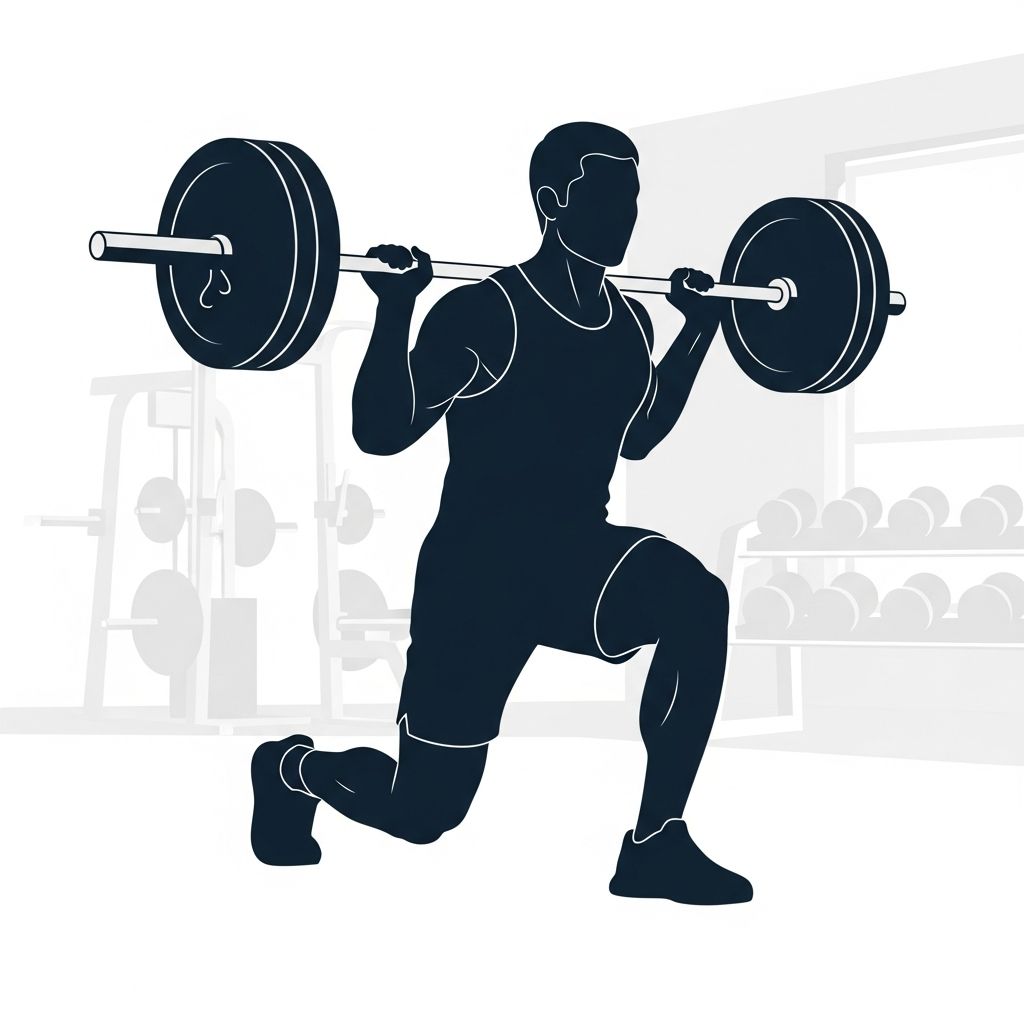
A barbell lunge is a strength exercise where you perform a lunge while supporting a barbell on your upper back. This added weight significantly increases the challenge compared to bodyweight lunges, allowing for greater strength and muscle development. Some beneficial exercises, such as chin tucks and different upper body stretches, can complement your barbell lunge routine. Unlike machine exercises that guide your movement, the barbell lunge requires you to control your balance and stability through every rep.
There are many different alternatives to the standard front lunge. For instance, the reverse lunge has you step backward, which can place less stress on your knees and emphasize your glutes and hamstrings more. Meanwhile, a walking lunge involves stepping forward continuously, turning the exercise into a dynamic, forward-moving pattern rather than returning to a stationary starting point.
Each variation offers unique benefits. While dumbbell lunges are a great option, using a barbell allows you to lift heavier, maximizing the potential for muscle growth. The choice between a front lunge, reverse lunge, or walking lunge often depends on your specific training goals and comfort level.
Key Movement Patterns and Unilateral Benefits
The barbell lunge is defined by its key movement patterns: stepping, descending into the lunge, and driving back to the start. This great movement challenges your body's ability to coordinate and stabilize under a load, making it a highly functional exercise. The core of the movement is unilateral, meaning it works one side of your body at a time.
These unilateral benefits are a major advantage. By isolating one leg, you force it to handle the entire load without assistance from the other. This helps expose and correct muscle imbalances that might go unnoticed during bilateral exercises like squats. A stronger, more balanced lower body is less prone to injury and performs better in both athletic activities and daily life.
Training one leg at a time improves your hip alignment and overall stability. Over time, you'll see improvements not just in the strength of your lower body muscle groups, but also in your performance on other major lifts. If you're looking for alternatives that offer similar unilateral benefits, consider Bulgarian split squats or dumbbell step-ups.
(ALSO READ: 8 Must-Try Barbell Workouts for Total Body Strength)
Muscles Worked During Barbell Lunges
The barbell lunge is a powerhouse exercise that engages several major muscle groups in your lower body. The primary movers are your quadriceps, gluteal muscles including the gluteus maximus, and hamstrings. These muscles work together to control your descent and power you back up to the starting position.
Beyond the main players, other muscles provide crucial support. Your calf muscles engage to help you push off the ground, while your core and back muscles work isometrically to keep your torso upright and stable throughout the movement. We will explore the roles of these primary and supporting muscles.
Primary Muscles Engaged: Quadriceps, Glutes, and Hamstrings
The barbell lunge heavily relies on three primary lower body muscles, including the glute muscles, to execute the movement. Your quadriceps, located on the front of your thighs, are responsible for extending your knee. They control the lowering phase of the lunge and provide the force needed to push back to the start.
Your gluteus maximus, the largest muscle in your glutes, is another key player. This extremely powerful muscle group helps with hip extension, driving you upward from the bottom of the lunge. The hamstrings, on the rear of your thighs, assist the glutes in hip extension and help stabilize your knee joint throughout the exercise.
Here is a breakdown of how these muscles function during a barbell lunge:
|
Muscle Group |
Primary Function |
|---|---|
|
Quadriceps |
Controls the descent and extends the knee to push you back up. |
|
Gluteus Maximus |
Extends the hip to drive your body upward from the lunge position. |
|
Hamstrings |
Assists with hip extension and provides stability to the knee. |
Supporting Muscles and Core Activation
While the large leg muscles do most of the heavy lifting, a host of supporting muscles are essential for performing the barbell lunge correctly and safely. Your core muscles, including your abdominals and obliques, must stay engaged to provide core stability and keep your torso from leaning or twisting. A strong core is your foundation for balance in both your daily life and exercise life.
Your upper back muscles, including the traps, also play a vital role. They contract isometrically to create a stable shelf for the barbell to rest on, preventing it from shifting as you move. Without this support, maintaining proper posture would be nearly impossible, especially with heavier weights.
Additionally, muscles in your lower legs, like your calves and the adductors of your inner thigh, contribute to the movement. Your calves help with the final push-off at the bottom of the barbell lunges, while your adductors assist with hip flexion and extension. Activating all these muscles together is what makes the barbell lunge such a comprehensive, full-body challenge.
Major Benefits of Barbell Lunges
Incorporating barbell lunges into your fitness journey can lead to great results. This great exercise is not just about building bigger legs; it also significantly enhances your functional fitness. The movement mimics everyday actions like walking up stairs, making you stronger and more coordinated in your daily life.
One of the key advantages is its potential for great progression. You can easily increase the challenge by adding more weight, allowing for continuous strength and muscle gains. The benefits extend to better balance and a stronger core, making it a well-rounded addition to any workout plan, similar to the convenience of sending updates through a custom email. Now, let’s look closer at these benefits.
Improving Leg Strength and Muscle Definition
Barbell lunges are one of the most beneficial exercises for developing raw leg strength. By loading the movement with a barbell, you place significant tension on the targeted muscle groups, forcing them to adapt and grow stronger. This exercise directly targets the quadriceps, glutes, and hamstrings, which are the building blocks of a powerful lower body.
The unilateral nature of the lunge also contributes to enhanced muscle definition. When you work one leg at a time, you can achieve a more powerful muscular contraction compared to bilateral exercises. This focused effort can lead to greater hypertrophy and a more sculpted appearance in your legs and glutes.
Furthermore, because the lunge is a compound movement that engages multiple muscles at once, it helps increase your overall caloric expenditure. This can aid in fat loss, further revealing the muscle definition you've worked hard to build. If you want strong and well-defined legs, the barbell lunge is an excellent choice.
Enhancing Balance, Coordination, and Athletic Performance
Beyond building strength, barbell lunges are fantastic for improving your balance and coordination. The act of stepping, lowering, and returning to the start under load challenges your body's ability to stabilize itself, as poor balance and stability are the cause of a lot of injuries. This dynamic balancing act forces your core and smaller stabilizer muscles to work overtime, leading to dramatic improvements in your overall stability.
This enhanced stability directly translates to better athletic performance. Many sports require the ability to change direction, sprint, and jump, all of which rely on single-leg strength and balance training found in different sports training programs. By training these qualities with barbell lunges, you build a more athletic and resilient body that is better prepared for dynamic movements and less prone to injury.
In fact, balance exercises like the lunge are so effective that they are often used as a form of therapy in fall prevention programs and rehabilitation settings. The mental focus required to stay balanced during the exercise also provides a unique challenge, making it a great way to train both your body and mind.
How to Set Up for Safe and Effective Barbell Lunges
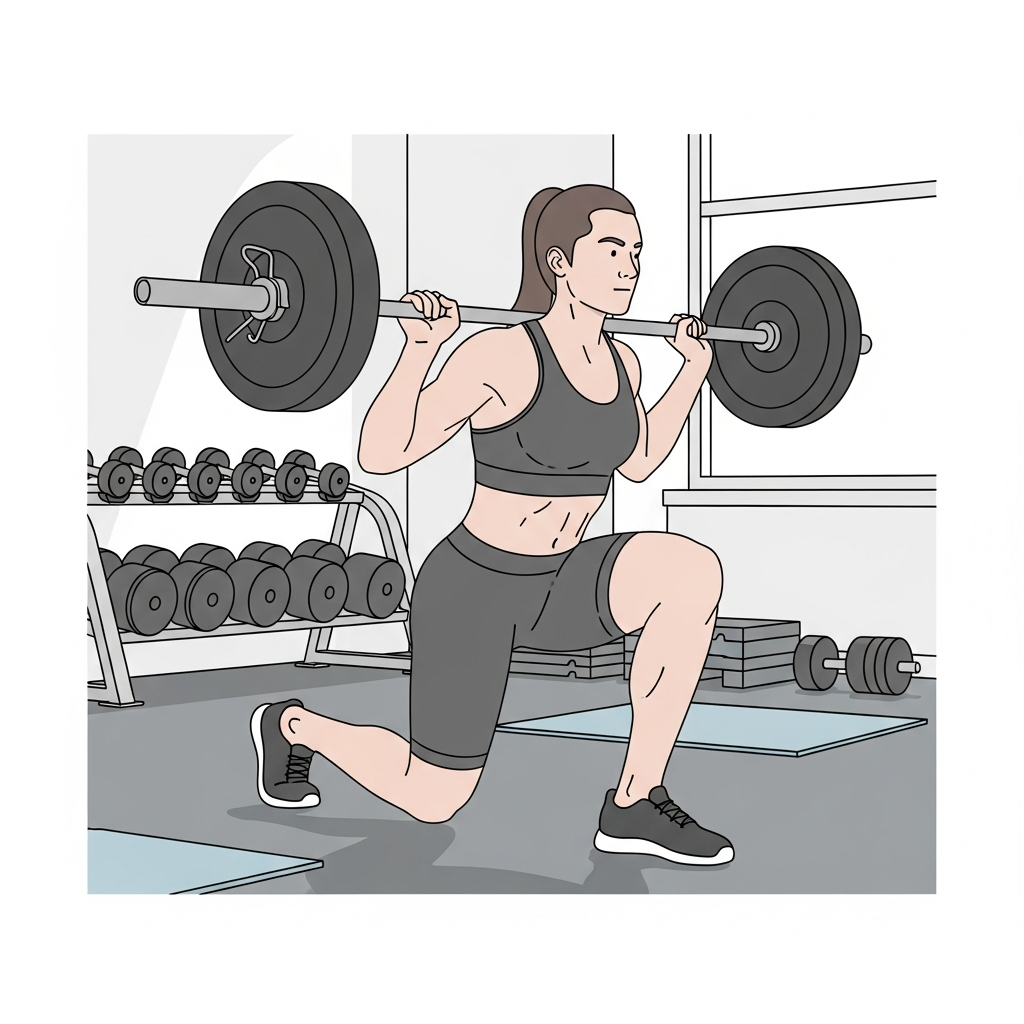
Proper preparation is key to minimizing the risk of injury and getting the most out of your barbell lunges. Before you even lift the bar, you need to ensure your equipment setup is correct and your body is ready for the movement. A few minutes of preparation can make all the difference.
This involves positioning the barbell correctly in the rack and finding your ideal starting position. An effective warm-up is just as important, as it prepares your muscles and joints for the demands of the exercise. Let's cover how to set up the bar and warm up the right way.
Equipment Setup and Proper Bar Placement
Your equipment setup begins at the squat rack. Proper bar placement is crucial for both safety and comfort. Set the barbell on the rack at about collarbone height. This allows you to get under the bar comfortably without having to go on your tiptoes.
Once the height is set, step under the bar and position it on your upper back, resting it on your trapezius muscles, not your neck. This creates a stable shelf for the extra weight. Grip the bar with your hands evenly placed, just outside your shoulders. Keep your chest upright, engage your core, and un-rack the weight. Take a few careful steps back to create enough space for your lunges. This is your starting position.
To ensure safety and proper form, remember these key points:
- Always set the bar at a height that allows for an easy un-rack and re-rack.
- Rest the bar on your fleshy upper back muscles, never directly on your spine or neck.
- Maintain a tall, upright posture with a tight core before stepping back from the rack.
Warming Up the Right Way: Mobility and Activation Drills
An effective warm-up is non-negotiable before performing barbell lunges, whether you’re a novice trainer or a hardcore bodybuilder. It increases blood flow to your muscles, improves mobility, and reduces your risk of injury. Your warm-up should focus on mobility and activation drills that prepare the specific muscles and joints involved in the lunge.
Focus on drills that improve hip mobility and promote core activation. Tight hips can seriously limit your range of motion and lead to poor form. Simple stretches and movements can open up your hips and get your glutes firing. Good lower body activation exercises prepare your muscles for the work ahead, ensuring they are ready to handle the load.
Consider adding these drills to your warm-up routine:
- Hip Flexor Stretch Lunge: Hold a deep lunge stretch for 20-30 seconds on each side to open up your hips.
- Bulgarian Split Squats (Bodyweight): Perform a few reps on each leg to activate the quads and glutes and practice single-leg stability.
- Glute Bridges: Lie on your back and perform 10-15 bridges to wake up your glutes and hamstrings.
Performing Barbell Lunges with Proper Form
Executing the barbell lunge with proper form is essential for maximizing muscle activation and minimizing the chance of injury. From the starting position to the final rep, every part of the movement should be controlled and deliberate. We recommend starting off your first set by not rushing through the exercise or using incorrect technique, as this increases the risk of strain.
This movement is a great activation exercise, but only when done correctly. We'll provide a step-by-step guide to help you nail the technique and point out common mistakes to avoid so you can perform lunges safely and effectively.
Step-by-Step Guide to Technique and Execution
Mastering the technique and execution of the barbell lunge takes practice. Once you're in the starting position with the barbell securely on your back, you're ready to begin. The key is to move with control throughout the entire range of motion.
Inhale deeply, then move a foot ahead. Plant your foot firmly on the floor and immediately begin to lower your body into the lunge position. Descend until your back leg's knee is just an inch or two from the ground and your front thigh is nearly parallel to the floor. Then, repeat the movement by switching to your opposite leg.
From the bottom, forcefully press through your front heel to drive yourself back to the starting position. Exhale as you return. Reset your feet, take another breath, and repeat the movement, either on the same leg or by alternating. Here's a quick guide:
- Begin in a standing starting position with the barbell on your upper back.
- Step forward with one leg.
- Lower your hips until both knees are bent at approximately a 90-degree angle.
- Ensure your front knee is aligned with your ankle, not drifting past your toes.
- Engage your core and maintain an upright torso.
- Push off the front foot to return to the start.
- Alternate legs for the desired number of repetitions.
Common Mistakes to Avoid and Tips for Better Balance
Many common mistakes can increase your risk of injury and reduce the effectiveness of the exercise. One frequent error is taking steps that are too short, which can place excessive stress on your front knee. Another is leaning your torso too far forward, which takes away the opportunity to implement a great strategy for emphasizing your quads and may strain your lower back.
Shortening the range of motion is another issue, often caused by using too much weight. Always choose a load that allows you to complete each rep with full, controlled movement. Maintaining balance requires a lot of mental focus, so avoid distractions and concentrate on your form. Any wobble increases your chance of injury.
Here are some tips to help you avoid these mistakes and improve your balance:
- Take a long enough step forward so your front shin is vertical at the bottom of the lunge.
- Throughout the exercise, maintain an upright torso and ensure your chest stays lifted.
- Focus on a fixed point in front of you to help maintain stability.
- Distribute your weight evenly across your front foot, pressing through the entire foot to stand back up.
Conclusion
In summary, mastering barbell lunges and a couple of exercises can significantly enhance your workout routine by building strength and improving overall balance and coordination, essential for your daily duties. By understanding the key techniques, common mistakes, and the targeted muscles involved, you can ensure that you are performing this exercise effectively and safely. Remember to prioritize proper form and listen to your body as you progress. Whether you're a beginner or looking to refine your technique, consistent practice will yield impressive results. Don't hesitate to reach out if you have any questions or need personalized advice on your fitness journey. Happy lifting!
Frequently Asked Questions
How much weight should I use for barbell lunges as a beginner?
As a beginner, start with just your body weight to master the form. Once comfortable, use an empty barbell (typically 45 lbs). Focus on performing a high number of repetitions with perfect technique before adding extra weight. This will build a strong foundation and help you avoid a premature growth plateau.
What’s the difference between barbell lunges and walking barbell lunges?
A standard barbell lunge involves returning to the starting position after each rep. In a walking lunge, you step forward into the next lunge instead of pushing back. This makes the walking lunge a more dynamic movement that covers distance, more closely mimicking movements from daily life and athletic activities.
REFERENCE:
https://www.ncbi.nlm.nih.gov/pmc/articles/PMC6063068/
https://www.ncbi.nlm.nih.gov/books/NBK513334/
https://www.ncbi.nlm.nih.gov/pmc/articles/PMC5548154/
https://pubmed.ncbi.nlm.nih.gov/22237139/
https://www.ncbi.nlm.nih.gov/books/NBK538193/
https://www.health.harvard.edu/pain/posture-and-back-health