

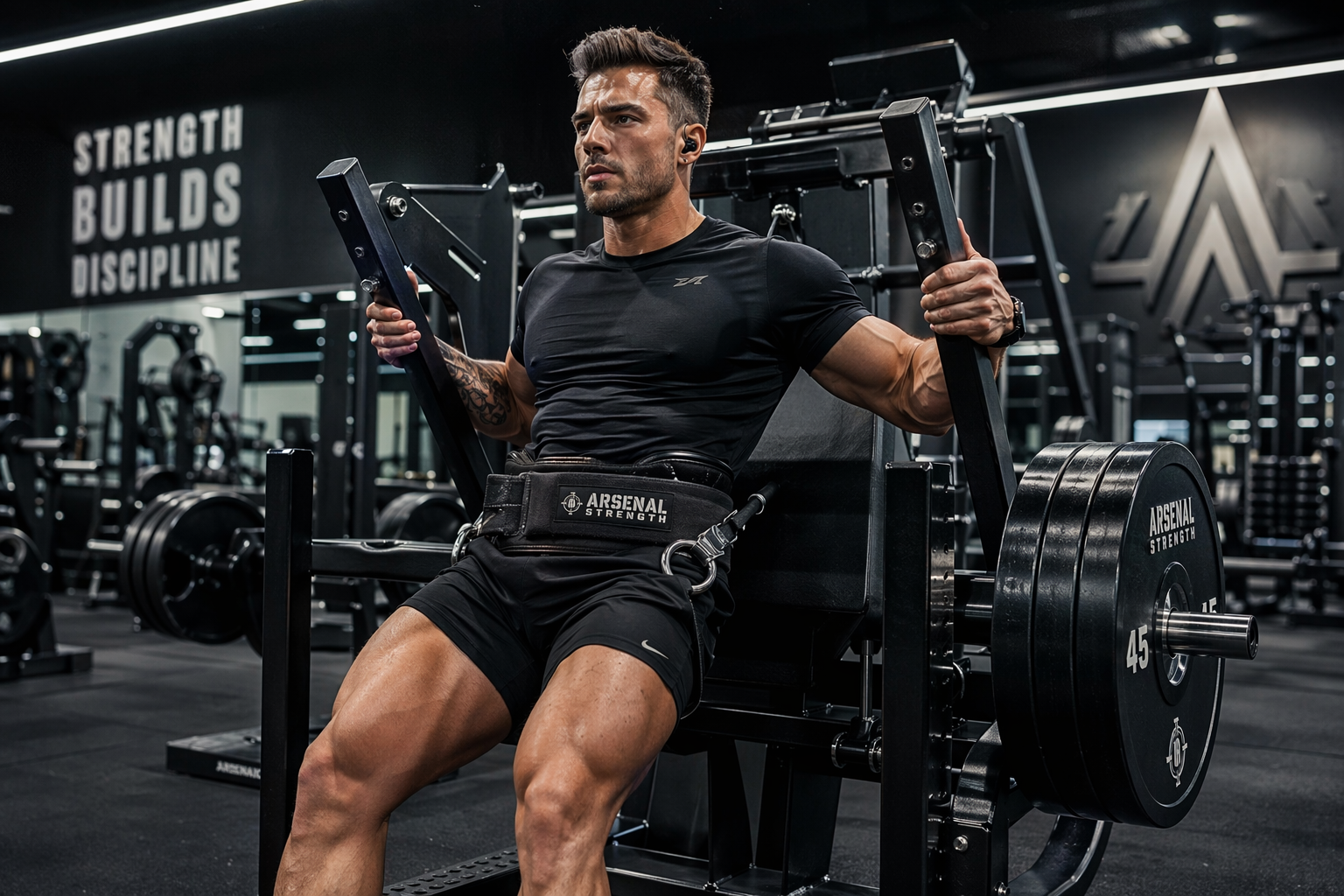
Key Highlights
- Belt squats are a smart way to build lower body strength without placing the load on your lower back. Beginners can safely start adding belt squats to their training routine by first learning the basic technique, beginning with lighter weights, and focusing on proper form throughout the full range of motion.
- A belt squat machine lets you train hard through a strong range of motion with less spinal stress. Always ensure the squat machine is adjusted to your body and gradually increase intensity as confidence and strength develop.
- A belt squat machine lets you train hard through a strong range of motion with less spinal stress.
- These exercises fit well into strength training when you want more leg work and less upper body fatigue.
- Belt squats can support hip strength, balance, and cleaner squat mechanics.
- They are useful for lifters managing back issues while still chasing strength and power.
- Several variations can target muscle growth, control, and athletic movement.
Introduction
Belt squats are one of the most useful tools you can add to strength training when your goal is stronger legs without extra stress on your spine. This lower body exercise shifts the load to a belt around your hips, which helps you train hard while keeping your upper body freer than in traditional squats. If you want more leg work, better recovery, or a safer option when your back feels beat up, belt squats deserve a place in your routine.
Belt Squat Exercises for Building Strength and Power
If you want real strength gains, belt squats give you several effective ways to load your lower body muscles. They let you train hard with heavy weights while avoiding much of the spinal loading that comes with barbell squats. That makes them a powerful tool for steady lower body training. If you don’t have access to a belt squat machine, there are good alternatives for targeting similar muscles. Options like weighted step-ups, goblet squats, or using a dip belt with weight plates while standing on elevated platforms can offer a comparable lower-body workout and help you build strength without placing extra stress on your spine.
You can use standard reps for leg strength, marches for hip work, single-leg versions for balance, tempo reps for control, and Romanian deadlift variations for hip hinge strength. Each option changes the challenge without changing the main goal: stronger, more powerful legs.
1. Standard Belt Squat
Start with the belt squat machine set to a manageable load. Step onto the platform, secure the belt low around your hips, and take a natural squat stance. From the starting position, let the belt hang straight between your legs, grab the handles, and stand tall to lift the weight into place.
As you lower down, bend your knees and hips together. Keep your chest up, brace your midsection, and aim for a comfortable depth with proper form. Your thighs can reach parallel or slightly lower if your mobility allows. Then drive back up to standing in a smooth, controlled line.
- Keep your feet about shoulder-width apart with toes slightly turned out.
- Let your knees track over your toes instead of collapsing inward.
- Use the handles for balance, not to pull the weight up like a leg press.
2. Belt Squat March
The belt squat march looks simple, but it can light up your hips and glutes fast. Instead of squatting, you stand tall under load and march in place or across the platform. This makes belt squats useful not only for strength, but also for warm-ups, activation, and work capacity.
Keep an upright posture and lift each foot as if you were walking normally. The goal is clean muscle activation, not sloppy speed. This movement pattern can help relieve tight hips and reduce the heavy, compressed feeling some athletes get from repeated spinal loading.
- Use a load that lets you stay balanced and complete higher-volume steps.
- Focus on smooth foot lifts and even pressure through the standing leg.
3. Single-Leg Belt Squat
Among squat variations, the single-leg belt squat stands out for building control. Training one side at a time challenges your lower body strength while forcing the hips to stabilize. That matters because stronger hips support cleaner movement, better force transfer, and improved balance during sport and lifting.
This version also helps you notice side-to-side differences. If one leg feels less stable or weaker, the exercise makes that clear right away. Because the load sits at the hips, you can train key muscle groups without the upper body demands of a back squat or front squat.
- Keep the working foot planted and the pelvis level as you lower.
- Use support from the machine handles if balance limits your form.
4. Tempo Belt Squat
Tempo belt squats slow everything down, and that is exactly why they work. By controlling the lowering phase and pausing slightly before standing, you increase time under tension without needing extreme loads. For many lifters, that leads to better positions and cleaner reps.
A slower tempo also teaches patience at the bottom. Instead of dropping fast and bouncing out, you own each inch of the rep. That improves control and makes your lower body training more deliberate, especially when technique tends to fall apart under fatigue.
- Try lowering for a three-count, then stand up with purpose.
- Choose a weight that allows smooth reps instead of rushed grinding.
5. Belt Squat Romanian Deadlift
The belt squat Romanian deadlift adds a different pattern to belt squats by shifting the focus from a deep squat to a hip hinge. Instead of bending mainly at the knees, you push the hips back and feel the work move into the glutes and hamstrings. It is a useful option when you want posterior chain work with less upper body demand.
This variation can also create a traction-like effect for the lower back because the load pulls from the hips rather than the shoulders. For athletes who take on lots of compression from heavy barbell work, that can feel much more manageable.
- Keep a soft knee bend and move by driving the hips backward.
- Stop when hamstring tension rises and your spine stays in a strong position.
Key Benefits of Incorporating Belt Squats Into Your Training
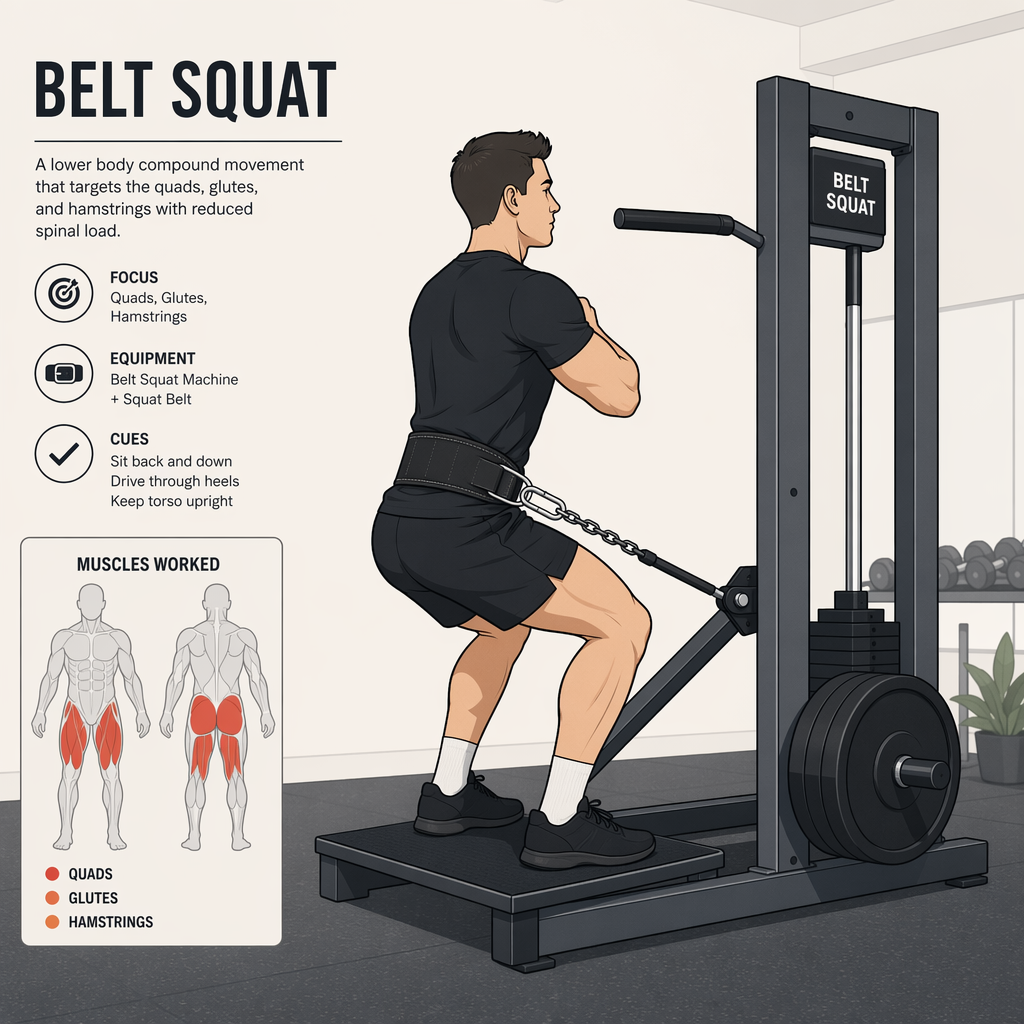
One major reason lifters use belt squats is simple: they let you train the legs hard without placing the weight across the upper back. That can make them easier to recover from and easier to keep in a busy strength training program.
They also support injury prevention by reducing stress on areas that often get overloaded in traditional squats. If you deal with back issues, shoulder discomfort, or fatigue from heavy barbell work, belt squats offer strong muscle engagement with a friendlier setup. Next, let’s look at the biggest performance benefits.
Enhanced Lower Body Strength
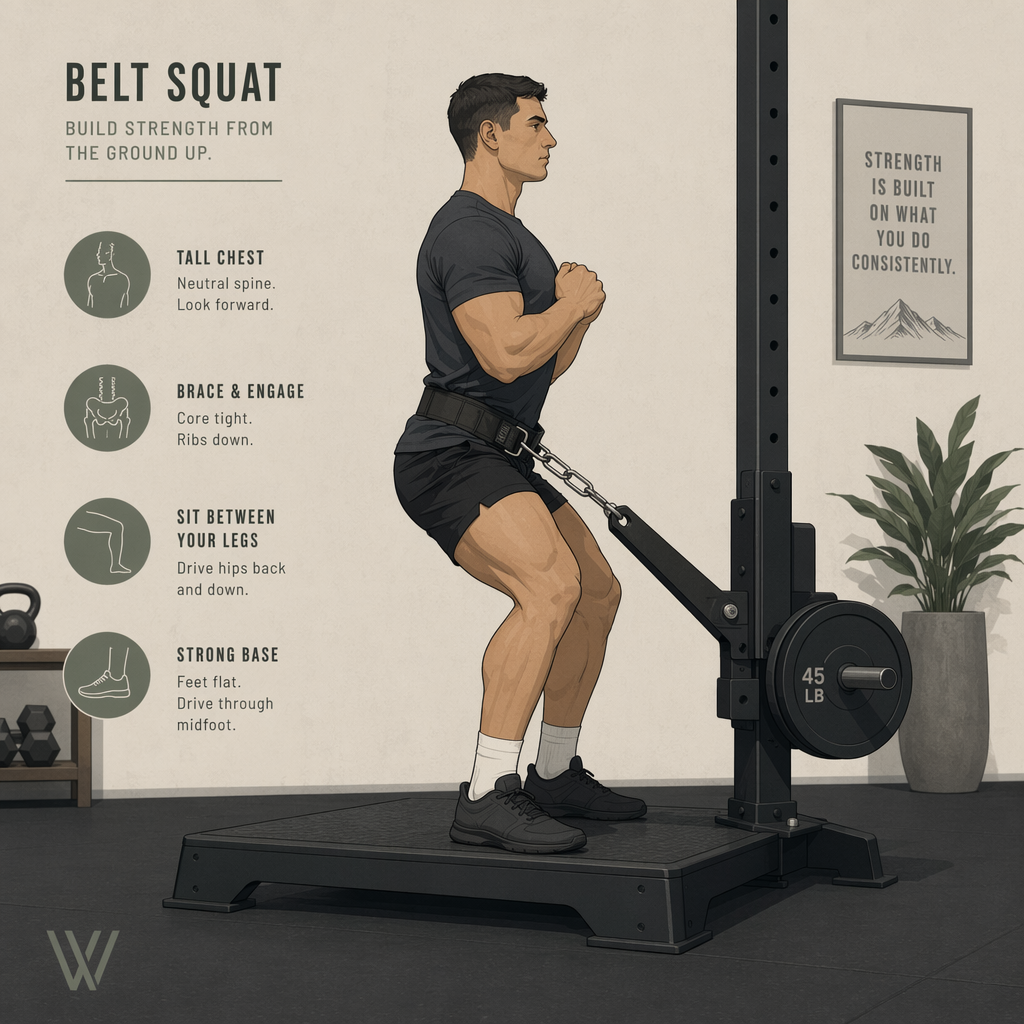
When your goal is stronger legs, belt squats make a lot of sense. They let you challenge the quads, glutes, and hamstrings with heavy loads while reducing the balance and trunk demands that can limit performance in other lifts. That means your legs often become the true limiting factor.
Because of that, muscle activation in the lower half can stay high across multiple hard sets. Many coaches use belt squats as primary work, accessory work, or a substitute when traditional loading is not the best fit. In a smart training program, that flexibility matters.
- Great for building leg strength with less upper body fatigue.
- Useful for higher-volume work that would be draining with back squats.
- Easy to adjust for strength-focused sets or work-capacity sessions.
Reduced Spinal Load and Lower Back Stress
A major benefit for most individuals is the diminished pressure on the spine; when using a squat machine that places weight on the hips rather than the shoulders, much of the axial loading associated with typical barbell squats is eliminated, which immediately alters the sensation of the movement.
If lower back pain or spinal compression limits your training, belt squats can be a safer alternative. They were originally used in part for lifters who could not tolerate regular squatting because of back problems. You still train the legs hard, but the spine carries far less direct stress.
- Keep the belt low over the hips to avoid excessive lower back extension.
- Use the machine handles to stay tall and resist being pulled forward.
Muscles Targeted by Belt Squat Exercises
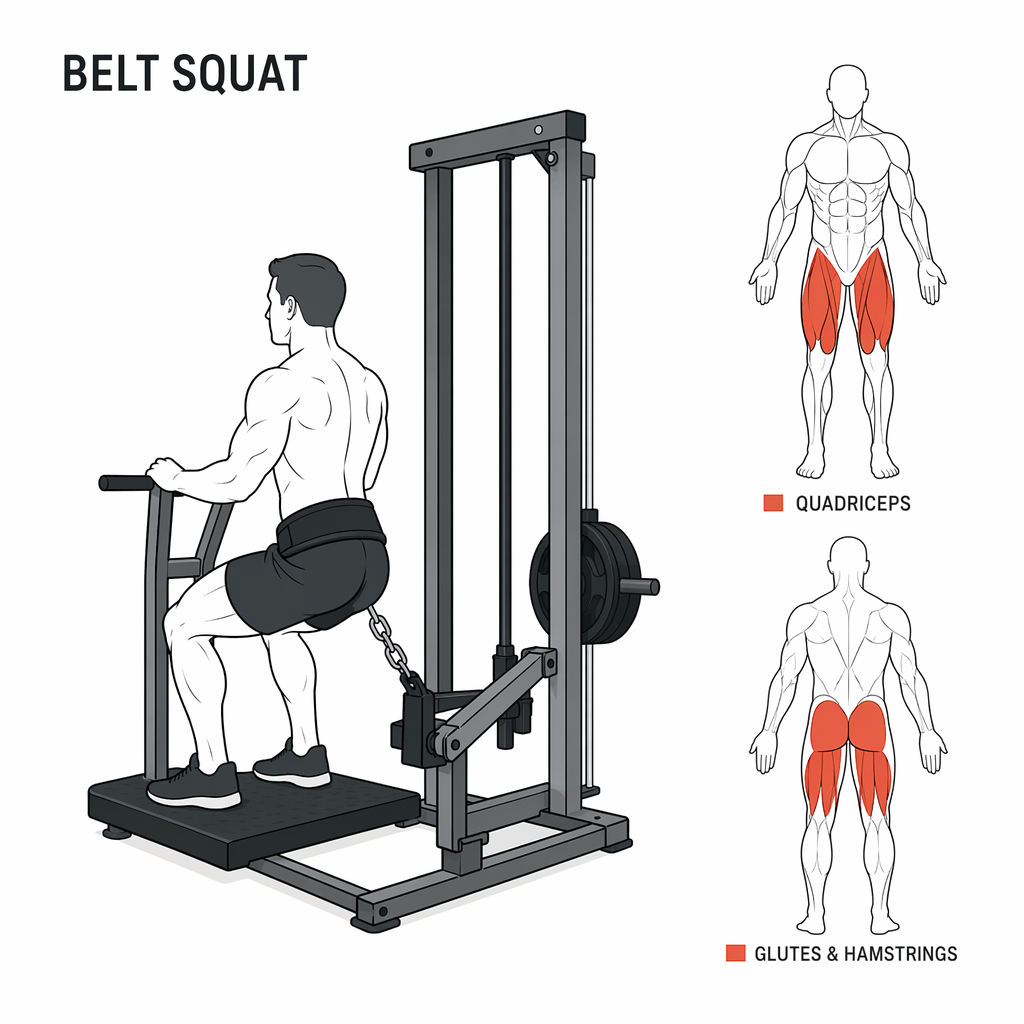
Belt squats mainly train the lower body muscles, with the quads, glutes, and hamstrings doing most of the work. You also get support from the calves, core, and hip stabilizers, especially when stance width, depth, or exercise variation changes. That broad muscle engagement is one reason they fit so well into strength training.
|
Muscle Group |
Main Role During Belt Squats |
|---|---|
|
Quadriceps |
Drive knee extension and handle much of the squat effort |
|
Glutes |
Support hip extension and power out of the bottom |
|
Hamstrings |
Assist hip control and stabilize the movement |
|
Core and hips |
Help maintain posture, balance, and alignment |
Quadriceps, Hamstrings, and Glutes
The quadriceps usually take center stage in a belt squat. Because the load is attached at the hips and the torso can stay more upright, the exercise often feels very direct on the front of the thighs. That is one reason many lifters compare the training effect favorably with a leg press, though the movement is still more natural.
At the same time, the hamstrings and glutes do important work. They help stabilize the hips, guide the descent, and drive strong extension as you stand up. A well-designed squat machine can make that pattern feel smooth and repeatable.
- Quads handle a large share of the upward drive.
- Glutes and hamstrings support force, stability, and strong lockout.
Core and Hip Muscles
Even though the load is not on your shoulders, your core still matters in every belt squat rep. Your trunk helps you stay stacked and resist being pulled out of position. Without that support, proper form breaks down and the movement becomes less effective.
The hip muscles matter just as much. Marches, single-leg work, and even standard reps ask the hips to control alignment and stabilize the pelvis. Stronger hips can improve how you run, jump, and squat, which is why belt squats can help athletic performance as well as general lifting.
- Brace your core before each rep to keep the torso steady.
- Train hip stability with marches or unilateral work for extra carryover.
Conclusion
Belt squat exercises are an excellent addition to your strength training routine, offering numerous benefits for building power while minimizing strain on your spine. By incorporating variations like the standard belt squat, belt squat march, and single-leg belt squat, you can effectively target key muscle groups such as the quadriceps, hamstrings, and glutes. This not only enhances lower body strength but also promotes a balanced overall fitness regime. Remember, consistency is key when it comes to reaping the full rewards of your training. So, get started with belt squats today and feel the difference in your strength journey! If you're ready to elevate your workouts, reach out to us for a free consultation and personalized guidance.
Frequently Asked Questions
How does adding belt squat movements to my strength training program benefit me?
Belt squats help you build lower body strength while placing far less stress on the lower back than many loaded squat patterns. In strength training, they are useful for higher-volume leg work, recovery-friendly loading, and injury prevention when barbell work or upper body limitations make regular squats harder to manage.
How do belt squats compare to traditional squats in terms of muscle activation and joint safety?
Belt squats can produce similar muscle activation in the legs while reducing spinal load compared with traditional squats. That often improves joint safety for people with back concerns or upper body limitations. They may involve less total trunk demand, but they still train the quads, glutes, and hamstrings very effectively.
REFERENCE:
https://pubmed.ncbi.nlm.nih.gov/32030125/
https://pubmed.ncbi.nlm.nih.gov/25630691/
https://pubmed.ncbi.nlm.nih.gov/28595237/
https://pubmed.ncbi.nlm.nih.gov/30273281/
https://pubmed.ncbi.nlm.nih.gov/19002072/
https://content.iospress.com/articles/isokinetics-and-exercise-science/ies570