


Key Highlights
- The barbell bent over row is a powerful compound exercise for building strength in your back muscles.
- Mastering the proper form, including the starting position and a neutral spine, is crucial to maximize benefits and prevent injury.
- This exercise targets multiple muscles, including the lats, rhomboids, traps, and posterior deltoids.
- You can use different grips, like overhand or underhand, to slightly change the muscle focus.
- Consistent practice and gradual progression in weight will lead to significant back strength and development.
Introduction
Are you looking to build a stronger, more defined back? The barbell bent over row is a classic strength training exercise that can help you achieve just that. This powerful move is a staple in many workout routines for its ability to target numerous back muscles simultaneously. By adding this exercise to your regimen and focusing on proper form, you can effectively enhance your upper body strength and improve your overall physique. Let's explore how to perform this fantastic exercise correctly and unlock its full potential.
What Are Barbell Bent Over Rows?
The barbell row is a fundamental compound exercise that involves lifting a barbell from a bent-over starting position toward your stomach. It's a full-body movement that requires you to maintain a hip hinge, engaging your lower body for stability while your upper body does the heavy lifting.
Because it engages multiple joints and muscle groups through a complete range of motion, the barbell bent over row is incredibly efficient for building overall strength and muscle mass. It's a go-to exercise for anyone serious about developing a powerful back.
Why Is the Barbell Bent Over Row a Staple Back Exercise?
The barbell bent over row has earned its reputation as a staple back exercise for a good reason. It's one of the most effective movements for building mass and strength across the entire upper back. This exercise comprehensively targets the large back muscles, including the latissimus dorsi (lats), rhomboids, and trapezius.
By allowing you to lift a significant amount of weight, this strength training exercise provides the overload necessary for muscle growth. Unlike many machine exercises, it forces your core and lower back to stabilize your body, leading to functional strength that translates to other lifts and daily activities.
To include barbell bent over rows effectively in your routine, consider adding them as a primary lift on your back or pull day. Aim for 3-4 sets of 6-12 reps, focusing on controlled movements. Starting with a lighter weight to perfect your form is always the best approach before gradually increasing the load.
Key Benefits of Incorporating Barbell Bent Over Rows in Your Routine
Adding barbell bent over rows to your workout offers numerous advantages beyond just building a strong back. As a compound exercise, it efficiently works multiple muscle groups at once, making your training sessions more effective. This movement is excellent for strengthening the entire posterior chain, which is crucial for athletic performance and overall stability.
Regularly performing this exercise can lead to significant improvements in your posture by strengthening the muscles of the upper back. A strong back can also help stabilize the spine and may help alleviate or prevent back pain when performed with correct form.
Here are some key benefits:
- Builds Mass and Strength: Targets major back muscles like the lats and rhomboids.
- Improves Posture: Strengthens the muscles that help you stand tall.
- Enhances Grip Strength: Holding a heavy barbell challenges your forearms and hands.
- Boosts Functional Strength: Engages the core and lower body for stabilization.Proper Form and Technique for Barbell Bent Over Rows
(ALSO READ: 8 Must-Try Barbell Workouts for Total Body Strength)
Proper Form and Technique for Barbell Bent Over Rows

Achieving the correct form is the most critical aspect of the barbell bent over row. Start by mastering the hip hinge position, where you push your hips back while keeping a neutral spine. This ensures the load is placed on your back muscles, not your lower back, protecting you from injury.
From this stable starting position, you'll pull the barbell toward your body. Maintaining good form throughout the entire movement is key to targeting the right muscles and getting the most out of every repetition. We'll break down the specifics next.
Step-by-Step Guide to Performing Barbell Bent Over Rows Correctly
Following a step-by-step process will help you perform the barbell bent over row with confidence and precision. Getting the setup right is the first and most important part of the lift. Stand with your feet about hip-width apart and the barbell over the middle of your feet.
Before you even lift the weight, focus on your body position. A flat back and engaged core are non-negotiable for safety and effectiveness. Remember to move the weight with your back and arms, not by jerking your body.
Here is how to perform the movement:
- Grip the barbell with an overhand grip, slightly wider than your shoulders.
- Deadlift the bar up to a standing position.
- Hinge at your hips, pushing them back until your torso is at about a 45-degree angle or slightly above parallel to the floor. Keep a slight bend in your knees and maintain a neutral spine.
- From this starting position, pull the barbell up toward your belly button, squeezing your shoulder blades together.
- As you pull, make sure to keep your elbows tucked in near your body.
- With steady control, bring the barbell down to the starting position; this finishes a single repetition.
How Low Should You Bend Over? Overhand vs. Underhand Grip Explained
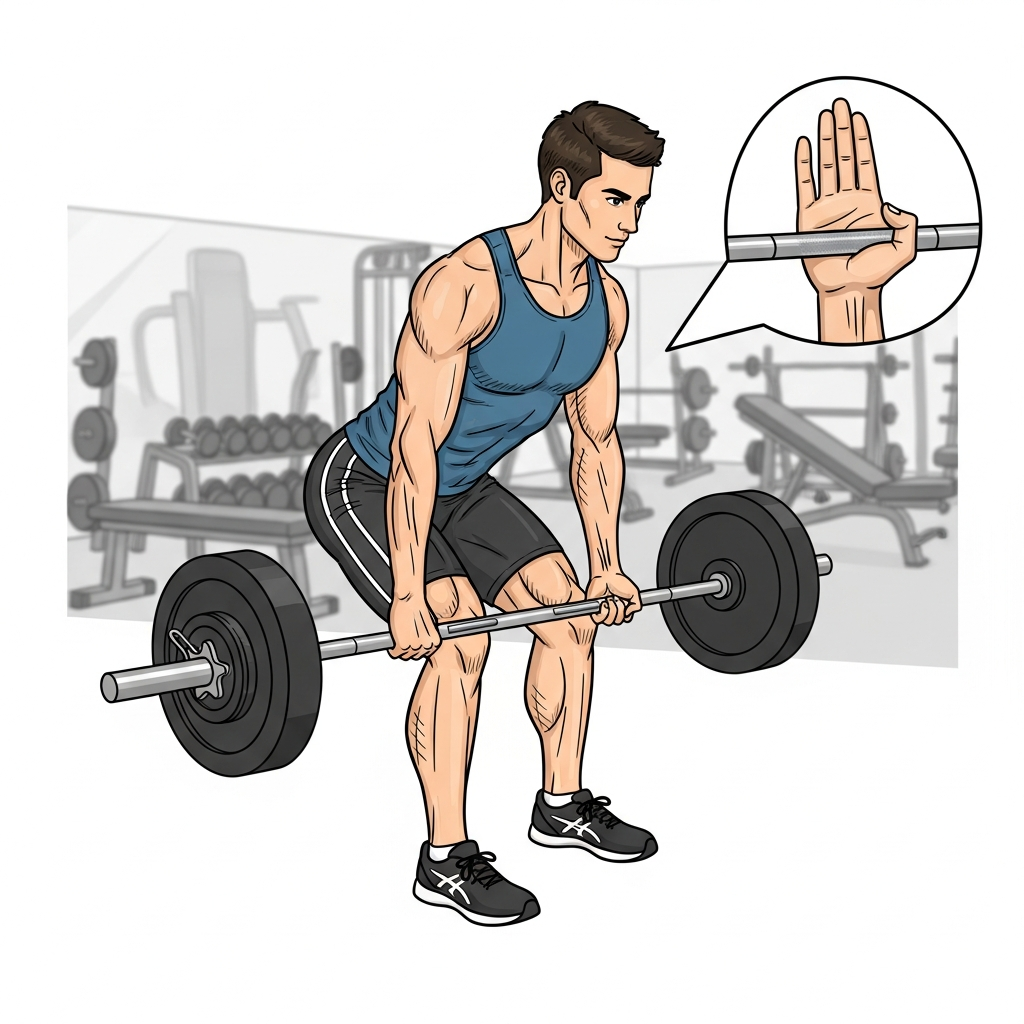
A common question is how far to bend your torso. For a standard barbell row, aim for a torso angle of about 45 degrees. Hinging until your torso is nearly parallel to the floor, as in a Pendlay row, increases the range of motion but also the difficulty and demand on your lower back. Beginners should start with a 45-degree angle to build strength and stability first.
Your grip also plays a significant role. The overhand grip, or pronated grip, is the standard choice. It targets the upper back muscles, like the rhomboids and traps, more directly. This grip encourages your elbows to move outwards slightly, engaging the rear deltoids.
Alternatively, you can use an underhand grip, also known as a reverse grip or supinated grip. This variation brings the biceps into the movement more and tends to target the latissimus dorsi. Many people find they can lift more weight with a reverse grip, but it's important to choose the grip that best aligns with your training goals.
Muscles Worked During Barbell Bent Over Rows
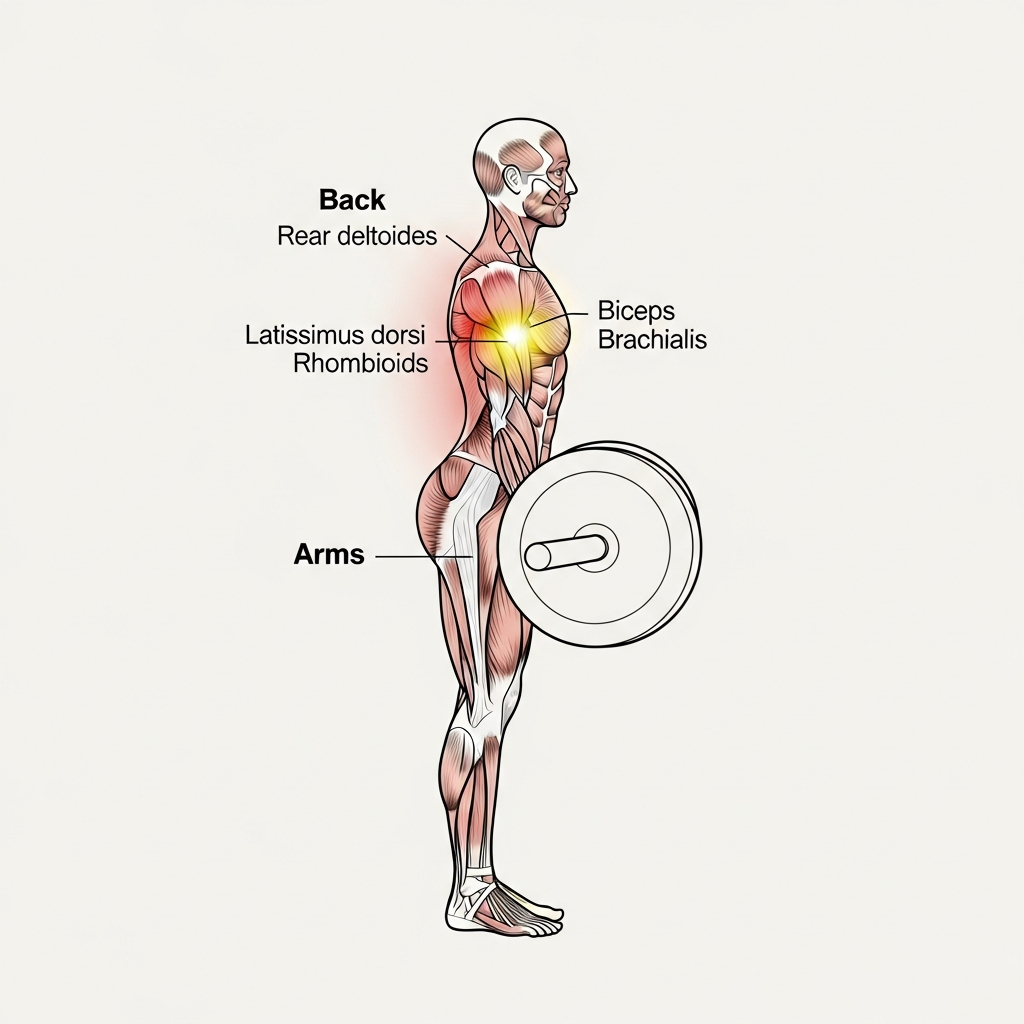
The barbell bent over row is a powerhouse exercise because it recruits a wide array of muscles in your upper body and core. The primary movers are the large back muscles, including the latissimus dorsi, which are responsible for the pulling motion. You'll also heavily engage your traps, rhomboids, and posterior deltoids.
Beyond the main targets, many supporting muscles are activated to stabilize your body and assist in the lift. Your biceps help pull the weight, while your core and lower back work hard to maintain a rigid torso. Let's take a closer look at these muscle groups.
Primary Muscles Targeted
The main reason to perform barbell rows is to build a strong, thick back. This exercise directly hits several major muscle groups that contribute to back width and density. The latissimus dorsi, the large, wing-like muscles on the sides of your back, are a primary target.
You'll also feel a strong contraction in your trapezius and rhomboids, the muscles in your mid and upper back that are responsible for pulling your shoulder blades together. Additionally, the posterior deltoids, or rear shoulder muscles, get a great workout, contributing to a well-rounded shoulder development.
Here are the primary muscle groups worked:
|
Muscle Group |
Function in the Movement |
|---|---|
|
Latissimus Dorsi (Lats) |
Pulling the arms down and back towards the body. |
|
Trapezius (Traps) |
Retracting and depressing the shoulder blades. |
|
Rhomboids |
Squeezing the shoulder blades together. |
|
Posterior Deltoids |
Assisting in pulling the arms back. |
Supporting Muscles Activated
While the back muscles do the heavy lifting, a host of supporting muscles are crucial for performing the barbell row safely and effectively. The erector spinae, the muscles running along your spine, work isometrically to keep your lower back straight and stable throughout the movement. This is vital for preventing injury.
Your core, including your abs and obliques, must remain braced and tight to create a rigid torso. This stability prevents your body from swaying and ensures that the force you generate is transferred efficiently to lift the barbell. A strong core is your best defense against lower back strain during this exercise.
Finally, your arms play a key role. The biceps are heavily involved in flexing the elbow to pull the weight up, especially with an underhand grip. Your forearms are also challenged as they work to grip the bar securely, especially as you start lifting heavier weight. Even the triceps can be engaged to help stabilize the elbow joint.
Common Mistakes and How to Avoid Injury
The barbell bent over row is a fantastic exercise, but improper form significantly increases the risk of injury, particularly lower back pain. Common errors like rounding your back, jerking the weight, or using momentum can lead to strain and take the focus off the target muscles.
Prioritizing good form over heavy weight is the best way to stay safe and make progress. By understanding the frequent mistakes, you can actively work to avoid them and ensure your rows are both safe and effective. We will now discuss some of these errors and how to correct them.
Frequent Errors to Watch For
Rounding the lower back is among the most hazardous errors. When your spine loses its neutral alignment, you put immense pressure on your vertebral discs. Always maintain a flat back from your hips to your head to protect your spine.
Another common error is using momentum or "jerking" the weight up. This often happens when the weight is too heavy. This improper form reduces the tension on your back muscles and shifts the stress to your joints and lower back. Focus on a smooth, controlled pull and a slow, deliberate lowering of the bar.
Look out for these frequent mistakes:
- Rounding the Back: Failing to maintain a neutral spine.
- Using Momentum: Jerking the weight instead of pulling it with muscle control.
- Incorrect Head Position: Looking up or craning the neck, which disrupts spinal alignment.
- Pulling with the Arms: Initiating the pull with your biceps instead of your back muscles.
Tips for Safe and Effective Barbell Rowing
To ensure your barbell rows are both safe and productive, focus on technique above all else. Proper form is your best defense against injury. Before you even think about adding plates, master the movement with a light weight or even just the barbell.
Maintaining a neutral spine and proper alignment is critical. Keep your head in line with your spine, your core engaged, and your back flat. Think about pulling with your elbows, not your hands, to better engage your back muscles.
Here are some tips for safe and effective rows:
- Start with a Light Weight: Perfect your form before attempting progression with heavier loads.
- Keep Your Core Tight: Brace your abs throughout the entire lift to support your lower back.
- Control the Movement: Avoid jerking the weight. Use a slow and controlled tempo on both the pull and the release.
- Focus on Squeezing: At the top of the movement, consciously squeeze your shoulder blades together.
Conclusion
In conclusion, mastering the barbell bent over row is essential for anyone looking to build back strength effectively. By understanding proper form, targeting the right muscles, and avoiding common mistakes, you set yourself up for success in your fitness journey. Incorporating this exercise into your routine not only enhances your strength but also contributes to overall muscle balance and posture. Remember, consistency is key, and with time, you'll notice significant improvements in your back strength and overall fitness. If you're eager to take your training to the next level, don’t hesitate to reach out for expert guidance or a personalized workout plan. Your stronger back awaits!
Frequently Asked Questions
How Can I Increase My Strength on Barbell Bent Over Rows?
To increase your strength, apply the principle of progressive overload. Gradually increase the heavy weight you lift, add more reps to your sets, or reduce your rest times. Following a structured strength training program that incorporates the barbell row will ensure consistent and measurable progress over time.
Are There Effective Variations of Barbell Bent Over Rows?
Yes, there are several great variations. The Pendlay row starts from the floor each rep, emphasizing explosive power. Using a reverse grip targets your biceps more. For unilateral work, the dumbbell row is a fantastic choice, and a chest-supported row on an incline bench can isolate the back by removing the need to stabilize your torso.