

Key Highlights
Here's a quick look at the main points of our discussion:
- The trap bar deadlift often puts less stress on your lower back due to a more upright torso position.
- A conventional barbell deadlift is a masterclass in the hip hinge and heavily targets your posterior chain.
- You can typically lift heavier weights with a trap bar because of its favorable mechanics and centered gravity.
- The trap bar uses a neutral grip, which can be more comfortable for your shoulders and reduces the need for a mixed grip.
- Choosing between the trap bar and barbell deadlift depends on your specific strength training goals, mobility, and risk of injury.
- Both lifts are excellent for building strength and muscle, but they differ in muscle activation and movement patterns.
Introduction
When it comes to building serious strength, the deadlift is king. But which deadlift is right for you? The trap bar deadlift and the traditional barbell deadlift are both fantastic exercises for any strength training program. They target similar muscle groups and can help you build a powerful physique. However, key differences in equipment, form, and how they stress your body, particularly the lower back, mean that one might be a better fit for your personal goals. We’ll go over the specifics so you can make a decision.
Comparing Trap Bar vs Barbell Deadlift
At their core, both the trap bar deadlift and the barbell deadlift involve picking heavy weight off the floor. They are both fundamental hip hinge movements that build incredible full-body strength. The range of motion and muscle groups trained are also very similar.
However, the differences are what make this comparison interesting. The movement pattern for a trap bar deadlift allows for a more upright posture, making it a bit of a hybrid between a squat and a deadlift. In contrast, the conventional barbell deadlift is a pure hinge pattern. We will now explore the equipment, body mechanics, and grip variations more closely.
Understanding the Equipment Differences
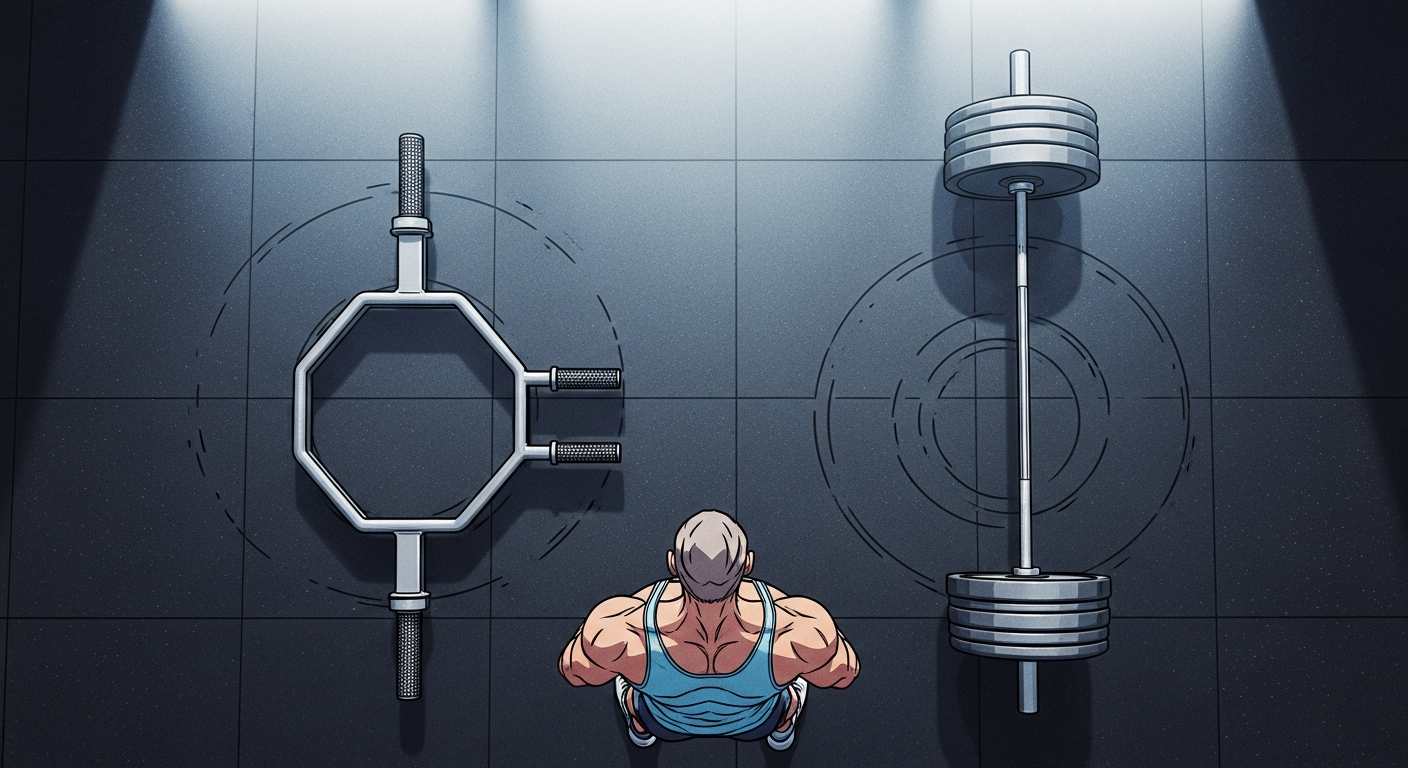
The most obvious difference is the bar design itself. A barbell is a straight bar of metal where you load weight plates on each end. You stand behind it to perform the lift. This design forces the weight to be in front of your body's center of gravity.
On the other hand, the trap bar, also called a hex bar, has a hexagonal shape. This bar design allows you to stand inside the frame. Most trap bars come with two sets of handles: low handles that are level with the bar and high handles that are elevated. This difference in where you stand relative to the weight plates dramatically changes the lift.
|
Feature |
Trap Bar (Hex Bar) |
Straight Bar (Barbell) |
|---|---|---|
|
Shape |
Hexagonal or diamond-shaped |
A long, straight piece of metal |
|
Your Position |
Stand inside the frame |
Stand behind the bar |
|
Handle Type |
Neutral grips on the sides, often with high and low handles |
Grip the bar itself, usually with overhand or mixed grip |
|
Center of Gravity |
Aligned with your body's center |
In front of your body's center |
Movement Patterns and Body Mechanics
The equipment differences directly influence the movement patterns and your body mechanics during the lift. With a conventional deadlift, the bar is in front of you, which requires a significant hip hinge to get into the starting position. Your torso will be more horizontal to the ground to keep the bar over your mid-foot.
In contrast, the trap bar allows for a more upright torso position. Because you stand inside the bar, your shins don't get in the way, allowing for more forward knee travel. This makes the starting position feel more like a squat, with a more vertical shin angle and a more upright posture.
While both lifts train the hip hinge, the trap bar deadlift is often described as a squat-hinge hybrid. It's still predominantly a hinge, but the ability to maintain a more upright position changes the demands on your body. The range of motion for the hips and knees in a trap bar deadlift is nearly identical to a conventional deadlift, despite the different body positions.
Grip Variations and Handle Options
Your grip is another key point of contrast. With a trap bar, the handles are at your sides, placing your hands in a neutral grip position with your palms facing each other. This is often more comfortable for the shoulders and wrists and is as secure as a mixed grip because the bar cannot roll in your hands. This can be a major advantage for reducing stress on the biceps tendon.
For a barbell deadlift, your grip options are different and can be a limiting factor. As you lift heavier, a standard overhand grip may not be strong enough to hold the bar. Lifters then have a few choices to improve their grip strength:
- Mixed grip: One hand is overhand (pronated) and the other is underhand (supinated). This prevents the bar from rolling but can lead to slight imbalances.
- Hook grip: You wrap your thumb around the bar and then wrap your fingers over your thumb. This is very secure but can be painful to learn.
- Lifting straps: These wrap around your wrists and the bar to take grip strength out of the equation.
Most trap bars also feature two sets of handles—high and low. The high handles reduce the range of motion, which is great for beginners or those with mobility issues. The low handles provide a range of motion more comparable to a barbell deadlift
(ALSO READ: .8 Must-Try Barbell Workouts for Total Body Strength)
Muscles Targeted in Trap Bar vs Barbell Deadlift
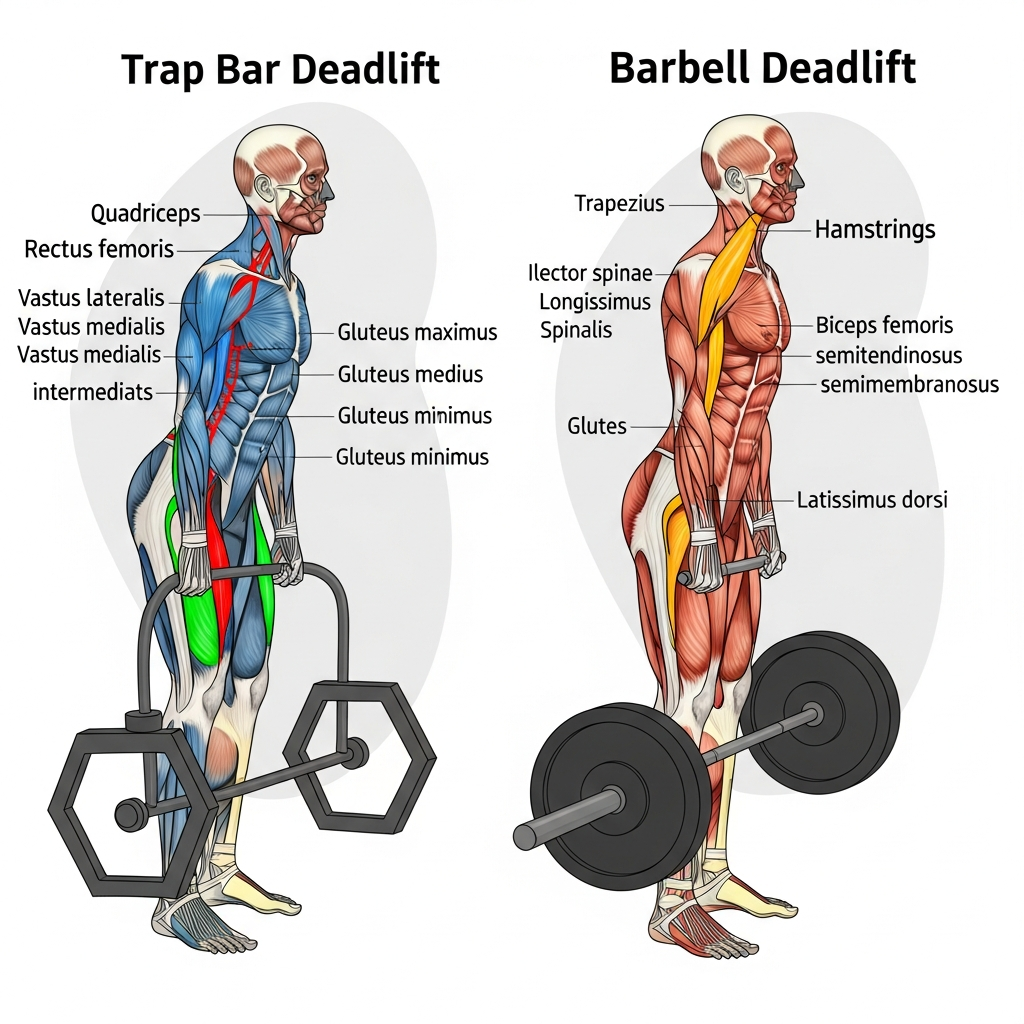
While both deadlifts are full-body exercises, the different mechanics lead to variations in muscle activation. Both lifts heavily recruit the posterior chain—the group of muscles on the back of your body, including the glutes, hamstrings, and erector spinae.
However, the trap bar deadlift tends to involve the quadriceps more, while the conventional deadlift places a greater emphasis on the hamstrings and spinal erectors. The back muscles are engaged in both, but the way they are stressed differs. Let's look closer at how each lift targets specific muscle groups.
Posterior Chain Activation
The conventional barbell deadlift is the king of posterior chain development. Because the bar is in front of you, the movement requires a pronounced hip hinge. This setup places significant load on your hamstrings, glutes, and lower back muscles from the start of the lift. Research shows that hamstrings activation is about 10-15% higher in conventional deadlifts compared to the trap bar version.
The trap bar deadlift also works the posterior chain hard. It's still a hinge-dominant movement that will build strong glutes and hamstrings. However, because you can maintain a more upright torso, the demand on the lower back muscles and hamstrings is slightly less.
Essentially, if your main goal is to build the strongest possible posterior chain, the conventional deadlift has a slight edge. However, the trap bar deadlift still provides more than enough stimulus for significant strength and muscle growth in these areas.
Quadriceps Involvement
The trap bar deadlift truly excels in this aspect. The ability to maintain a more upright torso position means you can achieve greater knee flexion at the start of the lift. This increased knee bend brings your quadriceps into the movement in a much bigger way. Studies have shown that quad muscle activation can be up to 20% higher in trap bar deadlifts compared to conventional ones.
This makes the trap bar deadlift feel like a hybrid between a squat and a deadlift. You're pushing the floor away with your legs more, much like you would in a squat. This added quad involvement is one reason why many people can lift more weight with a trap bar.
If you're an athlete looking for explosive lower body power or want to build more balanced leg development, the increased quadriceps involvement of the trap bar deadlift is a significant benefit. It's a great way to train your quads heavily without putting a bar on your back.
Upper Body Engagement Differences
The upper body, particularly the back muscles and grip, is challenged differently by each lift. In a conventional deadlift, your lats play a huge role in keeping the bar close to your body. Engaging the lats creates tension throughout the upper back and helps maintain a neutral spine. The overhand or mixed grip also heavily taxes your grip strength.
With the trap bar deadlift, the neutral grip and centered weight distribution change the upper body muscle activation. There is more emphasis on the upper traps and less on the lats compared to a conventional pull. Your shoulders also tend to be in a more comfortable and stable position.
While both lifts build a strong back and powerful grip, the specific demands vary. The conventional deadlift is superior for building the pulling skill needed to keep a barbell close, while the trap bar's neutral grip allows you to focus on lifting heavy without your grip being the first thing to fail.
Benefits of Trap Bar Deadlifts
The benefits of trap bar deadlifts are numerous, which is why this exercise has become so popular in gyms everywhere. One of the biggest advantages is the reduced stress it places on the lower back, making it a safer-feeling option for many people.
The neutral grip is more comfortable for the shoulders, and the overall movement is often easier for beginners to learn. The versatility of the trap bar, especially if it has high and low handles, allows it to be adapted for various goals and fitness levels. We'll now explore these benefits in more detail.
Reduced Lower Back Stress
One of the most cited benefits of the trap bar is that it places less stress on the lumbar spine. The unique design allows you to stand inside the center of mass, which helps you maintain a more upright torso position throughout the lift. This reduces the shearing forces on your lower back by about 10-15% compared to a conventional deadlift.
This more upright posture makes it easier to maintain a neutral spine, which is crucial for preventing back injuries. For people with a history of lower back pain or those who sit at a desk all day, this reduction in spinal loading can be a game-changer. It allows you to train the deadlift pattern hard while minimizing the risk.
While no exercise is completely injury-proof, the mechanics of the trap bar deadlift are often more forgiving. It provides a way to build strength and power with a lower perceived risk to the lower back, making it a valuable tool for both beginners and experienced lifters.
Ease of Learning for Beginners
The trap bar deadlift is generally much easier for beginners to learn than the conventional deadlift. The learning curve is gentler, with most beginners achieving proper form in just a few sessions. This is largely because the starting position is more intuitive. You don't have to worry about scraping your shins or finding the perfect balance with the bar in front of you.
For many beginners who may have mobility issues, getting into a good starting position for a conventional deadlift can be challenging. The trap bar, especially with its high handles, reduces the mobility demands at the hips and allows for a cleaner setup.
This ease of learning means beginners can start lifting heavy weight safely and sooner, which builds confidence and promotes progress. The trap bar teaches the fundamental mechanics of a heavy pull without the steep technical demands of a barbell, making it an excellent introductory deadlift variation.
Versatility in Athletic Training
The trap bar is an incredibly versatile tool for improving athletic performance. Studies have shown that lifters can produce greater peak power and velocity with a trap bar compared to a barbell, even at the same relative intensity. This makes it a superior choice for athletes in sports that rely on explosive power, like jumping and sprinting.
The ability to handle heavier loads with the trap bar also provides a powerful stimulus for building lower body strength and muscle growth. Coaches often prefer it for athletes because it delivers many of the benefits of both squats and deadlifts in one efficient movement, without the high technical demand or spinal loading of a back squat.
From building raw strength to enhancing power output, the trap bar deadlift is a fantastic exercise for overall athletic development. Its versatility allows it to be programmed for various goals, whether that's lifting heavy loads for maximum strength or moving lighter loads quickly for power.
Advantages of Traditional Barbell Deadlifts
Despite the rise of the trap bar, the traditional barbell deadlift remains a gold standard in strength training for good reason. It is the ultimate test of raw pulling strength and a masterclass in the hip hinge pattern. For those in strength sports like powerlifting, it's a required movement.
The conventional deadlift offers unique advantages in terms of muscle activation, particularly for the posterior chain, and is unmatched for building grip strength. Let's delve into what makes the straight bar deadlift such a revered and effective exercise.
Specificity for Powerlifting and Strength Sports
If your goal is to compete in powerlifting, the choice is made for you. You will be performing the straight bar deadlift on the platform, so you must train it. The principle of specificity in strength training dictates that to get good at an exercise, you have to do that exercise. The regular deadlift is a specific skill, and trap bar deadlifts won't fully replicate the demands of conventional pulls.
Even for non-competitors, there's value in mastering this classic lift. It teaches patience off the floor, incredible full-body tension, and technical discipline that carries over to other barbell movements. Learning the traditional straight bar deadlift can make you a better, more well-rounded lifter.
While the trap bar can be a useful accessory for powerlifters in the offseason for overload or volume work, it cannot replace the specificity of training with a barbell. For anyone serious about powerlifting, the barbell deadlift must be the cornerstone of their program.
Posterior Chain Development
When it comes to building a powerful posterior chain, the conventional deadlift is arguably the best tool for the job. The mechanics of the lift, with the bar in front of your center of mass, forces a greater forward torso lean. This creates immense mechanical tension on the glutes, hamstrings, and the entire system of back muscles.
This strong emphasis on the hip hinge pattern makes it incredibly effective for muscle growth and strength training in these key areas. If your goal is to develop brutally strong hamstrings and a rock-solid back, the conventional deadlift will deliver. The increased demand on the spinal erectors also helps build a strong, resilient lower back when performed with proper form.
While the trap bar also targets these muscles, the conventional deadlift's unique leverage places them under greater stress. This makes it a superior choice for those specifically looking to maximize the development of their posterior chain.
Building Grip Strength and Pulling Skill
A straight barbell is unforgiving on your grip, and that's one of its greatest strengths. Holding onto a heavy, rolling bar is a direct challenge to your hand and forearm strength. As the weights get heavier, you are forced to develop a crushing grip, which has carryover to countless other exercises and real-world tasks.
The conventional deadlift also develops a unique pulling skill. You must learn to actively use your lats to keep the straight barbell close to your body and prevent it from drifting forward. This ability to "pull the slack out" and maintain tension is a technical skill that the trap bar doesn't demand in the same way.
To manage heavy loads, lifters develop different grip techniques, each building strength in its own way:
- Overhand grip: The foundational grip that builds basic hand strength.
- Mixed grip: A common strategy to prevent the bar from rolling, challenging your grip under heavy loads.
- Hook grip: The most secure grip for powerlifting, it builds incredible thumb and finger strength.
Mastering these grips and the pulling skill of a conventional deadlift makes you a more capable and technically proficient lifter overall.
Safety Considerations for Both Deadlift Variations
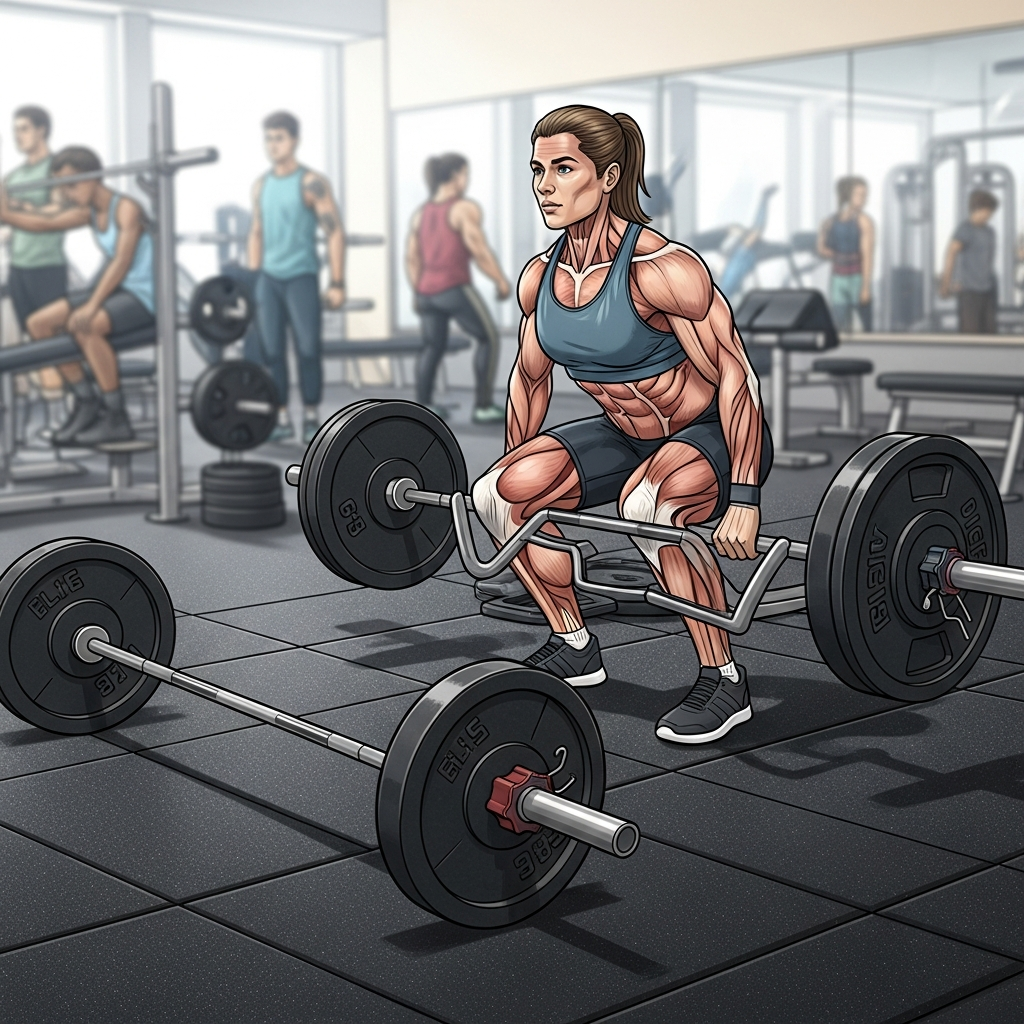 In the gym, making safety your highest priority is essential at all times. Both deadlift variations can be performed safely with proper form and smart programming. However, they present different challenges and potential risks of injury, particularly concerning the lumbar spine. Understanding these differences is key to injury prevention.
No exercise is inherently "safe" or "dangerous"—it's all about how you perform it. The goal is to choose the variation that best fits your body and execute it with excellent technique. Let’s look at the specific safety considerations for each lift.
Lumbar Spine Positioning
Maintaining a neutral spine is the most important safety cue for any deadlift. This means keeping your back flat and avoiding excessive rounding or arching of the lumbar spine. The trap bar deadlift often makes this easier to achieve. The neutral grip position and centered load allow for a more upright torso, which naturally puts the lower back in a less compromised starting position.
With the conventional deadlift, the bar's forward position requires more hip flexion and torso lean, which can make it more challenging to maintain a neutral spine, especially for those with long legs or tight hamstrings. If mobility is limited, the body may compensate by rounding the lower back, increasing the risk of lower back pain or injury.
For many people, the trap bar deadlift feels safer because the setup is more forgiving on the lumbar spine. It allows lifters to focus on a strong pull without having to fight for a safe spinal position, which can be a significant advantage, especially for beginners or those with a history of back issues.
Injury Risks and Prevention Strategies
The most common injury risk in any deadlift variation comes from poor lifting form, especially rounding the back under a heavy load. This places immense pressure on your spinal discs and can lead to serious injury. However, each lift has its own specific risks. With the barbell, scraping your shins is common, and with a mixed grip, there is a small but real risk of a bicep tear on the supinated arm.
Injury prevention starts with mastering proper form before adding heavy weight. Regardless of the bar you choose, you must learn to brace your core, maintain a neutral spine, and control the weight throughout the entire lift.
Here are some key injury prevention strategies:
- Perfect your form: Work with a coach or use video feedback to ensure your technique is solid. Never sacrifice form for more weight.
- Address mobility issues: If you can't get into a good starting position without rounding your back, work on your hip and ankle mobility or choose a variation that suits your current range of motion, like trap bar deadlifts with high handles.
- Pay attention to your body and avoid forcing yourself when you feel pain. If something feels wrong, lower the weight or stop the exercise. Smart programming with adequate recovery is crucial for long-term, injury-free lifting.
Suitable Populations for Each Method
The trap bar deadlift is often the better option for general fitness enthusiasts, athletes, and beginners. Its ease of learning, lower stress on the back, and superior power production make it a fantastic tool for building overall strength and athleticism. For individuals with mobility issues, long limbs, or a history of back pain, the trap bar is often a much more accessible and comfortable choice.
The conventional barbell deadlift is the clear choice for competitive powerlifters. It's also an excellent option for experienced lifters whose specific goals include maximizing posterior chain development and mastering classic barbell movements. If you have no mobility restrictions and want to build the purest form of pulling strength, the barbell is a phenomenal tool.
Ultimately, the best choice depends on your individual body, injury history, and specific goals. A qualified personal trainer can help you assess your movement and decide which variation is the better option for you. It's not uncommon to include both in a well-rounded program.
Conclusion
In conclusion, both the trap bar and barbell deadlifts offer unique benefits tailored to different training goals and experience levels. While the trap bar is often easier on the lower back and more beginner-friendly, the barbell deadlift excels in specificity for powerlifting and developing core strength. Understanding your fitness objectives and body mechanics is essential when choosing between these two variations. Whether you aim to build muscle, enhance performance, or minimize injury risks, integrating both deadlift styles into your routine can provide a comprehensive approach to strength training. If you're ready to take your deadlift game to the next level, consider scheduling a free consultation with our experts to find the best approach for your individual needs.
Frequently Asked Questions
Is the trap bar deadlift safer and easier to learn for beginners?
Yes, for most people, the trap bar deadlift is considered safer and easier to learn. The design allows for a more upright torso position, which reduces stress on the lower back and makes it easier to maintain proper form. This lowers the risk of injury and makes it a more accessible starting point for beginners.
Can trap bar deadlifts build muscle and strength as effectively as barbell deadlifts?
Absolutely. The trap bar deadlift is extremely effective for building muscle and strength. Due to the favorable mechanics, you can often lift heavier loads, providing a powerful stimulus for growth. While muscle activation differs slightly, both lifts will develop all the key muscle groups involved in a strong pull.
Should athletes alternate between trap bar and barbell deadlifts for optimal performance?
Alternating between trap bar and barbell deadlifts can be a very smart strategy for athletes. Using both deadlift variations allows you to reap the unique benefits of each—the power of the trap bar and the posterior chain strength of the barbell. This can lead to more well-rounded development and improved athletic performance.
REFERANCE:
https://www.ncbi.nlm.nih.gov/pmc/articles/PMC9528903/
https://www.ncbi.nlm.nih.gov/pubmed/10912892
https://www.ncbi.nlm.nih.gov/pubmed/11404665
https://pubmed.ncbi.nlm.nih.gov/26840440/
https://pmc.ncbi.nlm.nih.gov/articles/PMC5091063/
https://pubmed.ncbi.nlm.nih.gov/32107499/