

Key Highlights
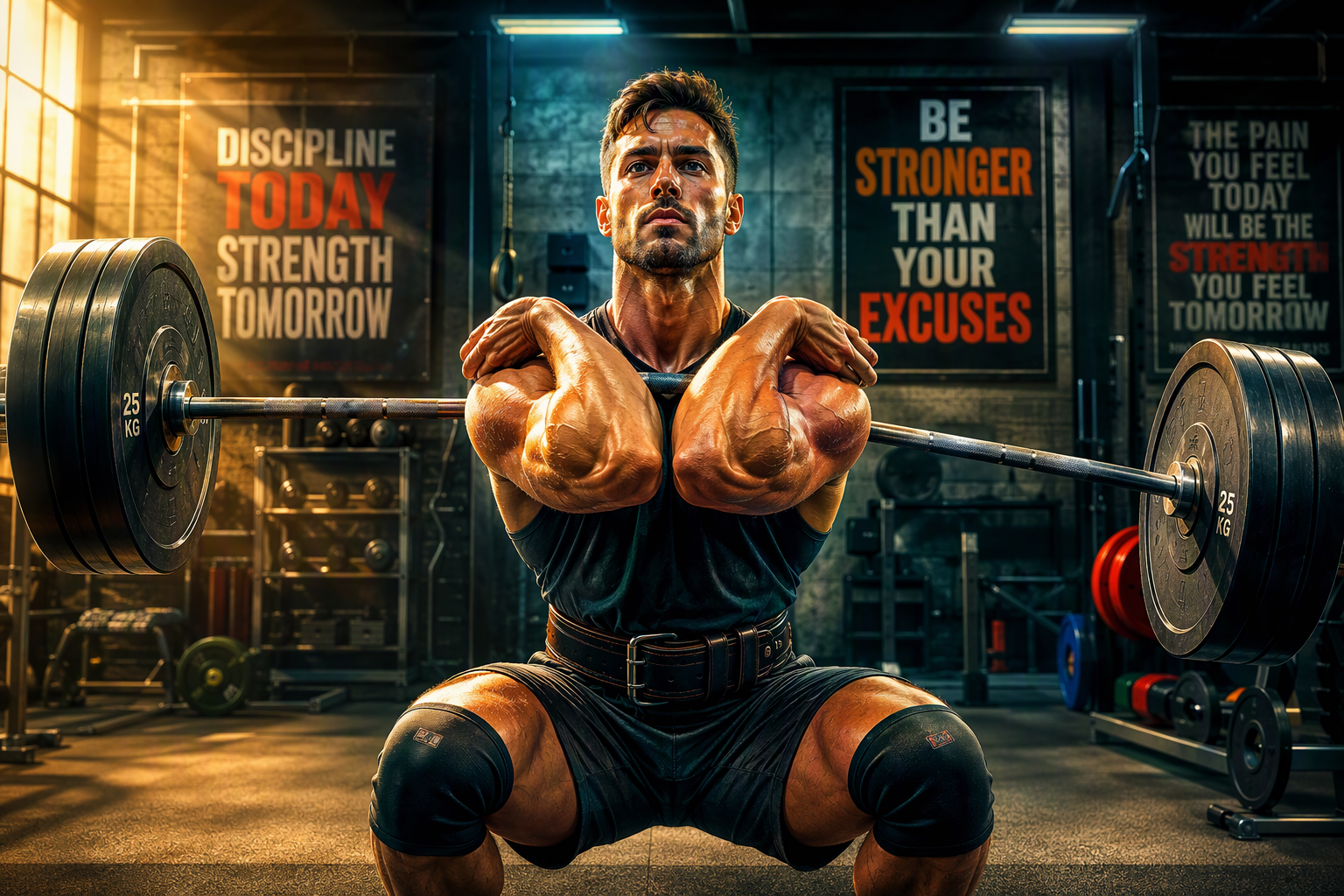
- The cross arm grip is a useful front squat option when wrist pain makes other grips hard to use. You set the bar in a squat rack and rest it across the front of your shoulders, not in your hands.
- For jnrjic with limited mobility, alternatives to the reverse-cow grip include lifting straps, which let you hold the bar with a neutral grip, or the traditional clean grip if flexibility allows. These alternatives can help make front squat variations more accessible.\
- You set the bar in a squat rack and rest it across the front of your shoulders, not in your hands.
- Proper technique matters: keep your elbows up, chest lifted, and torso in an upright position.
- This style can help reduce squat injuries when the load is controlled, and form stays solid.
- Compared with the traditional back squat, it shifts more demand to the quads and upper back.
- It works best for lifters who want a front squat without the mobility demands of a clean grip.
Introduction
The front squat remains an important exercise for strength training and muscle building because bar placement changes how your body works through the lift. When you unrack the bar and carry it on your chest, you stay more upright and place more stress on the quads and upper back. This exercise does not allow you to lift as much weight as traditional back squats, which should be considered throughout the maturation of your workout program. That makes the cross arm version worth learning. If you want a practical front squat option that feels simpler on the wrists, this variation deserves a closer look.
(ALSO READ: Front Squat Exercise: Key Form Tips for Success)
Understanding the Cross Arm Barbell Front Squat
The cross arm barbell front squat is a front squat variation that places the bar across the front of your shoulders while your arms cross over it in an X shape. This squat grip stands out because it does not require your fingers to stay under the bar, which can help when mobility is limited in Olympic-style weightlifting compared to a low bar position.
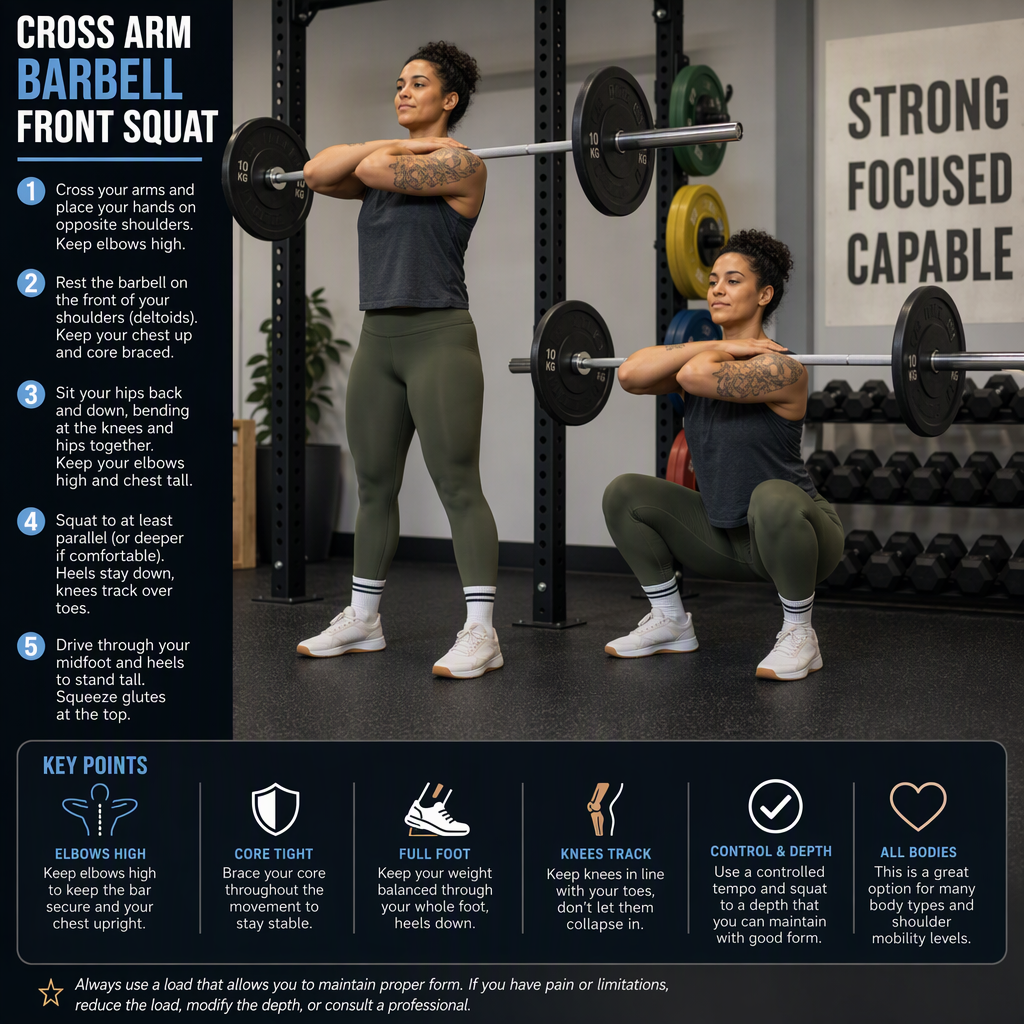
To do it correctly, the squat bar positions must stay supported by the shoulders, with elbows pointed forward and kept high. Those technicalities of the exercise, including low bar positioning, are key to the proper mechanics of a good squat, particularly regarding the balancing of anterior and posterior forces. Your lower body drives the lift, while the upper back helps keep the bar stable for muscle building and balance.
Proper Setup and Technique for the Cross Arm Grip
Start by setting the bar in a squat rack around collarbone height. Step in until the bar touches the front of your shoulders and sits comfortably on the deltoids, as recommended in Jesse’s simple weekly workout tips and workout regimen. This front squat grip works only when the bar carries the front weight of the bar by the shoulders, not held up by the hands.
- Set the low bar squat at a height that lets you step under it without rising onto your toes.
- Place the bar across the front of your shoulders and lift your elbows forward.
- Cross your arms over the bar so each hand reaches toward the opposite shoulder area.
From there, use proper technique on every rep. Keep your chest up, feet flat, and hips back as you lower under control. Drive up by pushing into the floor and keep the bar centered. If your elbows drop or your chest folds, the lift becomes harder to balance and less secure.
Comparing Cross Arm vs. Clean Grip Positions
Both grips place the bar in the same front squat grip position on the shoulders, but they manage control differently. The clean grip keeps fingers under the bar for a more secure squat grip, while the cross arm grip removes that support. The main distinction of the back squat is that it makes the cross arm style easier on stiff wrists, yet less reliable as the weight of the barbell increases, especially when using the high bar position; each squat grip style has its own nuances.
|
Feature |
Clean Grip |
Cross Arm Grip |
|---|---|---|
|
Safety |
More secure and generally safer |
Less secure if elbows drop |
|
Comfort |
Tougher with limited mobility |
Higher wrist and triceps mobility needed for more defined triceps under the guidance of our editorial team. |
|
Mobility requirements |
Higher wrist and triceps mobility needed for more defined triceps under the guidance of our editorial team. |
Lower mobility demand |
|
Muscle engagement |
Strong upper back support needed |
Similar lower body focus, but harder to stabilize |
So who should use each? Choose the clean grip if you can hold it well and want the best front squat control. Choose the cross arm grip if you need alternative ways or alternative hand positions due to mobility limits or wrist discomfort.
(ALSO READ: Front Squat Grip Variations: Which One is Best?)
Safety Considerations for the Cross Arm Barbell Front Squat
Yes, the cross arm grip can be safe for barbell front squats in the gym today, but only when your setup is solid and the bar stays fixed on the shoulders. Its main advantage is that it can reduce wrist pain because your hands are not forced underneath the bar. That can mean more comfort and minimal stress on the wrists, making it an important question to consider for optimal comfort during your lifts, which is another perk of this version.
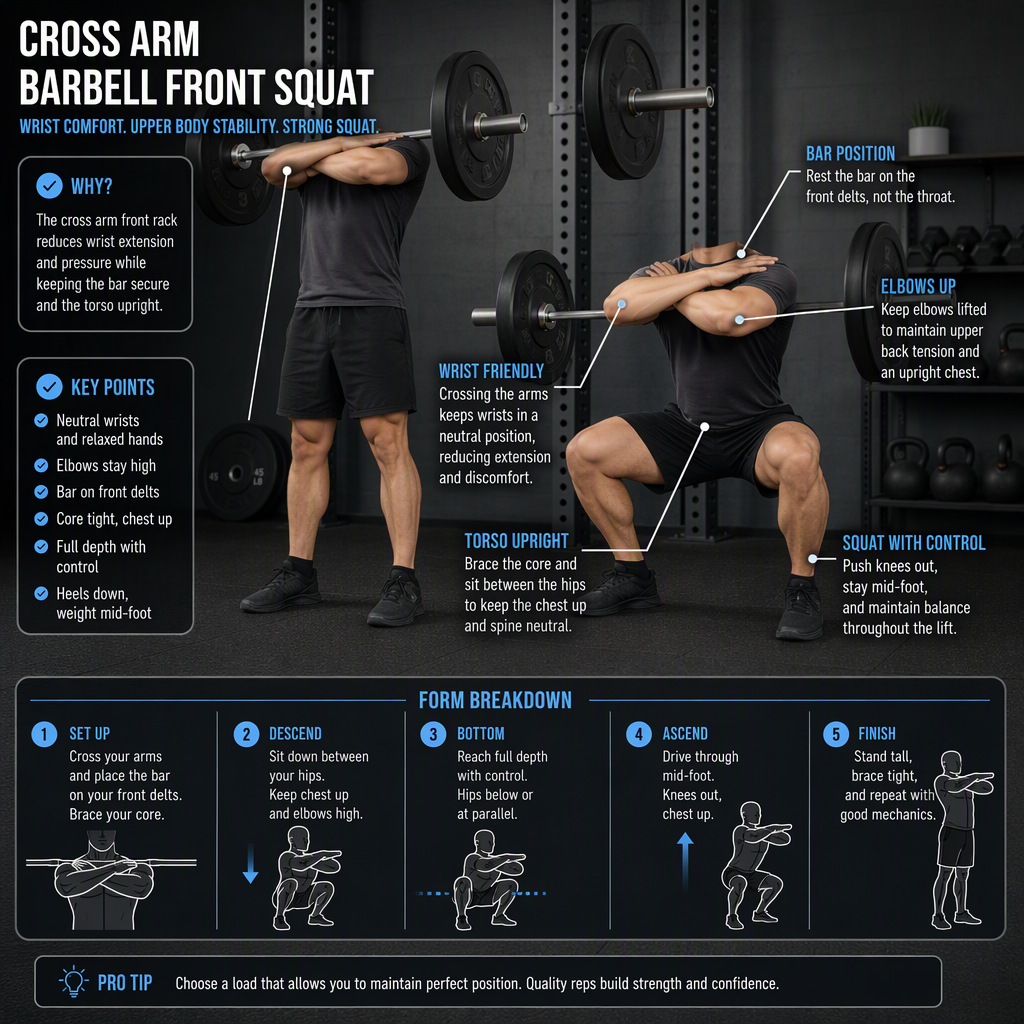
At the same time, the bar is harder to secure than with a clean grip, so your upright position matters a lot for the high bar squat. If you are learning the movement or using heavier loads, a training partner can help you watch your form and limit squat injuries, contributing to your easy fitness routine, particularly engaging your posterior chain muscles. Next, it helps to look at stability in more detail.
Reducing Injury Risk and Ensuring Stability
Keeping the bar stable starts before the first rep. Use a squat rack set at the right height, place the bar firmly on the shoulders, and lift the elbows so the bar does not roll forward. This variation may ease wrist pain, but it asks more from your posture and control while performing more prominent squat exercises as part of a progressive loading program. A key takeaway is to ensure your elbows remain lifted during this process.
- Keep your elbows high and nearly level with the bar to reduce forward tipping.
- Brace your upper back so the chest stays proud instead of collapsing.
- Lower only as far as you can while keeping the bar centered and your feet flat.
Your core and upper back do a lot of the work here. As the load rises, they must resist the bar pulling you forward. The posterior chain has minimal stress compared with back squat styles, so you need clean posture and a steady torso. Think “chest up, elbows up, stand straight” on every rep.
Common Mistakes and How to Avoid Them
A few errors show up often with this squat grip. The biggest one is letting the elbows fall, which causes the bar to drift forward. Another is trying to hold the bar with the hands instead of letting the shoulders support it, especially when performing Olympic lifts for hungry lifters for a good reason. Some lifters also rush depth and lose posture at the bottom of the front squat.
- Don’t let your chest collapse, or the bar will feel unstable.
- Don’t set the bar too high above the collarbone area.
- Don’t force positions that irritate tight wrists or throw off alignment.
The fix is simple but important: use proper technique from the start. Practice with a lighter load, stay upright, and keep the bar resting across the shoulders through the full rep. Good form lowers the chance of squat injuries and helps you get better results from each set without wasting effort.
Conclusion
In conclusion, mastering the Cross Arm Barbell Front Squat not only enhances your strength but also ensures safety when performed correctly and in consideration for the services provided for building muscle. Understanding the nuances of grip positions and maintaining proper form are essential for maximizing effectiveness and achieving a mechanical advantage while minimizing injury risk. By being mindful of common mistakes, you empower yourself to achieve better results in your fitness journey. Remember, every lift counts towards your progress. If you're curious to delve deeper into this technique or have any questions, feel free to reach out for a personalized consultation. Your health and safety come first!
Frequently Asked Questions
Who should use the cross arm grip for front squats?
The cross arm grip suits lifters who struggle with the clean grip because of mobility limits or wrist discomfort. It is one of the better alternative hand positions if your best hand position is not the front rack. As the founder of The Headlock, I can share that there are a couple of variations that can also work for people chasing the ultimate development of quad growth, since the front squat supports an upright position and stresses the quads more.
Does anybody here front-squat? : r/Stronglifts5x5
Yes, many lifters incorporate the cross arm barbell front squat into their routines. This squat variation enhances core stability and promotes proper squat mechanics. It targets quads effectively while minimizing strain on the lower back. Always ensure proper form and start with lighter weights to build strength safely
REFERENCE:
https://breakingmuscle.com/the-perfect-squat-7-articles-to-help-you-achieve-it/
https://breakingmuscle.com/25-tips-for-better-front-squats/
https://breakingmuscle.com/deconstructing-the-front-squat/
https://breakingmuscle.com/get-a-big-squat-the-russian-squat-routine-vs-the-smolov-squat-routine/