

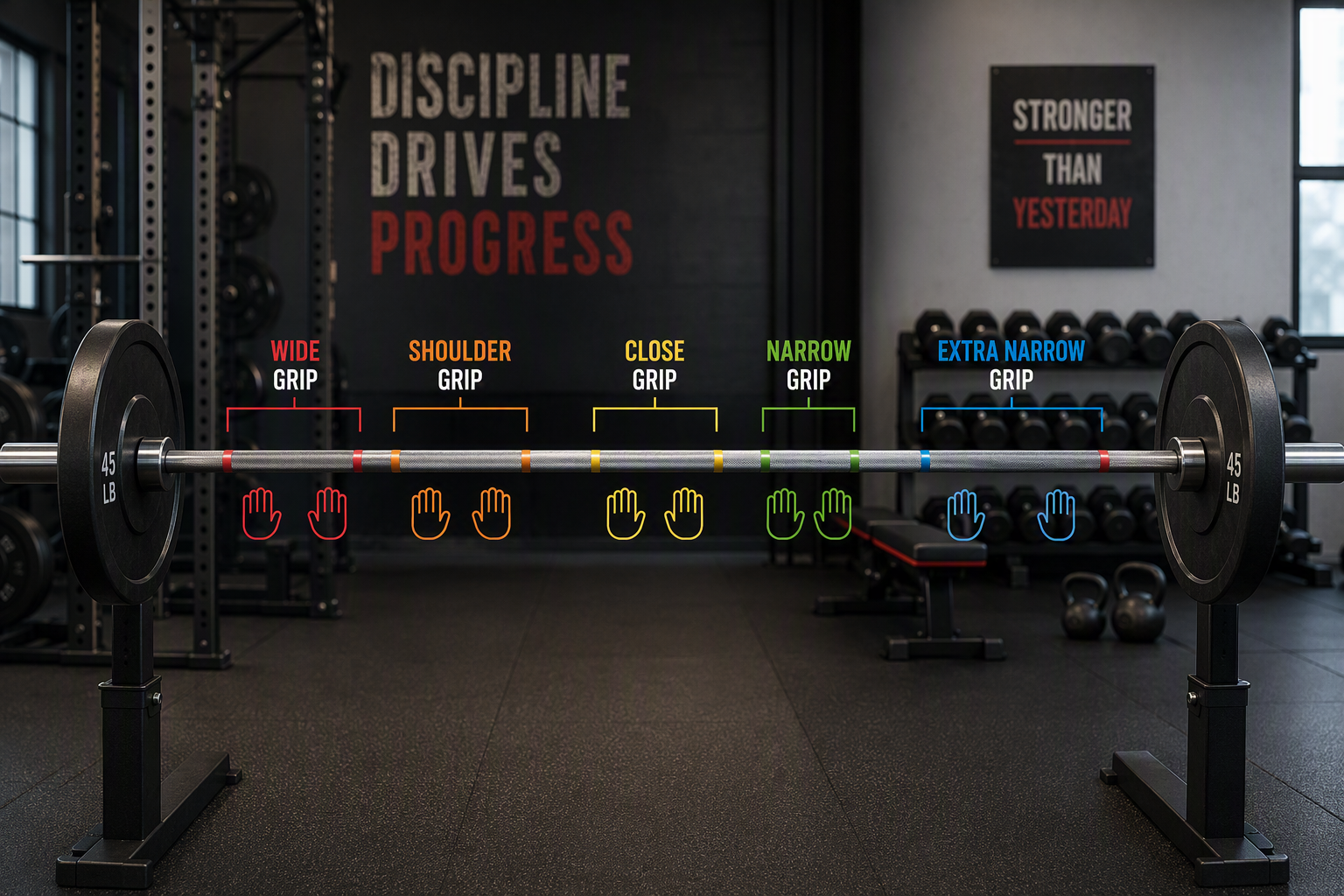
Key Highlights
- The front squat works best when the bar sits securely and your elbows stay high.
- Your grip width can change comfort, balance, and how upright your torso stays.
- The clean grip is usually the most stable choice if your mobility work is solid.
- The cross-arm grip can help if wrist or shoulder motion is limited.
- California grip variations give you another option when the standard front rack feels tough.
- The best grip is the one that keeps the bar on your shoulders with control.
Introduction
The front squat is one of the best lifts for strength, athletic movement, and building muscle. It challenges your legs, core, and upper back while asking you to stay tall under the bar. Still, many lifters get stuck on one issue: grip. If your hands, wrists, or shoulders are in the wrong spot, your squat stance and bar position can fall apart fast. So which grip should you use? The answer depends on stability, comfort, and mobility.
CLICK HERE
Overview of Front Squat Grip
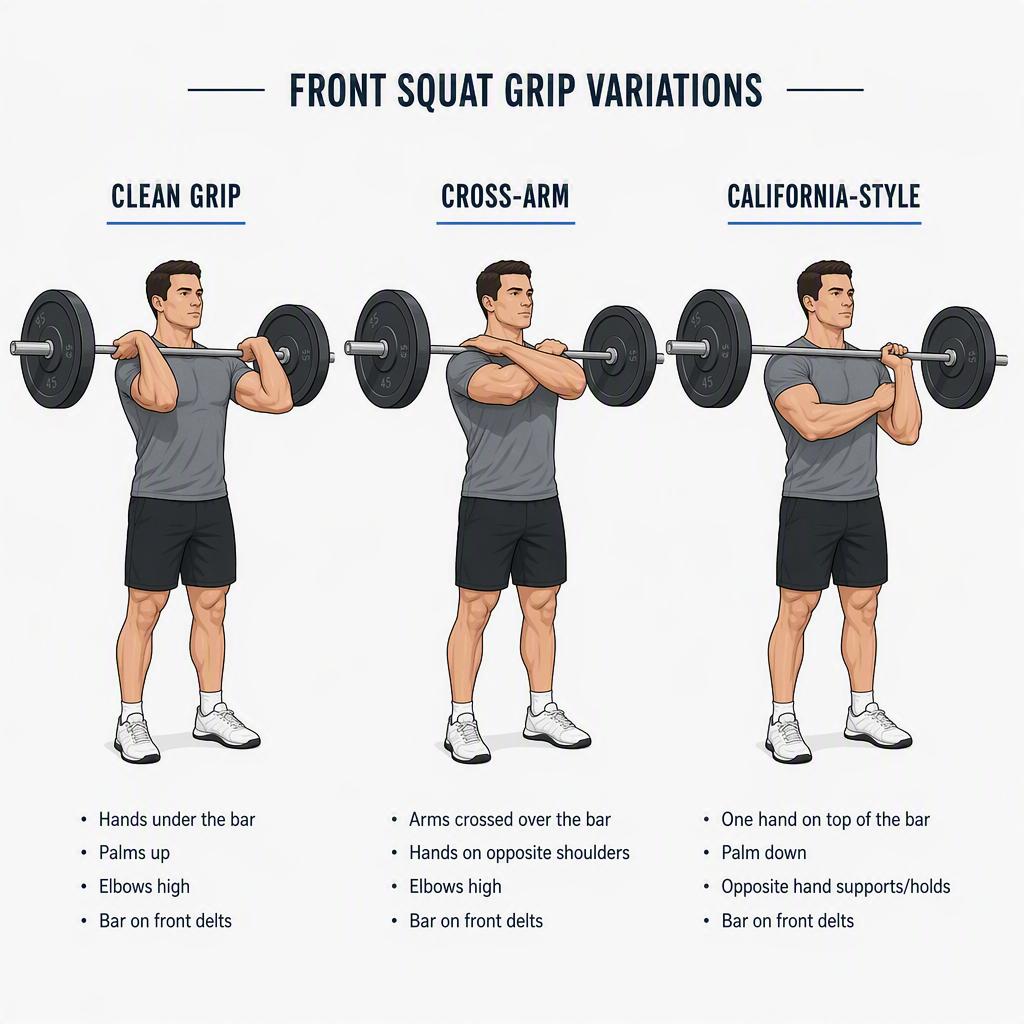
In a front squat, the barbell should rest across the front of your shoulders, not hang in your hands. That support comes from a solid rack position, with elbows driven forward so the bar stays close to your body.
Most lifters use a front rack position based on the clean grip, but there are other options. Cross-arm and California-style setups can help when wrist or shoulder mobility is limited. Each one changes how secure the bar feels, which is why grip choice matters so much.
(ALSO READ: What Muscles Do Front Squats Work? A Complete Guide)
Why Grip Matters in the Front Squat
Your grip affects far more than your hands. In a front squat, it shapes your torso position, elbow height, and balance from top to bottom. A good setup helps your upper arms stay nearly parallel to the floor, which keeps the bar over the middle of your foot.
When grip width is off, problems show up quickly. Too narrow or too forced, and your elbows may drop. Once that happens, your chest tips forward and the squat becomes harder to control. That is how grip choice affects upper body posture during a front squat.
Common mistakes are also easy to spot. People often hold the bar in their hands instead of letting it rest on the shoulders, or they let the elbows sink during reps. Others ignore mobility and force a position they cannot maintain under load.
How Different Grips Can Impact Performance
A better grip can improve how many reps you complete with good form. It also helps you stay upright, which lets the front squat train the quads, glutes, and core without losing position. Since the lift is useful for strength and muscle mass, bar control matters.
To properly hold the bar during a front squat, keep it on the front of your shoulders and raise the elbows forward and up. Your hands help guide the bar, but they should not carry the load. That applies whether you use a clean grip or a variation.
Some grips also carry more risk when used poorly:
- Holding the weight in your hands can stress the wrists, elbows, and shoulders.
- Dropping the elbows can pull you forward and make the lift less efficient.
- A loose setup can reduce help from the glutes and hamstrings.
- Heavy reps with an unstable grip make missed lifts more likely.
Front Squat with Straps
Front squats with straps serve as an outstanding modification to improve lifting technique while offering extra stability. By utilizing straps, you can firmly secure the barbell, which helps to minimize wrist and forearm strain—especially useful for individuals with limited grip strength or flexibility.
This approach supports correct form and allows you to concentrate on activating core muscle groups like the quadriceps and core. Adding front squats with straps to your exercise regimen can boost performance and provide better stability during lifts, making it a worthwhile option for both beginners and experienced athletes.
(ALSO READ: What Are Front Squats Good For? Key Advantages Explained)
The Clean Grip (Front Rack Position)
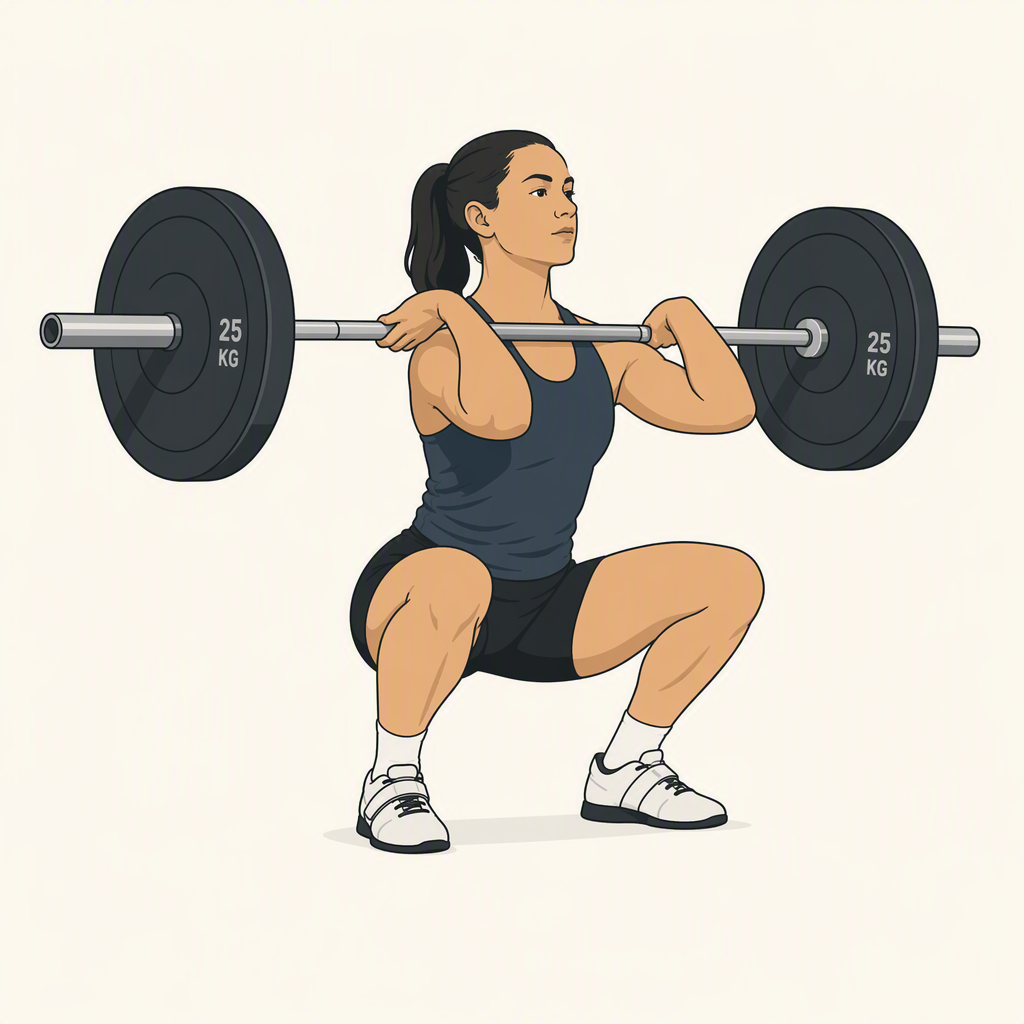
The clean grip is the standard front rack position for most lifters. It places the bar across the shoulders while your fingers stay on the bar and your elbows point forward. In the best version, the bar rests on the body, not in the hands.
If a full hand position is hard, you can still use a partial clean grip. Many lifters lift well with fewer fingers on the bar, starting by letting the pinky or ring finger come off. That makes the rack position easier without losing the basic shape.
Proper Setup and Technique for the Clean Grip
Start with the barbell set around collarbone height. Take a grip width around shoulder-width or just outside it, then step in so the bar touches the front of your shoulders. From there, drive the elbows forward and up until the upper arms are close to parallel with the floor.
Next, let the bar settle into the rack position. Your fingers can stay under the bar, but the shoulders should support the load. If full contact is too hard, drop one or more fingers rather than forcing a painful hold.
To improve mobility for the clean grip, use simple front-rack practice with a light bar or PVC pipe and keep the elbows high. Stretching the lats and pecs can also help. Over time, small changes in grip width and regular mobility work make the position more natural.
Pros, Cons, and When to Choose the Clean Grip
For most people, the clean grip is the best grip for front squats for beginners because it teaches the strongest bar position from the start. It also carries over to the clean. If you can keep the elbows high and the bar on the shoulders, this is the top option.
That said, not everyone can hold a full grip right away. Limited wrist or shoulder motion can make the front rack tough, and front squat causes discomfort for some lifters at first. In those cases, a partial grip or straps can help while you improve mobility.
|
Option |
Best Use |
Limitation |
|---|---|---|
|
Full grip clean grip |
Most stable and secure setup |
Needs the most mobility |
|
Partial clean grip |
Good when only some fingers fit comfortably |
Slightly less secure |
|
Clean grip with straps |
Helpful when mobility is limited |
Not the final goal for most lifters |
Yes, straps are okay if mobility is limited, especially as a short-term tool.
Cross-Arm and California Grip Variations
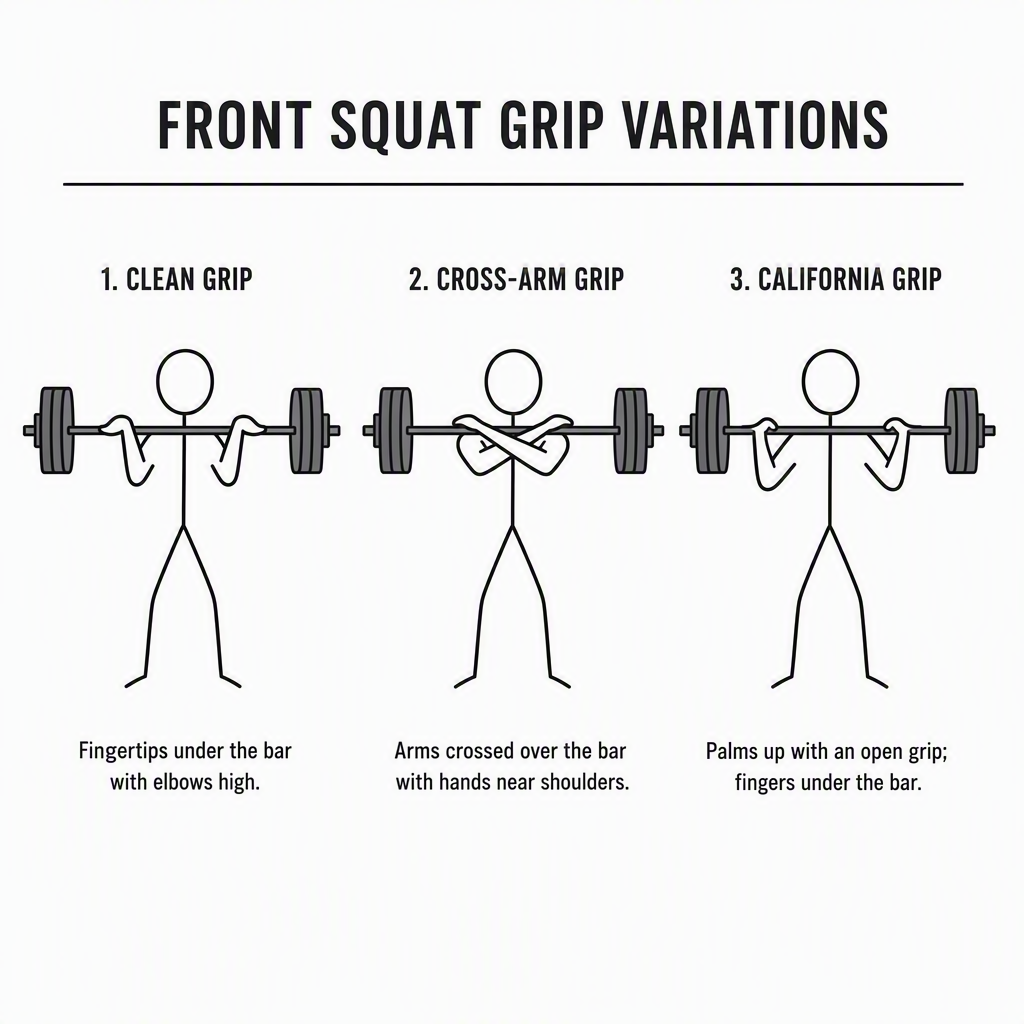
Not every lifter can use the clean grip well, even with steady mobility work. That is where the cross-arm grip and California grip come in. Both aim to keep the bar on the shoulders while reducing stress on tight wrists or shoulders.
These variations can be useful, but they are not identical. Your grip width, arm position, and how much support you get from the hands all change between them. If you need another path to a stable front squat, these two are worth comparing.
Distinguishing the Cross-Arm from the California Grip
The cross-arm grip is the simpler option. You place the bar in the front rack on your shoulders, lift the elbows, then cross your arms and rest the hands on top of the bar. It removes the need to get the fingers under the bar.
The California grip is different. Instead of crossing the arms over the bar, you cross the wrists in front of the body so the bar sits near the webbing of the thumbs. It still changes the front rack, but it keeps a feel that is closer to a normal grip.
So what are the main differences? The clean grip is usually the most secure and best for transfer to the clean. The cross-arm grip is easier on tight joints but less stable. The California grip sits between them, offering another way to manage limited mobility.
Benefits and Limitations for Each Variation
Some lifters prefer the cross-arm grip over the clean grip because it asks less from the wrists and shoulders. If shoulder pain or stiffness makes the standard setup hard, this can be a practical adjustment. A wider grip in other variations may also improve comfort.
Every option comes with its own compromises. The bar must stay supported by the shoulders close to the clavicles, and when the elbows go down, stability is quickly lost. For this reason, these grips tend to be more helpful for athletes addressing mobility challenges rather than trying to achieve the most stable position possible.
Here is the short version:
- Cross-arm grip: easiest on wrists, but less stable with heavy weight.
- California grip: useful when you want less strain but more bar connection.
- Clean grip: best overall stability if mobility allows it.
- Straps: a smart bridge when mobility or shoulder pain limits normal front rack work.
(ALSO READ: Discover the Benefits of Front Squats for Strength Gains)
Conclusion
In summary, understanding the various front squat grip variations can significantly enhance your performance and comfort during the lift. Each grip offers unique advantages and potential drawbacks, making it crucial for you to experiment and find the one that best suits your body structure and strength goals. Whether you opt for the clean grip for its stability or the cross-arm grip for versatility, the key is to focus on proper setup and technique to ensure safety and effectiveness. Ready to elevate your front squat game? Try out these grips in your next workout and see the difference they can make! For personalized guidance, don't hesitate to book a free consultation with our experts.
Help with front squat grip? : r/Fitness
For front squat grip, consider three main variations: the crossed-arm grip, the Olympic grip, and using straps. Each offers unique benefits; the crossed-arm grip is easier for beginners, while the Olympic grip promotes better posture. Choose based on comfort and mobility to maximize performance and safety during your workout.
REFERENCE:
https://workoutguru.fit/barbell-clean-grip-front-squat-video-exercise-guide-tips-002912/