

Key Highlights
- The front squat primarily targets the quadriceps while also engaging the glutes and other lower-body muscles.
- Compared with the back squat, the front squat shifts the load to the front of the body and encourages a more upright torso.
- Your core and upper back work hard to hold the front rack position and support balance.
- This movement is excellent for building strength, athleticism, and useful muscle mass.
- It also helps improve lower body balance by training several muscle group patterns together.
- Front squats can suit many fitness levels through load, stance, and grip changes.
Introduction
The front squat is one of the most useful lower body lifts you can add to your training. It is popular with athletes, lifters, and general gym-goers because it works more than one muscle group at a time while reinforcing strong squat form. With the bar placed at the front of the body, this exercise challenges your legs, core, and posture differently than many other squat movements. If you want stronger legs and cleaner movement, it deserves attention.
(ALSO READ: Front Squat Exercise: Key Form Tips for Success)
What muscles do front squats work?
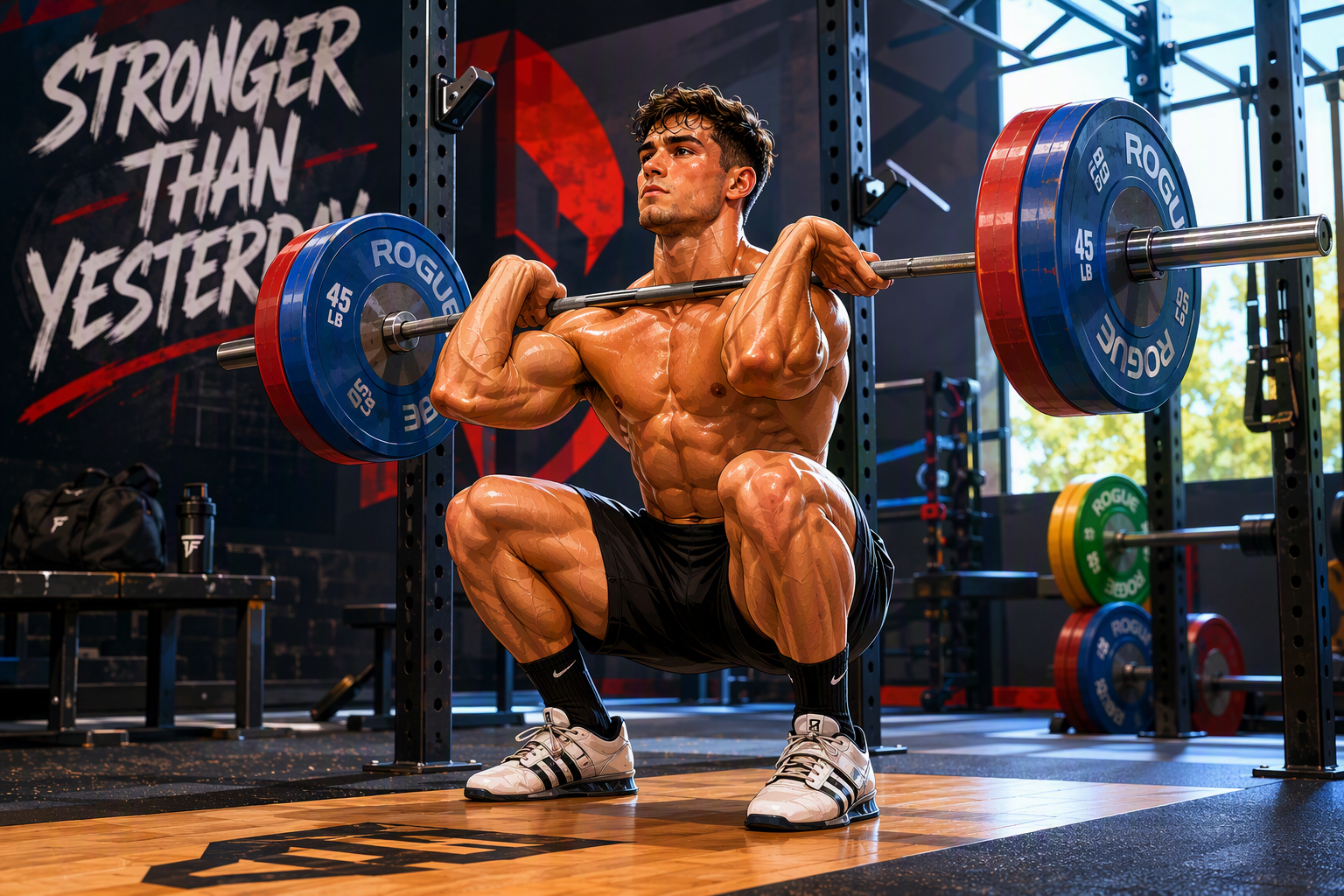
At its core, the front squat is a barbell squat performed with the bar resting across the shoulders in the front rack position. From there, you move from standing into a deep squat position and return to full extension. The front squat position places the load in front of the body, which changes how you balance and move.
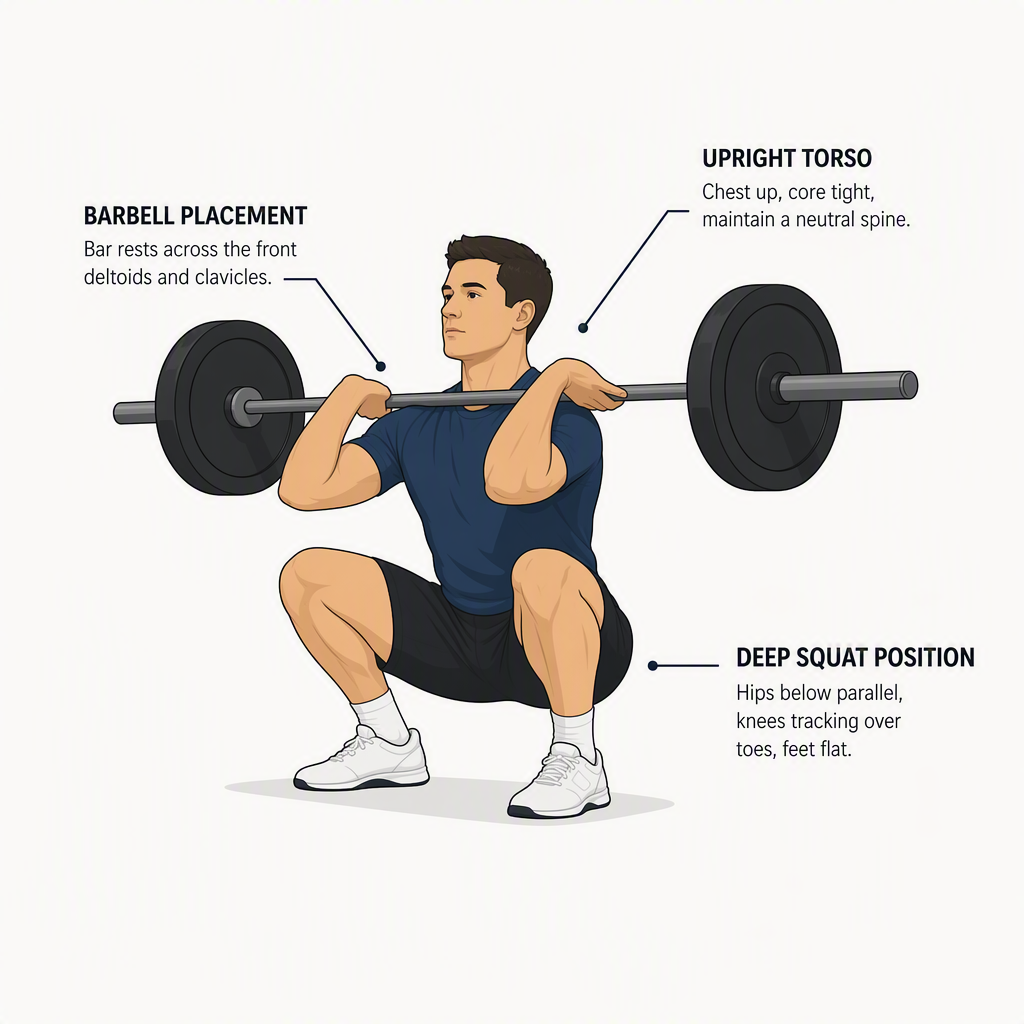
That is why squat form matters so much. To keep the bar secure, you need elbows up, a torso upright, and a stable front rack position. Good mechanics help you move through the full range of motion without letting the bar drift forward or your posture collapse.
How Front Squats Differ from Other Squat Variations
What makes the front squat stand out? The main difference is bar position. In a back squat, the bar sits on the upper back. In a front squat, it rests across the top of the chest and shoulders. That shift changes your squat technique and makes you stay more upright.
Other variations change the movement in different ways. A box squat shortens the path by giving you a target to sit to. A Zercher squat places the load lower, in the crooks of the elbows, which also changes posture and comfort.
- Front squat: bar in front rack, more upright posture
- Back squat: bar on upper back, more forward body lean
- Box squat: controlled sit to a box, useful as a progression
- Zercher squat: bar carried in bent elbows, lower front load position
Because of this setup, muscle activation in front squats tends to place more emphasis on the quads, while the back squat brings more glutes and hamstrings into the picture.
Key Elements of Proper Front Squat Form
Proper form starts before you even descend. Your start position should place the bar at mid-chest height in the rack. Step under it, set it across the shoulders, bring the elbows forward, and stand up with the bar. Then step back with your feet about shoulder-width apart and toes slightly turned out.
As you lower, keep your chest up and your elbows lifted. Your knees should track with your toes, and your weight should stay balanced toward your heels. In the bottom squat position, the hip crease should pass below the top of the knees.
- Set the bar across the shoulders, not in the hands
- Keep elbows high through the full rep
- Brace the abs before you descend
- Drive through the heels to return to standing
This front squat form helps the primary muscles work well, especially the quadriceps and glutes, while the supporting muscles keep you stable.
Primary Muscles Worked During Front Squats
The front squat is a lower body lift with a clear focus. Its main drivers are the quadriceps and glutes, which handle most of the force needed to lower and raise the body under load. These muscles are central to strong, efficient movement in sports and daily life.
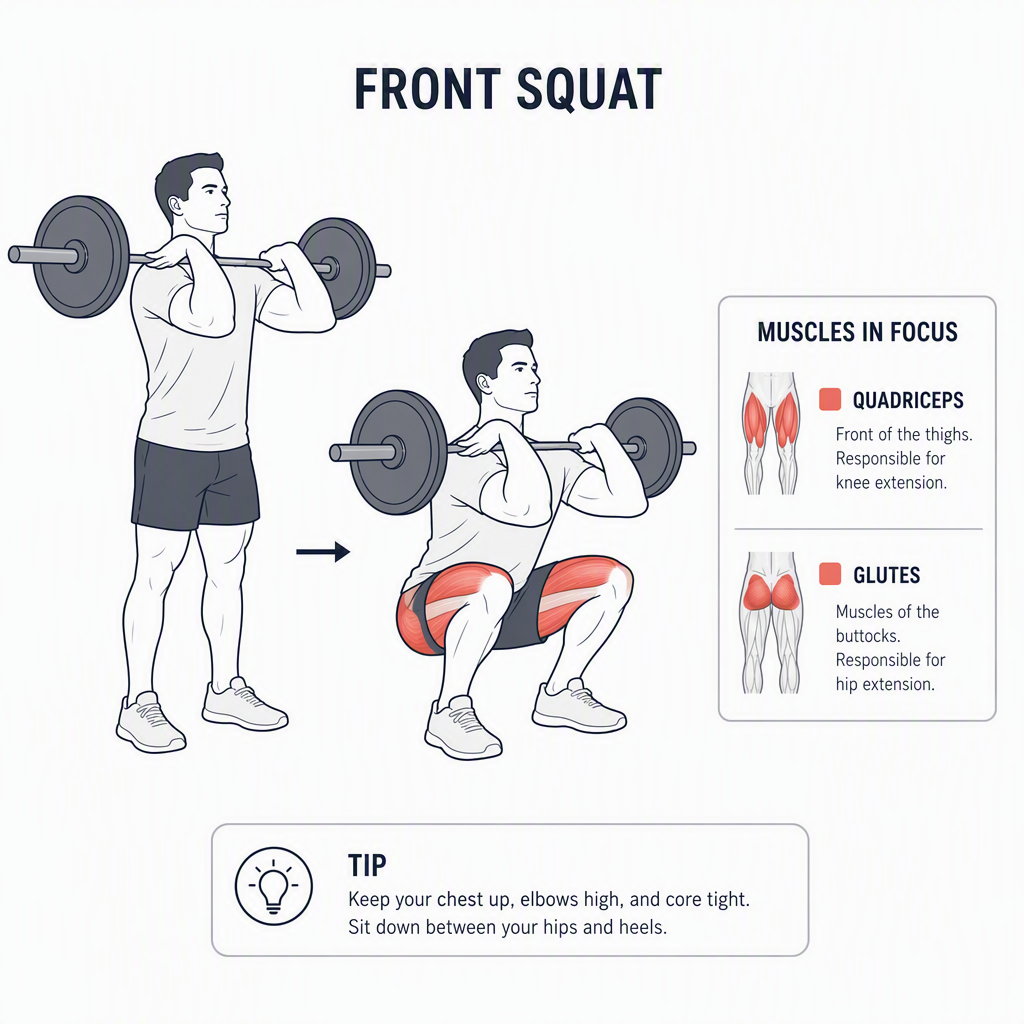
Because of the bar placement, muscle activation shifts toward the front of the legs more than in some other squat styles. Still, the front squat is not only a quad move. Your glutes also contribute strongly, especially as you stand up from the bottom.
Quadriceps Activation and Function
If your goal is quad development, the front squat is a smart choice. The upright posture required by the movement places more demand on the quadriceps, which are responsible for knee extension. As you descend and rise, these muscles help control the knees and produce force to stand back up.
This is why front squats are often seen as a great exercise for building quad strength. Since the load sits at the front of the body, you must keep the torso more vertical. That position increases the work done by the front thigh muscles compared to squat styles that allow more forward lean.
The quadriceps are still not working alone. Glutes, hamstrings, and core muscles support the lift, but the squat technique gives the quads a leading role. If you want to focus mainly on your legs, especially the front of the thighs, front squatting fits that goal well.
Glute Engagement in the Front Squat
Even though the front squat is known for quad emphasis, your glutes still do important work. They help extend the hips as you rise from the bottom and contribute to the powerful finish of each rep. That makes them a major part of the movement, not just an afterthought.
The glutes are part of the posterior chain, and they support both strength and muscle growth in the lower body. In the front squat, they are stressed alongside the quadriceps, especially when you drive upward under load with good posture and control.
So, are glutes or hamstrings more involved in front squats? Based on the movement pattern described here, the glutes play the larger role. Hamstrings help with stability, but glutes contribute more directly to hip extension and the standing phase of the lift.
(ALSO READ: Discover the Benefits of Front Squats for Strength Gains)
Secondary and Supporting Muscle Groups
The front squat does not stop at the legs. Several secondary muscles assist the movement by protecting posture, controlling the bar, and creating stability from top to bottom. This matters because strong support muscles help you keep good positions under load.
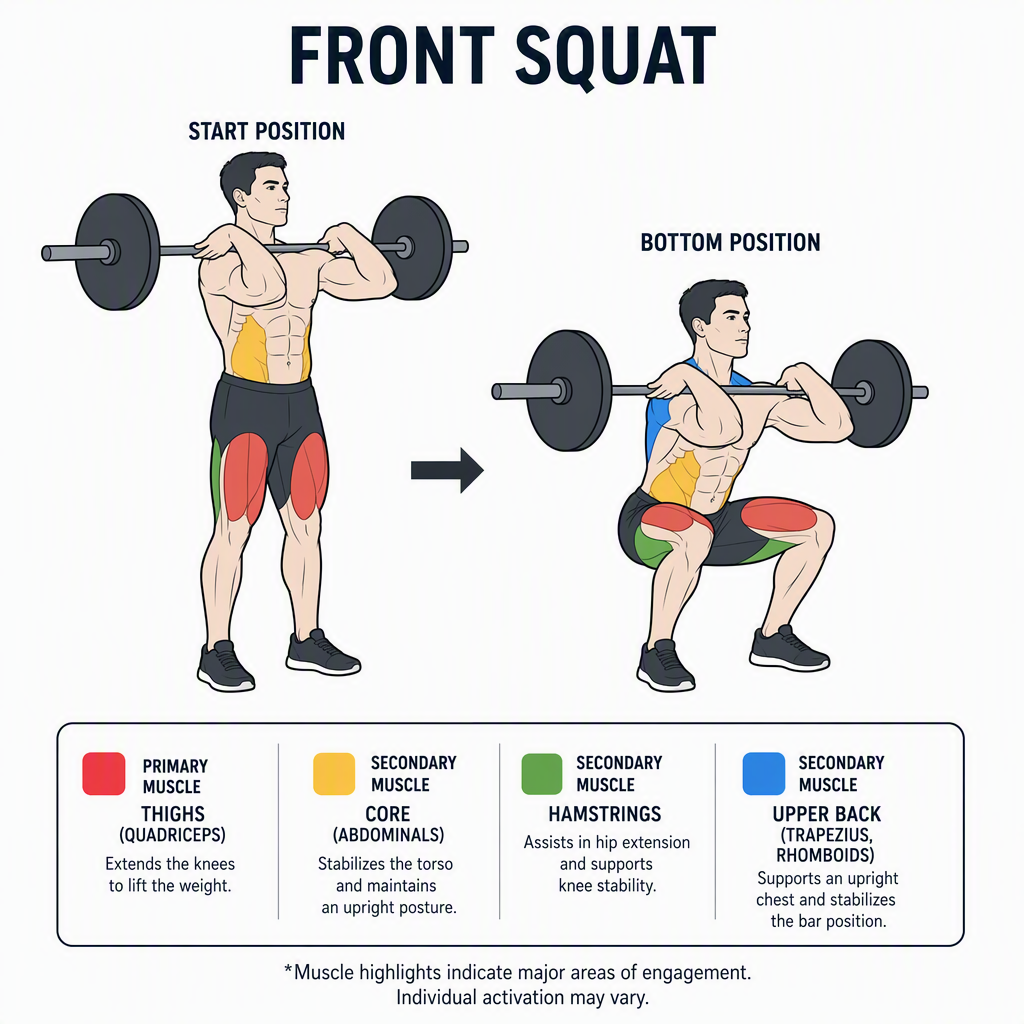
Among the most important are the hamstrings, core, and upper back. Each muscle group plays a different role, but all help the front squat feel stronger and safer. Next, let’s look at how these supporting areas contribute during the lift.
Hamstring Involvement in Front Squats
The hamstrings are active during front squats, but they are not the lead muscle group. Their main job is to support the movement and help maintain lower body control as you move into and out of the squat. They also assist with stability when you initiate the descent.
This is one reason front squat form matters. If your weight shifts into your toes, you reduce the contribution of the posterior chain, including the hamstrings. Sitting back properly and driving through the heels helps keep them involved in a useful way.
Compared with the glutes, the hamstrings are less involved in producing the main force of the lift. They support rather than dominate. So if you are asking whether glutes or hamstrings do more in a front squat, the answer is glutes, with hamstrings playing a steady supporting role.
Core Strengthening and Stability
Yes, front squats also strengthen your core muscles. In fact, they challenge the core heavily because the bar sits in front of the body and tries to pull you forward. To resist that pull, your abdominals and other trunk muscles must brace hard throughout the rep.
That core tension helps create stability and supports the upright posture the movement demands. Without it, your chest drops, your elbows fall, and the bar becomes harder to control. A stable midline also helps transfer force from the floor through the body and into the bar.
The front squat therefore trains more than the legs. It teaches your body to stay organized under load. If you want stronger abs, better posture, and more control during compound lifts, this exercise gives you a lot of return.
Upper Back and Shoulder Support
Your upper back and shoulder muscles are essential in the front squat. The bar rests on the shoulders in the front rack, so the body must work to keep the elbows high and prevent the chest from folding forward. This is especially important as the weight gets heavier.
The key supporting areas include the rhomboids, traps, and other upper back muscles, along with the shoulder region that helps hold the rack position. These muscles contract isometrically, meaning they work without large movement, to keep the bar secure and the spine set.
Which upper body muscles support the front squat movement? The clearest answers are the upper back, traps, rhomboids, and shoulder muscles. They may not drive the squat like the legs do, but they make proper front rack position and safe bar control possible.
Comparing Muscle Activation: Front Squat vs Back Squat
When you compare the front squat with the back squat, the biggest difference comes from where the barbell sits. That single change affects posture, loading, and how hard specific muscles must work during each barbell squat. Both lifts train the legs and trunk, but the emphasis is not identical.
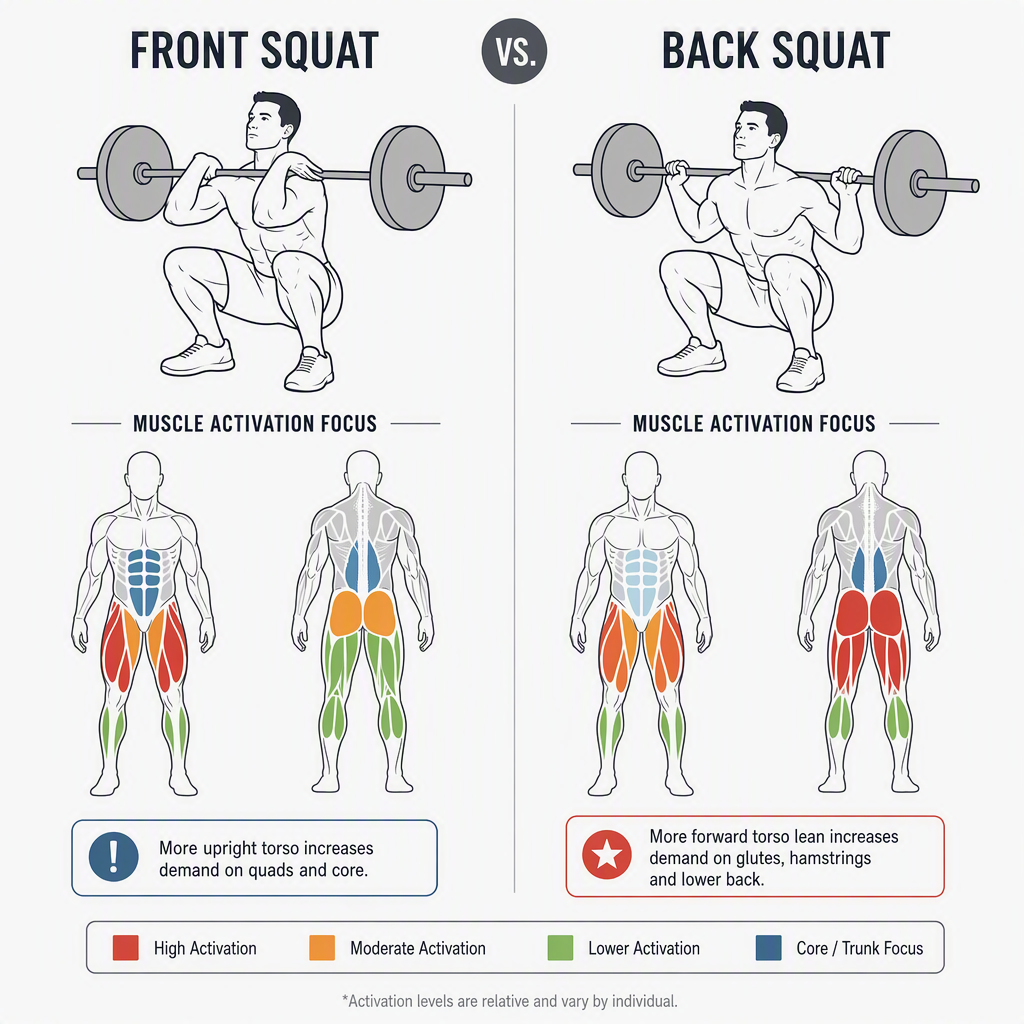
The front squat keeps the load more forward and reduces stress on the lower back, while the back squat allows more total weight and greater posterior chain involvement. The next sections break down those muscle activation differences more clearly.
Differences in Quadriceps and Glute Activation
Here is a simple way to compare how the front squat and back squat tend to challenge the quadriceps and glutes. Both lifts train both areas, but the emphasis shifts because of posture and bar placement.
|
Muscle Area |
Front Squat |
Back Squat |
|---|---|---|
|
Quadriceps |
Higher emphasis due to upright torso and stronger knee extension demand |
|
|
Glutes |
Strong involvement, especially on the way up, but not the main focus |
|
|
Overall posture effect |
Load in front promotes more quad-dominant mechanics |
|
|
Posterior chain demand |
Present, though less emphasized than in the back squat |
|
In the back squat, the bar sits on the upper back, which allows more forward lean and generally brings the glutes in more. So how is the muscle activation in front squats different from back squats? Front squats push more work toward the quads, while back squats spread more emphasis into the glutes and hamstrings.
Impact on Spinal Alignment and Core Muscles
One major benefit of the front squat is how it affects spinal alignment. Because the bar is in front, you must stay tall to keep it balanced. This encourages an upright torso and can reduce compressive stress on the lower back compared with a heavier back squat.
That does not mean the back squat is bad. It simply loads the body differently. In both lifts, the erector spinae and core muscles work to stabilize the trunk. In the front squat, though, the challenge of resisting a forward pull makes the abdominals and upper torso work especially hard.
So yes, front squats strengthen your core muscles. They train the trunk to hold position while the legs move through the range of motion. If you want a squat that supports posture and trunk control, the front squat offers a clear advantage.
Benefits of Building Leg Strength with Front Squats
The front squat builds leg strength in a very practical way. It trains the quadriceps, glutes, and supporting muscles together, helping you generate force while staying balanced and controlled. That makes it a great exercise for both gym performance and everyday movement.
It also supports muscle mass and athletic ability without needing the same loading style as other squat variations. Because the movement blends strength, posture, and coordination, it fits well into many training plans. The next two sections show how those benefits carry over.
Improving Overall Leg Muscle Balance
Can front squats help improve overall leg muscle balance? Yes, they can. Since the movement trains the quads strongly while still involving the glutes and hamstrings, it helps develop the lower body in a more coordinated way. That matters if one area tends to dominate your squat pattern.
The upright position also makes you control the movement carefully, which can expose weak links in your squat. If you cannot keep your chest up or knees tracking well, you quickly notice it. That feedback helps you train the whole muscle group system more evenly.
Here too, a dumbbell front squat proves to be a valuable choice, offering numerous similar advantages but without the extensive mobility requirements of a barbell front squat; this difference often allows individuals to focus on establishing proper movement patterns prior to increasing weights.
Athletic Performance Gains and Functional Strength
Front squats support athletic performance because they build force through the legs while teaching you to stay stable and upright. Running, jumping, changing direction, and other explosive skills rely on strong hip and leg action. This lift trains that in a direct way.
It also develops functional strength. You are not just moving weight. You are learning to brace, control posture, and produce power through a full range of motion. Good squat technique carries over to many other training tasks and real-world movements that need balance and leg drive.
Why are front squats considered good for building quad strength? The answer comes back to mechanics. The front-loaded position makes the quadriceps work harder to extend the knees while you keep the torso tall. That combination is why many athletes value the movement.
(ALSO READ: Top 6 Front Squat Alternatives for Building Leg Strength)
Conclusion
In conclusion, understanding the muscles targeted during front squats is crucial for maximizing your workout efficiency and achieving your fitness goals. By focusing on the primary and secondary muscle groups involved, including the quadriceps, glutes, hamstrings, and core, you can enhance overall leg strength and improve your athletic performance. Remember, the front squat not only builds muscle but also promotes proper spinal alignment and core stability, making it an essential exercise in any training regimen. If you're ready to take your strength training to the next level, consider booking a free consultation with a fitness expert to tailor a program that works best for you.
Front Squat vs. Back Squat? What does r/fitness think?
The r/fitness community often debates the differences between front squats and back squats. Front squats primarily target the quadriceps, core, and upper back for stability, while back squats engage the glutes and hamstrings more. Each variation has unique benefits depending on your fitness goals and preferences.