

Key Highlights
- Front squat alternatives can help you keep building leg strength when the front rack position feels awkward or painful.
- Many squat variations create similar muscle activation across the lower body, including the quads, glutes, hamstrings, calves, and core.
- Goblet squats and Bulgarian split squats are strong options if you want simple movements with proper form.
- Zercher squats and safety bar squats work well in strength training when you still want an upright torso.
- Hack squats and dumbbell step-ups give you useful ways to train the same muscle groups with different equipment.
Introduction
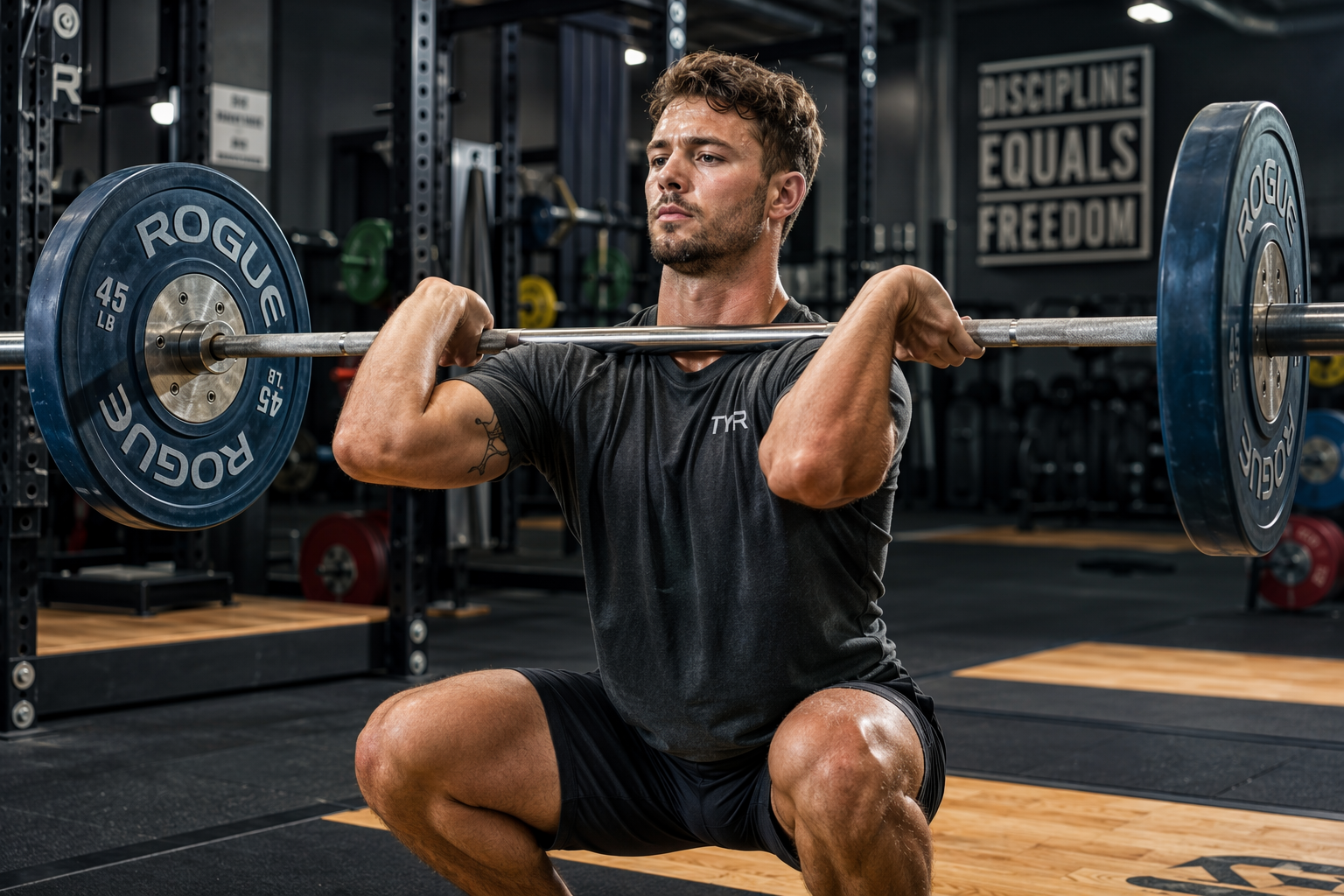
The front squat is a popular lift for lower body strength training because it challenges your quads, core, upper back, and more. Still, it is not the right fit for every body. If the front rack position bothers your wrists, shoulder mobility, or upper back, you do not need to force it. Several effective alternatives offer similar muscle activation and help you keep progressing. The key is finding a movement you can perform well, train often, and load safely.
(ALSO READ: Front Squat Exercise: Key Form Tips for Success)
Top 6 Front Squat Alternatives for Building Leg Strength
Not every lifter can front squat comfortably, and that is completely fine. Many front squat alternatives train the same lower body muscle groups while keeping muscle activation high. You can still target the quads, glutes, hamstrings, calves, and core without using the standard front rack position.
Some squat variations also make it easier to keep an upright torso, which helps mimic the front squat feel. Others let you use heavier weights, minimal equipment, or a more stable setup. Here are six practical options worth adding to your program.
1. Goblet Squats
Goblet squats are one of the best front squat alternatives, especially if you are still learning proper form. They are simple, beginner-friendly, and create strong muscle activation through the quads and core. You hold a kettlebell or dumbbell vertically at the front of your chest, which encourages a more upright torso, much like a front squat.
To set up, take your usual starting position with feet around shoulder-width or slightly wider. Brace your core, keep your elbows close, and stay tall as you lower down. Then drive through the floor to stand back up with control.
- Hold the weight close to the front of your chest to help balance and posture.
- Keep your chest up and elbows near your body throughout the rep.
- Use lighter weights first, then progress before trying heavier weights.
(TO KNOW MORE: Front Squat vs Goblet Squat: Similarities and Differences)
2. Zercher Squats
Zercher squats are a strong barbell choice if you want an exercise that works many of the same muscle groups as the front squat. The load sits in the crook of your elbows, which changes the upper body demand and increases muscle activation in the core, upper back, and even the biceps.
For setup, place the bar on a rack just under elbow height. Start with the empty bar so you can learn the use of the barbell in this position. Scoop it into your elbows, stand tall, step back, and settle into your standard squat position before each rep.
As you descend, keep your elbows close and your chest proud. This helps you stay braced and upright. Zercher squats also let you handle more load than goblet squats, making them a smart strength training option once technique feels solid.
(TO KNOW MORE: Zercher Squat vs Front Squat: Strength Benefits Explored)
3. Bulgarian Split Squats
The Bulgarian split squat is a useful option when you want to train your lower body one side at a time. It challenges balance, control, and several muscle groups, with a strong focus on the quads and gluteus maximus. If front squats do not feel right, this movement can still keep your leg day productive.
Set your back foot on a bench or other stable surface and plant your front leg firmly. From there, lower under control while keeping an upright torso. Your front leg does most of the work, and that makes this a strong choice for building strength with less total load.
- Keep your front foot planted and stable through every rep.
- Let the back foot stay relaxed while the front leg drives the movement.
- Start with bodyweight or lighter weights if you are new to split squat work.
4. Safety Bar Squats
Safety bar squats are a smart pick if the front rack position is the main issue. For many lifters, limited shoulder mobility or wrist discomfort makes front squats hard to set up, even when the lower body is ready for the work. A safety bar changes that without removing the squat pattern.
Because of the bar design, you can keep your hands in a more comfortable position and still hold an upright posture. That makes safety bar squats easier to tolerate than a front squat while still giving solid muscle activation through the quads, glutes, and core.
They can also feel friendlier than a back squat for some people, since the torso stays more vertical. If you want a barbell alternative that reduces stress from awkward arm positioning, this variation deserves a place in your training.
5. Hack Squats
Hack squats are one of the best machine exercises to replace the front squat when you want a stable setup. If balance, mobility, or bar position keeps getting in the way, this machine lets you focus more directly on your lower body work. The quads usually take on a large share of the effort.
The fixed path can make it easier to train hard while maintaining clean movement. That controlled setup often helps you push for stronger muscle activation without worrying as much about front rack comfort or upper body limits.
Another advantage is loading potential. Many people can use heavier weights on hack squats than on goblet squats because grip and holding position are no longer the limiting factors. If your goal is a quad-focused replacement, this is a practical gym-based choice.
6. Dumbbell Step-Ups
Dumbbell step-ups are a simple way to train the lower body with minimal equipment. You only need a pair of dumbbells and a stable surface, which makes them useful at home or in a basic gym. They also carry over well to everyday life because stepping, driving, and balancing are common movement patterns.
Begin by positioning one foot on the bench or box, then push through that leg to stand up. Rather than letting yourself drop, focus on lowering yourself with control. Select a box height that allows you to maintain proper form and smoothly perform the targeted number of repetitions.
- Use a stable surface that does not wobble or slide.
- Start with bodyweight if dumbbell step-ups feel new.
- Focus on control on both the step-up and the return down.
How to Choose the Right Front Squat Alternative for Your Goals
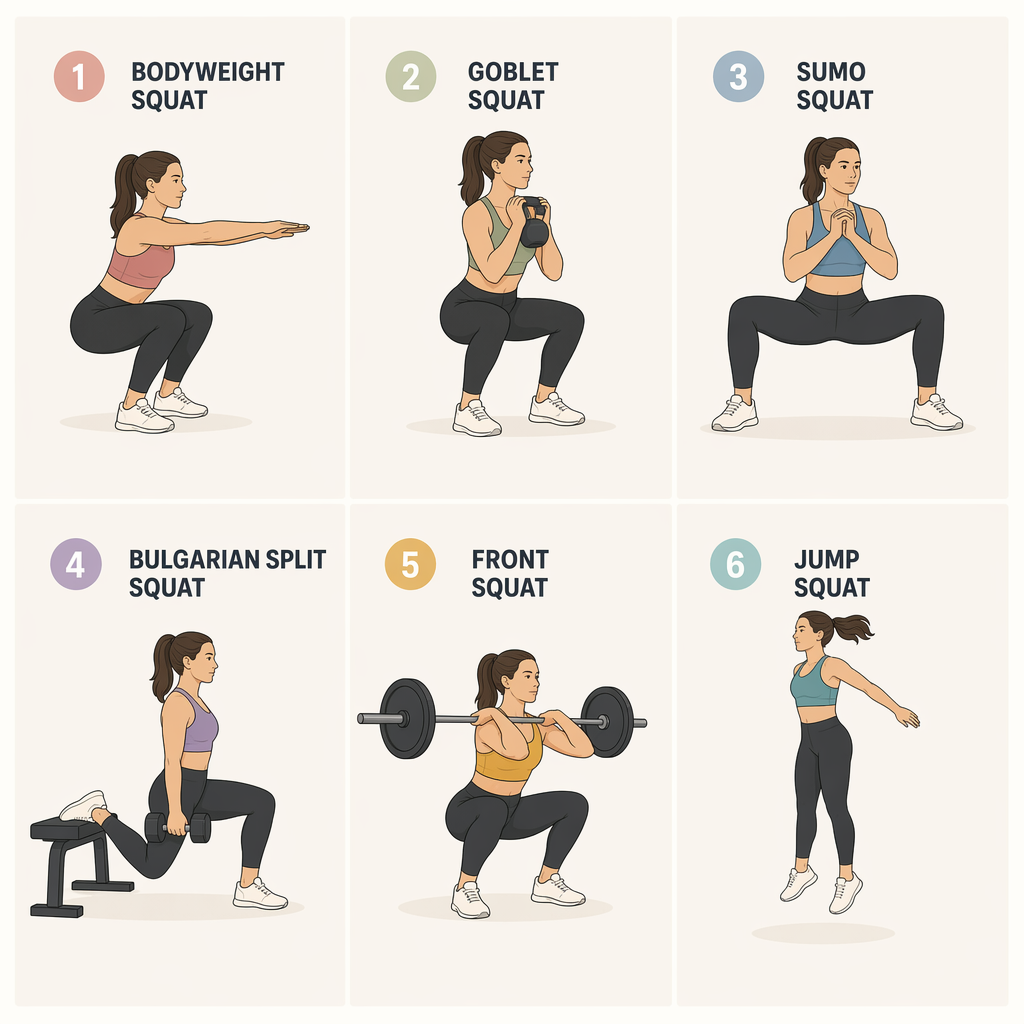 Selecting the ideal substitute hinges on identifying what's preventing you from doing front squats—whether that's limited mobility, lack of equipment, confidence issues, or discomfort. Once you determine the underlying reason, picking among different squat variations is significantly simpler, as the most suitable choice is the one that enables you to consistently train your lower body with correct technique and sustained effort.
You should also match the exercise to your new goals. Some options favor muscle activation and control, while others allow more load or a simpler setup. The next sections break that decision down in a practical way.
Considering Equipment Availability (Home vs. Gym Options)
Your available gear matters more than most people think. On home vs gym lower body days, the best exercise is often the one you can set up quickly and perform well. Even with minimal equipment, you can still achieve quality muscle activation without skipping squat work.
At home, goblet squats and dumbbell step-ups are usually the easiest to use. In a gym, hack squats, safety bar squats, and Zercher squats open up more loading options. Bulgarian split squats fit both settings if you have a bench or another stable surface.
|
Option |
Best Setting |
Equipment Need |
Main Benefit |
|---|---|---|---|
|
Goblet Squats |
Home or gym |
One kettlebell or dumbbell |
Simple setup and easy learning |
|
Dumbbell Step-Ups |
Home or gym |
Dumbbells and box or bench |
Functional single-leg work |
|
Bulgarian Split Squats |
Home or gym |
Bench plus bodyweight or dumbbells |
Strong quad and glute focus |
|
Zercher Squats |
Gym |
Rack and barbell |
More loading potential |
|
Safety Bar Squats |
Gym |
Safety squat bar and rack |
Easier on shoulders and wrists |
|
Hack Squats |
Gym |
Hack squat machine |
Stable, quad-focused training |
Adapting for Wrist, Shoulder, or Mobility Issues
If your wrist or shoulder mobility makes the front squat uncomfortable, do not force the position. Pain or strain in the setup usually means you will avoid the lift or lose form. A good alternative should let you train hard without fighting the rack position every rep.
Safety bar squats are especially helpful here because they remove much of the demand from the wrists and shoulders. Goblet squats can also work well since the load is easier to hold. Both options still support an upright posture and solid muscle activation through the quads and core.
Keep your chest tall, brace well, and maintain a neutral spine throughout the movement. That can help reduce unnecessary stress on the lower back while preserving the front squat feel. Comfort matters because it supports better training consistency over time.
Selecting Alternatives Based on Muscle Emphasis (Quads, Core, Glutes)
Different front squat alternatives shift emphasis slightly, even though many train similar muscle groups. If your main goal is to keep front-squat-like muscle activation, focus on exercises that support a tall torso and strong bracing. That usually keeps the quads and core more involved.
Goblet squats and Zercher squats are strong picks for the quads and core. Bulgarian split squats bring the glutes into the picture in a big way, especially through the front leg. Hack squats are excellent if you want a more direct quad challenge with machine support during strength training.
- Choose goblet or Zercher squats for a front-loaded feel.
- Pick Bulgarian split squats if you want more single-leg glute work.
- Use hack squats when quad focus and controlled loading matter most.
(ALSO READ: Discover the Benefits of Front Squats for Strength Gains)
Conclusion
In summary, exploring alternatives to front squats can significantly enhance your leg strength while catering to your personal fitness needs. From goblet squats to Bulgarian split squats, each option presents unique benefits that can help you target different muscle groups effectively. As you consider these alternatives, remember to factor in your equipment availability and any specific mobility requirements you might have. Tailoring your workout routine with the right exercises can lead to better results and a more enjoyable training experience. If you're looking for personalized guidance to optimize your leg workouts, don’t hesitate to reach out for a free consultation!
Frequently Asked Questions
Which front squat alternative is best for beginners?
For beginners, goblet squats are usually the best place to start. They are simple to learn, require minimal equipment, and make proper form easier to maintain. You still get strong muscle activation through the lower body and core, which makes them a reliable first step away from front squats.
REFERENCE:
https://www.trainheroic.com/blog/how-to-zercher-squat-one-exercise-to-rule-them-all/
https://pubmed.ncbi.nlm.nih.gov/22237139/
https://pubmed.ncbi.nlm.nih.gov/33626500
https://pubmed.ncbi.nlm.nih.gov/29282529/
https://legionathletics.com/front-squat/
https://legionathletics.com/back-squat/