

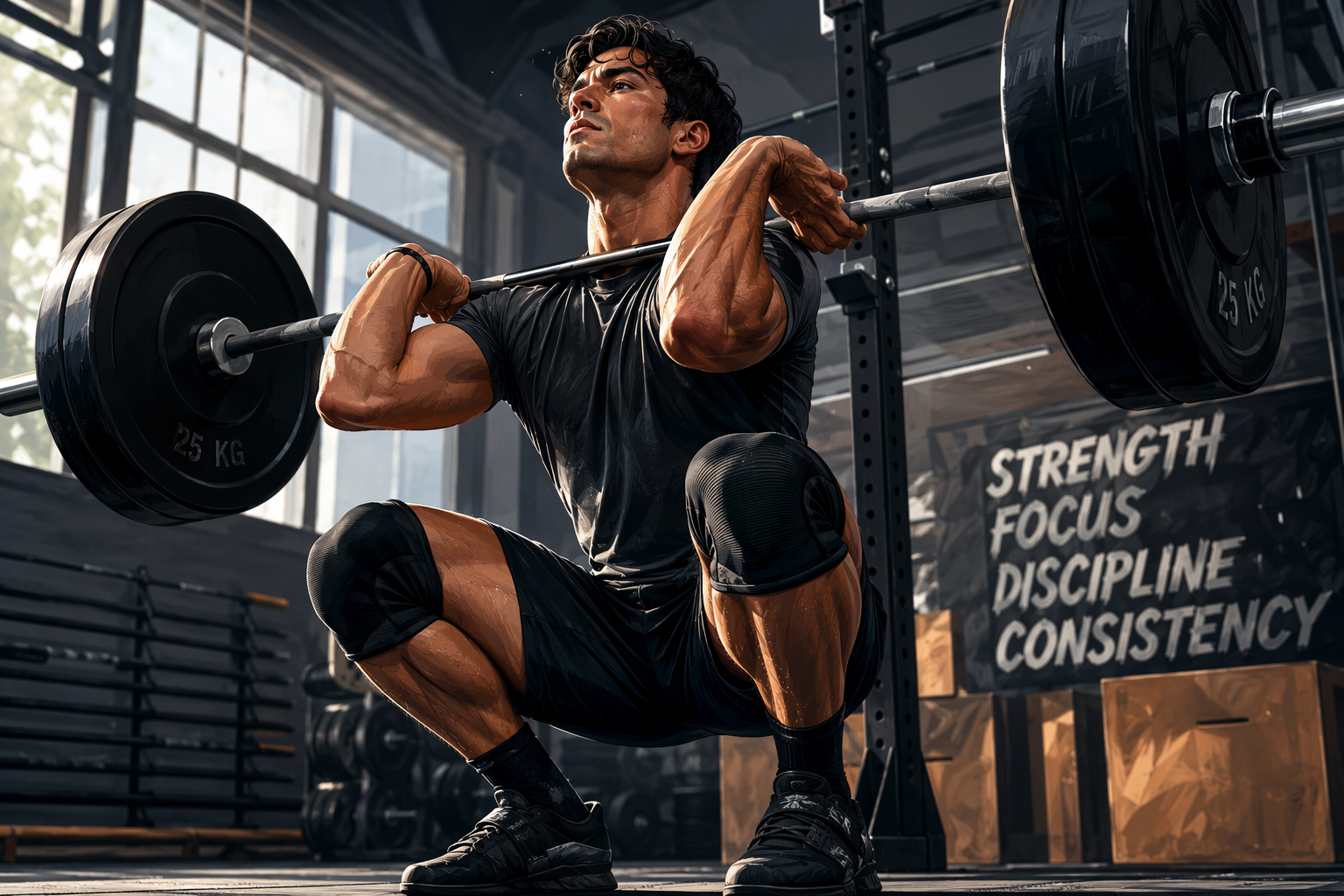
Key Highlights
- The front squat emphasizes range, making it a strong choice for lower body training and full-body muscle building.
- It requires a more upright torso position and steady control compared to the back squat.
- Several variations cater to different fitness levels:
- Goblet squat for beginners
- Barbell front squat for intermediate to advanced individuals
- Single-arm kettlebell front squats for a challenging twist
- These variations help athletes progress and find the right fit for their ability and goals.
What is a barbell front squat?
A barbell front squat is a strength training exercise that targets the quadriceps, core, and upper body. Unlike traditional squats, the barbell is held across the front of the shoulders, promoting proper posture and balance. This variation enhances overall stability and engages muscles more effectively during the movement.
- It challenges your core strength, upper back, and legs through a full range of motion.
- Proper front rack position, elbow height, and balance matter more than load at first.
- It fits many goals, from light loads and high reps to heavy work for strength.
- Beginners can learn it safely by starting light and focusing on form.
Introduction
The front squat is one of the most useful lifts you can add to your lower body training. It builds strength, supports athletic movement, and teaches you how to stay controlled under load. It also requires great flexibility and is an essential prerequisite for the clean, since the lift uses the same receiving position. If you want stronger legs, a more stable trunk, and better movement quality, the front squat deserves attention. The key is learning the setup and practicing each rep with intent.
Understanding the Front Squat Exercise
At its core, the front squat is a barbell squat with the weight supported across the front of the shoulders, which can include metal plates. The bar sits in the front rack position, while you move from standing to a deep squat and then return to full extension.
What makes solid front squat technique stand out is the upright torso position. You keep the elbows forward and high so the bar stays secure on the shoulders. This setup helps you move well, stay balanced, and prepare for the details that make the lift effective.
What Makes the Front Squat Unique Compared to Other Squats
The biggest difference between the front squat and the back squat is where the bar sits. In a front squat, the load is on the front of the body across the shoulders. In a back squat, the bar rests behind the neck on the traps. That shift changes how you hold your trunk and how the lift feels.
Because the bar is in front, you need a more upright torso position to keep it from rolling forward. A good squat position means elbows pointing forward, chest up, knees tracking with the toes, and the knees remaining in a safe, orthopedically compromised position as the bar rests on the shoulders instead of being carried by the hands. This is the correct technique for performing the front squat exercise.
You also squat to proper depth, with the crease of the hips below the top of the knees, then drive through the heels to stand while lifting the heaviest loads. That makes the movement strict, controlled, and very useful for athletic training.
Who Should Incorporate Front Squats
The front squat is a great option for many lifters. It works well for athletes, general gym-goers, and people who want stronger legs, better control, and more powerful hip extension. It also supports anyone learning Olympic lifting, since it is tied to the clean receiving position used by elite weightlifters.
Beginners can safely learn the lift if they start light and focus on position first. A PVC pipe or empty bar helps you practice without worrying about load. Keep the bar on the shoulders, lift the elbows, and move through a controlled descent before trying heavier sets.
Some people need modifications. If you have an injured wrist or mobility limits, a crossed-arm setup can help enhance your leg drive. A personal trainer can also guide stance, grip, and depth so you build skill without forcing poor positions.
Main Benefits of Adding Front Squats to Your Routine
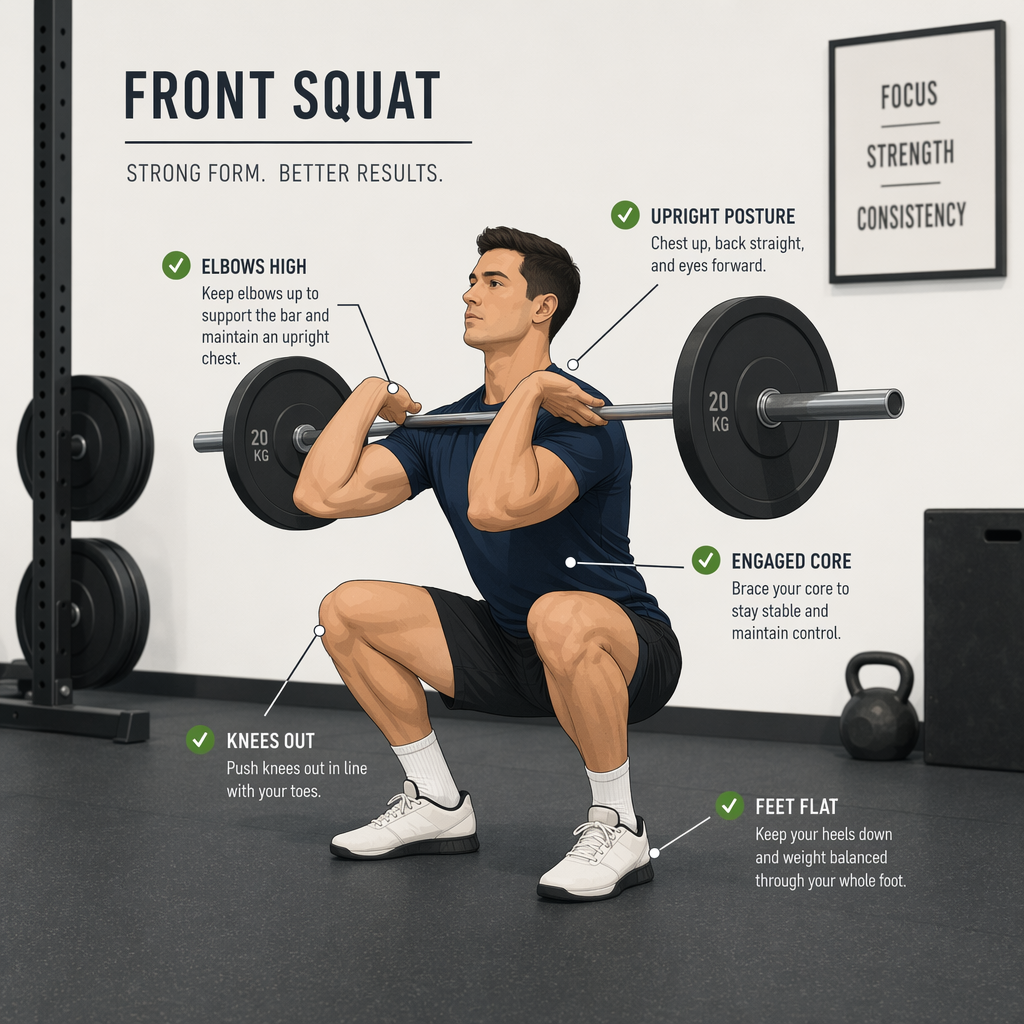
Adding the front squat to your routine is a great way to build strength, power, flexibility, and great athleticism in one movement. It trains the legs, trunk, and upper back while also improving the controlled hip extension that supports running, jumping, and changing direction.
It is also useful for muscle mass and muscle growth. Since the lift can be trained with heavy weight, light weight, low reps, or high reps, it fits many goals. Even if you have mobility issues, simple changes in grip or equipment can keep the movement productive.
(TO KNOW MORE: Discover the Benefits of Front Squats for Strength Gains)
Muscle Building and Strength Gains
If your goal is muscle mass, the front squat is a great tool. It trains a large amount of muscle at once, especially in the quads, glutes, hamstrings, core, and upper back. That broad demand gives the body a strong stimulus for building muscle and improving total-body strength.
It is also flexible. You can use a heavy load and low reps to push strength, or use lighter weight with high reps to build work capacity and reinforce movement quality. That makes it easy to include in different phases of training without changing the exercise itself.
So, what are the main benefits of adding front squats to your workout routine? You get stronger legs, more muscle growth, better athletic output, and a lift that carries over to other training. Few exercises cover that much ground so efficiently.
Improved Posture and Core Engagement
One clear advantage of the front squat is how much it asks from your posture. Because the bar sits forward, you must stay tall through the trunk and keep the elbows up. That teaches better alignment and helps you avoid folding over during the rep.
Just as important, the lift challenges core strength and may place athletes at a greater risk of injury. Good core bracing keeps the trunk stable so force can travel from the floor into the bar. When your midsection stays firm, your lumbar position is easier to maintain, and the movement feels more controlled from start to finish.
Want better balance and stability during front squats? Take a deep belly breath before the rep, brace hard, and keep your weight from drifting to the toes. Staying over the mid-foot, with the chest up and elbows forward, gives you a more solid base.
Key Muscles Worked During Front Squats
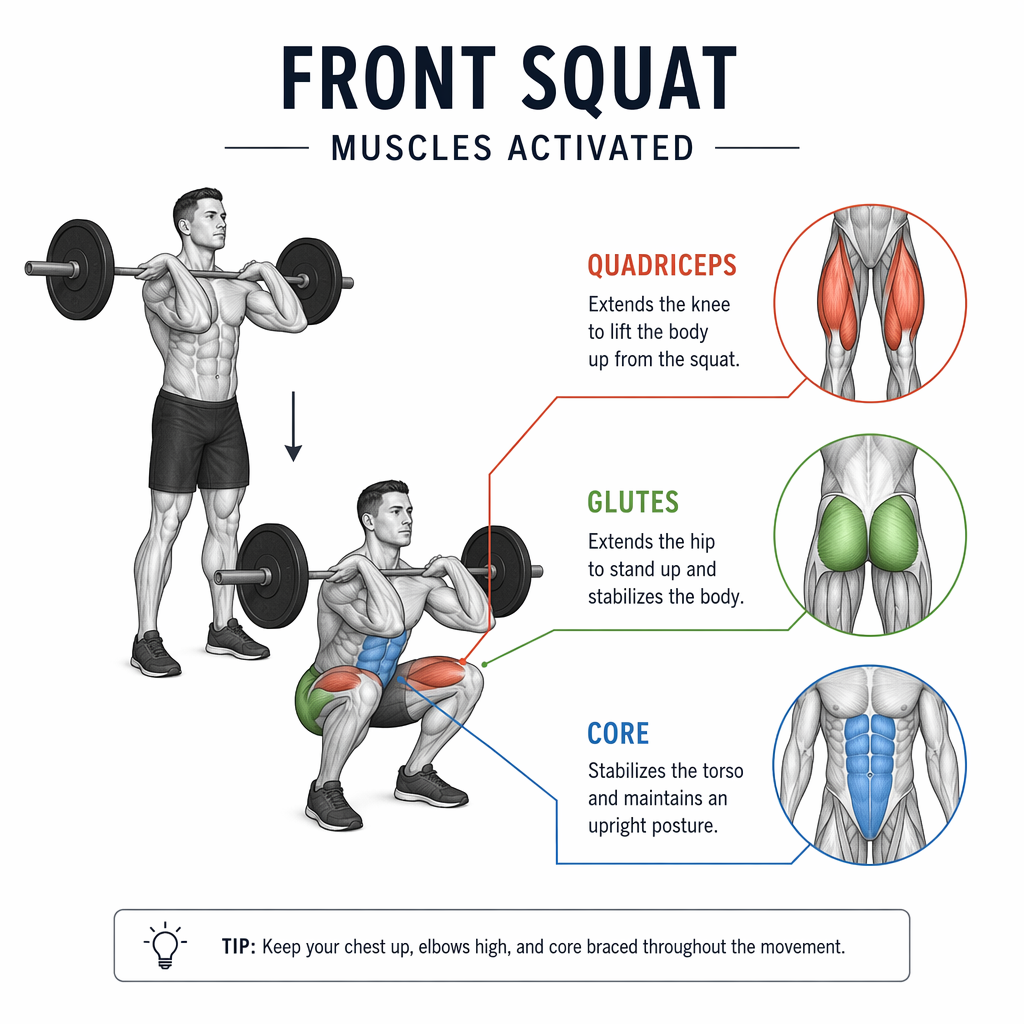
The front squat trains nearly every major muscle group, but the biggest demand falls on the muscles of the legs, the muscles of the core, and the upper back. As you lower and rise, the quads, glutes, hamstrings, and hip flexors help control the movement and produce force.
At the same time, the upper back and lower back work hard to keep the spine stable. The core locks everything in place so the bar stays supported on the shoulders. That full-body effort is why this lift is so effective.
Quads, Glutes, and Hamstrings
The front squat primarily works the quads, glutes, and hamstrings. These muscles handle the lowering phase, support you at the bottom, and drive you back to standing. Because the lift uses a deep squat position, the legs are challenged through a full working range.
The quads often get the most attention because they work hard to extend the knees and bring you out of the bottom. The glutes help with hip extension, while the hamstrings assist with control and power as the hips and knees move together.
So if you are asking what muscles front squats primarily work, the answer starts with the legs. The movement gives the quads, glutes, and hamstrings a strong stimulus for muscle growth, especially when your depth, control, and bar position stay consistent.
Upper Back and Core Activation
The upper back plays a bigger role in front squats than many people expect. Rhomboids, traps, and spinal erectors work isometrically to stop the chest from collapsing and to help keep the elbows lifted. Without that effort, the bar tends to roll forward.
Equally crucial is maintaining core engagement, as your abdominal muscles and other trunk muscles are vital for stabilizing your center; this ensures power generated by your legs transfers efficiently to the bar rather than dissipating through a relaxed midsection. Such muscular support is essential for keeping your torso upright throughout the movement.
How do you position the barbell properly during a front squat? Set it across the shoulders at the front rack, close to the throat and above the clavicles, with elbows driven forward. The bar should rest on the body, not be held up by the hands.
Step-by-Step Guide to Mastering Front Squat Technique
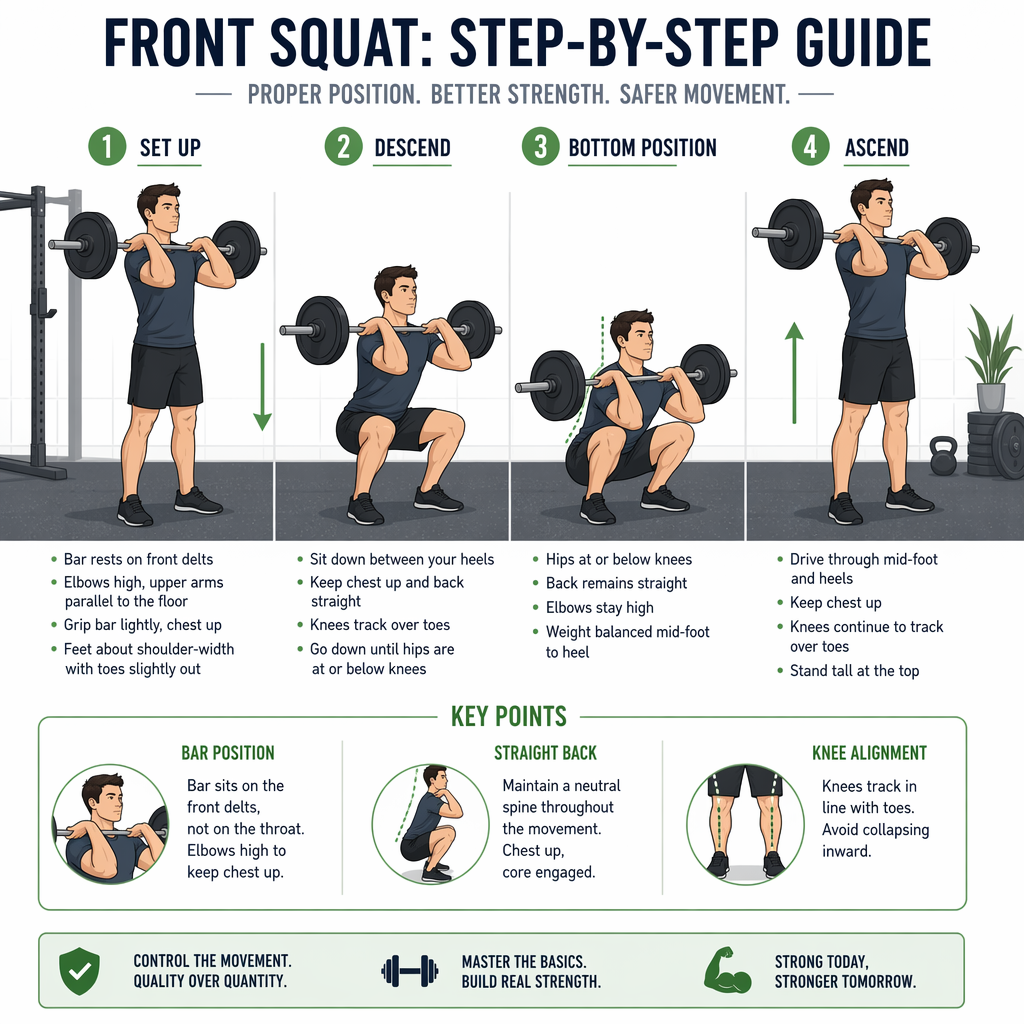
Start by setting the bar in the rack at a height that lets you step under it easily. Choose your hand width, bring the elbows forward, and place the bar across the shoulders in the front rack position. Stand up with the bar, take one step back, and set your feet evenly, usually around shoulder-width with the toes turned slightly out. Ensure that your stance reflects proper shoulder width to maximize stability. Take a deep breath and brace your abs before moving.
During the execution of a front squat, sit the hips back slightly and squat down under control. Keep the elbows rising, the chest tall, and the knees tracking with the toes. Reach depth when the crease of the hips passes below the knees, then drive through the heels to stand. That is front squat technique in its simplest and most useful form.
Correct Barbell Position and Grip Styles
A strong setup starts with correct barbell placement. The barbell should sit across the front of the shoulders, touching the torso, while your elbows point forward and stay high. Your hands help guide the bar, but they should not carry most of the weight.
Grip style can vary based on mobility and training goals. Some lifters use a full grip, while others use a loose grip with fingertips on the bar. If your goal is heavy front squats and you lack excellent wrist flexibility, a loose grip can be useful. If you are training for the clean, a fuller grip may be worth building over time.
- Set your hands slightly wider than shoulder-width if needed for comfort.
- Keep the bar resting on the shoulders, not hanging in the hands.
- Use a full grip if your mobility allows it without losing position.
- Choose a loose grip if flexible wrists are a limit and the elbows still stay high.
(ALSO READ: Are Front Squats Better Than Back Squats? The Truth Revealed)
Descent, Depth, and Driving Back Up
Once you are set, begin the descent by sending the hips back slightly and sitting down with control while maintaining your lumbar curve. Your squat stance should let you move smoothly, usually around shoulder-width, though some lifters do better with small changes. Keep the knees moving in the same direction as the toes as you lower.
Depth matters. You want the crease of the hips to finish below the top of the knees so you train the full range of motion. If achieving this requires greater hip flexibility, and that is hard, lighten the load, adjust stance, or work on mobility instead of forcing a poor position.
Common mistakes include shifting onto the toes, letting the knees cave in, stopping high, or dropping the elbows. Each one disrupts the line of action and makes the lift less efficient. On the way up, drive through the heels and stay tall throughout the entire rep.
Tips to Improve Balance, Stability, and Form
Better front squats come from better control, not just more effort. For stronger balance, keep the bar over your base of support and avoid drifting forward onto the balls of the feet. Your elbows should stay up, your chest should stay proud, and your knees should continue tracking over the toes. These small details protect your form and help the rep feel smoother under load.
If stability breaks down, look at the simple fixes first. Warm-ups with air squats, lunges, ring rows, shoulder circles, push-ups, or a paused goblet squat are all good choices. Regular mobility work for the hips, hamstrings, shoulders, and upper back can also improve your ability to hold position and move through depth.
Breath Control and Core Bracing
Breath control is one of the easiest ways to improve your front squat right away. Before you descend, take a deep belly breath and lock the trunk down. That pressure gives your body a firmer base to squat from and helps you stay connected to the floor.
Core bracing works with that breath to create midline stability. When the midsection is tight, the spine stays supported and force moves more cleanly from the legs into the bar. This is especially important as the weight gets heavier or fatigue starts to build.
Looking for a useful way to boost balance and stability? Take a moment to reset your breathing before each repetition, tighten your core, and resist the urge to hurry. By sticking to this deliberate routine, you reinforce your nervous system and promote steadiness, making it easier to maintain a solid position throughout your set.
Mobility Drills and Accessory Exercises
If your front squat feels blocked by position rather than strength, mobility drills can help. The lift demands current flexibility at the ankles, knees, hips, upper back, and shoulder girdle. Pausing in the bottom with the elbows high is one simple way to build comfort where you need it.
Accessory exercises also make a difference. They let you improve form without always loading a heavy bar. If mobility issues or weak positions are limiting progress, small practice changes often lead to better reps and more weight later.
- Use a goblet squat with a pause to open the bottom position.
- Try tempo front squats with a PVC pipe or empty bar.
- Stretch the lats and pecs if the front rack feels restricted.
- Add general movements like lunges and shoulder circles before lifting.
(ALSO READ: Top 6 Front Squat Alternatives for Building Leg Strength)
Comparing Front Squats vs. Back Squats
The front squat and back squat are both strong lower-body lifts, but they feel different because of bar position. The front squat places the bar across the shoulders in front, which encourages a more upright torso. The back squat places the load behind the neck, which often allows a heavier barbell. Muscle recruitment is similar overall, though front squats place slightly more emphasis on the quads because of the bar path and body angle.
|
Feature |
Front Squat |
Back Squat |
|---|---|---|
|
Bar position |
Across the front of the shoulders in the front rack |
|
|
Torso angle |
More upright torso position |
|
|
Typical loading |
Often less than a back squat heavy barbell |
|
|
Muscle focus |
Similar total muscle recruitment, with slightly more quad emphasis |
|
|
Stance options |
Can use a narrower stance or wider stance based on comfort and depth |
|
Differences in Muscle Recruitment and Athletic Carryover
When people compare these lifts, they often ask about muscle recruitment. Both train the legs, trunk, and upper back very well. The front squat shifts the load forward, which tends to increase the demand on posture and often places slightly more focus on the quads, while still challenging the glutes and hamstrings.
That difference also affects athletic carryover. Front squats train controlled hip extension, leg strength, and trunk stiffness in a way that supports jumping, sprinting, and changing direction. They are also directly useful for Olympic lifting because the receiving position matches the clean.
The back squat may let you use a heavier barbell, but that does not make the front squat less valuable. Your squat stance, mobility, and goals should guide the choice. Both are productive. They just stress the body in slightly different ways.
When to Choose One Over the Other
Choose front squats when you want to improve front rack skill, train for the clean, build strong quads, or reinforce a tall torso under load. They are also a good choice when you want a demanding lift that supports many athletic tasks and different types of workouts.
Choose back squats when your goal is to handle the heaviest possible weight in a squat pattern. Since the back squat often allows a bigger heavy load, it can be useful for broad lower-body strength development and high power output in training blocks centered on strength.
For many lifters, the answer is not either-or. Both are good choices depending on the week, phase, or target. Front squats fit skill work and athletic transfer well, while back squats shine when you want more total loading for general movements and strength.
(TO KNOW MORE: Master the Back Barbell Squat: A Beginner's Guide)
Conclusion
In conclusion, mastering the front squat exercise can significantly enhance your strength training regimen. By focusing on proper technique and form, you'll not only build muscle but also improve your posture and core stability. Remember to engage the key muscles involved, such as your quads, glutes, and hamstrings, while incorporating mobility drills to enhance your performance. Whether you are a beginner or an experienced lifter, front squats can provide substantial benefits and complement your overall fitness goals. Ready to take your training to the next level? Get in touch with us for expert guidance and personalized tips!
REFERENCE:
https://www.catalystathletics.com/video/1402/Clean-Rack-Position/
https://pubmed.ncbi.nlm.nih.gov/2917954/
https://pubmed.ncbi.nlm.nih.gov/25630691/
https://www.ncbi.nlm.nih.gov/pmc/articles/PMC5889545/
https://www.ncbi.nlm.nih.gov/pmc/articles/PMC4961270/
https://www.catalystathletics.com/video/1421/Full-Squat-Depth-Variation-For-Olympic-Weightlifting/