

Key Highlights
- The front squat and back squat are both useful squat variations for building lower body strength.
- Each lift shifts emphasis across muscle groups, with the front squat favoring quads and core strength.
- The back squat usually allows heavier loading, which can help overall strength and muscle development.
- Front squats often support a more upright torso and may feel better on the lower back.
- Your best choice depends on goals, body mechanics, mobility, and how each squat feels in training.
Introduction
If you have ever stood by the squat rack wondering whether to choose a front squat or back squat, you are not alone. Both lifts can strengthen your lower body, build muscle, and improve your training results. Still, they are not identical. The way the bar sits on your body changes your squat form, muscle emphasis, and comfort level. That is why the better option depends less on hype and more on your goals, technique, and how your body responds.
Are front squats better than back squats?
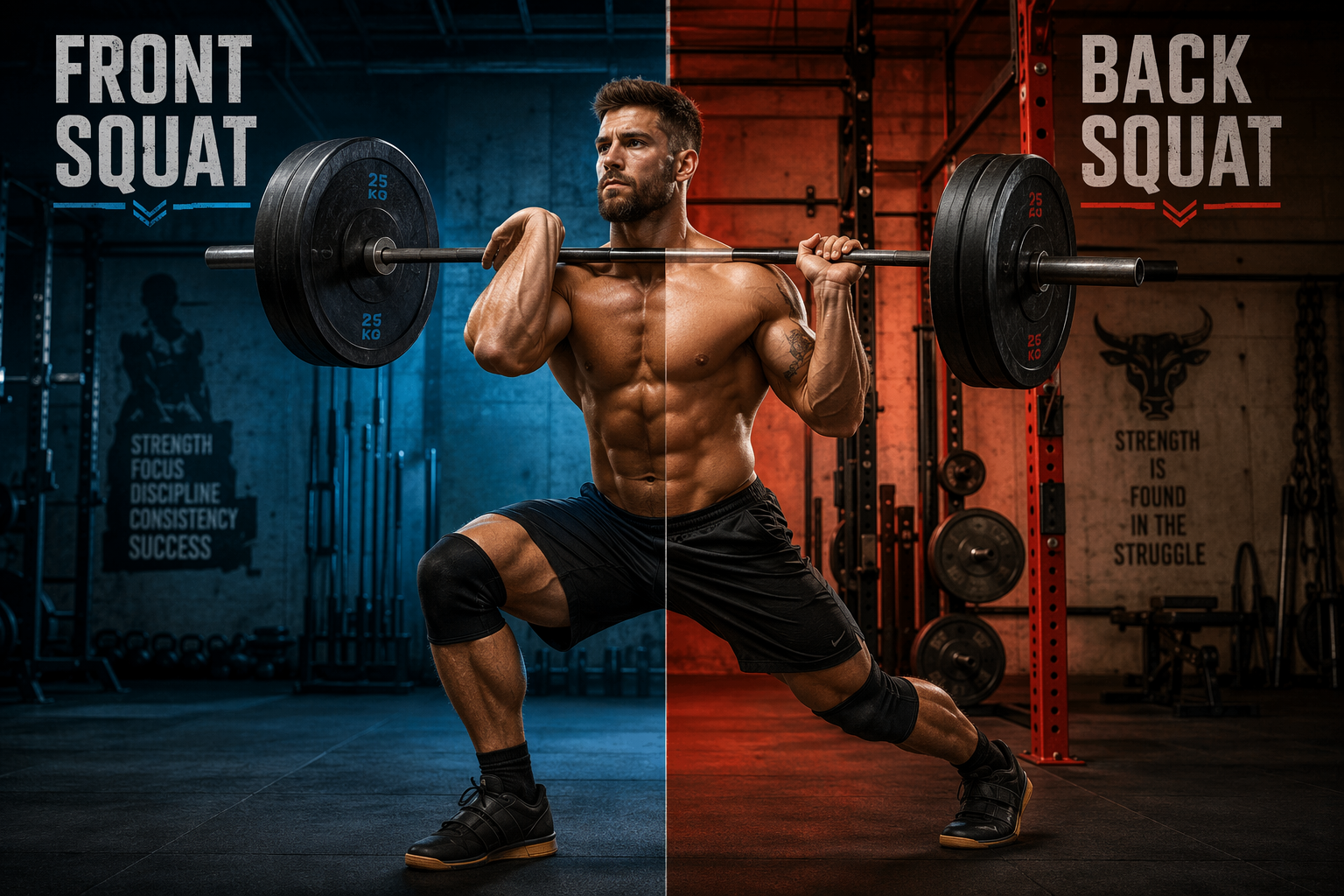
At a basic level, both squat variations train the lower body through a similar movement pattern. The biggest change comes from barbell placement. A back squat places the bar on your upper back, while a front squat keeps it in front of the body on the shoulders. That shift changes your squat position, torso angle, and the way force moves through the lift.
For some people, front squats feel easier to learn because the bar works like a counterbalance and encourages proper form. Others prefer back squatting because it feels more stable under heavy loads. The details below explain how muscle groups, body mechanics, and range of motion separate these lifts in real training.
(ALSO READ: Front Squat Exercise: Key Form Tips for Success)
Muscle Groups Targeted by Each Variation
Both squat variations train the lower body well, but they do not stress the same muscle groups in the same way. The front squat tends to increase quad and core demand, while the back squat gives a bit more work to the hamstrings and other posterior chain muscles. Your upper body also works hard to keep the bar stable.
In practice, the difference looks like this:
- Front squats usually place more emphasis on the quadriceps.
- Back squats tend to involve more hamstring contribution.
- Front squats challenge the core and upper back more directly.
- Back squats remain highly effective for working the legs and glutes.
So, are front squats more effective than back squats for building overall leg strength? Not automatically. Both can build strong legs when you use proper form and train consistently. Front squats may be better if you want more quad focus, while back squats may be the stronger choice for loading the whole lower body with heavier weight.
Barbell Placement and Body Mechanics
Barbell placement drives the biggest mechanical difference between these lifts. In a back squat, the bar rests on the upper back. Depending on style, it may sit high on the traps or lower across the rear delts after you pull the shoulder blades back to create a shelf. In a front squat, the bar sits in the front rack position on the shoulders.
That front rack position changes your squat position and keeps the movement pattern more upright. Since the load stays closer to your midline, many lifters feel less strain through the lower back. You may also set the bar slightly lower in the squat rack for front squats because the unrack is different.
|
Lift |
Bar position |
Torso angle |
Key effect |
|---|---|---|---|
|
Front squat |
In the front rack position, resting on the shoulders |
More upright torso |
Often increases upper back and core demand |
|
High bar back squat |
On the traps |
Fairly upright |
Balances quad work and total lower body training |
|
Low bar back squat |
Lower on the upper back |
More forward lean |
Often allows heavier loading |
Range of Motion and Flexibility Demands
Range of motion matters in both lifts, but the front squat often asks for more flexibility to keep the bar secure and the chest up. You need enough mobility through the shoulders, wrists, and thoracic spine to hold a solid front rack position. Without that, squat form can break down fast.
Back squats usually place fewer demands on the front rack, but they still require good mobility for proper alignment. Depth, balance, and control all depend on how well your hips and ankles move. If one area is tight, it can become the limiting factor and affect your full range of motion.
Body type also plays a role. Some lifters with long limbs or low back discomfort may feel more natural in a front squat because the upright setup helps them stay balanced. Others may find back squats easier to load and repeat. In the end, the better fit is the one you can perform well and consistently.
Effectiveness for Building Strength and Muscle
When the goal is muscle development and lower body strength, both squat variations can work extremely well. The main difference is where the stress lands and how much weight you can manage with proper technique. Back squats usually let you handle heavier loads, which can be useful for broad strength gains.
Front squats still deserve a place, especially if you want more quad focus or a lift that feels easier on your lower back. For muscle growth, the best choice depends on which areas you want to bring up. The next sections break this down into leg strength, hypertrophy, and sports performance.
Overall Leg Strength Development
If your goal is overall lower body strength, the back squat often gets the edge because most people can lift more weight with it. More load can mean more total stress on the legs and hips, which supports broad strength progress over time. That is one reason it remains a staple in the squat rack.
Still, the front squat should not be dismissed. It uses the same basic movement pattern and can recruit the legs very effectively. If back squats bother your low back or feel hard to repeat with proper form, front squats may help you train more consistently, and consistency matters most.
So, are front squats more effective than back squats for building overall leg strength? Usually, back squats have the advantage for total loading. But front squats can be just as valuable when comfort, technique, or recovery make them the better long-term option.
Impacts on Muscle Hypertrophy
For muscle hypertrophy, the answer depends on what you want to grow most. Front squats are often a smart pick for quad-focused muscle growth because they increase demand on the front of the thighs. Back squats, on the other hand, can provide more hamstring involvement while also letting you move heavy loads.
Here is the simple breakdown:
- Choose front squats if your main target is quad development.
- Choose back squats if you want a more load-heavy option for broad leg size.
- Use lighter weights in front squats or heavier loads in back squats based on form and recovery.
If your main goal is muscle growth, neither lift is perfect for every body or every phase. Front squats can give more bang for your buck on quad size, while back squats may better support total leg mass. Your best move is to match the lift to the muscle groups you want to emphasize.
Performance in Sports and Athletic Training
For athletic training, the better squat often depends on the sport. Powerlifters need the back squat because it is part of competition. That makes it the priority when sport-specific performance is the goal. Since it also supports heavy strength work, it remains a key tool for raw lower body strength.
Front squats are especially useful for Olympic lifters and can carry over well to the clean and jerk and the snatch. The upright movement pattern and front-loaded position make them closely related to receiving weight in those lifts. They can also help build quad strength and upper back control.
So which is better for performance? If your sport rewards maximum squat loading, lean toward the back squat. If your sport needs front-rack strength, posture, and cleaner transfer to Olympic patterns, lean toward the front squat. In many cases, athletes benefit most from using both squat variations at different times.
(ALSO READ: Discover the Benefits of Front Squats for Strength Gains)
Safety Considerations and Injury Risk
Safety comes down to more than choosing front squat or back squat. Your squat form, mobility, training load, and recovery all shape injury prevention. When proper alignment slips, stress can shift to the knees, hips, or lumbar spine. That is why good technique matters more than chasing numbers.
Some lifters find front squats easier on the lower back and even more manageable with knee issues. Others do well with back squats when they control load and maintain position. To protect joint health, you need to understand where each lift creates stress and what common mistakes to avoid.
Stress on Knees, Hips, and Lower Back
One of the clearest differences between these lifts is how they load the lower back. Front squats often place less stress on the lumbar spine because the more upright torso shortens the moment arm at the back. That is one of the major benefits of front squats for lifters who do not tolerate heavy back squatting well.
At the same time, neither lift is automatically safe if proper form is missing. Poor depth control, loss of bracing, or awkward hip movement can still irritate the knee joint, hip, or lower back. Load selection matters just as much as exercise choice.
Keep these points in mind:
- Front squats may be a better option if back squats aggravate your lower back.
- Back squats can increase spinal stress, especially with forward lean and heavy loading.
- For some people with knee pain, front squats may feel more sustainable over time.
Suitability for Different Body Types and Mobility Levels
Not every squat works the same for every person. Your body types, limb length, injury history, and mobility all shape which lift feels stronger and safer. That is why one lifter may thrive with back squats while another gets better results from front squats.
Front squats can be a strong fit for people who feel better with a more upright torso or who want less stress on the low back. Back squats may suit lifters who can maintain balance and squat form while using heavier weight. In both cases, flexibility can become the limiting factor if key joints are too stiff.
If your range of motion is restricted, the front rack may be hard to hold, making the front squat less practical at first. If forward leaning causes problems, back squats may feel worse. The right choice is the one that matches your structure, mobility, and ability to repeat solid reps.
Common Mistakes and How to Avoid Them
A lot of squat issues come from losing position under load. In the back squat, lifters often lean too far forward. In the front squat, they may let the elbows drop and the chest collapse. Both problems can turn good form into poor posture and reduce injury prevention.
Front squats may feel easier for some beginners because the load in front helps them stay balanced and learn a cleaner squat position. Back squats can take more practice because the bar sits behind you, which may make depth and balance harder to control early on.
Watch for these mistakes:
- Breaking at the hips too much and turning the squat into a good morning.
- Letting the elbows drop in the front squat.
- Losing upper back tension during the walkout or descent.
- Chasing weight before proper technique is consistent.
Choosing the Right Squat for Your Goals
Choosing between these squat variations comes down to your goals, not gym trends. If your fitness routine centers on moving the most weight possible, the back squat usually makes more sense. If you want a lower body lift that also challenges posture and feels easier on the back, the front squat may be the smarter pick.
If you could only keep one, choose the lift you can perform with the best squat form and the least discomfort. The next two sections will help you decide based on muscle development, posture, and core demands.
Best Squat Variation for Muscle Growth and Size
If muscle growth is your top goal, think first about which muscle groups you want to emphasize. Front squats are often better for bringing up the quads. The load in front encourages a more upright position, which increases quad demand and can make lighter weights feel very productive.
Back squats are often the better choice if you want broad lower body size and the ability to train with heavy loads. Since you can usually lift more, they create a strong overall stimulus for the legs and hips. That can be useful when size and strength both matter.
So which squat variation should you choose? Pick front squats if your quads are the priority. Pick back squats if you want the most total loading potential. If your program allows it, using both squat variations can cover more bases without forcing one lift to do everything.
Best Squat Variation for Posture and Core Activation
Yes, it is generally true that front squats can help posture more than back squats. The front squat position demands an upright torso, and that requirement pushes your upper back and trunk to stay engaged throughout the rep. If you lose position, the bar tells you right away.
That setup also changes core strength demands. Because the weight sits in front, the core muscles must work hard to keep you from folding forward. Back squats still train the core, but the front squat tends to challenge it more directly in many lifters.
Key takeaways:
- Front squats usually demand more upright posture.
- Front squats often increase direct core activation.
- Back squats still help muscle growth and trunk stability, just with a different feel.
Conclusion
In conclusion, both front squats and back squats offer unique benefits that cater to different fitness goals and body types. Front squats focus on core strength and posture, making them ideal for enhancing muscle growth and stability. On the other hand, back squats are excellent for overall leg development and strength. Understanding the nuances of each variation can help you maximize your workout results while minimizing the risk of injury. Whether you're aiming for hypertrophy or functional strength, choosing the right squat variation is essential. If you're ready to take your squatting technique to the next level, consider booking a free consultation with our trainers to tailor a program suited to your needs!
Front Squats vs. Back Squats: Which Is Better?
Both front squats and back squats offer unique benefits, catering to different fitness goals. Front squats emphasize core strength and maintain an upright posture, while back squats engage the posterior chain more effectively. Ultimately, neither is definitively better; it depends on individual objectives and training preferences.
REFERENCE:
https://www.sciencedirect.com/topics/neuroscience/erector-spinae-muscle
https://pubmed.ncbi.nlm.nih.gov/25630691/
https://www.ncbi.nlm.nih.gov/pmc/articles/PMC7039033