

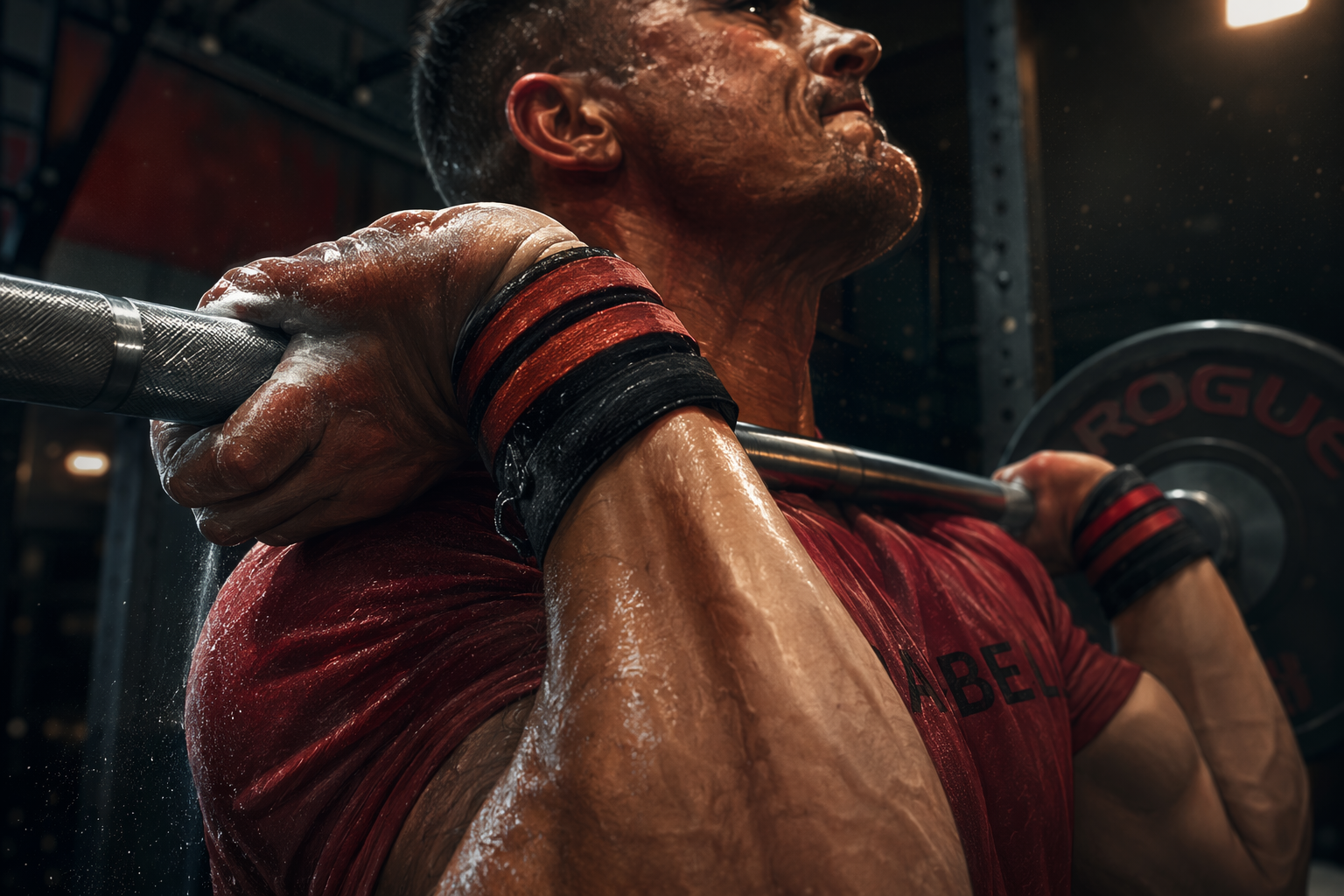
Key Highlights
- The front squat builds lower body strength while also challenging your core and upper back.
- Its front rack position encourages an upright torso and strong posture during strength training.
- You get high muscle activation in the quads, glutes, abdominals, and upper back.
- Compared with the back squat, the front squat often uses lighter weights with strong training payoff.
- It supports mobility, balance, and cleaner squat mechanics.
- Many coaches use it to improve athletic performance and reduce stress on the lower back.
Introduction
The front squat is one of the most useful lower body lifts you can add to your strength training plan. It challenges your legs, core, and posture at the same time, which is why many coaches keep it in regular rotation. Compared to other squat variations, the front squat stands out for its upright position and full-body demand. If you want better leg strength, cleaner movement, and more athletic carryover, this exercise gives you a lot from one simple pattern.
Understanding Front Squats and Benefits of Front Squats
At first glance, the front squat may look similar to the back squat, but the setup changes the whole feel of the lift. With the bar carried in front, front squatting asks for a different squat technique and more control through your trunk.
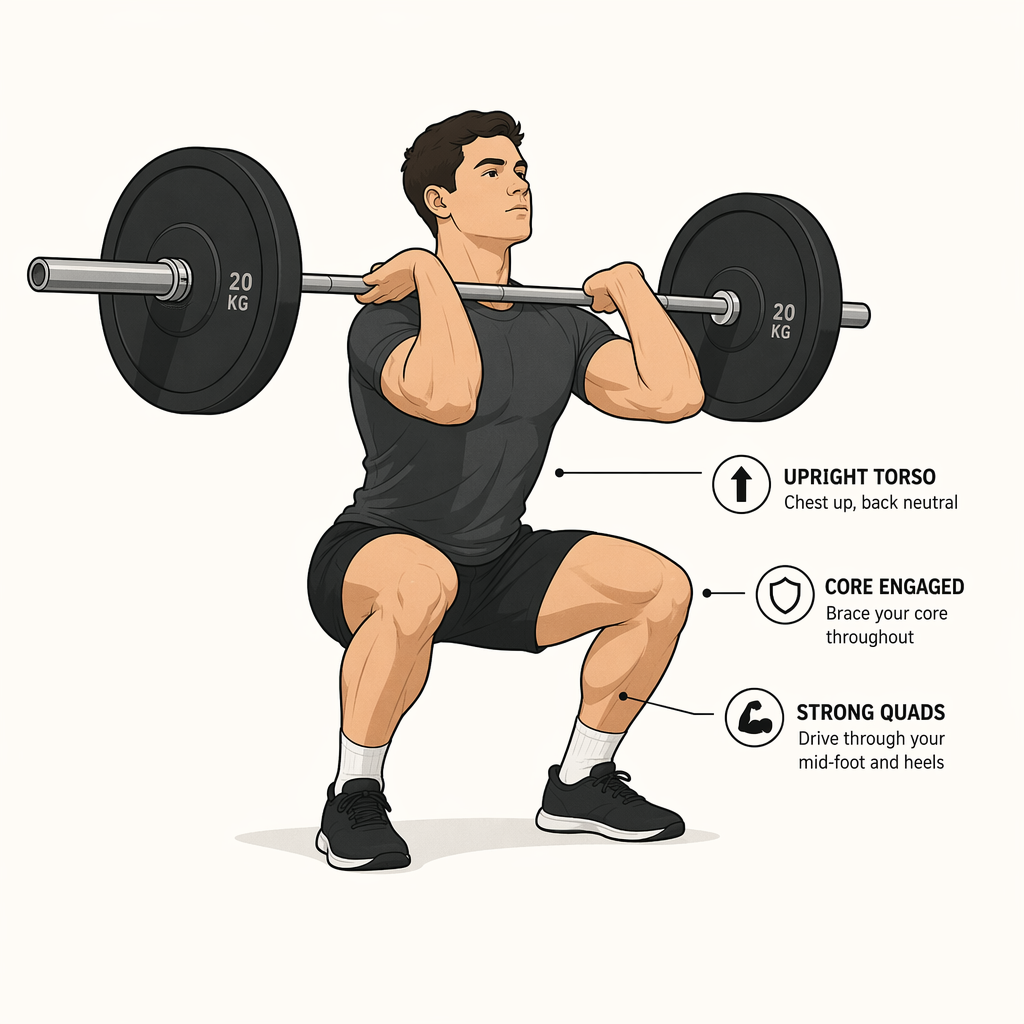
That shift creates one of its biggest advantages: a more upright torso. Because of that posture, many lifters feel stronger through the quads, core, and upper back. These differences also explain why coaches often recommend the front squat for movement quality and athletic development.
(ALSO READ: Front Squat Exercise: Key Form Tips for Success)
What Makes Front Squats Different from Other Squat Variations
The biggest difference between a front squat and a back squat is where the load sits. In the front squat, the bar rests in the front rack position across the front of your body, near the front of the shoulders. That changes your starting position and the path of the lift.
Because the bar is forward, your squat technique has to support a more upright torso. You cannot lean as much without losing position. That means the lift asks more from your core and upper back while still training the legs hard.
- The front rack position shifts the load forward and changes balance demands.
- A more upright torso places greater emphasis on different muscles, especially the quads and trunk.
- Many coaches in a certified personal training program teach it to improve control, posture, and clean mechanics.
Main Benefits for Strength and Athletic Performance
In strength training, the front squat delivers more than leg work. It trains your whole system to stay strong under load, from your feet to your upper back. That broad muscle activation is a big reason it carries over well to sport.
It also helps develop explosive power. When you drive out of the bottom quickly, your nervous system learns to produce force fast. That matters for athletic performance in jumping, sprinting, changing direction, and other powerful tasks.
- It strengthens each major muscle group involved in squatting and standing.
- It supports muscle mass gains, especially in the legs and trunk.
- It is a key part of Olympic lifting because the receiving position of the clean depends on it.
Why Coaches and Athletes Recommend Front Squats
Many coaches like the front squat because it teaches good positions under pressure. A personal trainer can use it to build strength, improve coordination, and expose weak links that other lifts may hide. That makes it useful for both beginners and experienced lifters.
Even though back squats are still one of the staples of every fitness program, front squats offer benefits that deserve much usage. They fit heavy days, technique sessions, and sports training. They also work well as an accessory exercise for athletes who need more quad and core work.
For a successful personal trainer, this lift offers practical value across many types of movements. It builds relevant knowledge about bracing, posture, and mobility while supporting functional fitness that carries into real athletic tasks.
Key Muscle Groups Targeted During Front Squats
The front squat trains nearly every major muscle group, but a few areas work especially hard. Your legs create the movement, while your trunk and upper back hold everything in place. That combination is what makes this lift feel demanding so quickly.
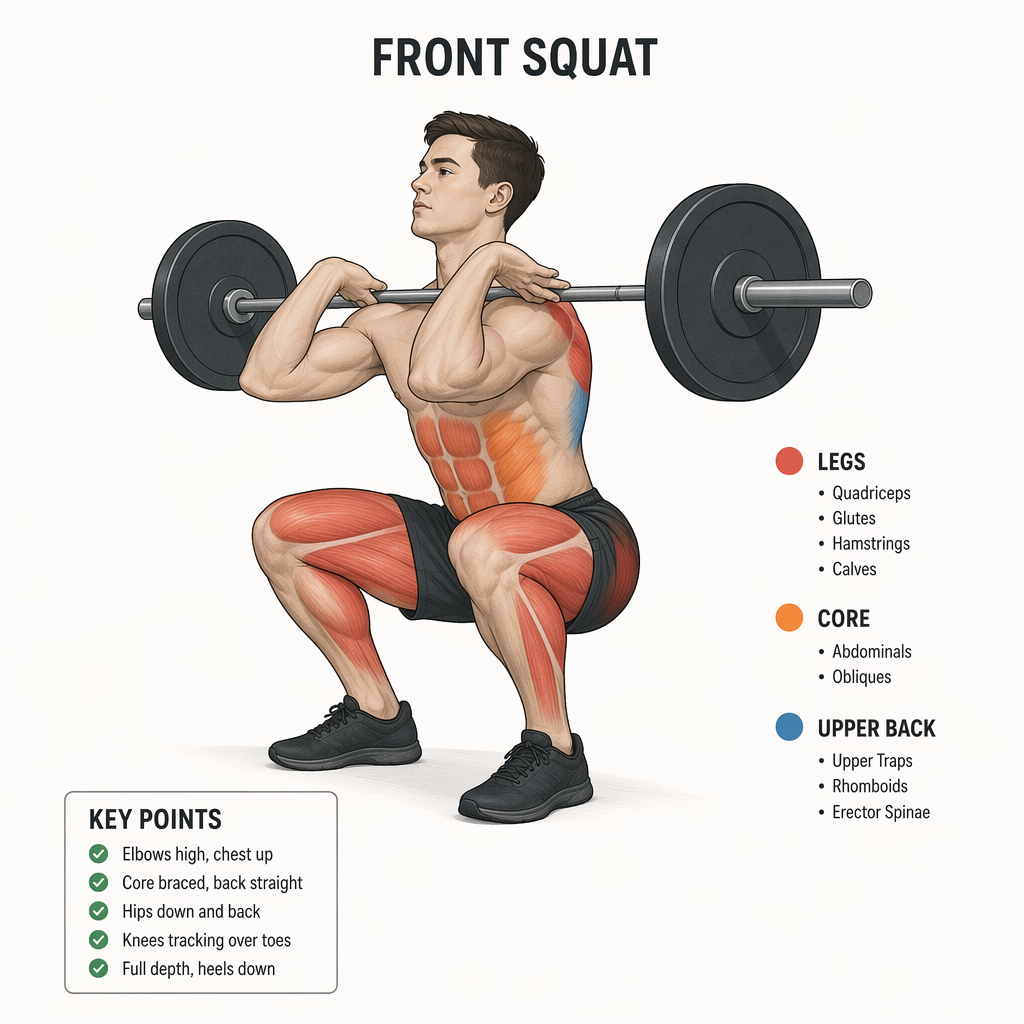
Among the lower body muscles, the quads, glutes, hamstrings, and hip flexors take on a large share of the work. At the same time, the abdominals, spinal erectors, traps, and rhomboids support posture. Next, let’s break those roles down in a clearer way.
Focus on Quadriceps and Lower Body Development
If you want to train your quadriceps hard, the front squat is a strong choice. Because the load stays in front, you usually stay more upright, which increases the challenge on the front of the thighs. Many lifters feel this almost right away.
That makes the lift useful for lower body development. Along with the quads, your glutes, hamstrings, and hip flexors help you descend and stand back up with control. These lower body muscles work together through the full range of motion.
Another advantage is how easily the front squat can fit into a program as direct quad work. If your goal is more muscle mass, better leg strength, or cleaner squat mechanics, this lift gives you a focused lower body stimulus.
Core Activation and Upper Back Engagement
The front squat is excellent for core strength because the bar tries to pull you forward. To resist that, your abdominals and spinal erectors must brace hard from start to finish. You are not just moving weight. You are holding position the whole time.
Your upper back also works hard to keep the elbows lifted and the chest tall. The traps, rhomboids, and other back muscles help support the bar on the front of the shoulders. Without that effort, your upright torso starts to collapse.
This is where posture benefits show up. Good front squatting asks for an open thoracic spine, steady breathing, and tension through the latissimus dorsi and trunk. Many people find that this demand makes the lift feel more complete than it first appears.
How Front Squats Contribute to Improved Posture and Balance
Front squats can help improve posture because they reward good alignment and punish sloppy positions fast. If your chest drops or elbows fall, the bar becomes harder to control. That feedback teaches you to stay tall and organized under load.
Balance improves for a similar reason. The bar sits forward, so you must stay centered over your feet while controlling the descent and drive up. That constant adjustment builds awareness and steadiness, especially through the trunk and hips.
- By promoting an elevated chest and engaging the upper back, the lift supports an upright posture.
- It improves balance by teaching you to stay stable with the load slightly forward.
- A thoracic spine opener and front rack work can help you find a better extended position.
(ALSO READ: Top 6 Front Squat Alternatives for Building Leg Strength)
Front Squats vs. Back Squats – Essential Comparisons
The front squat and back squat are both valuable, but they do not stress the body in the same way. The front squat usually demands a more upright position, while the back squat often allows a heavier load and a different squat technique. That by itself alters the sensation of every lift.
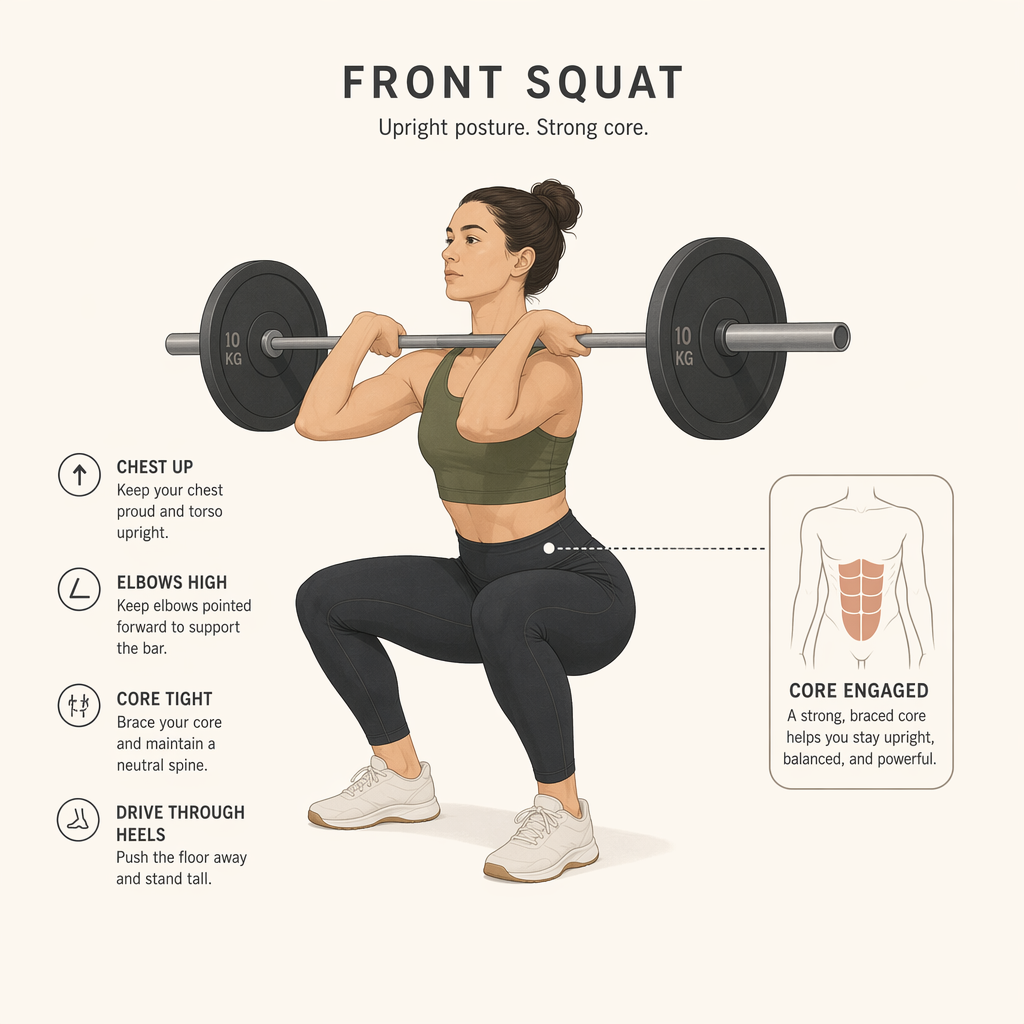
For many athletes, the choice depends on training goals, comfort, and movement quality. Some prefer the front squat for core demand and reduced lower back strain. Others use the back squat for maximal loading. The next sections compare these differences more directly.
Core Strength and Stability Differences
If your main goal is core strength and stability, the front squat often has an edge. Because the bar sits in front, your trunk has to work harder to stop the body from folding forward. That creates a strong bracing demand through the entire rep.
The back squat still trains the trunk, but the front squat usually makes you feel that effort sooner. Its more upright torso position turns every repetition into a posture and control challenge, not just a leg exercise.
|
Comparison Point |
Front Squat |
Back Squat |
|---|---|---|
|
Load position |
In front of the body |
Across upper back |
|
Torso angle |
More upright torso |
More forward lean possible |
|
Core strength demand |
Higher bracing demand |
Strong, but often less obvious |
|
Stability challenge |
Greater front-loaded stability |
More support from bar placement |
|
Squat technique feel |
Strict and posture-driven |
Often more forgiving under heavier load |
Impact on Lower Back Health and Injury Risk
Many lifters believe the front squat can reduce lower back stress, and the reason is simple. The lift usually uses lighter weights than a back squat, which can lower the total load your spine has to manage. The upright position may also help some people stay in a stronger shape.
That does not mean the front squat is risk-free. Poor form, dropped elbows, or loss of spinal position can still raise injury risk. The same is true for any squat pattern, including a high bar squat. Good setup and control still matter most.
According to the compiled guidance, improper positioning can lead to knee issues and inefficient force transfer; although it does not assert that front squats specifically prevent meniscus tears, the guidance indicates that improved tracking, bracing techniques, and the use of lighter weights could promote safer training for most individuals.
Mobility, Flexibility, and Functional Fitness Benefits
Front squats ask a lot from your ankles, knees, hips, shoulders, and upper back. Because of those mobility requirements, practicing them can help you improve flexibility and active control through positions many people avoid in daily training.
They can also expose soft tissue restrictions that limit your rack position or depth. The compiled warm-up ideas are simple: roll the lats, use a thoracic opener, stretch the wrists, and practice breathing well. One cue stands out here: avoid chest breathing and build a solid 360-degree brace.
These gains matter for functional fitness. The front squat trains you to move well, hold posture, and create force through a full range of motion. That kind of control carries over to sport, lifting, and many everyday movement demands.
How to Integrate Front Squats into Your Training
Adding the front squat to your routine does not have to be complicated. You can use it as a main lift, a warm-up pattern before heavier squats, or an accessory exercise for quad and core development. The key is to start with loads that let you keep proper form.
A personal trainer might also use the front squat to teach better posture, bracing, and rack position during strength training. It fits well in many programs, from athletic performance work to general fitness. Next, let’s cover technique, mistakes, and smart progressions.
Tips for Optimal Technique and Common Mistakes to Avoid
Strong front squatting starts with position. Set the bar across your shoulders, raise the elbows, brace your trunk, and keep the chest tall as you descend. Proper form matters more than chasing load, especially early on.
Many typical issues occur when you attempt to perform the lift before developing proper mobility and control; for instance, a weak front rack position or strained wrists can prevent the bar from resting in its ideal spot, which unnecessarily increases the difficulty of the lift.
- Keep the elbows up so the bar stays secure on the shoulders.
- Drive through the heels instead of shifting weight into the toes.
- Use lighter weights if your knees cave in or depth disappears.
- Do not hold the bar entirely in your hands if the rack position can rest on the torso.
Frequency, Progressions, and Front Squat Variations for All Levels
For most people, the best way to build the front squat is to practice it consistently with manageable loads. The compiled guidance suggests starting with a PVC pipe or light bar so you can learn the movement without fatigue getting in the way. That is one of the safest front squat progressions.
You can also place it early in a workout or use it during your back squat warm-up. As skill improves, it can move into heavier work. If the rack is limited in a busy gym, dumbbell, kettlebell, or sandbag options still give you many of the same benefits.
- Start with a light bar or goblet squat to build position and confidence.
- Use crossed-arm or non-barbell options if mobility limits the standard rack.
- A certified personal training program often teaches each variation of the squat in this step-by-step way.
Conclusion
In conclusion, front squats are an invaluable addition to any strength training program. They not only enhance lower body strength but also promote core stability and improve posture, making them a versatile choice for athletes and fitness enthusiasts alike. By incorporating front squats into your routine, you can target key muscle groups effectively while minimizing injury risk associated with other squat variations. Remember to focus on proper technique and gradually progress to ensure maximum benefits. If you're looking to elevate your training, consider giving front squats a try. Your body will thank you!
Is front squat really worth it?? : r/Fitness
Absolutely! The benefits of front squats include improved core stability, enhanced posture, and increased quadriceps strength. They engage multiple muscle groups, making them an effective full-body workout. Incorporating front squats into your routine can significantly boost overall strength gains and athletic performance, proving their worth in any fitness regimen.
REFERENCE:
https://www.bcpti.ca/category/mobility-movement/
https://www.muscleandfitness.com/workouts/leg-exercises/4-reasons-front-squat-more/
https://www.muscleandfitness.com/workouts/leg-exercises/get-complete-front-squat/
https://pubmed.ncbi.nlm.nih.gov/19002072/