

 Key Highlights
- The Zercher squat and front squat are both useful bar squats for different fitness goals.
- Their biggest difference is bar position, which changes comfort, technique, and muscle demand.
- A front squat usually fits Olympic weightlifting and quad-focused strength training better.
- A Zercher squat stands out as a unique barbell exercise for core power and upper body challenge.
- Both options offer real strength benefits, so the best squat variation depends on your workout plan.
- Your right choice should match mobility, sport needs, and long-term progress.
Introduction
Choosing the right squat variation can make your strength training more effective. If you are comparing the Zercher squat and the front squat, you are really asking which lift matches your fitness goals, mobility, and training style. Both build strong legs, a solid core, and better posture, helping you find your perfect squat, but they do it in different ways. One may suit your sport or workout routine better than the other. Let’s break down how each movement works and where each one shines.
Zercher squat vs front squat
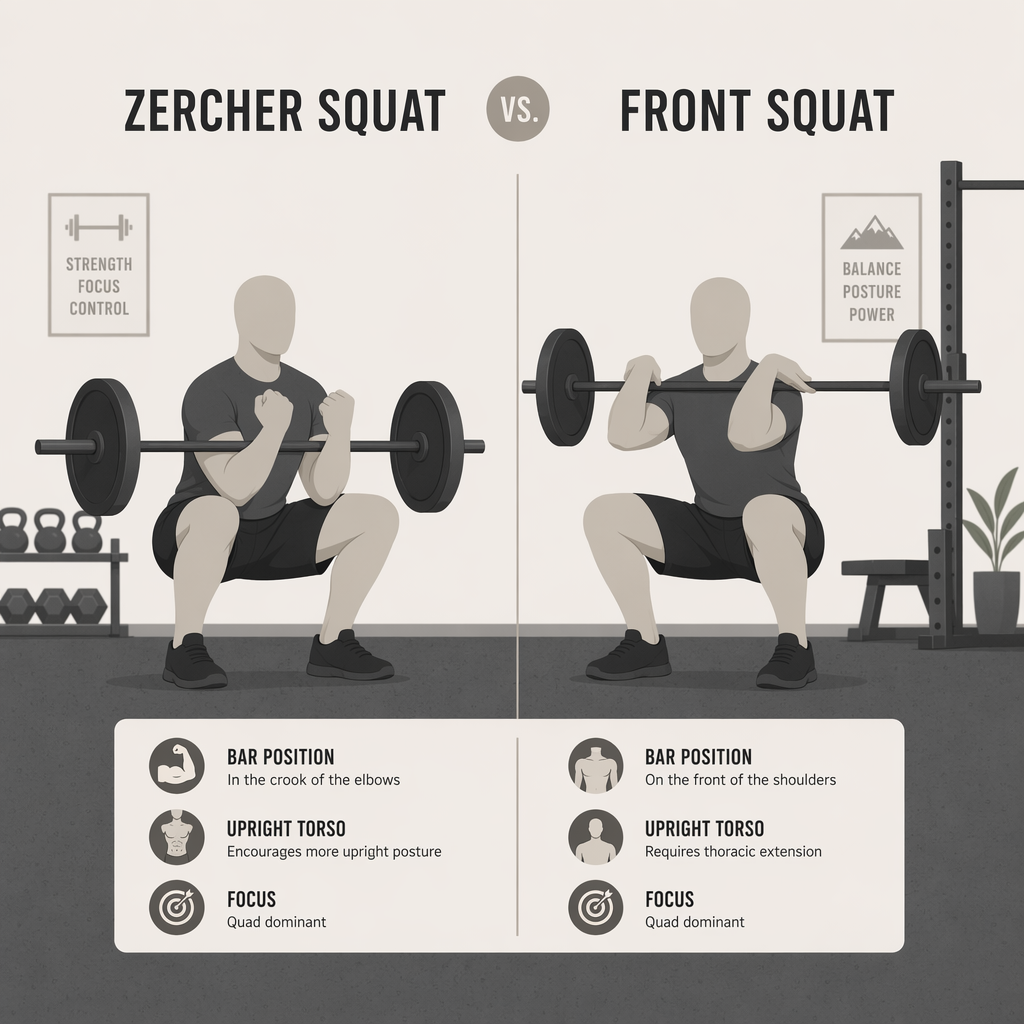
The Zercher squat is a unique barbell exercise named after Ed Zercher. In this lift, the bar rests in the crook of your elbows at the front of your body, allowing you to lift heavy weights. That setup challenges your upper body, upper back, and core strength in a very direct way.
By contrast, the front squat places the bar in a rack position on the front of your shoulders, often with a clean grip or crossed-arm hold. Both are front-loaded bar squats, but their main differences come from how the load sits and how your body supports it.
(ALSO READ: Front Squat Exercise: Key Form Tips for Success)
Key Differences in Technique and Execution
Start with the setup. In a Zercher squat, the bar position sits lower at the front of your body, cradled in your elbows. Here’s a simple guide: you usually take it from a low rack or even from the floor. This changes the feel of the lift right away and adds pressure to the arms and upper back.
In a front squat, the bar sits higher in a rack position across the front of your shoulders. The clean grip is common, though some lifters cross the arms instead. This technique asks for a rigid, upright torso and strong control through the upper body.
So, are Zercher squats harder? For many people, yes, because elbow pain and arm fatigue can limit performance. Front squats often feel more stable once you build the needed mobility, but they demand more from the wrists, shoulders, and rack position.
Comparing Movement Patterns and Bar Placement
Both lifts are front-loaded squats, so they encourage an upright position more than back squats. Still, the exact movement patterns are not identical. Zercher squats can allow a slight upper-back round in some training styles, while front squats usually demand a more vertical torso from start to finish.
That difference comes from bar placement. In the front squat, the bar sits on the front of your shoulders, which makes it highly useful for Olympic weightlifting. In the Zercher squat, the lower carrying position shifts stress toward the core, arms, and upper back.
|
Feature |
Zercher Squat |
Front Squat |
|---|---|---|
|
Bar placement |
In the crook of the elbows at the front of your body, utilizing safety bar squats for added security |
|
|
Support position |
Arm cradle |
Rack position |
|
Torso style |
Upright or slightly flexed upper back |
More upright position |
|
Sport carryover |
Strongman, combat sports, carrying tasks |
Olympic weightlifting, functional fitness |
Muscles Targeted by Zercher Squats Versus Front Squats
These two lifts train many of the same lower-body muscles, but the emphasis changes. Both can build quad strength, glutes, and postural control, yet the load position shifts where you feel the most stress and effort during each rep.
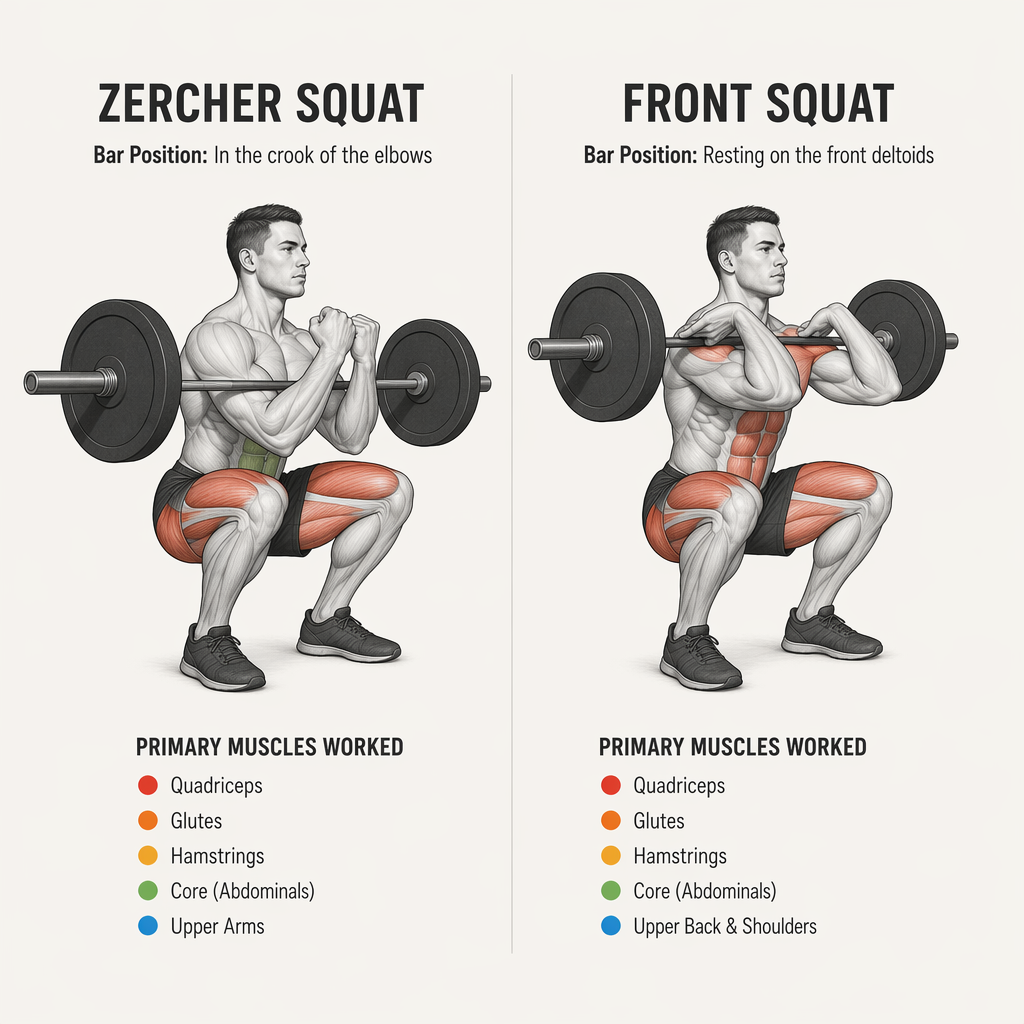
A Zercher squat tends to involve the upper back, lower back, arms, and deep core muscles more heavily. A front squat places more direct demand on the quads while also improving thoracic spine stability and a stable upper body. Here’s a closer look at how each movement spreads the workload.
Primary Muscle Activation in Zercher Squats
A Zercher squat hits a ton of muscles at once. Your quads and glutes drive the squat, but that is only part of the story. Because the bar sits in your elbows, your body must fight to stay balanced through the whole rep.
This means your deep core muscles work hard to keep the torso rigid. Your upper back strength matters too, since the load tries to pull you forward. There is also clear arm engagement, especially through the biceps and elbows, because they help support the bar.
For bodybuilding, the Zercher squat can add a fresh stimulus to the quads, hips, and upper back. Still, some lifters may find that the arms or upper back fatigue first. For more unique insights on this exercise, it makes it great for total body power, though not always the easiest choice for pure leg-focused volume.
Primary Muscle Activation in Front Squats
The front squat is known for driving quad strength. With the bar high on the shoulders, your knees and torso position place a big share of the work on the front of the thighs. Glutes still help, but the quads usually take center stage.
At the same time, this lift trains upright posture and thoracic spine stability. If your chest drops or elbows fall, the bar moves out of place. That is why a strong rack position matters so much. Your upper back and core must stay active to support every rep.
For bodybuilding, many lifters may prefer the front squat when the goal is to push the legs harder without arm discomfort. It can be a better option for quad-focused training, especially if your mobility allows a clean, consistent setup under the bar.
Strength-Building Benefits of Each Squat Variation
Both lifts offer real strength benefits, but they do not build strength in the same way. One may improve full-body strength through awkward load control, while the other may let you train the legs and trunk in a more sport-specific pattern.
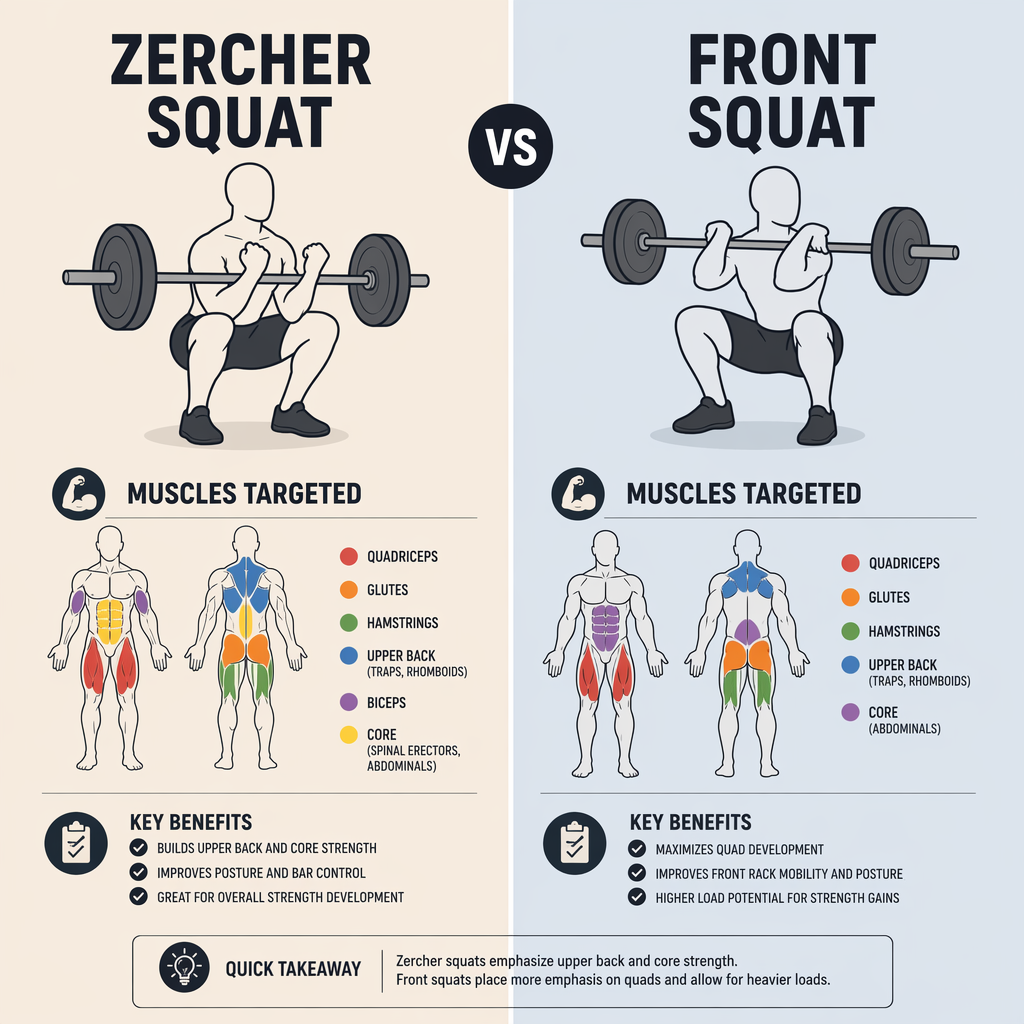
If you want a practical answer, neither movement is universally better. A Zercher squat challenges the upper body, core, and lower back more directly. A front squat often fits a workout routine aimed at quad strength, posture, and athletic carryover. Let’s separate the benefits so your choice becomes easier.
(ALSO READ: Discover the Benefits of Front Squats for Strength Gains)
How Zercher Squats Contribute to Full-Body Strength
The Zercher squat is a unique barbell exercise because it forces nearly your whole body to work as one unit. The lower bar carry position makes the lift feel awkward, but that is also why it builds so much control. Your trunk, arms, hips, and upper back all have to stay locked in.
For overall strength, it has strong value when your sport or daily demands involve carrying, lifting, or controlling uneven loads. It can also help reinforce posture under stress and improve core power through a long range of motion.
- It builds total body power by combining leg drive with heavy core bracing.
- It challenges the upper back and arm support muscles on every rep.
- It can improve strength in movements that resemble carrying awkward objects or opponents.
Some lifters use lighter weights here because elbow discomfort can limit heavier loads.
Strength Benefits Unique to Front Squats
Front squats stand out in strength training because they help you load the legs while keeping a very upright posture. That upright pattern improves postural control and teaches you to stay balanced under the bar without folding forward.
This lift is also highly specific to Olympic weightlifting and functional fitness. If cleans are part of your program, the front squat is not optional. It teaches the same front-loaded receiving position and supports a stable upper body under pressure.
- It develops quad strength more directly than many other squat options.
- It improves posture, thoracic extension, and front rack control.
- It usually supports more consistent lower-body loading for sport-specific training.
For many athletes, the front squat is the better all-around choice when the goal is leg strength plus direct carryover to formal lifting movements.
Choosing the Right Squat for Your Fitness Goals
The right squat variation depends on what you need most. Are you training for Olympic lifting, strongman, combat sports, or general strength? Your fitness goals should guide the lift, not trends or guesswork.
In many training programs, both moves can work well together. A personal trainer may even place them in the same workout plan at different points in a cycle, either in-person or through online consulting. Still, if you must choose one, it helps to know when Zercher squats make more sense and when front squats are the smarter fit.
When to Choose Zercher Squats for Maximum Results
Choose the Zercher squat when your goal is functional strength, upper-back challenge, or sport carryover to wrestling, strongman, or combat work. It also makes sense if front rack mobility is a limiting factor. Start with light weights, as this variation does not rely on a stronger rack position, and some lifters find it easier to access early on.
That said, it is not always a full replacement for front squats. If your sport depends on the clean or front rack mechanics, you still need those patterns. Zerchers can support your true potential, but they should match the purpose of your training.
- Use it when mobility work for wrists and shoulders is still in progress.
- Pick it if carrying strength and core demand matter more than clean mechanics.
- Be cautious if elbow discomfort appears, especially under heavier loads.
For some people, this squat variation is a great addition rather than the main event.
Situations Where Front Squats Are the Better Option
Front squats are the better option when your training has a clear sport-specific goal. If you practice Olympic weightlifting or functional fitness, this lift deserves priority because it directly supports the clean and its receiving position. In that case, Zerchers should not replace it.
They also work well for lifters who want stronger quads and a more stable upper body without the arm fatigue of a Zercher hold, addressing their mobility needs. Even if the rack position feels hard at first, steady practice often improves comfort and control.
- Choose the front squat when the clean grip is part of your sport or routine.
- Use wrist wraps if wrist strain limits your setup.
- Start with lighter weights if mobility or balance is still developing.
For many athletes, front squats stay in the workout routine year-round because of their direct carryover and reliable training effect.
Conclusion
In summary, both Zercher squats and front squats offer unique benefits that can enhance your strength training routine. While Zercher squats are excellent for building full-body strength and improving core stability, front squats focus on developing the quadriceps and enhancing overall mobility. Additionally, exploring new techniques can add variety to your regimen. Ultimately, the choice between these two squat variations should be guided by your specific fitness goals and personal preferences. By incorporating both into your workouts, you can maximize your strength development and keep your training dynamic. If you're ready to take your fitness to the next level, consider getting started with a tailored workout plan that suits your needs!
Why is the Zercher squat not as popular as the back squat?
The Zercher squat is less popular than the back squat primarily due to its unconventional positioning and the discomfort it can cause. Many lifters prefer the back squat for its familiarity and ease of execution. However, the Zercher squat offers unique benefits for core strength and flexibility.