

Key Highlights
- The front squat is a great exercise for building strength in your lower body while keeping your torso upright.
- Compared with the back squat, it places more emphasis on the quads and challenges core stability more directly.
- Because the load sits on the front of the body, the movement encourages better posture during each squat.
- Front squats also improve range of motion through the ankles, hips, knees, and upper back.
- They carry over well to athletic training, Olympic lifting, and balanced leg development.
Introduction
If you want a squat variation that does more than just load your legs, the front squat deserves attention. It is a smart choice for building strength, improving posture, and teaching better movement patterns. Because the bar sits in front, this squat asks your body to stay tall and controlled from start to finish. That makes it useful for beginners, athletes, and experienced lifters alike. To see why, it helps to first understand what sets the front squat apart.
What are front squats good for
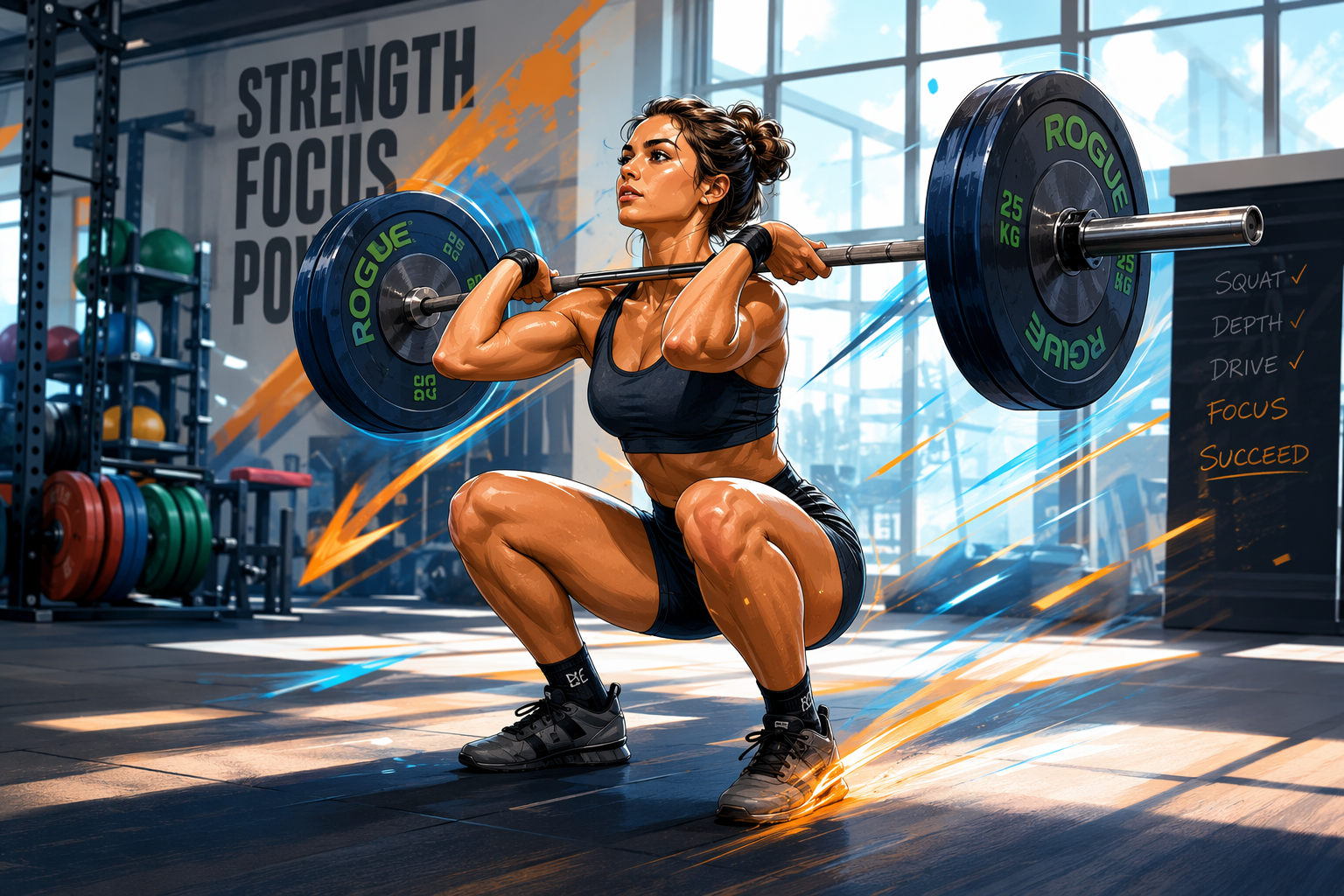
A front squat is a squat done with the barbell resting across your shoulders in the front rack position. Unlike the back squat, where the load sits on your upper back, this variation places the weight in front of you.
That configuration immediately alters the lift. Maintaining the bar during a front squat demands a vertical torso, strong core engagement, and a secure squatting position, which many find offers a distinct technical benefit because it promotes proper alignment and exposes faulty technique more obviously. Now, let’s explore what sets this movement apart and how to execute it effectively.
(ALSO READ: Front Squat Exercise: Key Form Tips for Success)
What Makes Front Squats Unique Among Squat Variations
What makes the front squat stand out is where the load sits. With the bar on the front of the body, you have to stay tall, or the bar will drift forward. That changes the feel of the exercise compared with a back squat and places more demand on control.
Because of that setup, your torso upright position becomes a key part of success. Many lifters find this useful because the movement naturally teaches better posture, stronger bracing, and more awareness of where the body is during each rep. In simple terms, the lift gives quick feedback.
There is also a real technique advantage in the movement of the front squat. You cannot easily lean, fold, or hide weak positioning for long. That makes it a strong teaching tool for beginners and a valuable option for experienced lifters who want cleaner squat mechanics and better transfer to the clean.
How to Perform Proper Front Squat Technique
Good front squat technique starts with the barbell resting across your shoulders, close to the throat, in a secure front rack position. You can use a clean grip if you have the wrist and shoulder mobility, or a crossed-arm position if mobility is limited. Your squat stance is usually around shoulder-width with toes slightly turned out.
As you begin front squatting, take a deep breath, brace your abs, and sit down under control. Keep your elbows up, chest proud, and knees tracking with your toes. Aim to reach full squat depth, then drive through your heels to stand tall and finish your reps with balance.
- Set the barbell on the shoulders, not in the hands.
- Keep the elbows pointed forward and high.
- Maintain a steady squat stance from start to finish.
- Descend under control and stand up without letting the bar roll.
Muscles Activated by Front Squats
The front squat works most of your lower body in one movement. It strongly targets the quads, while also training the glutes and hamstrings as you lower down and stand back up. That combination makes it effective for building muscle mass and strength at the same time.
This movement demands considerable engagement from the upper back and trunk, as the bar’s placement in front requires your body to counteract the tendency to be pulled forward, making the exercise involve more than just the legs. Now, let’s examine in greater detail the primary muscles of the lower body along with the supporting muscles responsible for your stability.
Targeted Lower Body Muscles
Front squats are especially known for their quad emphasis. Because you stay more upright, the knees travel in a way that increases demand on the front of the thighs. If your usual squat leaves your glutes sore but not your quads, this variation can help even things out.
At the same time, your glutes and hamstrings still work hard. They support the descent, help you reverse out of the bottom, and contribute to strong hip extension. That makes the movement useful for building leg strength without ignoring the rest of the lower body.
|
Muscle Group |
Role in the Front Squat |
|---|---|
|
Quads |
Main driver of the lift, especially when rising from the bottom position |
|
Glutes |
Help extend the hips and support power through the ascent |
|
Hamstrings |
Assist with control, stability, and support during the full movement |
Core Engagement and Upper Body Involvement
Here is where the front squat really earns its reputation. Your core has to work hard to stop the bar from pulling you forward. The abs contract isometrically throughout the rep, much like a loaded plank, which helps reinforce better control through the torso.
The upper back is just as important. The rhomboids, traps, and spinal support muscles help keep your chest lifted and elbows up. If those areas relax, your posture breaks and the lift becomes much harder to complete cleanly.
For many lifters, that means front squats can be better than back squats for developing core stability. Since the load is in front, the demand on the torso feels more immediate. You build strength in the abs and upper back while practicing the tall posture that supports safer, stronger lifting.
Key Benefits of Including Front Squats in Your Workout
Adding the front squat to your routine gives you more than one payoff. It is a great exercise for building strength in your legs, improving posture, and training your core without needing extra isolation work. It also challenges mobility and teaches cleaner squat mechanics.
Another big benefit is balance. If you rely only on one squat pattern, your progress can stall or weak points can stay hidden. Front squats offer a different training effect than a standard squat while still carrying over to other lifts. The next sections cover the biggest benefits in more detail.
Building Overall Leg Strength and Power
Front squats help with overall leg strength by loading the lower body through a deep and controlled pattern. When you train through a full range of motion, your quads, glutes, and hamstrings all have to contribute. Over time, that can support greater strength and more muscle mass.
They also build power. Driving a heavy barbell upward as quickly as possible teaches your body to produce force fast. That matters in sports, but it also matters in strength training, where stronger leg drive can improve other lifts and movement quality.
Powerlifters often include front squats because they strengthen the legs and torso in a way that carries over to heavier back squats. They can expose weak quads, improve upright positioning, and add useful variation without abandoning the goal of building strength across the whole lower body.
Enhancing Core Stability and Posture
One of the clearest benefits of front squats is how they train core stability. Since the load is in front, your abs and upper back must work together to keep you from folding. That constant bracing can strengthen the midsection in a very practical way.
Posture improves for the same reason. To hold the bar securely, you need your chest up, elbows high, and shoulders in a better position. This makes the lift helpful for people who want stronger support muscles without putting as much direct stress on the lower back as some other heavy squat patterns.
- Your abs stay active through the whole rep.
- Your upper back works to hold the bar path steady.
- Your posture improves because the torso must stay tall.
- Your lower back often gets less strain than with heavy back-loaded squats.
(ALSO READ: Discover the Benefits of Front Squats for Strength Gains)
Front Squats for Athletic Performance
For athletes, the front squat can be a direct performance tool. It develops leg drive, strong hip extension, and the ability to apply force quickly. Those qualities matter whether you run, jump, cut, throw, or lift. That is one reason the movement shows up so often in programs built around athletic performance.
It also has a strong connection to Olympic lifting and CrossFit, where the clean grip and front rack position matter. If you want strength that carries into sport, this lift makes a lot of sense. Let’s look at where it fits best and how it supports movement quality.
Application in Sports and CrossFit Training
The front squat is a staple in CrossFit because it develops strength, power, and control at the same time. It is also the receiving position for the clean, so athletes who practice Olympic lifting need to be comfortable and strong in that pattern. That alone makes front squatting highly valuable.
In sports training, the movement supports the kind of hip extension used in running, jumping, changing direction, and striking. Because the lift teaches force production with a tall torso, it can help athletes create power without losing position under load.
Its effectiveness in CrossFit can largely be attributed to its adaptability and versatility. You can use the front squat with heavy weight and low reps or lighter loads and higher reps. With a consistent squat stance and solid mechanics, it fits many workout styles while still delivering clear performance benefits.
Improving Mobility, Flexibility, and Injury Prevention
Front squats can help with mobility and flexibility because you need enough motion at the ankles, knees, hips, shoulders, and upper back to perform them well. The lift rewards good positions and can gradually improve them, especially if you use a clean grip and work to keep the elbows high.
They may also support injury prevention for some lifters. Since the load sits on the front of the body, there is often less stress on the lower back than with heavy back squats. Better posture, stronger abs, and improved control can also help you stay in healthier positions during training.
- They challenge ankle, hip, and shoulder mobility.
- They encourage flexibility through a deeper squat pattern.
- They can reduce excess lower-back stress in some programs.
- They carry over to other moves like lunges and support the posterior chain.
Conclusion
In conclusion, front squats are an exceptional addition to any workout routine, offering a wide array of benefits that promote both strength and stability. By engaging multiple muscle groups—from your legs to your core—you enhance your overall athletic performance while also improving mobility and flexibility. Whether you’re an athlete looking to up your game or simply someone seeking a more effective way to strengthen your lower body, integrating front squats can lead to significant gains. So, why not elevate your training? If you’re interested in learning more about how to incorporate front squats into your regimen, reach out for a free consultation with one of our fitness experts today!
Is front squat really worth it?? : r/Fitness
Front squats are definitely worth it! They enhance core stability, improve posture, and strengthen the quadriceps, glutes, and hamstrings. Additionally, front squats promote better mobility and can help prevent injuries. Incorporating them into your routine can lead to overall functional strength and athletic performance improvements.
REFERENCE:
https://www.issaonline.com/blog/post/essential-moves-your-complete-guide-to-the-front-squat
https://www.issaonline.com/blog/post/what-you-need-to-know-about-high-intensity-interval-training
https://www.issaonline.com/blog/post/what-can-you-do-instead-of-a-squat
https://www.acefitness.org/education-and-resources/lifestyle/exercise-library/135/bodyweight-squat