

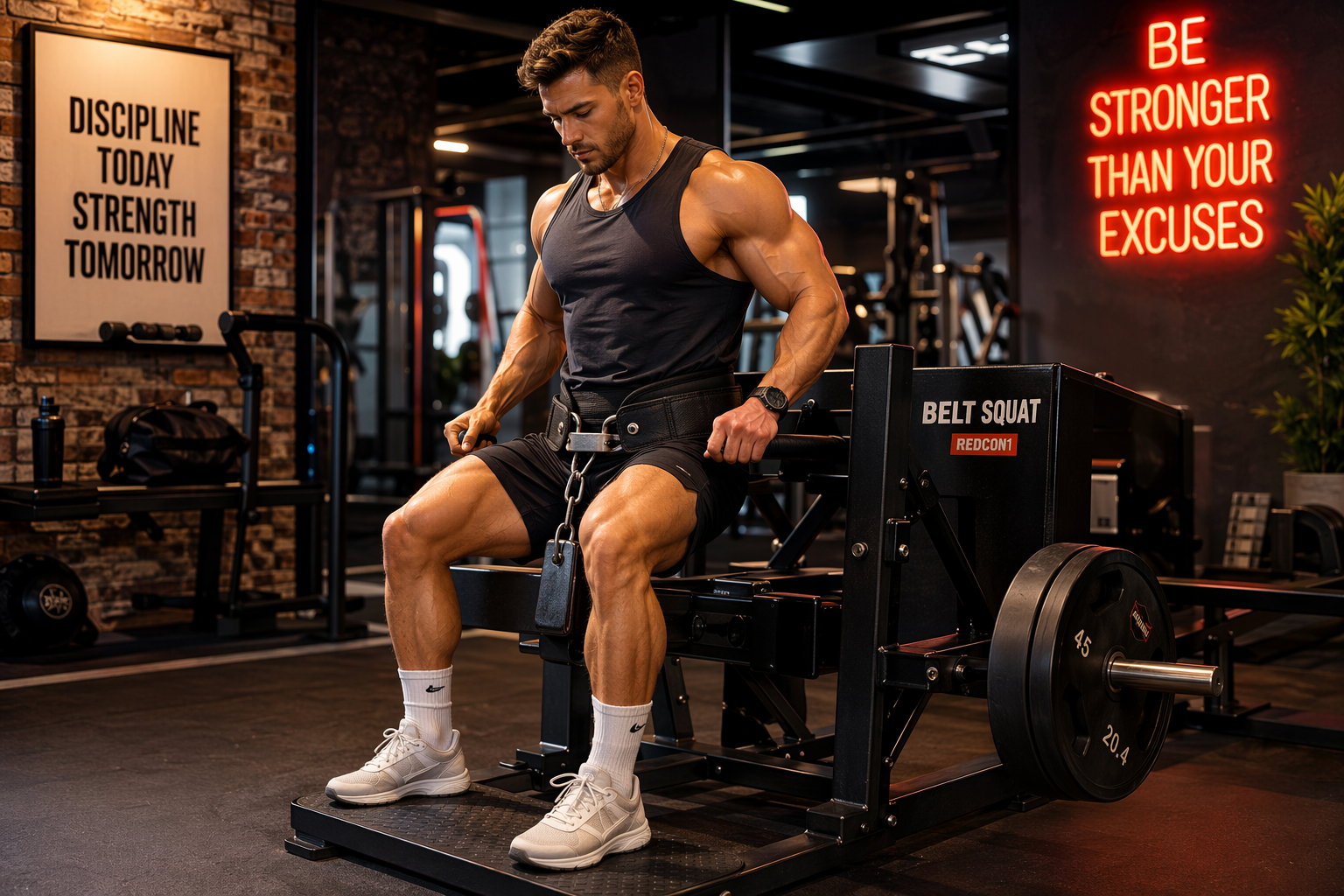
Key Highlights
- A belt squat is a useful squat variation for lower body strength training with less spinal strain.
- It shifts the load to your hips, which can improve muscle engagement in your quads and hamstrings.
- Compared with a back squat, it places less stress on your torso and lower back.
- This can make it a smart option for injury prevention and easier recovery between sessions.
- Beginners can use a belt squat machine safely when they follow proper form and setup.
- The tradeoff is less upper body involvement and usually lighter heavy loads than barbell squats.
Belt Squat Benefits
If you want stronger legs without putting a barbell on your upper back, the belt squat deserves your attention. This lower body exercise has become a practical option in strength training because it lets you squat while keeping the load around your hips instead of your spine. That matters if your back gets tired before your legs do. It also matters if you want another way to train hard, recover faster, and keep your routine moving forward.
What Makes Belt Squats Unique for Lower Body Training
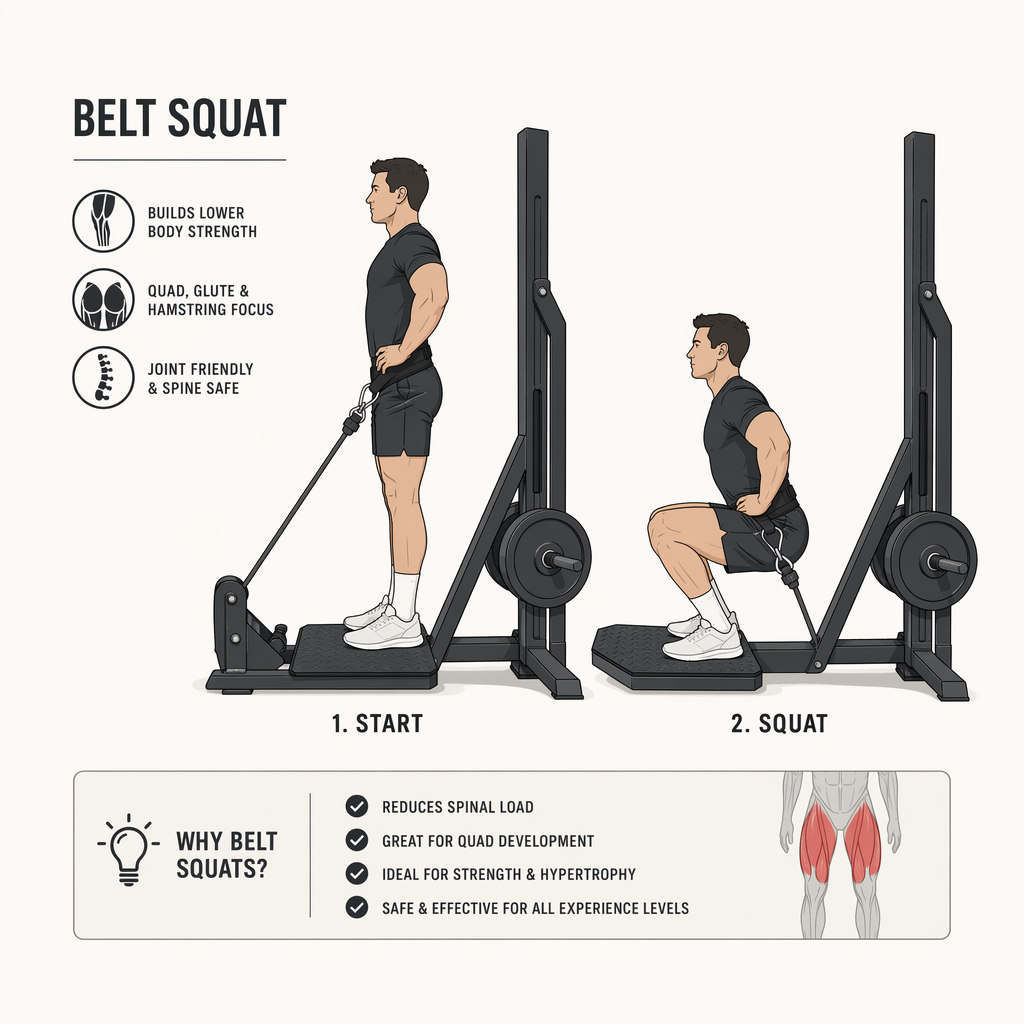
The belt squat stands out because of the unique placement of the load. Instead of resting a barbell across your shoulders, the weight hangs from a specialized belt around your waist. That changes how your body handles the exercise and keeps the focus on your lower body.
Because your torso does not have to support the same kind of pressure, you can train your legs with less spinal strain. A belt squat machine also helps many lifters target key muscle groups without the same demand on the upper body, which can be useful when heavy loads in a back squat feel limiting.
(ALSO READ: Belt Squat Exercises: Build Strength and Power Today)
How the Belt Squat Machine Works and Its Key Features
A belt squat machine works by attaching resistance to a specialized belt worn around your hips. When you start squatting, the load moves with your pelvis instead of sitting on your upper back. That simple change reduces stress on the spine and lets your legs do more of the work. For many people, that makes the movement feel more controlled and less intimidating than a traditional barbell setup.
Your setup still matters. Stand on the platform, make sure the belt feels secure, keep your feet between hip and shoulder width, brace your core, and use the handles if the machine has them. If you do not have a belt squat machine, some lifters use a dip belt and elevated platforms near a squat rack.
|
Feature |
What it does |
|---|---|
|
Specialized belt |
Holds the load around the hips instead of the torso |
|
Platform or machine base |
Creates space for depth while squatting |
|
Handles |
Add balance and help maintain proper form |
|
Hip-loaded resistance |
Reduces spinal strain compared with a barbell |
Comparing Belt Squats to Traditional Barbell Squats
A belt squat and a back squat both train the lower body well, but they do it differently. In a back squat, the traditional barbell rests across your shoulders, which increases muscle engagement in the core, upper body, and back. In a belt squat, the load stays around your hips, so your legs take more of the focus.
That difference can lower injury risk for lifters who feel discomfort in the lower back during squats. It can also make the belt squat a more beginner-friendly squat variation, since there is less demand on balance and trunk support. Many people find they can move through a solid range of motion with less fear of spinal strain.
Still, there is a tradeoff. Back squats usually allow more total weight and develop more full-body strength. Belt squats can provide similar lower body training benefits, but they do less for torso stability and upper body involvement.
Major Benefits of Belt Squats
One of the biggest benefits of the belt squat is that it trains your legs hard without putting the same pressure on your spine as a barbell squat. That makes this squat variation appealing if you want strong quads and hamstrings but need to limit spinal strain during strength training.
Another plus is recovery. Since there is less demand on your torso and back, many lifters can come back sooner for another lower body session. The movement also supports better muscle engagement in the legs while helping with injury prevention. The next sections break down those benefits more clearly.
Enhanced Quadriceps and Glute Activation
Belt squats are especially helpful when your goal is to emphasize the front of the legs. Because the load is attached at the hips, your quadriceps can take on more of the effort without your upper body becoming the weak link. That is one reason many lifters use this movement to grow their quads and keep lower body training productive.
They also work the glute and hamstrings, though the compiled information shows belt squats are slightly less effective for glute activation than back squats. Even so, they still train several important muscle groups and can fit well in a leg-focused session.
- The quads get a strong training effect because the exercise isolates the legs well.
- The glute still contributes during the squat, especially as you stand up from depth.
- A good range of motion helps the lower body work through a fuller squat pattern.
- The movement can be useful when you want leg growth without heavy upper body loading.
Reduced Stress on Lower Back and Spine
For many people, this is the main reason to use a belt squat. Since the load stays around the pelvis instead of on the shoulders, there is much less pressure on the lower back. Your torso does not have to stabilize a heavy barbell in the same way, which can reduce discomfort during training.
That makes belt squats a strong option if back fatigue usually shows up before your legs are done working. They can also help lower injury risk for lifters who are cautious about spinal strain or returning from lower back issues. The movement lets you keep squatting while changing how the body handles the load.
- Less compression on the spine can make the exercise feel safer than a back squat.
- Reduced torso demand often means less lower back fatigue during sets.
- Lower spinal strain supports injury prevention and easier recovery.
Conclusion
In summary, belt squats are a revolutionary addition to lower body training that can transform your workout routine. By providing enhanced quadriceps and glute activation while minimizing stress on the lower back and spine, they offer a unique approach to building strength and muscle. Whether you're an experienced lifter or just starting out, incorporating belt squats into your regimen can lead to impressive results. It's time to rethink your leg day strategy and consider the benefits of belt squats for a safer and more effective workout. Begin your journey now by exploring our offerings if you're prepared to elevate your training to new heights!
(ALSO READ: Belt Squat Alternatives: 10 Variations to Try Today)
Is there any reason to barbell squat over using a belt squat machine?
While barbell squats are a staple for building overall strength, belt squat benefits include reduced spinal compression and enhanced isolation of the lower body muscles. This makes the belt squat machine ideal for those recovering from injuries or looking to target specific muscle groups more effectively.
REFERENCE: