

Key Highlights
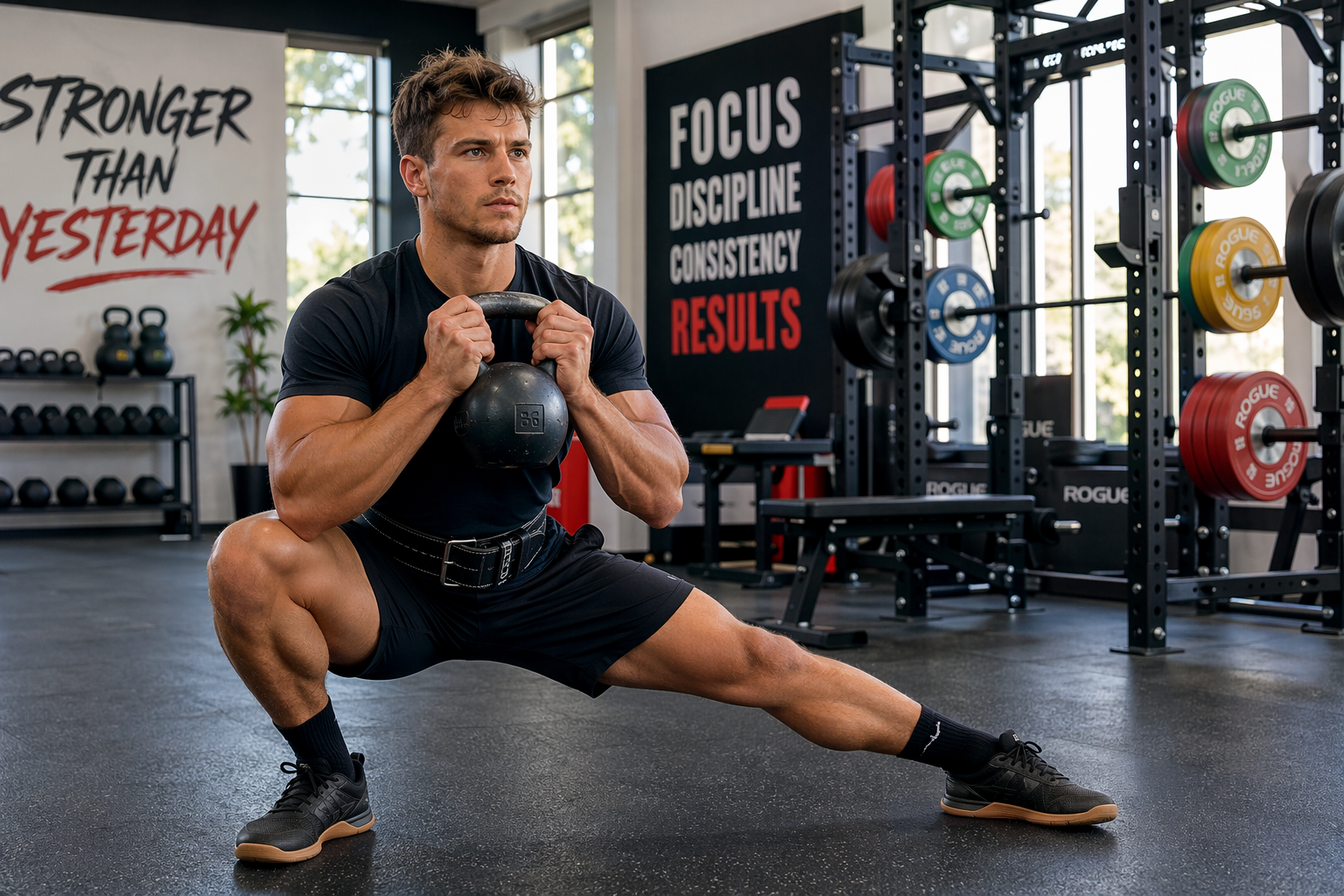
- A belt squat is great for your lower body because it trains hard with less stress on your lower back.
- If you do not have a squat machine, several squat alternatives can still support a strong leg workout.
- Front squats, leg press, hack squats, and landmine belt squat setups are among the best alternatives.
- Some effective lower body exercises need only minimal equipment, which helps in a home gym.
- The right choice depends on your goals, experience level, and the equipment you can access.
Introduction
The belt squat is an excellent method for intensively working your legs while sparing your upper body the load commonly experienced during barbell squats, which is particularly important if your lower back fatigues quickly or your gym is missing a belt squat machine. Fortunately, you still have effective alternatives available; several different squat variations can target the same muscles, promote muscle development, and adapt to nearly any workout environment. Here are some variations you should consider trying today.
Top Belt Squat Alternatives to Try Today
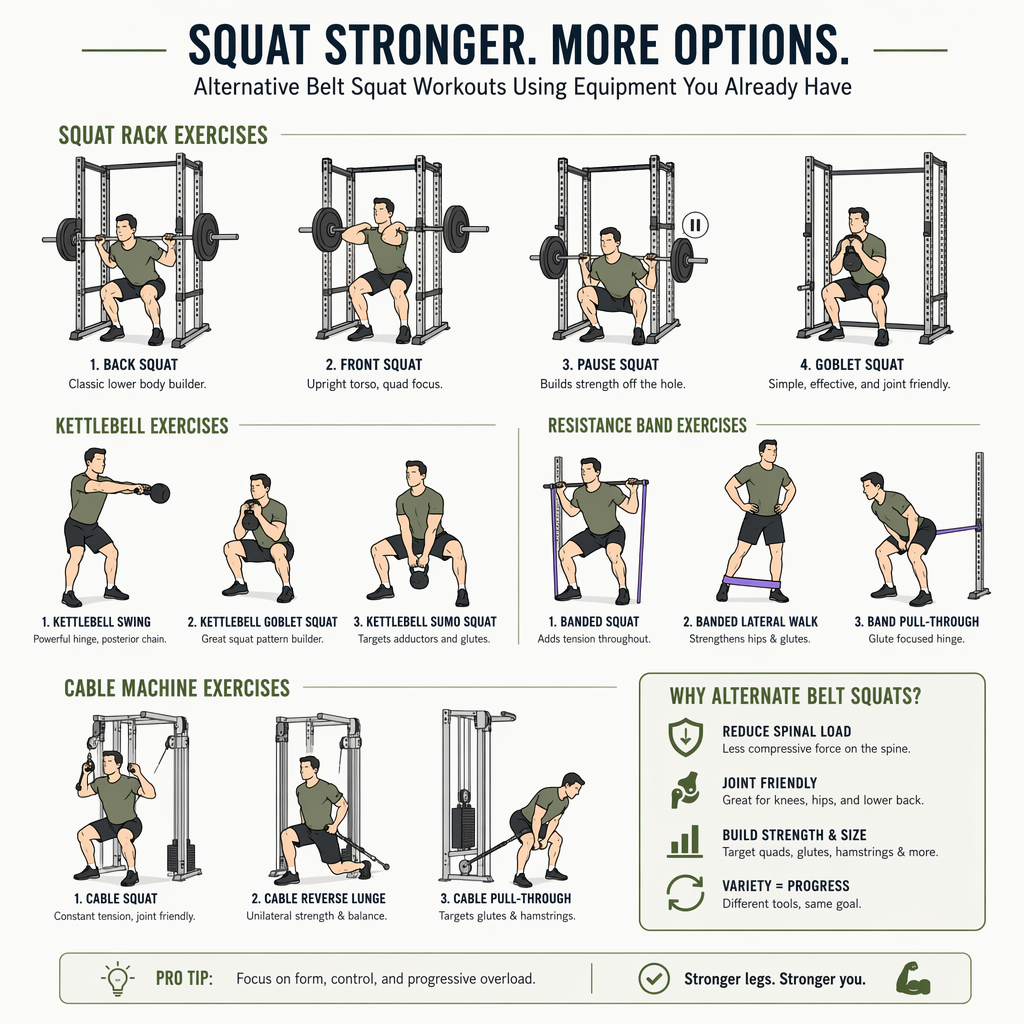
If you are wondering what the best exercises are to use as a hip belt squat alternative, start with movements that train the same lower body muscle groups while keeping the setup practical. Good options include front squats, leg press, hack squat variations, and a landmine belt squat.
You can also use goblet squats, Bulgarian split squat work, step-ups, resistance band squats, and sled push work in your training program. Each one offers a slightly different challenge, but all can serve as effective lower body exercises when chosen for your needs.
(ALSO READ: Belt Squat Exercises: Build Strength and Power Today)
1. Landmine Belt Squat
A landmine belt squat is one of the closest squat variations to a regular belt squat when you do not have a machine. Here’s how to perform it effectively:
- Setup:
- Place the end of a barbell into a landmine attachment.
- Load the other end with your desired weight plates.
- Connect your belt to the weighted side.
- Muscle Focus:
- Targets quads, glutes, and other muscle groups.
- Range of Motion:
- To enhance the range of motion, many lifters stand on plates, boxes, or steps.
- Caution:
- Be aware that the resistance curve feels a bit different.
- The bar can pull you forward if your balance is off.
- Recommendation:
- Perform 3-4 sets of 8-12 reps for optimal muscle activation.
- Use a solid squat attachment and maintain controlled reps for effectiveness.
Even without a machine, you can replicate many belt squat benefits with this setup.
2. Goblet Squat
Goblet squats are a smart choice if you want squat variations that do not use a barbell but still target many of the same lower body muscle groups as a belt squat. Here are some key points to consider:
- Equipment Needed: Only a dumbbell or kettlebell.
- Availability: Useful when a squat machine is not available.
- Form Assistance: Particularly helpful for those learning proper form.
- Posture Maintenance: Holding the weight in front can help you stay upright and reach depth, lowering the risk of injury.
- Progression: Ideal for moderate to high reps; not always suitable as your only heavy strength movement.
- Recommended Sets and Reps: Aim for 3-4 sets of 8-12 reps for overall effectiveness.
- If you want an easier starting point, though, goblet squats are hard to beat.
3. Front Squat
- Front Squats
- Muscle Groups Targeted: Quads, Glutes
- Benefits: Promotes leg strength gains, better load placement on the lower back, engages the upper back effectively.
- Starting Position: Bar rests in front, encouraging a more upright torso.
- Performance Tip: Take a deep breath before beginning the lift to enhance performance and improve muscle activation in the front of your legs.
- Sets and Reps: 3-4 sets of 6-10 reps.
- Practical Consideration: If you have access to a squat rack, this is a practical way to chase strength and size.
- Comparison to Belt Squats:
- While front squats are not identical to a belt squat, they serve as an effective alternative for building stronger legs with solid carryover to compound leg exercises.
- Transitioning:
- For many lifters, front squats act as a great bridge between machine-based work and classic free-weight training.
4. Bulgarian Split Squat
The Bulgarian split squat is one of the best squat alternatives when you want hard leg training with little equipment.
These are the main aspects you should take into account:
Equipment Needed: Only dumbbells or bodyweight.
- Target Muscles: Quads and glutes.
- Location: Works well at home.
Benefits:
- Unilateral Training: Each leg works on its own, helping you notice side-to-side differences while building lower body size and strength.
- Balance Challenge: Offers a balance challenge that many machine-based movements do not provide.
Considerations:
- Mobility Issues: Some people may find the setup awkward at first, especially the rear-foot position. Start slowly and keep the range manageable.
Recommended Sets and Reps:
- Sets: 3
- Reps: 8-12 per leg
Done well, it remains one of the most useful compound leg exercises you can add to your routine.
5. Hack Squat (Machine or Barbell)
Hack squat variations are excellent for lifters who want to push their lower body hard while keeping the movement stable. Here are some key points to consider:
- Long Range of Motion
- Utilize a hack squat machine with shoulder pads for a long range of motion.
- Focus on your legs without worrying much about balance.
- Sets and Reps: Aim for 3-4 sets of 8-12 reps.
- Muscle Growth
- Hack squats are useful for promoting muscle growth.
- Sets and Reps: Try 4 sets of 10-15 reps for hypertrophy.
- Consistency and Progression
- This squat machine allows for consistent reps and easier progression.
- Sets and Reps: Perform 3 sets of 6-10 reps to build strength.
- Support for Leg Development
- While it may not replace competition-specific powerlifting practice, it supports leg development.
- Sets and Reps: Incorporate 3-4 sets of 8-12 reps when managing heavy back squat volume.
- Effective for Powerlifting Training
- The hack squat machine is viewed as support work rather than a main skill lift.
- Sets and Reps: Use it for 3-4 sets of 8-10 reps to complement front and back squats.
- Lower Body Strength
- It helps build the lower body effectively.
- Sets and Reps: Include 4 sets of 8-12 reps in your routine.
- Direct Transfer
- Front squats or back squat practice usually matter more for direct transfer to lifting.
- Sets and Reps: Focus on 3 sets of 6-8 reps for these main lifts.
By incorporating these points and rep schemes into your routine, you can maximize
6. Leg Press
A leg press serves as an extremely practical alternative to the belt squat; here are the main factors you should keep in mind.
Muscle Groups Trained:
- Targets major lower body muscle groups.
- Does not load the spine, ideal if your back is already tired.
- Weight Loading:
- Allows for loading plenty of weight plates.
- Enables steady progress over time.
- Effectiveness:
- Works well for leg strength gains and muscle growth.
- Engages stabilizer muscles, making hard sets feel safer and easier to repeat.
- Training Integration:
- Both belt squat and leg press are effective lower body tools.
- Rotating them in your program can be beneficial.
- Gym Setup:
- If your gym has a squat machine but no belt squat setup, the leg press is a strong replacement.
Recommended Sets and Reps:
- Sets: 3-4 sets
- Reps: 8-12 reps for strength and hypertrophy.
- 7. Sled Push
Technically, a sled push doesn’t follow the typical squat movement pattern; however, it’s an excellent way to build lower body strength and is especially useful if you want to reduce stress on your back. Keep the following important tips in mind:
- Lower Body Builder: Effective for building strength in the legs.
- Reduced Back Strain: The load is pushed rather than carried on your torso, making it easier on the spine than traditional squats.
- Less Fatiguing: Allows for productive lower body work while minimizing fatigue.
- Muscle Activation: Provides strong muscle activation in the legs.
- Faster Recovery: Generally allows for quicker recovery compared to heavy barbell work.
Recommendation:
- Sets: 3-4 sets
- Reps: 10-15 reps
Think of sled push work as one of the best complementary exercises to squat variations, not always a one-for-one replacement. If your goal is to reduce stress while keeping your lower body training productive, it deserves a place in the conversation.
8. Step-Up
Step-ups are simple, effective, and easy to fit into almost any training program. Here’s how to incorporate them:
- Equipment Needed: A stable box, bench, or step.
- Execution:
- Stand facing the box/bench.
- Step up with one foot, bringing the other foot to meet it.
- Step back down and repeat.
- Sets and Reps:
- Aim for 3 sets of 10-15 reps per leg.
Benefits:
- Trains your lower body one leg at a time.
- Helps build strength, control, and work capacity.
- Straightforward setup makes it beginner-friendly.
Variations:
- Start with bodyweight only and progress to holding dumbbells for added resistance.
Overall, if you want a simple at-home alternative to the belt squat, step-ups are a very good answer. They may not match the loading potential of machines, but they are still effective lower body exercises that can fit nicely into a smart leg workout.
9. Resistance Band Squat
A resistance band squat is a beginner-friendly option when you need minimal equipment. Here are some key points to consider:
- Setup: Easy to set up and store, making it ideal for a home gym.
- Equipment: No special squat attachment or dedicated platform required.
- Resistance Level: Provides light to moderate resistance, allowing you to practice the movement pattern without heavy loading.
- Building Confidence: Helps build confidence before progressing to harder squat variations.
- Loading Potential: While it won't feel the same as a regular belt squat and has lower loading potential, it's still effective.
Recommended Sets and Reps:
- Sets: 3
- Reps: 12-15
This exercise is practical for new lifters or anyone training with limited equipment, helping to train the lower body and keep your routine moving forward.
10. Smith Machine Squat
The Smith machine squat offers several advantages for leg training:
- Guided Bar Path: Provides a fixed trajectory, making it easier to focus on proper form.
- Sets: 3
- Reps: 8-12
- Confidence for Beginners: Ideal for those not ready for a free barbell or lacking confidence in a squat rack.
- Sets: 3
- Reps: 10-15
- Controlled Training: Allows for a more controlled way to train your legs.
- Sets: 4
- Reps: 8-10
- Easier Loading: Some lifters find it simpler to load the movement without worrying about balance.
- Sets: 3
- Reps: 6-8
- Lower Back Sensitivity: Helpful for individuals with sensitive lower backs or those looking to reduce injury risk from unstable reps.
- Sets: 3
- Reps: 10-1
- Versatility: Can bridge the gap between bodyweight exercises and heavier gym work.
- Sets: 3
- Reps: 8-10
While you can achieve similar results to a belt squat using only bodyweight or minimal equipment (like a belt squat attachment), the Smith machine squat provides a balanced option between minimal and heavy lifting.
(ALSO READ: Discover the Barbell Exercise Benefits for Strength)
Key Benefits of Belt Squat Alternatives
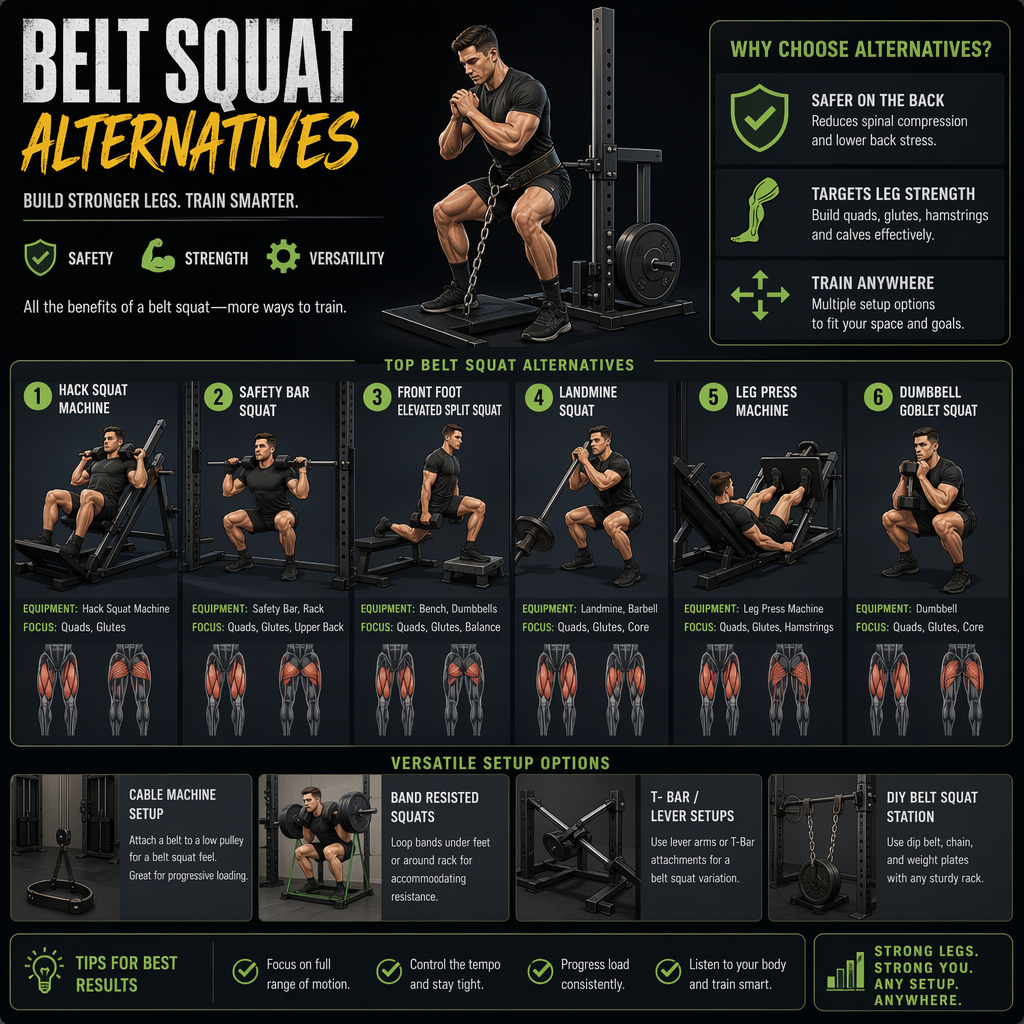
One big reason people use belt squat alternatives is simple: they can train the lower body hard with less stress on the lower back. In many cases, yes, these options do reduce back strain compared to traditional squats, especially when the load is not resting on your torso.
Another benefit is flexibility. Some variations improve muscle activation, some give a long range of motion, and others need less equipment. That means you can keep progressing whether you train in a busy gym or a small home setup. Next, let’s break those benefits down further.
Targeting Lower Body Muscles Without Back Strain
Many belt squat alternatives help you train your lower body while reducing how much work your torso has to do. That matters when your lower back is the weak link or when heavy barbell work leaves you worn down before your legs are fully trained.
A regular belt squat is known for creating less spinal stress because the load sits at the hips instead of across the upper body, with the end of the belt comfortably positioned at the lower back. Several alternatives follow that same idea. Leg press, hack squat, sled push, and landmine belt squat setups all let you challenge your legs without as much activity of trunk support as parallel back squats.
Does that mean zero risk of injury? No exercise offers that. Still, many of these options can lower the chance of technique breakdown from fatigue. If your goal is hard leg work with less back strain than traditional squats, our editorial team believes these choices make a lot of sense.
Equipment Needed for Effective Substitutes
The equipment you need depends on the substitute you choose. Some options use a squat machine, while others only need a box, dumbbell, or band. If you want a setup close to a belt squat, a dip belt or a dedicated belt squat belt becomes especially useful.
For free-weight options, a squat rack supports front squats and other barbell squat patterns. A landmine attachment helps with the landmine version. Home gym users often prefer simpler tools because they take less space and cost less, especially on their first order.
|
Exercise |
Equipment |
|---|---|
|
Landmine belt squat |
Landmine attachment, barbell, weight plates, dip belt or belt |
|
Front squat |
Barbell, squat rack |
|
Leg press or hack squat |
Squat machine or hack squat machine |
|
Goblet squat or step-up |
Dumbbell or kettlebell, bench or box |
|
Resistance band squat |
Resistance band |
Adaptations for Home and Beginner Workouts
If you do not have access to a belt squat machine, simplify your workout instead of forcing a complicated setup. A home gym can still support good progress. Choose squat variations that match your skill level and the tools you actually have.
Beginners often do best with an easier starting point. Goblet squats, step-ups, resistance band squats, and bodyweight Bulgarian split squat work can build control before heavier loading. These movements may look basic, but they can still support muscle growth when done consistently.
Try these simple modifications:
- Use goblet squats or resistance band squats when minimal equipment is all you have.
- Swap in step-ups or Bulgarian split squats if you need a home gym option.
- Add a landmine belt squat only if you have the space and can set it up safely.
(ALSO READ: 7 Effective Barbell Back Squat Alternatives to Try Today)
Conclusion
In conclusion, exploring belt squat alternatives can significantly enhance your lower body workout while minimizing strain on your back. Each of the variations mentioned not only targets key muscle groups but also allows for adaptability, whether you're at the gym or exercising at home, and they can activate various EMG activities. Embracing these alternatives ensures you maintain a balanced and effective training routine, catering to different fitness levels. Remember, consistency is vital for progress, so keep experimenting with these exercises to find what works best for you. For personalized guidance, feel free to reach out and schedule a free consultation with our fitness experts to elevate your training experience!
Frequently Asked Questions
Which belt squat alternative is best for powerlifting or building leg strength?
For powerlifting, front squats are usually one of the best belt squat alternatives because they build leg strength with good muscle activation and direct carryover to a strength training program. Hack squats and leg press also help, but they work best as support lifts alongside the back squat.
Can I get similar results to a belt squat using only bodyweight or minimal equipment?
You can get similar training benefits from a belt squat with bodyweight or minimal equipment, especially if you use squat variations like step-ups, Bulgarian split squats, goblet squats, or resistance band squats. They can train many of the same muscle groups; however, the difficulty of an exercise changes with heavy loading options, which may be more limited.
REFERENCE:
https://pubmed.ncbi.nlm.nih.gov/25630691/
https://www.ncbi.nlm.nih.gov/pmc/articles/PMC6548056/
https://www.ncbi.nlm.nih.gov/pubmed/32030125
https://www.ncbi.nlm.nih.gov/pmc/articles/PMC3805008/
https://pubmed.ncbi.nlm.nih.gov/30273281/
https://pubmed.ncbi.nlm.nih.gov/28603357/
https://pubmed.ncbi.nlm.nih.gov/16709916/
https://pubmed.ncbi.nlm.nih.gov/31230110/