

Which is Better: Dumbbell Deadlift vs Barbell Deadlift?
Key Highlights
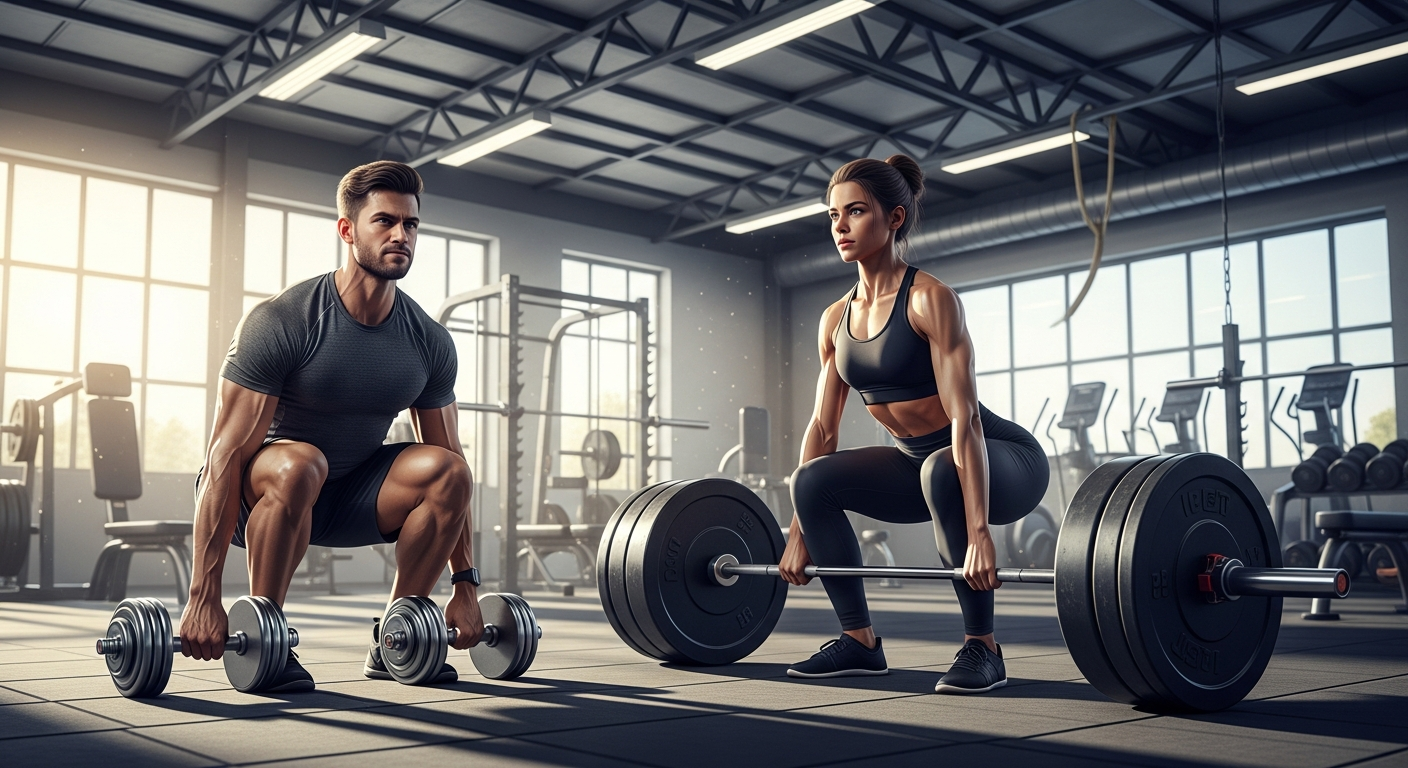
Here's what you need to know about the dumbbell deadlift versus barbell deadlifts:
- Barbell deadlifts are the top choice for building maximum strength, as they allow you to lift heavier loads.
- The dumbbell deadlift is fantastic for improving balance, addressing muscle imbalances, and offering a greater range of motion.
- Your grip strength will be challenged differently; barbells allow for mixed grips, while dumbbells require symmetrical strength.
- Both variations effectively target the posterior chain, but dumbbell deadlifts engage more stabilizer muscles.
- Mastering proper form is crucial for both to prevent injury and see the best results.
- The choice between them often comes down to your personal fitness goals and the equipment you have available.
Introduction
The deadlift is a powerhouse exercise, a true test of strength that works muscles from your head to your heels. But when it comes to choosing your weapon—barbell or dumbbells—things can get confusing. Should you go for the classic barbell deadlifts or opt for the versatile dumbbell deadlift? Both are great, but they offer different benefits for building strength, improving grip strength, and engaging your muscles. This guide will help you understand the differences and choose the right lift to crush your fitness goals, always with proper form in mind.
Understanding Deadlift Variations:dumbbell deadlift vs barbell deadlift
While both the dumbbell deadlift and barbell deadlifts involve picking weight up off the floor, their core mechanics are quite different. The main distinction lies in how the load is positioned relative to your body, which changes the entire feel and focus of the exercise. This affects everything from the muscles you work to the amount of weight you can lift.
Understanding these variations is key to picking the right one for your different goals. Whether you're focused on raw power, muscle balance, or just have limited equipment, the setup and execution of each lift offer unique advantages. Let's look closer at the key differences.
Key Differences in Equipment and Setup
The most obvious difference starts with the equipment itself. For barbell deadlifts, you need a barbell, weight plates (or bumper plates), and enough space for the 7-foot bar. This setup is built for loading on serious weight and is the standard in most commercial gyms.
On the other hand, the dumbbell deadlift requires only a pair of dumbbells. This makes it incredibly accessible for home gyms or those with limited space. The setup is simple: just grab your weights and find a small patch of floor.
Here’s a quick breakdown of the setup differences:
- Barbell Deadlifts: Require a barbell, plates, collars, and significant floor space. The grip width is relatively fixed.
- Dumbbell Deadlifts: Requiring just two dumbbells and a small workout area, this exercise allows each hand to hold its own weight separately.
- Load: Barbells can be loaded with much more weight.
- Versatility: Dumbbells are more portable and easier to store.
Strength, Balance, and Range of Motion Considerations
When it comes to raw strength, barbell deadlifts have a clear advantage. The stable, single bar allows you to move the most weight, making it the king for developing maximal pulling power. The movement path is more restricted, which lets you focus solely on lifting heavy.
The dumbbell deadlift, however, shines in other areas. Holding a separate weight in each hand forces each side of your body to work independently. This is excellent for improving balance and identifying and correcting muscle imbalances that a barbell might hide. You can't rely on your stronger side to compensate.
Additionally, dumbbells often allow for a greater range of motion. Since the weights are at your sides, you may be able to get a deeper stretch at the bottom of the movement. This can be beneficial for mobility and targeting muscles in a slightly different way. For beginners, the dumbbell version can be easier to learn due to the lighter starting weight and more natural movement path.
Muscles Targeted by Dumbbell and Barbell Deadlifts
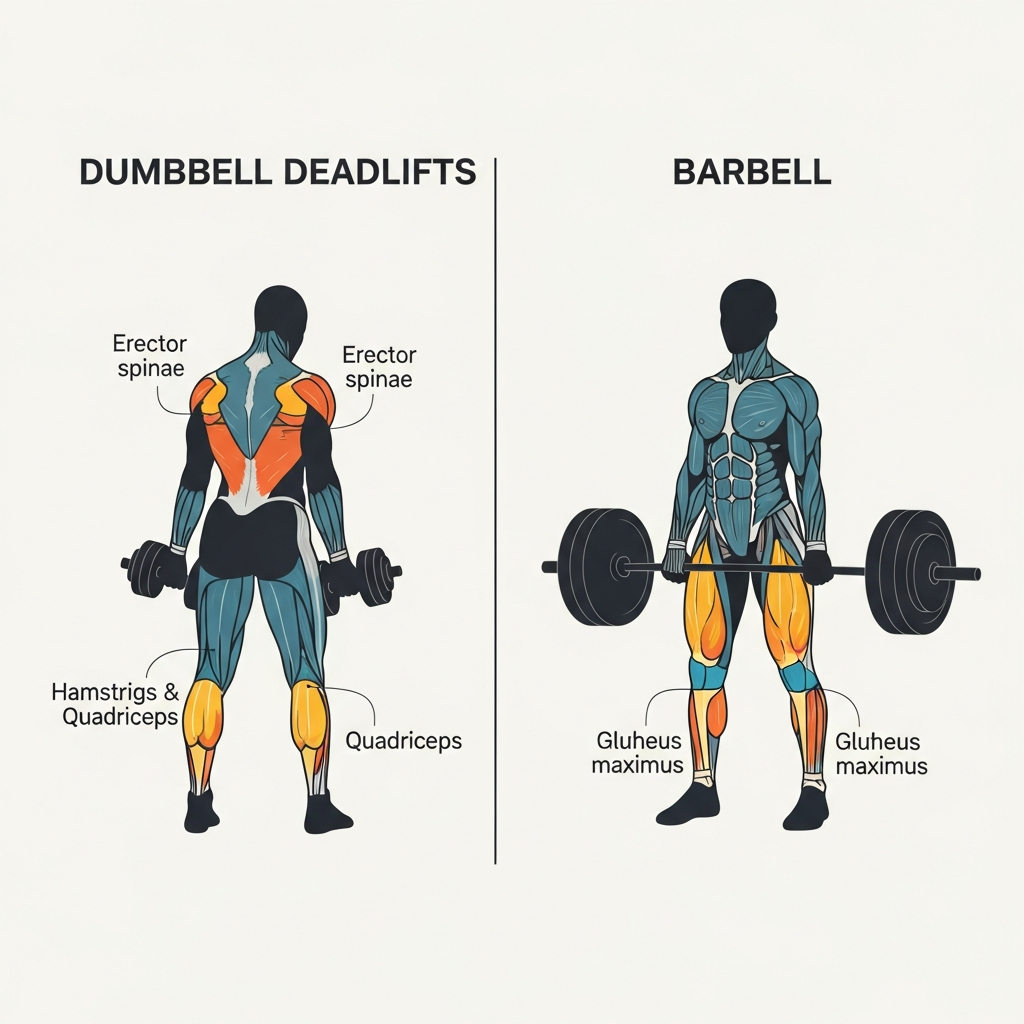
Both the dumbbell deadlift and barbell deadlifts are phenomenal for building your posterior chain—the group of muscles on the back of your body, including your glutes, hamstrings, and lower back. These are compound exercises, meaning they recruit multiple joints and muscle groups in one powerful movement.
However, the different equipment can shift the emphasis to specific muscle groups. While both hit the major players, the dumbbell version brings in more stabilizer muscles, particularly in the upper back and core, to control the independent weights. Let’s break down which muscles get the most attention from each lift.
Major Muscle Groups Worked
The deadlift is a full-body affair, but its primary targets are in your lower body and back. Both the dumbbell deadlift and barbell deadlifts will hammer your glutes, hamstrings, quads, and erector spinae (the muscles along your spine). You'll also feel it in your traps and upper back as you work to keep your posture strong.
The primary distinction in muscle engagement arises due to the demand for stability. Dumbbells require more work from your core and shoulder muscles to keep the weights from swaying. This means you get a little extra upper body and core work with every rep.
Here's a look at the primary and secondary muscles worked by each lift:
|
Muscle Group |
Barbell Deadlift |
Dumbbell Deadlift |
|---|---|---|
|
Glutes |
Primary Mover |
Primary Mover |
|
Hamstrings |
Primary Mover |
Primary Mover |
|
Lower Back |
Primary Mover |
Primary Mover |
|
Upper Back / Traps |
Heavy Engagement |
Heavy Engagement |
|
Core / Stabilizers |
High Engagement |
Very High Engagement |
|
Forearms (Grip) |
High Engagement |
High Engagement |
Posterior Chain Activation Comparison
When comparing how each lift activates the posterior chain, it's a matter of load versus control. Barbell deadlifts allow for the heaviest load, which creates a powerful stimulus for the entire chain, from your glutes to your traps. The sheer weight forces maximum recruitment to complete the hip extension and stand up.
Dumbbell deadlifts might involve lighter weight, but they can activate the posterior chain in a more nuanced way. The greater range of motion possible with dumbbells can lead to a deeper stretch in the hamstrings, similar to what you might feel in Romanian deadlifts. Variations like Romanian dumbbell deadlifts specifically target hamstring and glute engagement through a controlled, extended stretch.
Ultimately, both are excellent for hitting the full posterior chain. Barbells do it with brute force and heavy loading, while dumbbells do it by requiring more stability, balance, and often a greater range of motion. For pure muscle growth, both can be highly effective when programmed correctly.
(ALSO READ: Single Leg Deadlift Barbell: A Game Changer for Lifters)
Technique Breakdown: How To Perform Each Deadlift
Nailing proper form is non-negotiable for both the dumbbell deadlift and barbell deadlifts. While the core movement pattern—the hip hinge—is the same, the execution has key differences. Getting the technique right not only prevents injury but also ensures you’re getting the most out of every single rep.
Mastering these movement patterns is essential for building a strong foundation. We'll walk you through the step-by-step process for each lift, focusing on the cues that will help you maintain perfect form, challenge your grip strength, and lift safely.
Step-by-Step Guide to Dumbbell Deadlift Form
The dumbbell deadlift is a fantastic exercise, especially if you're new to the hip hinge movement or have limited equipment. Start with a lighter weight to focus on proper form before you increase the load.
Stand with your feet shoulder-width apart, with a dumbbell on the outside of each foot. Hinge at your hips, keeping your back straight, and lower yourself to grab the dumbbells. The sides of your body should be where your palms are facing.
To perform the lift:
- Push through your heels and drive your hips forward to stand up, keeping the dumbbells close to your body.
- Keep your chest up and core braced throughout the movement.
- At the top, squeeze your glutes. Your body needs to stay aligned in a straight line.
- Slowly reverse the motion, hinging at the hips to lower the weights back to the bottom of the movement. Focus on maintaining a flat back and controlled range of motion.
Step-by-Step Guide to Barbell Deadlift Form
The barbell deadlift is the gold standard for building maximum strength. Because you can lift heavier weights, flawless proper form is critical to avoid injury when pulling serious weight.
Approach the bar so that it's over the middle of your feet. Your feet should be about hip-width apart. Hinge at your hips and bend your knees to grab the bar. Your grip width should be just outside your shins. Keep your back straight, chest up, and hips lower than your shoulders.
To perform the lift:
- Drive your feet through the floor and pull, keeping the bar close to your body. It should drag along your shins and the front of your thighs.
- As the bar passes your knees, drive your hips forward to complete the lift, bringing the bar to hip level.
- At the peak, engage your glutes without arching your back.
- Lower the weight with control by reversing the motion, hinging at the hips first.
(ALSO READ : Barbell Deadlift Basics: Your Guide to Safe Lifting)
Common Mistakes with Dumbbell and Barbell Deadlifts
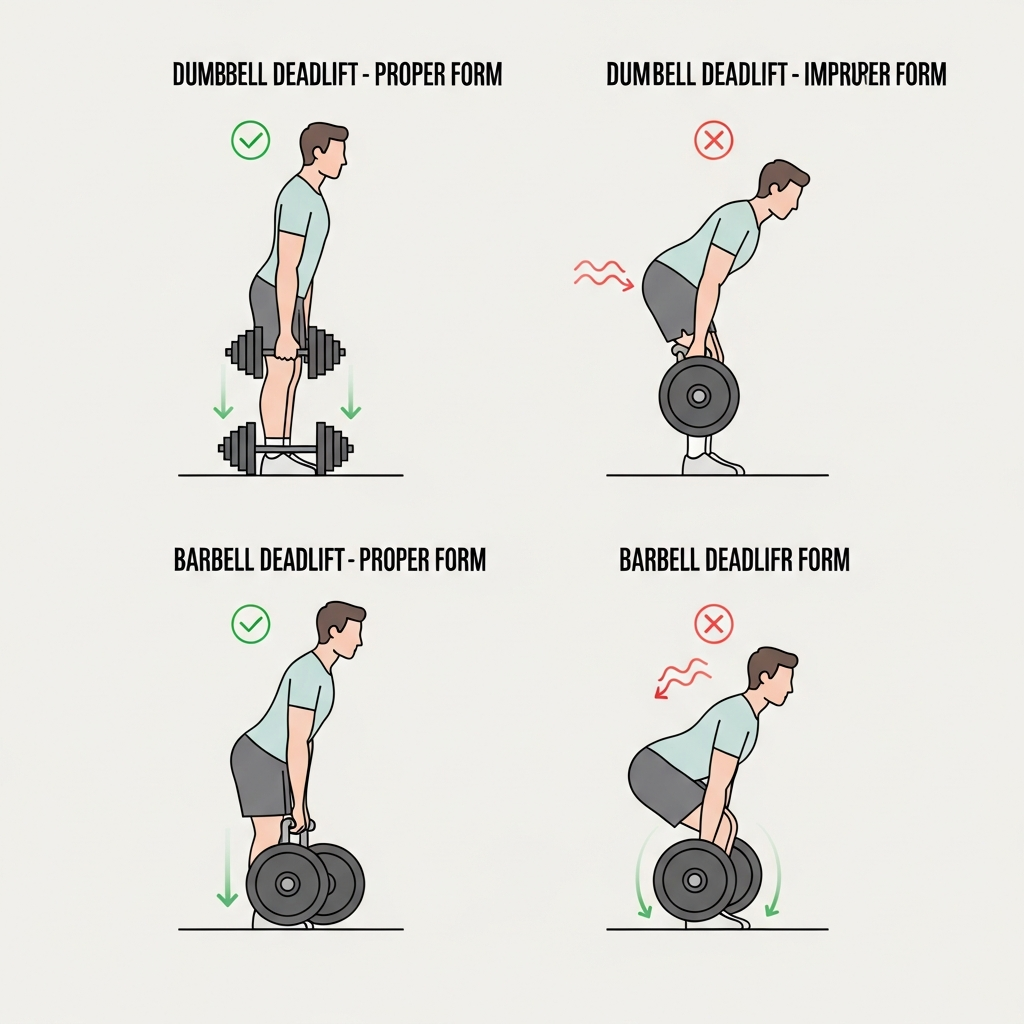
No matter which deadlift you choose, bad form can lead to trouble, especially for your lower back. Common mistakes often stem from a few weak points, like a rounded upper back, lifting with your back instead of your hips, or having poor grip strength that fails mid-lift.
These errors can not only hold back your progress but also put you at risk for injury. By understanding the most frequent mistakes for both dumbbell and barbell deadlifts, you can learn to spot them in your own technique and fix them before they become a problem.
Frequent Dumbbell Deadlift Errors
The versatility of the dumbbell deadlift allows for greater freedom of movement, but this benefit may also contribute to certain distinct mistakes.Because the weights aren't connected, it's easier to develop bad habits if you're not paying attention to your form. Bad form is a common issue.
The biggest challenge is controlling two separate objects. This requires more work from your stabilizer muscles, and if they're not ready, your form can break down. Weak grip strength can also be a limiting factor, causing you to fatigue prematurely.
Here are some common mistakes to avoid:
- Letting the dumbbells drift forward: Keep them close to your sides to maintain a proper center of gravity.
- Rounding your back: Maintain a neutral spine from your head to your hips throughout the full range of motion.
- Swinging the weights: The movement should be a controlled lift, not a swing.
- Not using your legs: Remember to drive with your legs and hips, not just pull with your back.
Typical Barbell Deadlift Mistakes
Barbell deadlifts carry a higher potential for injury if you make mistakes, simply because the weight is so much heavier. Bad form with a heavy barbell puts immense stress on your lower back and central nervous system.
Rounding your lower back is among the riskiest errors you can make.This happens when lifters try to pull a weight that's too heavy or their setup is wrong. Another issue is letting the bar drift away from the body, which increases the strain on your spine. Even a weak grip strength can lead to trouble if you lose control of the bar.
Watch out for these classic errors:
- Hips shooting up too early: Your hips and shoulders should rise at the same rate.
- Rounding your back: Keep your spine neutral. If you can't, the weight is too heavy.
- Jerking the bar off the floor: The pull should be smooth and powerful, not a sudden jerk.
- Hyperextending at the top: Squeeze your glutes to finish, but don't lean back and arch your spine.
Pros and Cons of Each Deadlift Style
Choosing between the dumbbell deadlift and barbell deadlifts isn't about which one is universally "better," but which one is better for you and your fitness goals. Both have unique advantages and disadvantages that make them suitable for different situations.
Barbell deadlifts excel at building pure strength with heavier loads, while dumbbell deadlifts offer a greater range of motion and are more forgiving on the body. Understanding the trade-offs will help you decide which lift to prioritize in your training.
Advantages and Disadvantages of Dumbbell Deadlifts
The dumbbell deadlift is a versatile and accessible option with several key benefits, especially for those training at home or focusing on functional fitness.
One of its biggest pros is the greater range of motion. Holding the weights at your sides allows for a more natural movement path and can lead to a deeper stretch. They're also safer in some respects; since you use a lighter weight and can easily drop them, the risk of getting trapped under a heavy load is eliminated. They're perfect for a small space.
However, the primary disadvantage is the limitation on load. You simply can't lift as much with dumbbells, which can limit your top-end strength potential.
- Pros: Improved balance, greater range of motion, safer for beginners, and excellent for accessory work.
- Cons: Limited potential for heavy lifting, grip can be a major limiting factor, and progression might require buying heavier dumbbells.
Advantages and Disadvantages of Barbell Deadlifts
When your goal is to build serious strength and raw power, the barbell deadlift is unmatched. This lift is a true measure of brute strength.
The single biggest advantage is the ability to load on heavier weights. This makes progressive overload straightforward and allows you to push for maximum strength gains. The stability of the bar lets you focus all your energy on pulling, which is ideal for developing serious strength.
The downside is that it requires more equipment, space, and technical skill. The risk of injury is also higher if your form breaks down under a heavy load.
- Pros: Best for building maximum strength, easy progressive overload, and builds immense posterior chain and raw strength.
- Cons: Higher risk of injury with bad form, requires more equipment and space, and can mask muscle imbalances.
Choosing the Right Deadlift for Your Goals and Situation
So, how do you decide between the dumbbell deadlift and barbell deadlifts? The answer comes down to your personal fitness goals, your experience level, and your training environment. There's no one-size-fits-all answer.
Are you training for maximum strength, or is your focus on general fitness and muscle balance? Do you have access to a fully equipped gym, or are you working with limited floor space at home? Answering these questions will guide you to the best choice for your workout routine.
Which is Better for Strength and Power Development?
For raw strength and pure power development, barbell deadlifts are the undisputed champion. The ability to load the bar with significant weight is the key factor. Building maximum strength requires lifting heavy, and the barbell is the most effective tool for that job. It allows for simple, measurable progressive overload, which is the foundation of getting stronger.
This lift is the cornerstone of powerlifting for a reason—it’s the ultimate test of brute strength. If your primary goal is to see how much weight you can pull from the floor, you need to be doing barbell deadlifts.
While the dumbbell deadlift will certainly make you stronger, it's better suited for building foundational strength, muscle endurance, and addressing imbalances. It serves as an excellent accessory lift to support your main barbell work but can't replace it for developing peak power and maximum strength.
Which Works Best for Home Gyms or Limited Equipment Setups?
If you're training in a home gym, a small apartment, or any place with limited equipment, the dumbbell deadlift is your best friend. Its minimal space and equipment requirements make it the clear winner for these situations.
You don't need a 7-foot barbell and a collection of heavy plates to get a great workout. A single pair of adjustable dumbbells or a few pairs of fixed-weight dumbbells can provide a challenging deadlift session. This makes it easy to use dumbbells for an effective workout in a small space.
Here’s why the dumbbell deadlift is ideal for home gyms:
- Space-Efficient: You only need enough room to stand and hinge.
- Versatile: The same dumbbells can be used for countless other exercises.
- Quieter: No clanging bumper plates, making it neighbor-friendly.
- Cost-Effective: A pair of dumbbells is often cheaper than a full barbell setup, making them perfect for those with limited equipment.
Conclusion
In conclusion, whether you choose dumbbell or barbell deadlifts ultimately depends on your specific fitness goals, preferences, and available equipment. Both variations offer unique benefits and challenges, making them valuable additions to your strength training routine. It's essential to focus on proper technique and avoid common mistakes to maximize your gains and minimize injury risk. Remember that incorporating a variety of exercises can lead to well-rounded strength development. If you're still unsure which deadlift style is best for you, try each one out and see how your body responds. For If you’d like tailored advice, feel free to contact our specialists for a complimentary consultation!
Frequently Asked Questions
Can dumbbell deadlifts be as effective as barbell deadlifts for muscle growth?
Yes, a dumbbell deadlift can be very effective for building muscle. While barbell deadlifts allow for heavier loads, dumbbells can provide a greater range of motion and require more stabilization, which is also great for stimulating muscle mass. The key is progressive overload, regardless of your fitness level or equipment choice.
Is it safer to use dumbbells or a barbell when doing deadlifts?
Dumbbells are often considered safer, especially for beginners. The lighter weight and ability to drop them easily reduces risk. However, safety ultimately comes down to proper form. A barbell deadlift done correctly is safe, while a dumbbell deadlift with bad form can still lead to injuries.
Do barbell and dumbbell deadlifts impact grip strength differently?
Yes, they do. Barbell deadlifts allow for a mixed grip, which can help you hold more weight but may create imbalances. The dumbbell deadlift forces a symmetrical, overhand grip, which is excellent for building balanced grip strength but may become your limiting factor sooner.
referance:
https://aasgaardco.com/category/training/coach-development/
https://www.ncbi.nlm.nih.gov/pubmed/11932579
https://www.ncbi.nlm.nih.gov/pubmed/28704311
https://www.roguefitness.com/the-ohio-bar-cerakote
https://www.youtube.com/@major-fitness