

Key Highlights
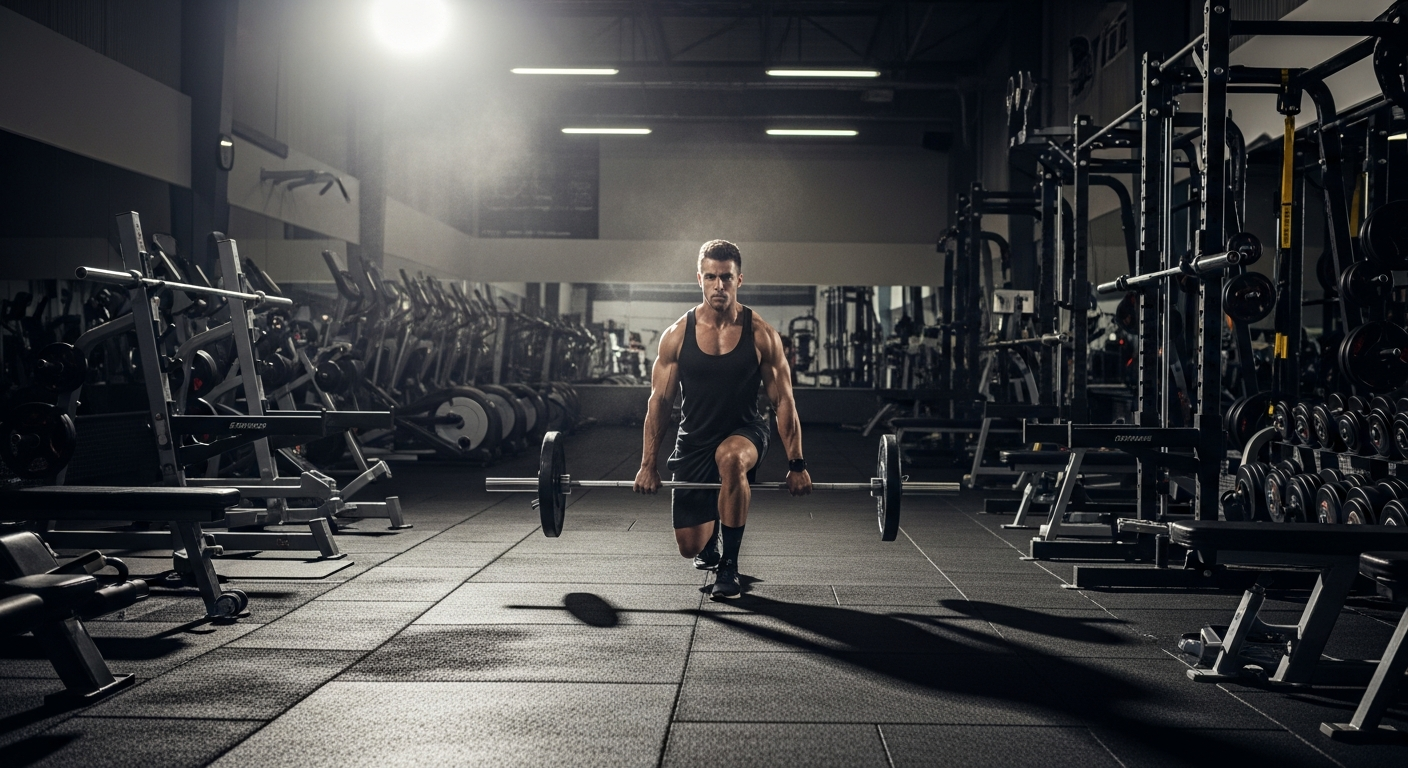
- The single leg deadlift with a barbell is a powerful unilateral training exercise.
- It significantly enhances balance, stability, and coordination.
- This lift boosts muscle activation in the glutes, hamstrings, and core.
- Using a barbell provides a unique challenge compared to dumbbells or kettlebells.
- Proper form is crucial for safety and to maximize the exercise's benefits.
- It's a great tool for identifying and correcting strength imbalances between legs.
Introduction
Are you looking to add a challenging and effective exercise to your strength training routine? The single leg deadlift might just be the move you need. This powerful exercise takes the traditional deadlift and gives it a twist by focusing on one leg at a time. It’s an incredible way to build a stronger lower body, improve your balance, and address muscle imbalances. If you want to elevate your workouts and see some serious gains, this exercise is a game-changer.
What Is the Single Leg Deadlift Barbell Exercise?
The single leg deadlift with a barbell is a unilateral hinge movement that challenges your entire posterior chain. Unlike a conventional deadlift, you perform this exercise while balancing on one leg. You start from a standing position, holding the barbell with an overhand grip. The movement involves a hip hinge, where you lower your torso toward the ground while extending the non-working leg behind you for balance. The goal is to keep your back straight and hips level as you lower the barbell.
This style of deadlift is all about control and stability. You’ll find it’s not just a test of strength but also of your coordination and balance. To return to the starting standing position, you drive through your standing leg and extend your hips, bringing the back leg forward. It’s a full-body exercise that requires focus and precise execution to perform correctly and safely. Now, let's explore what makes this deadlift unique and how the barbell changes the dynamic.
Key Features That Set It Apart From Other Deadlifts
The most obvious feature of the single leg barbell deadlift is its unilateral nature. By training one leg at a time, you can identify and correct strength imbalances between the two sides of your body, which is something bilateral lifts can mask. This focus on unilateral training makes it an excellent diagnostic and corrective tool.
Another key difference is the increased demand on balance and stability. While a Romanian deadlift emphasizes hamstring stretch from a stiff-legged starting position, the single leg deadlift involves a greater range of motion and coordination as you balance on one foot. This makes it a more functional movement that mimics activities like running and sprinting.
Ultimately, the combination of strength, balance, and coordination required makes the single-leg version a unique challenge. Unlike its two-footed counterparts, it forces smaller stabilizer muscles to work overtime, leading to more well-rounded development.
How the Barbell Changes the Traditional Single Leg Deadlift
Using a barbell for the single leg deadlift introduces a significant stability challenge. Unlike dumbbells or kettlebells, which allow for more freedom of movement, a loaded barbell forces you to maintain strict control to keep it level. This barbell version demands exceptional core strength to prevent rotation and maintain proper form.
Your center of gravity is tested more intensely with a barbell. You must keep the bar aligned with the middle of your standing foot while your back leg extends, which requires precise body control. Mastering this variation can significantly improve your overall lifting mechanics.
There are several variations you can explore depending on your goals and equipment.
|
Equipment |
Benefit |
|---|---|
|
Barbell |
Increases stability challenge and allows for heavier loads. |
|
Dumbbells |
Allows for greater freedom of movement and less stress on balance. |
|
Kettlebells |
Ergonomic and great for contralateral loading to challenge the core. |
|
Bodyweight |
Perfect for mastering form and improving balance before adding weight. |
(ALSO READ: Barbell Deadlift Basics: Your Guide to Safe Lifting)
Benefits of the Single Leg Barbell Deadlift for Lifters
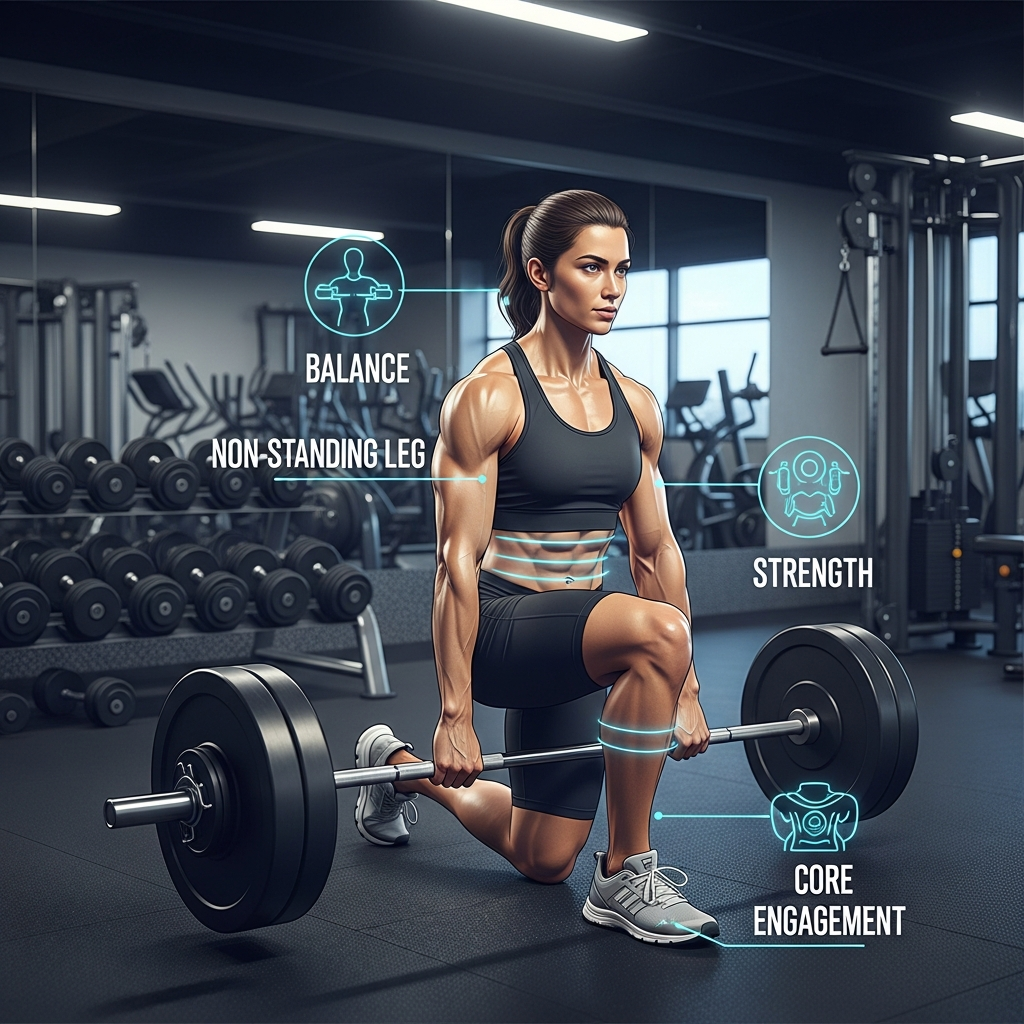
The single leg barbell deadlift offers a host of benefits for any strength training enthusiast. It’s a fantastic tool for building a resilient lower back and incredible core stability. As a unilateral exercise, it helps you identify and fix muscle imbalances, leading to more symmetrical strength and a reduced risk of injury.
Furthermore, this exercise allows for progressive overload, which is key for hypertrophy and strength gains. By focusing on one leg at a time, you increase the muscle activation in your glutes and hamstrings, promoting growth and power. The following sections will explore how this exercise can specifically improve your balance and strength.
Improving Balance, Stability, and Coordination
Yes, single leg barbell deadlifts are exceptional for improving balance and stability. Standing on one leg while lifting a weight forces your body to constantly make micro-adjustments to stay upright. This engages stabilizer muscles from your foot and ankle all the way up through your lower body and core.
Think of it as a form of active yoga with added resistance. The exercise trains your brain and body to work together, enhancing your coordination. This improved neuromuscular connection translates to better performance in sports and other lifts, as you'll be more stable and controlled during dynamic movements.
Your core muscles are also heavily engaged to prevent your torso from twisting, which further enhances your overall stability. Regular practice can lead to noticeable improvements in your ability to maintain balance, not just in the gym but in everyday life.
Enhancing Muscle Activation and Strength
The single leg barbell deadlift is a powerhouse for muscle activation. By isolating one leg, you place a greater demand on the muscles of the posterior chain. This targeted stress is excellent for hypertrophy, as it stimulates significant muscle growth in the glutes and hamstrings.
Your erector spinae muscles, which run along your spine, also work hard to maintain a neutral back position throughout the lift. This helps build a stronger, more resilient back. The unilateral nature of the movement ensures that the working leg's muscles are fully engaged without assistance from the other side.
This intense muscle activation means you can achieve a powerful training stimulus even with lighter weights compared to a conventional deadlift. The focused effort on one side of the body promotes strength gains that are both functional and aesthetic, building a powerful and well-defined posterior chain.
(ALSO READ: Trap Bar vs Barbell Deadlift: Which Should You Choose?)
Muscles Targeted During the Single Leg Barbell Deadlift
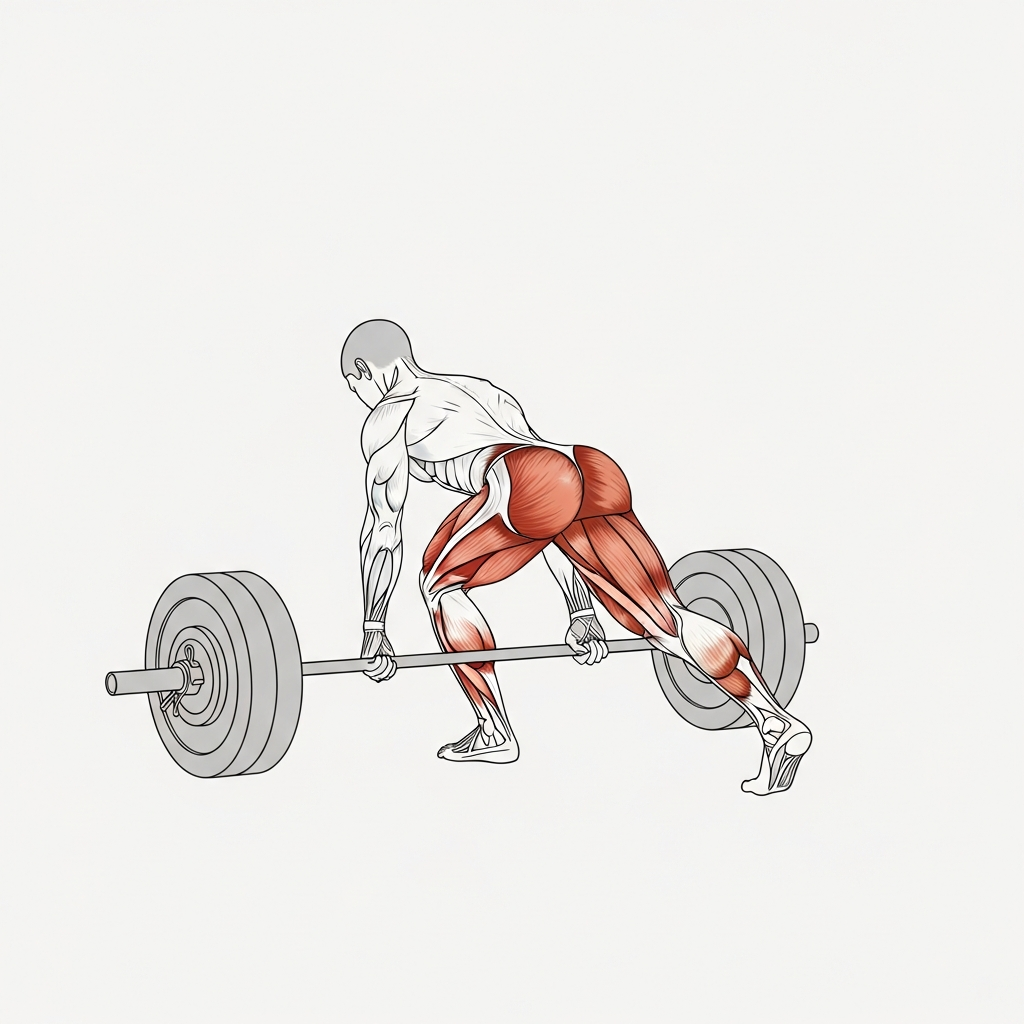
The single leg barbell deadlift is a comprehensive exercise that engages a wide array of muscles, primarily in the posterior chain. When you perform this lift, you're giving your glutes and hamstrings an incredible workout. These are the main movers responsible for the powerful hip extension needed to return to a standing position.
Beyond the major muscle groups, this exercise also heavily recruits your stabilizer muscles to maintain balance and control. Your core, back, and even the small muscles in your feet work together to keep you steady. Let's look closer at how these muscle groups are engaged.
Glutes, Hamstrings, and Posterior Chain Emphasis
The primary targets of this compound movement are the glutes and hamstrings. During the hip hinge, your hamstrings lengthen under tension, and you should feel a deep stretch at the bottom of the movement. This eccentric phase is crucial for muscle growth and strength development.
As you return to the standing position, your glutes and hamstrings contract forcefully to extend your hips. This powerful contraction is what drives the movement and builds strength in the entire posterior chain. The isolation of working one leg at a time ensures these muscles are getting a concentrated workout.
Because it's a compound movement that works multiple joints and muscles simultaneously, the single leg deadlift is highly efficient. It promotes functional strength and muscle growth in a way that few other exercises can, making it a valuable addition to any leg day routine.
Core Engagement and Stabilizer Muscle Involvement
While the posterior chain does the heavy lifting, your core and stabilizer muscles are the unsung heroes of the single leg deadlift. Strong core engagement is non-negotiable for maintaining core stability and a neutral spine throughout the entire range of motion, which is key to making the exercise back-friendly.
Your obliques work overtime to prevent your torso from rotating, while your deeper core muscles brace your spine. This anti-rotation element is one of the exercise's greatest benefits for building a strong, functional core. It's like doing a plank and a deadlift at the same time.
In addition, the smaller muscles in your hips, ankles, and feet are constantly firing to keep you balanced. This constant work strengthens these stabilizers, which can help prevent injuries in other activities. It’s a much more dynamic way to build stability than static exercises like back extensions.
(ALSO READ: Hex Bar vs Barbell Deadlift: Pros and Cons Uncovered)
How to Perform a Single Leg Barbell Deadlift with Proper Form
Nailing the proper form is essential to get the most out of the single leg barbell deadlift and to avoid injury. The correct set up begins with your feet and grip. You'll use a double overhand grip on the barbell, and your starting position will be stable and balanced before you initiate the hip hinge.
Control is the name of the game. A slow, deliberate movement will ensure you're using the right muscles and not momentum. The next sections will break down the execution step-by-step and offer tips to keep your back safe and happy throughout the lift.
Step-by-Step Setup and Execution
To begin, stand with a loaded barbell in front of you. It's wise to start with a lighter weight until you have mastered the proper form. Position your working foot so it is directly aligned with the center of the bar.
From this starting position, hinge at your hips and grab the bar with a shoulder-width, overhand grip. Keep your back flat and your gaze focused a few feet in front of you to maintain neutral alignment. Before you lift, ensure your shoulders are pulled back and your core is tight.
Now you're ready to perform the rep. Follow these steps for a perfect execution:
- Lift your non-working leg off the ground and extend it behind you.
- Initiate the lift by pushing through your standing foot.
- As the bar passes your knee, drive your hips forward to stand up straight.
- Slowly reverse the motion, hinging at the hips and extending your back leg for balance.
- Lower the barbell back to the floor with control.
- Complete all reps on one side before switching to the other.
Tips for Making the Exercise Back-Friendly and Safe
Protecting your lower back is the top priority. The single most important tip is to maintain a neutral spine. Avoid rounding your back at all costs, as this places undue stress on your lumbar spine. Think about keeping a straight line from your head to your hips.
If you feel strain in your lower back, it's often a sign that you're using too much weight or your form is breaking down. Don’t hesitate to drop to a lighter weight or even practice the movement with just your bodyweight. Unlike back extensions, where the movement is centered on the spine, this lift should be all about the hips.
Here are a few quick tips for a safer lift:
- Keep your core braced throughout the entire movement.
- Pull your shoulder blades down and back to keep your chest proud.
- Ensure your hips and shoulders stay square to the floor, avoiding rotation.
- Focus on a slow, controlled tempo rather than rushing through reps.
Common Mistakes to Avoid With Single Leg Barbell Deadlifts
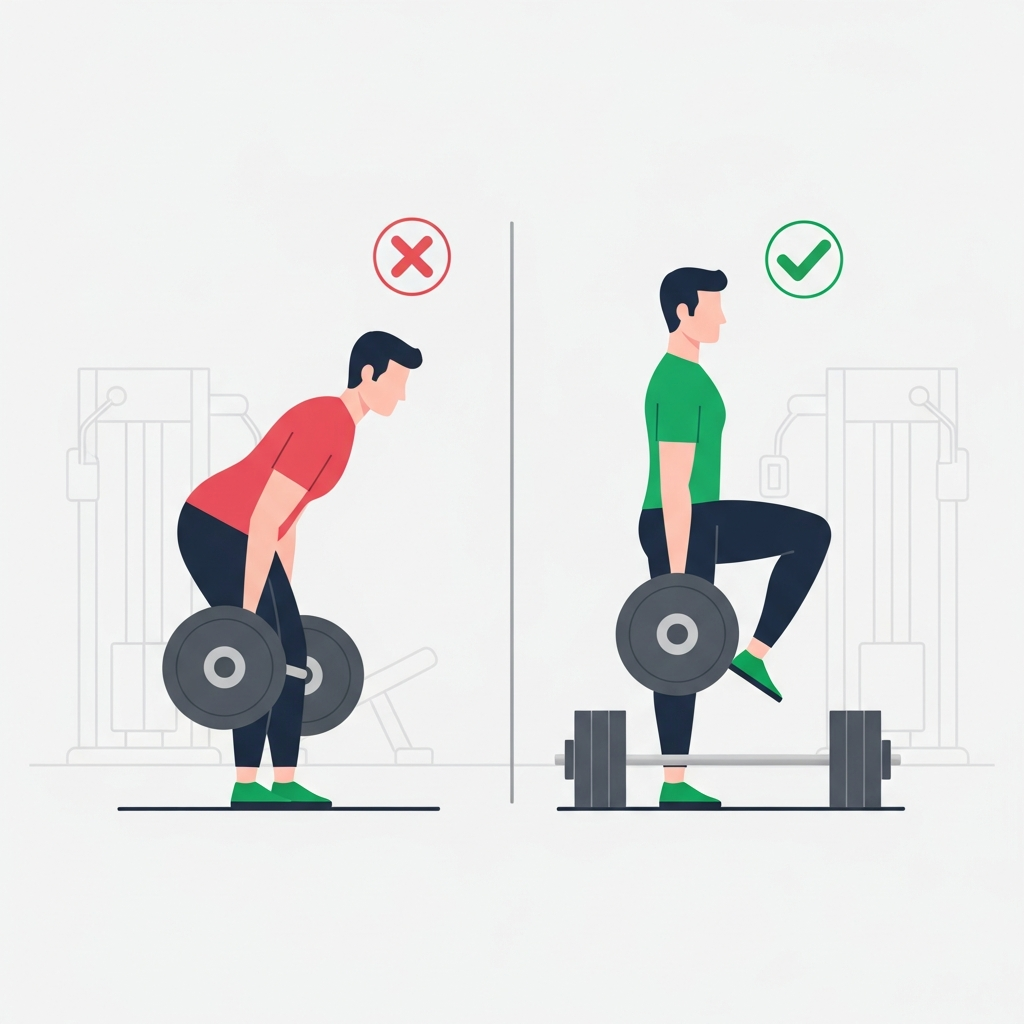
Even experienced lifters can make errors with this challenging exercise. Some of the most common mistakes involve improper back positioning and sacrificing stability for a greater range of motion. These errors not only reduce the effectiveness of the lift but also increase your risk of injury, so it's important to be aware of them.
By understanding what not to do, you can refine your technique and ensure you're performing the single leg barbell deadlift safely and effectively. We'll now look at two of the biggest mistakes: rounding your back and using too much weight.
Improper Back Positioning and Rounding
One of the most frequent and dangerous mistakes is improper back positioning, specifically rounding the lower back. When your spine loses its neutral alignment, you shift the load from your powerful glutes and hamstrings to the more vulnerable structures of your lumbar region. This is a recipe for injury.
This rounding often happens when lifters try to achieve a greater range of motion than their flexibility allows. Remember, the goal is to hinge at the hips, not to bend from the spine. Only lower the weight as far as you can while maintaining a flat back.
If you struggle with this, try using a dowel placed along your spine during bodyweight practice. The dowel should maintain contact with your head, upper back, and sacrum throughout the entire hinge. This provides immediate feedback and helps you pattern the correct movement.
Losing Balance or Using Excessive Weight
It’s easy to let ego get in the way, but using excessive weight on this exercise is a common pitfall. The single leg deadlift is a unilateral training exercise that demands balance and control. If you're struggling to stay stable, the weight is likely too heavy.
Losing balance not only makes the exercise less effective but also puts you at risk of falling or tweaking a muscle. It's far better to use a lighter weight and perform each rep with perfect control. This will build better muscle endurance and lead to greater strength gains in the long run.
For beginners, the answer is simple: start with just the barbell, or even a dowel, to master the movement pattern. Once you can perform the exercise with flawless form and balance, you can begin to add weight gradually. Focus on quality over quantity.
Conclusion
In summary, the single leg barbell deadlift is a transformative exercise that can significantly enhance your lifting routine. By focusing on balance, stability, and muscle activation, it not only targets the glutes and hamstrings effectively but also engages your core and stabilizer muscles. With proper form and technique, you can avoid common mistakes and reap the full benefits of this unique lift. Embracing the single leg barbell deadlift could very well be the game changer you need in your fitness journey. If you're ready to take your training to the next level, explore how this exercise can fit into your routine today!
Frequently Asked Questions
How much weight should beginners use for the single leg barbell deadlift?
Beginners should start with a very light weight, or even just the empty barbell, to master the form. Focus on completing each rep through the full range of motion with control. Once you feel stable and confident, you can apply progressive overload by slowly adding a small amount of weight.
Can single leg barbell deadlifts replace regular deadlifts in a workout routine?
While the single leg deadlift is excellent for muscle growth and correcting imbalances, it doesn't allow for the same heavy loading as a conventional deadlift. It's best used as an accessory lift to complement your main strength training, rather than a complete replacement for building maximal strength.
REFERANCE:
https://pubmed.ncbi.nlm.nih.gov/27647157/
https://strongfirst.skilltrain.com/Pages/Public/Courses
https://www.strength-oldschool.com/blogs/news/the-no-deadlift-program-to-improve-your-deadlift
https://charitysmith.org/memorial-funds/shawn-perine/
https://www.ergo-log.com/the-best-two-exercises-for-the-back-of-your-legs.html
https://www.ergo-log.com/conventional-deadlift-romanian-deadlift.html
https://www.youtube.com/channel/UCwi9teS8XW21G3hhct5SJgw