

Key Highlights
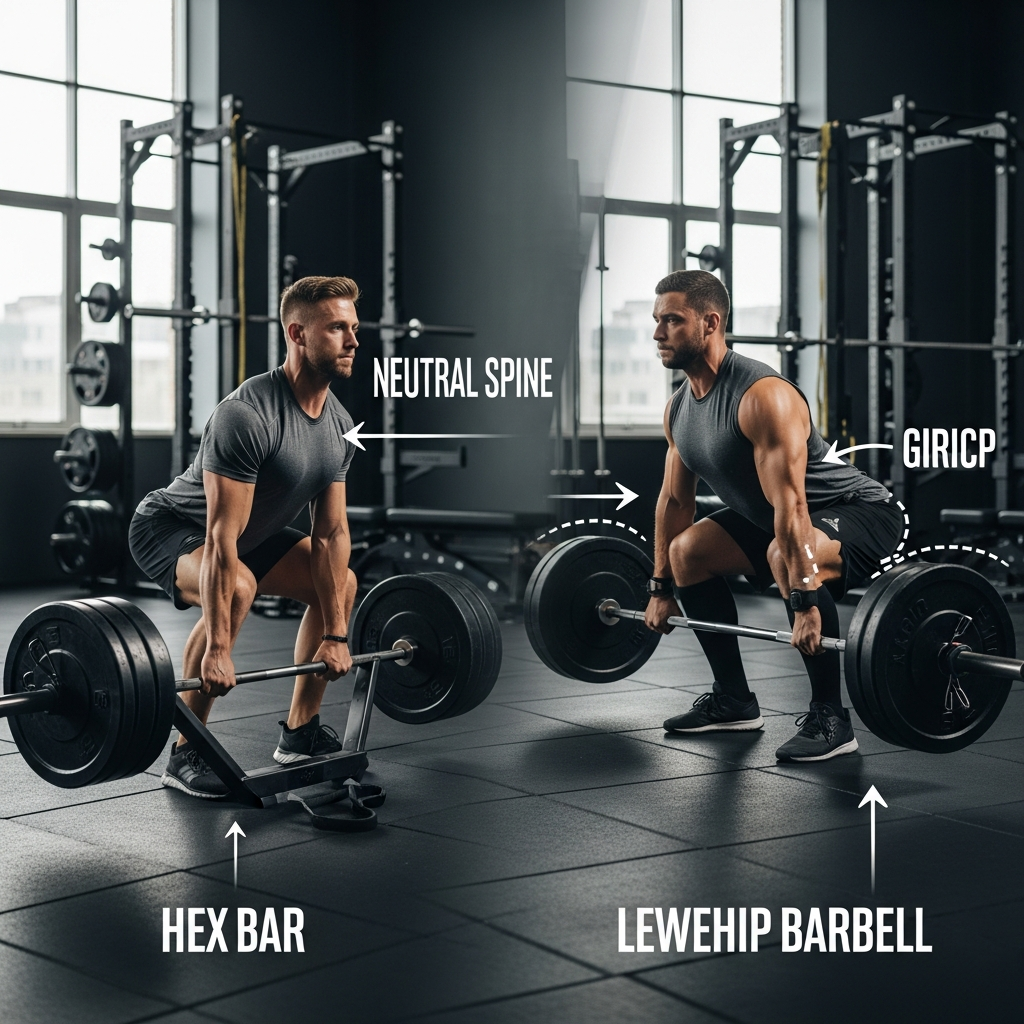
- The hex bar deadlift allows you to stand inside the frame, reducing stress on the lower back compared to the conventional barbell deadlift.
- Barbell deadlifts place more emphasis on the hamstrings and erector spinae, while the hex bar promotes greater muscle activation in the quadriceps.
- For beginners, the hex bar can be easier to learn with proper form due to its neutral grip and more upright posture.
- Your choice between a hex bar and a barbell deadlift should align with your specific strength training goals, such as building muscle or improving athletic performance.
- The hex bar's design often allows you to lift heavier loads because of the improved mechanical advantage.
Introduction
Deciding between the hex bar deadlift and the barbell deadlift is a common debate in the world of strength training. Both are fantastic exercises for building power and muscle, but they offer different benefits and challenges. Whether you're new to lifting or a seasoned athlete, understanding the nuances of each can help you choose the right lift for your body and your workout routine. Let's explore the pros and cons of each to help you make the best decision for your fitness journey.
Understanding the hex bar vs barbell deadlift
When it comes to strength training, the deadlift is a foundational movement. However, the equipment you use can significantly change the exercise. The two most popular options are the hex bar, also known as a trap bar, and the traditional straight barbell used for a conventional deadlift.
Each of these tools offers a unique way to lift, affecting your body mechanics and muscle engagement. The hex bar is a specialty barbell, while the straight bar is the standard in many powerlifting circles. Let's look at what defines each lift.
What Is a Hex Bar Deadlift?
The hex bar deadlift, often called the trap bar deadlift, uses a specialty bar with a hexagonal frame. This unique shape is the key to its benefits. You stand inside the frame during the lift, which aligns the weight with your body's center of gravity.
This setup allows for a more natural lifting motion. The hex bar features handles on either side, allowing for a neutral grip where your palms face each other. This hand position is often more comfortable and can be less stressful on your shoulders and wrists compared to a straight bar.
Because of its design, the hex bar deadlift promotes a more upright torso. This posture combines elements of a squat and a deadlift, making it a great compound exercise. It's often considered a more beginner-friendly option because the movement can feel more intuitive.
What Is a Barbell Deadlift?
The barbell deadlift is the classic version of this powerful exercise, often referred to as the conventional deadlift. It is performed with a standard straight bar, like an Olympic bar, which is positioned in front of your body. This placement requires you to hinge forward more significantly to lift the weight from the floor.
During a barbell deadlift, you grasp the straight bar with an overhand, mixed, or hook grip. Because the bar is in front of you, the lift places a greater demand on your posterior chain, which includes your hamstrings, glutes, and lower back muscles.
This lift is the standard in powerlifting competitions, so many serious lifters focus on mastering its form. It requires more technical skill to perform correctly and safely, as the forward-leaning position can increase stress on the lower back if not executed with proper technique.
(ALSO READ: Barbell Deadlift Basics: Your Guide to Safe Lifting)
Key Differences Between hex bar vs barbell deadlift
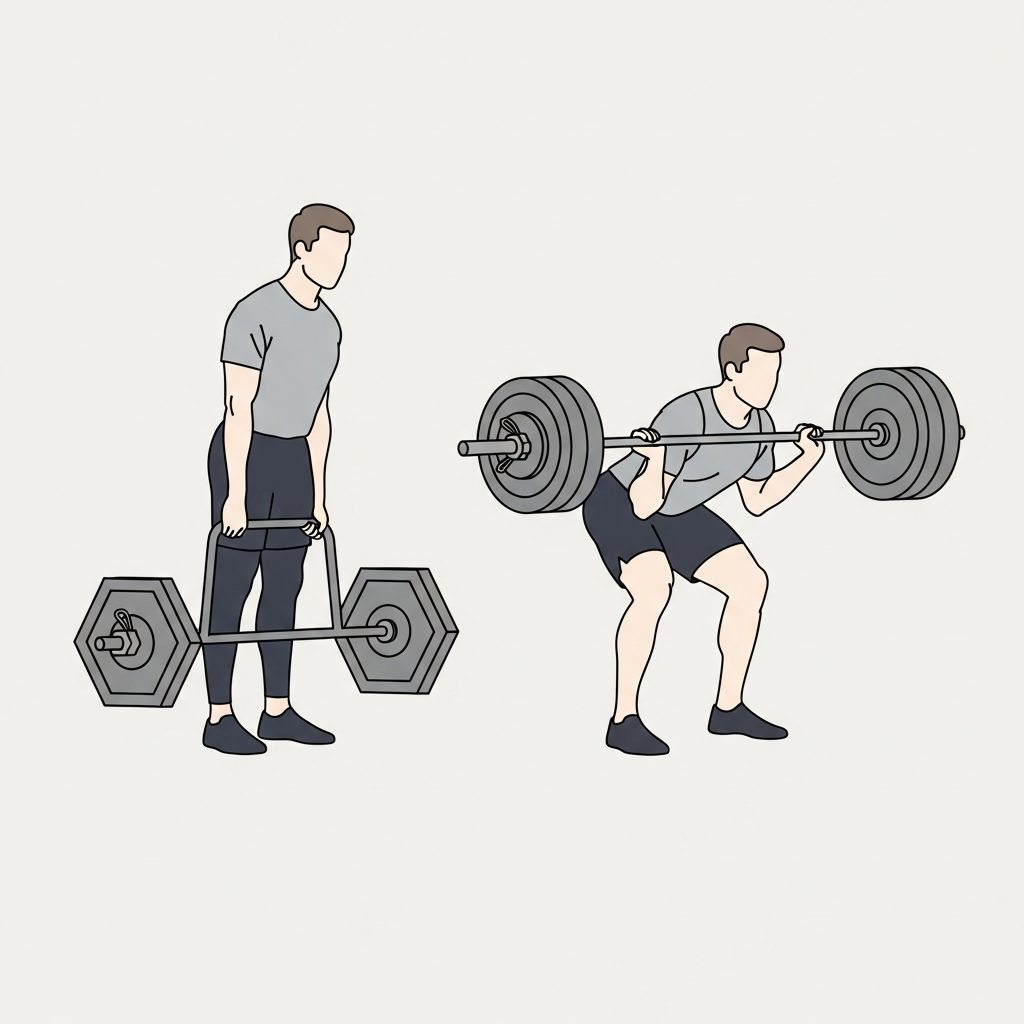
The primary distinctions between the hex bar deadlift and barbell training lie in the equipment, your body's positioning, and the resulting movement pattern. The shape of the bar itself dictates everything from your grip width to your posture, which directly impacts muscle engagement and technique.
Understanding these differences is crucial for choosing the right lift. Let's compare the setup and equipment for each, and then examine how the lifting techniques vary. This will give you a clearer picture of which deadlift is right for your goals and body.
Setup and Equipment Comparison
The most obvious difference starts with the equipment. The hex bar has a hexagonal frame that you stand inside, with handles at your sides. In contrast, a barbell deadlift uses a straight barbell that you stand behind. This fundamental design difference changes the entire dynamic of the lift before you even add weight plates.
The hex bar's handles are typically positioned to offer a neutral grip, with palms facing each other. Many hex bars also provide two handle heights: high and low. The high handles reduce the range of motion, making it easier for beginners or those with mobility issues. The straight barbell requires an overhand or mixed grip.
Let's break down the main equipment differences in a simple table:
|
Feature |
Hex Bar |
Straight Barbell |
|---|---|---|
|
Bar Shape |
Hexagonal frame |
Straight bar |
|
Your Position |
Stand inside the frame |
Stand behind the bar |
|
Grip Type |
Neutral grip (palms in) |
Overhand or mixed grip |
|
Handle Options |
Often has high and low handles |
Single bar height |
Lifting Technique and Movement Patterns
The movement patterns for the hex bar and barbell deadlifts are quite distinct due to the equipment differences. With the hex bar, your body's center of gravity is aligned with the weight. This allows for a more upright torso throughout the lift and greater knee flexion, making the movement somewhat similar to a squat. The grip is neutral, which is often more comfortable and less stressful on the biceps than a mixed grip.
In contrast, the barbell deadlift requires you to pull the weight from in front of your body. This forces you into a more hinged-forward position, placing greater demands on your posterior chain. Maintaining proper form is critical to avoid rounding your lower back.
Key technique differences include:
- Torso Position: The hex bar encourages a more upright torso, while the barbell requires more forward lean.
- Knee Bend: The hex bar deadlift involves greater knee flexion at the start of the lift.
- Grip: Hex bars use a neutral grip, whereas barbells use overhand or mixed grip variations.
Muscle Activation and Target Areas
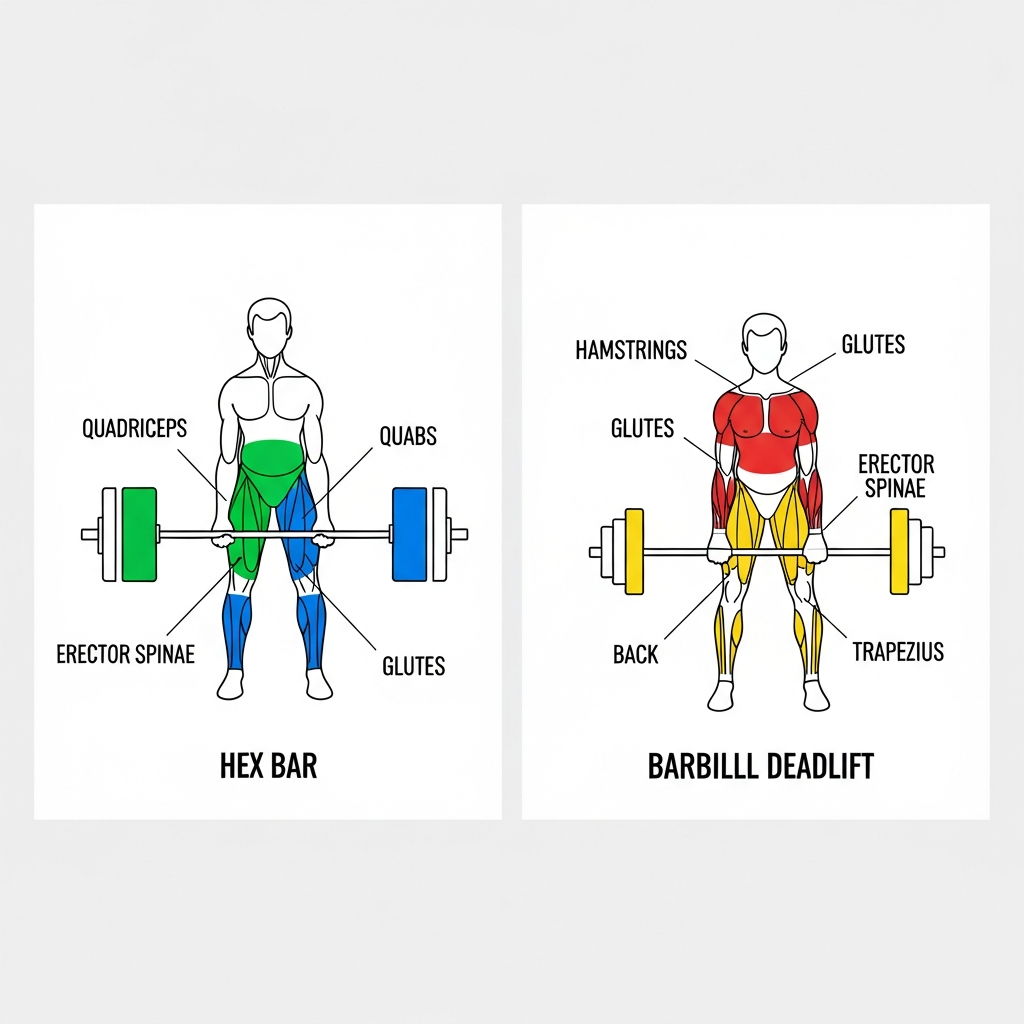
While both the hex bar deadlift and the conventional deadlift are excellent for building overall muscle mass, they don't target muscle groups in the exact same way. The differences in form and body mechanics lead to variations in muscle activation, particularly in the lower body.
Understanding which muscles are emphasized in each lift can help you tailor your training to your specific goals. Let's explore the primary muscles worked during a hex bar deadlift and compare them to those engaged during a conventional deadlift.
Muscles Worked in Hex Bar Deadlifts
The hex bar deadlift is a fantastic compound exercise that activates several major lower body muscles. Due to the more upright torso and greater knee bend, this lift places a significant emphasis on the quadriceps. In fact, studies show considerably more muscle activation in the quads compared to a conventional deadlift.
While the quads take on a larger role, the posterior chain is still heavily involved. The gluteus maximus is crucial for driving hip extension to complete the lift, and the hamstrings act as important stabilizers throughout the movement. Your core also works hard to maintain a neutral spine.
Here are the primary muscles targeted:
- Quadriceps: Heavily engaged to extend the knees.
- Gluteus Maximus: Responsible for generating force during hip extension at full lockout.
- Hamstrings: Assist in hip extension and provide stability.
- Core: Stabilizes the spine throughout the lift.
Muscles Worked in Barbell Deadlifts
The conventional barbell deadlift is renowned for its ability to build a powerful posterior chain. Because the bar is in front of you, the lift places a greater demand on the muscles on the back side of your body. This makes it a full body exercise that truly tests your strength from head to toe.
Research shows that the barbell deadlift produces higher levels of muscle activation in the hamstrings and the erector spinae muscles of the lower back. These muscles work hard to support your spine and extend your hips from a hinged position. If you're looking to maximize development in these areas, the barbell deadlift is an excellent choice. However, this also means there's a higher potential for back pain if your form is incorrect.
Key muscles worked include:
- Hamstrings: Highly activated during the concentric (lifting) phase.
- Erector Spinae: Work to stabilize the spine and extend the back.
- Glutes: Crucial for powerful hip extension.
- Entire Body: Engages lats, traps, and forearms for grip and stability.
(ALSO READ: Trap Bar vs Barbell Deadlift: Which Should You Choose?)
Strength, Power, and Performance Outcomes
When it comes to strength gains and building muscle, both deadlift variations are highly effective. However, the way they contribute to power and athletic performance can differ. Your choice might depend on whether you want to lift the absolute heaviest loads or develop sport-specific skills.
Your training program can benefit from either lift, but understanding their distinct performance outcomes is key. We'll explore which variation allows for heavier lifts and how each one translates to athletic performance on and off the field.
Lifting Heavier Weight—Which Variation Offers More Potential?
For most people, the hex bar deadlift allows for heavier lifts. This is due to the improved mechanical advantage it offers. By standing inside the bar, the weight is aligned with your center of gravity, and the more upright posture with greater knee flexion puts you in a stronger position to lift.
This setup reduces the distance the bar has to travel and decreases the stress on your lower back and hips compared to conventional barbell deadlifts. As a result, lifters often find they can move more weight with the hex bar. Studies have shown that the hex bar deadlift can produce greater peak force and power.
However, it's important to remember that lifting heavier doesn't always mean it's better for every goal. While the hex bar is great for moving maximal weight, the barbell deadlift excels at building strength in the specific muscles required for competitive powerlifting.
Athletic Performance: Sport-Specific Benefits
Both deadlifts can significantly boost athletic performance, but they offer slightly different sport-specific benefits. The hex bar deadlift is often favored for athletes in field sports. Since it generates greater peak power and velocity, it's highly effective for improving jumping ability, speed, and agility.
The movement pattern of a hex bar deadlift more closely mimics the lower body movement used in many sports, such as jumping or tackling. The increased quad activation and explosive power development make it a valuable addition to a strength training program for athletes.
On the other hand, the conventional deadlift is essential for powerlifters, as it's a competitive lift. It is also excellent for building raw, total-body strength that can carry over to other activities.
- Hex Bar Benefits: Improves vertical jump, acceleration, and peak power.
- Barbell Benefits: Builds maximum posterior chain strength and is specific to powerlifting.
- Both: Increase overall strength and contribute to a more powerful physique.
Safety, Back Health, and Injury Risk
Safety should always be a top priority in your training, especially when lifting heavy. The risk of injury, particularly to the lower back, is a common concern with deadlifts. The design of the hex bar and barbell directly influences spinal loading and overall safety, making one potentially better than the other depending on your body and history with back pain.
Maintaining a neutral spine and using proper technique are crucial for both lifts, but the upright position of the hex bar deadlift offers distinct advantages. Let's examine how each lift impacts your back and which might be a safer choice for you.
Lower Back Stress and Spinal Positioning
The hex bar deadlift is widely considered to be safer for the lower back. Its design allows you to maintain a more upright torso, which significantly reduces the shear forces and stress placed on your spine. By keeping the load aligned with your center of gravity, you minimize the lever arm acting on your lower back.
This makes maintaining a neutral spine much easier throughout the lift. Research has confirmed that the hex bar deadlift results in lower peak stress on the lumbar spine compared to the conventional deadlift. This means there is less stress on your back during the movement.
In contrast, the barbell deadlift's forward-leaning posture inherently places more demand on the erector spinae muscles to support the spine. While this can be a great way to strengthen those muscles, it also increases the risk of injury if your form breaks down.
Suitability for Beginners and Individuals with Back Issues
For a beginner, learning proper form with the hex bar is generally easier and safer. The intuitive movement pattern and neutral grip reduce the technical demands of the lift, allowing newcomers to focus on the fundamental hip hinge without the added complexity of navigating a bar around their shins.
This makes the hex bar an excellent choice for individuals with pre-existing back issues or those concerned about back health. The reduced spinal load provides a safer way to build lower body strength. If you have a history of back pain, the hex bar deadlift is often the recommended variation.
Here’s who can benefit most from starting with a hex bar:
- Beginners: It's easier to learn proper deadlift form.
- People with Back Issues: It places less stress on the lumbar spine.
- Those with Mobility Limitations: The high handles reduce the range of motion.
- Athletes: It builds explosive power with a lower risk of injury.
When to Choose Hex Bar vs. Barbell Deadlifts
The decision between a hex bar and a barbell deadlift ultimately comes down to your personal training goals, current fitness levels, and individual needs. There is no single "better" option; each has its place in a well-rounded workout routine. This comprehensive guide aims to help you make an informed choice.
By considering what you want to achieve—whether it's raw strength, athletic power, or muscle growth—you can determine which deadlift variation is the right tool for the job. Let's look at how to align your choice with your fitness goals.
Training Goals and Personal Needs
Your fitness goals are the most important factor in this decision. If your primary goal is to compete in powerlifting, then mastering the traditional barbell deadlift is non-negotiable. It's a required lift in competitions, and your training should reflect that. It’s also the best choice for maximizing posterior chain development.
On the other hand, if your goal is general strength gains, athletic performance, or building muscle with less risk to your lower back, the hex bar deadlift is an excellent option. It's particularly well-suited for athletes who need to develop explosive power for sports like football or basketball.
For those with a history of back pain or beginners who are still learning proper lifting mechanics, the hex bar deadlift is the safer and more practical choice. It allows you to build a strong foundation before potentially progressing to the more technically demanding barbell deadlift.
Situations Where Each Deadlift Excels
Each deadlift variation shines in different scenarios. The hex bar deadlift is superior for developing peak power and velocity, making it ideal for improving athletic performance. Because you can typically lift heavier loads with it, it's also great for maximal strength development in a safer, more controlled manner.
Conversely, conventional barbell deadlifts are unmatched for building the specific strength needed for powerlifting and for maximally engaging the hamstrings and erector spinae. It is a true test of total-body strength and technical proficiency. Including it in your training program is essential if you want to compete or build a formidable posterior chain.
Here's a quick summary of where each lift excels:
- Choose the Hex Bar Deadlift for:
- Improving athletic performance (jumping, sprinting).
- Lifting maximum weight with less back stress.
- Beginner-friendly learning and technique.
- Choose the Conventional Barbell Deadlift for:
- Powerlifting competition training.
- Maximizing hamstring and lower back strength.
- Developing technical lifting skills.
(ALSO READ: 8 Must-Try Barbell Workouts for Total Body Strength)
Conclusion
In conclusion, choosing between the hex bar and barbell deadlift ultimately depends on your individual goals, experience level, and any physical considerations you may have. Both variations offer unique benefits, from muscle activation to safety for those with back issues. By understanding the key differences and evaluating your own training needs, you can make an informed decision that aligns with your fitness journey. Whether you're aiming for strength, performance, or injury prevention, incorporating the right deadlift variation can significantly enhance your workout routine. If you need further guidance in optimizing your deadlift technique, feel free to reach out for a consultation!
Frequently Asked Questions
Is it easier to learn proper deadlift form with a hex bar or barbell?
Yes, it is generally easier for a beginner to learn proper deadlift form with a hex bar. The neutral grip and upright posture make the movement more intuitive and reduce the technical skill required compared to a conventional deadlift with a barbell, which demands more attention to spinal position.
Are hex bar deadlifts better for people with lower back issues?
Absolutely. Hex bar deadlifts are often recommended for people with lower back issues or a history of back pain. The design allows you to keep a more neutral spine and upright torso, which places significantly less stress on the lower back compared to a traditional barbell deadlift.
REFERENCE:
https://strongfirst.skilltrain.com/Pages/Public/Courses
https://www.physio-pedia.com/Erector_Spinae
https://www.physio-pedia.com/Quadriceps_Muscle
https://www.strongerbyscience.com/trap-bar-deadlifts/
https://www.t-nation.com/training/10-reasons-bodybuilders-are-bigger-than-powerlifters/
https://www.t-nation.com/training/a-new-angle-on-cable-training/
https://www.menshealth.com/fitness/a38866422/best-rep-ranges-workouts/
https://www.westside-barbell.com/blogs/the-blog/the-dynamic-effort-method