

Key Highlights
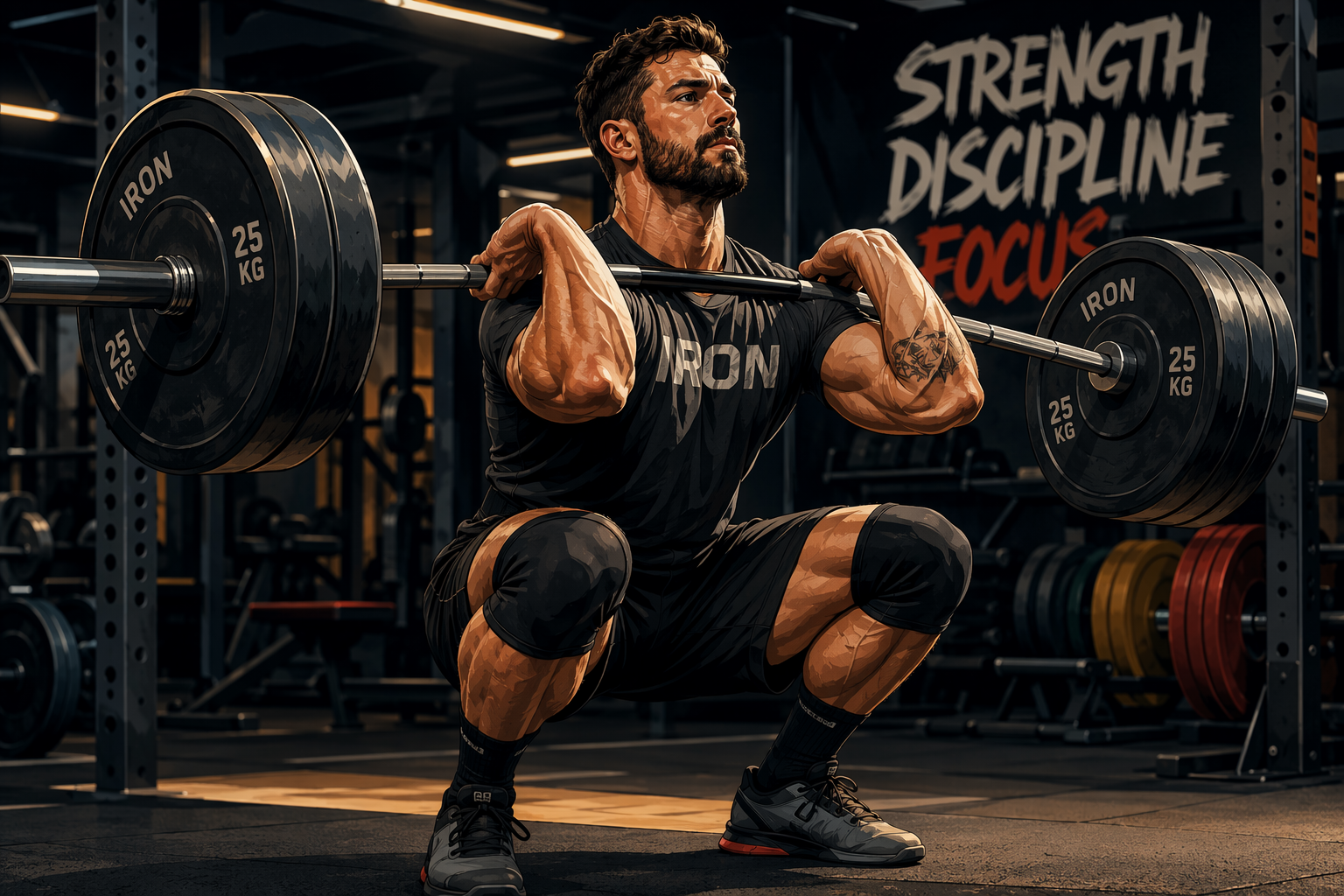
- The front squat uses a barbell in the front rack position.
- It builds lower body strength while challenging balance and coordination.
- Stabilizing the weight in front makes it ideal for improving both strength and stability.
- The hack squat uses a machine that guides your movement, providing structure and support.
- With less emphasis on balance, the hack squat lets you focus on developing lower body strength with minimal coordination required.
- The hack squat uses a squat machine that guides the path and makes setup more structured for many lifters.
- Both exercises train major muscle groups in the lower body, especially the quads and glutes.
- Your range of motion, stance, and form can change how each movement feels.
- Front squat and hack squat each fit different strength, safety, and experience needs.
Introduction
When you want better leg strength, squats usually lead the conversation. Two popular options are the hack squat and the front squat, but they do not train your body in the same way. One uses a machine for a guided pattern, while the other uses free weights and more control. So which one should you choose? That depends on your goals, your form, and your comfort level. Let’s break down how each exercise works and where each one shines. When performing front squats, some common mistakes include letting the elbows drop, rounding the upper back, and allowing the knees to cave inward. In contrast, during hack squats, people often make errors such as placing their feet too high or too low on the platform, not maintaining proper alignment, and locking out the knees at the top. Recognizing these potential pitfalls can help you perform both exercises safely and effectively.
Front squat vs Hack squat
A front squat is a free-weight squat done with a barbell held in a front rack position across the front of your shoulders. It asks more from your torso, core, and overall control. Because of that, many lifters use it to build strength, posture, and coordination.
By contrast, a hack squat is performed on a machine with your back against a pad and your shoulders under support. The setup is more fixed, which can make the movement easier to repeat. Both are useful squat alternatives, but they serve slightly different purposes. The details below make those differences clearer.
(TO KNOW MORE: Front Squat Exercise: Key Form Tips for Success)
Key Differences Between Front Squat and Hack Squat Techniques
The main differences between the front squat and hack squat start with how you hold the load and control the movement. In a front squat, the starting position places the barbell on the front of your shoulders, with elbows up and your torso upright. In a hack squat, the squat machine supports your back and shoulders, so the path is more guided from the start.
That changes how each lift feels. Front squats demand more balance, stability, and body awareness than back squats or machine work. Hack squats reduce those demands and let you focus more directly on driving through your legs. Both can use a strong range of motion down to parallel or slightly below, depending on control.
|
Feature |
Front Squat |
Hack Squat |
|---|---|---|
|
Starting position |
Barbell in front rack on shoulders |
Back on pad, shoulders under machine support |
|
Equipment |
Free weights |
Squat machine |
|
Stability demand |
High |
Lower |
|
Range of motion |
Controlled by lifter |
Guided by machine path |
|
Skill level |
More technical |
Easier to repeat |
Comparing Equipment and Setup for Each Exercise
Equipment changes the whole training experience. For a front squat, your setup usually needs a rack, a barbell, and plates. Some lifters also use lifting straps if wrist or shoulder mobility makes the front rack harder to hold. Since you control the full squat, the lift can feel less forgiving when your form breaks down.
On the other hand, the hack squat machine gives you built-in structure. You place your back against the pad, position your shoulders under the shoulder pads, and move along the machine’s track. That guided setup often feels safer for people still learning the pattern or managing confidence under load.
Key setup differences include:
- Front squat setup depends more on rack height, grip, and barbell position.
- Hack squat machine setup depends more on foot placement and shoulder pad alignment.
- The squat machine provides more support, while free weights require more control.
Muscles Targeted by Front Squats vs Hack Squats
Both exercises train big lower body muscle groups, but the way they do it is not identical. Your quads, glutes, and other leg muscles work hard in each movement, yet the demand shifts based on support, body position, and stability needs. That is why muscle engagement can feel very different from one version to the other.
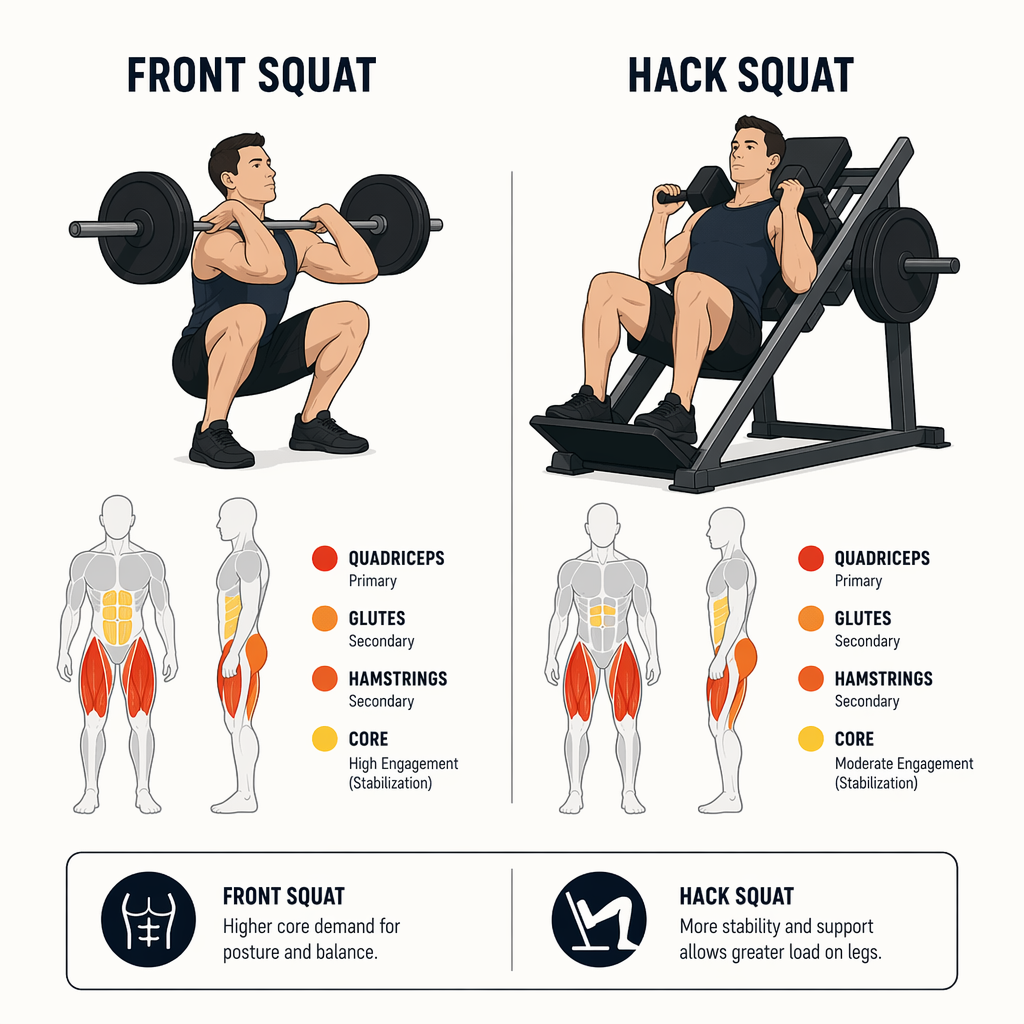
Front squats usually require more total-body muscle activation because you must support the barbell and stay upright. Hack squats place more structure around the movement, which can make the quadriceps feel more directly loaded. Let’s examine each of them in greater detail.
(ALSO READ: Discover the Benefits of Front Squats for Strength Gains)
Muscle Activation in Front Squats
A front squat targets the quads and glutes while also asking more from your core and upper body to keep the bar in place. Because the weight sits in front, your torso has to stay upright, and that increases the challenge across several muscle groups at once. You’re not merely shifting the load; you’re also keeping it steady.
That extra demand is one reason many coaches rate the front squat highly for overall lower body strength. Compared with hack squats, front squats usually involve more coordination and balance, even if both train the same main leg areas. The quads still do a lot of the work, but they are not working alone.
Mobility also matters here. Tight wrists, shoulders, hips, or ankles can affect how well you hold the front rack and reach proper depth. If your mobility is limited, your form may suffer before your legs are fully challenged.
Muscle Engagement in Hack Squats
A hack squat strongly targets the leg muscles, especially the quads, glutes, and hamstrings. Since the squat machine supports your torso, you can focus more directly on pushing through the platform and loading the lower body. Many people notice a strong quad burn because the movement keeps tension in the legs with less need for balancing.
Your stance can slightly shift the feel. A wide stance may bring in more glute and inner-thigh involvement, while other foot positions can change where the effort lands. The machine also helps you repeat a steady range of motion, which can make each rep feel consistent.
For muscle growth, hack squats can be very effective because the setup makes progressive loading simple and controlled. Front squats still build size, but hack squats often make it easier to push the legs hard without the same stability limit.
Benefits and Suitability for Strength, Safety, and Beginners
Choosing between these exercises often comes down to what you need most right now. If your main goal is leg strength with more full-body demand, the front squat has a strong case. If you want a more guided option that helps you focus on reps and progressive overload, the hack squat can be a smart pick.
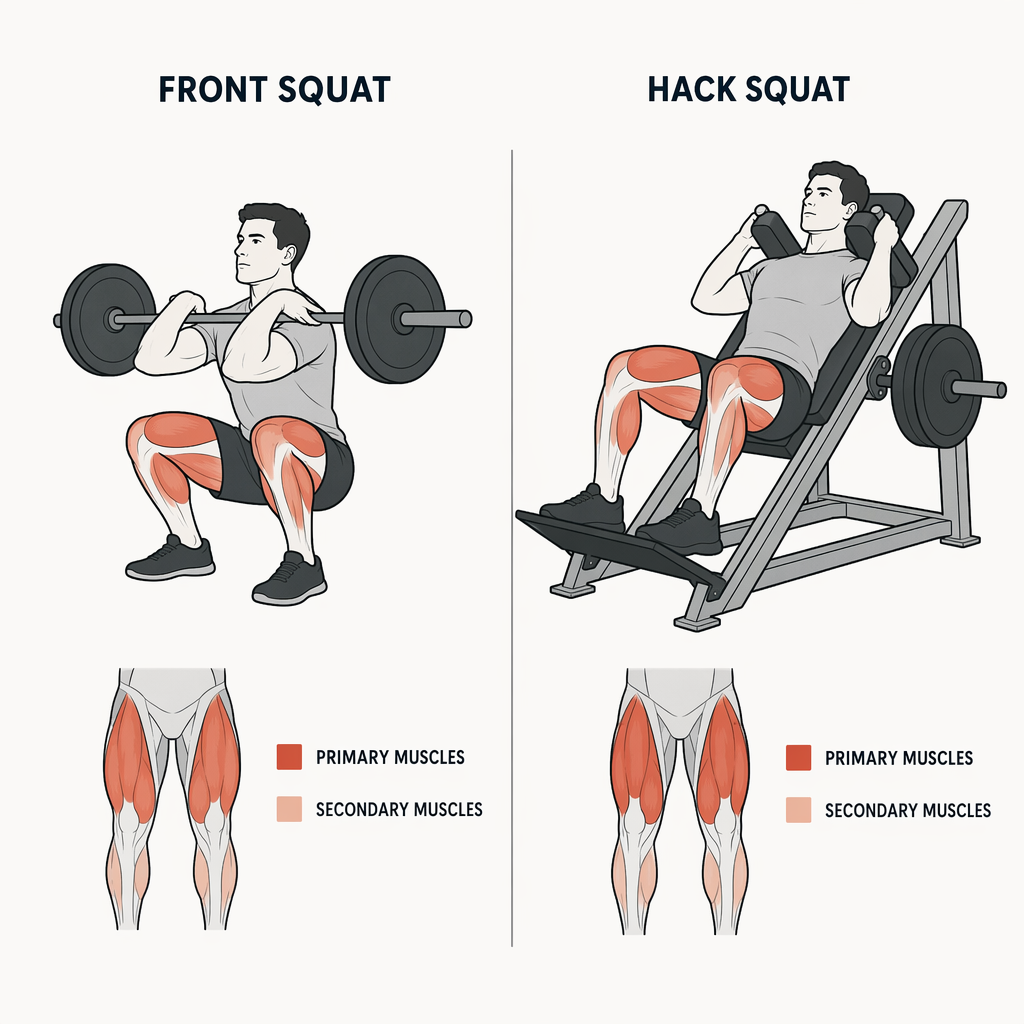
Safety and comfort matter too. Front squats require better form and coordination, while hack squats reduce some balance challenges and may feel friendlier if your lower back is tired. The next section helps you match the movement to your experience level.
Choosing the Right Squat Variation for Strength Gains and Experience Level
If you want overall leg strength, the front squat usually offers more long-term value. It is a free-weight lift, so your body has to stabilize the load, stay upright, and coordinate the entire movement. That added challenge can carry over well to other leg exercises. Still, it only pays off if your technique is solid.
For beginners, the answer is not always simple. A hack squat is often easier to learn because the machine guides the path and reduces balance demands. That can make proper form easier at first. If someone has lower back fatigue or wants less spinal stress, the hack squat may also feel like the better fit.
A simple way to choose:
- Pick the front squat if you want more total-body strength and can learn the technique well.
- Pick the hack squat if you want a more guided pattern with easier setup.
- Use both if you want variety and balanced lower body progress.
Conclusion
In conclusion, both front squats and hack squats offer valuable benefits depending on your fitness goals and experience level. While front squats engage the core and improve overall strength and stability, hack squats target the quads and can be easier on the back for beginners. By understanding the differences in technique, equipment, and muscle engagement, you can make an informed choice that aligns with your workout routine. Remember, the key to successful training is consistency and finding what works best for you. If you'd like personalized advice on incorporating these exercises into your regimen, feel free to reach out for a consultation!
Which one is better, a hack squat or a regular squat?
Choosing between a hack squat and a regular squat depends on your fitness goals. Hack squats emphasize the quads and reduce spinal load, making them great for beginners or those with back issues. Regular squats engage multiple muscle groups, offering a full-body workout. Assess your needs to decide!
REFERENCE:
https://www.muscleandfitness.com/workouts/leg-exercises/exercise-face-back-front-and-hack-squat/
https://www.muscleandfitness.com/workouts/workout-tips/5-worst-lifts-beginners/
https://hortonbarbell.com/the-6-best-weightlifting-straps-all-personally-tested/
https://hortonbarbell.com/goblet-squat-vs-front-squat/
https://hortonbarbell.com/hack-squat-how-to-muscles-worked-benefits/