


Key Highlights
- The main difference between the hack squat and barbell squats is the muscle groups they target; the hack squat focuses on the quads, while the barbell squat works the entire lower body.
- Barbell squats are a free-weight exercise that engages more stabilizer muscles, making them ideal for functional strength. Hack squats use a machine for added stability and can be safer for beginners or those with back issues, but aren’t necessary for optimal leg development. Both have benefits, but barbell squats alone effectively build leg strength and size by activating more stabilizer muscles.
- The hack squat is performed on a squat machine, which provides stability and can be safer for beginners or those with back issues.
- For overall leg strength and muscle mass, barbell squats are superior, but hack squats excel at isolating the quadriceps.
- Your training programs and fitness goals will determine which squat variation is best for you.
Introduction
When it comes to building serious lower body strength, squats are a gym staple. You've likely seen people doing both the classic barbell squat and the machine-based hack squat. Both are fantastic for your legs, but they target different muscle groups and offer unique benefits. Are you wondering which one is better for your goals? This guide will break down the hack squat vs. barbell squat debate, helping you understand their core differences so you can choose the right move for your leg day workout.
Understanding Squat Variations
Squats come in many forms, and each has its own purpose. The debate between using a squat machine and free weights like barbell squats is common in the fitness world. The choice often comes down to your personal goals, experience level, and what you want to achieve.
A hack squat machine guides your movement along a fixed path, which can alter your range of motion compared to a free-weight exercise. Let's look closer at what defines a hack squat and a barbell squat to understand how they differ.
What is a Hack Squat?
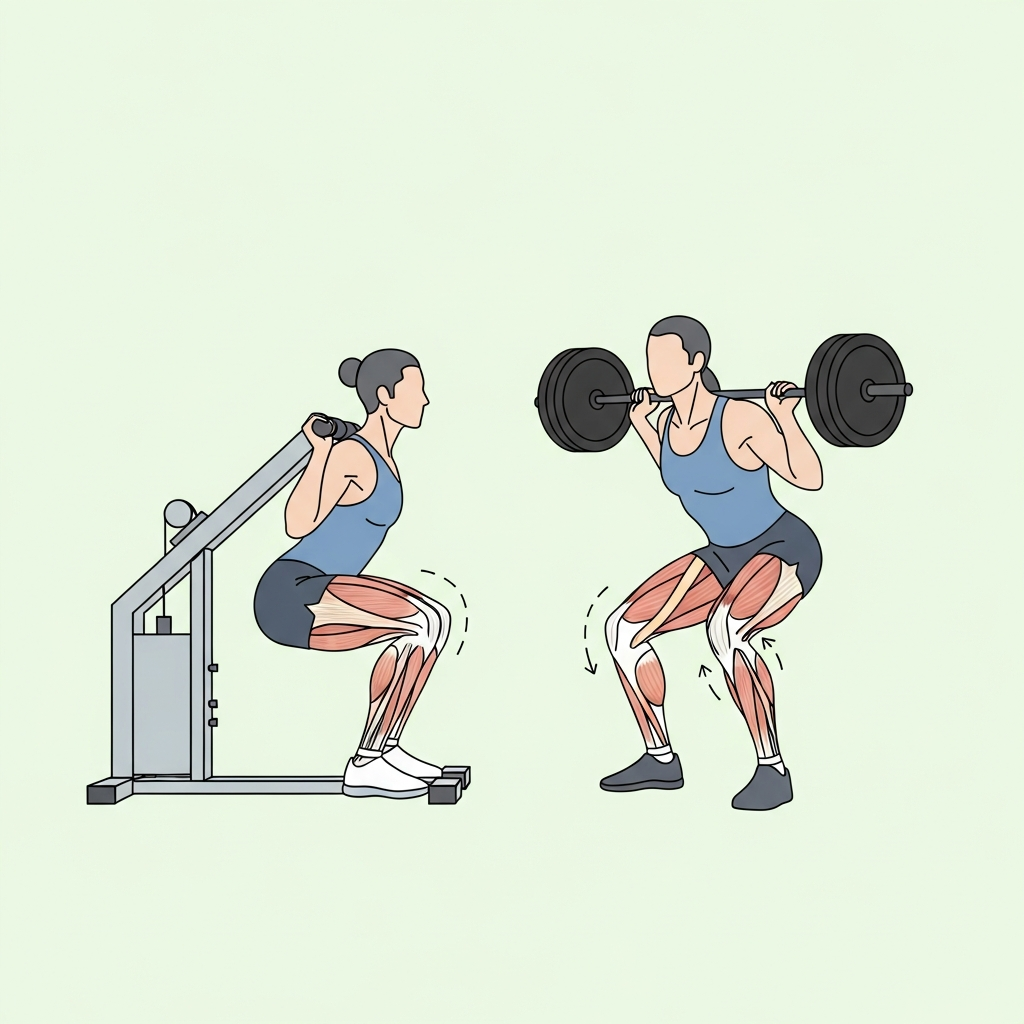
A hack squat is a compound lower body exercise performed on a specialized squat machine. You position yourself by placing your back against a padded support and your shoulders under pads. Your feet are placed on a platform in front of you, and you squat down, moving a weighted sled along a fixed, angled track.
This setup provides a great deal of stability. Because the machine supports your back and guides the movement, you don't need to focus as much on balance. This allows for a more controlled execution of the exercise.
The primary benefit of this machine-based movement is its ability to isolate specific muscles in the lower body. It is particularly effective at targeting the quadriceps, making it a popular choice for those looking to build significant thigh muscle mass.
What is a Barbell Squat?
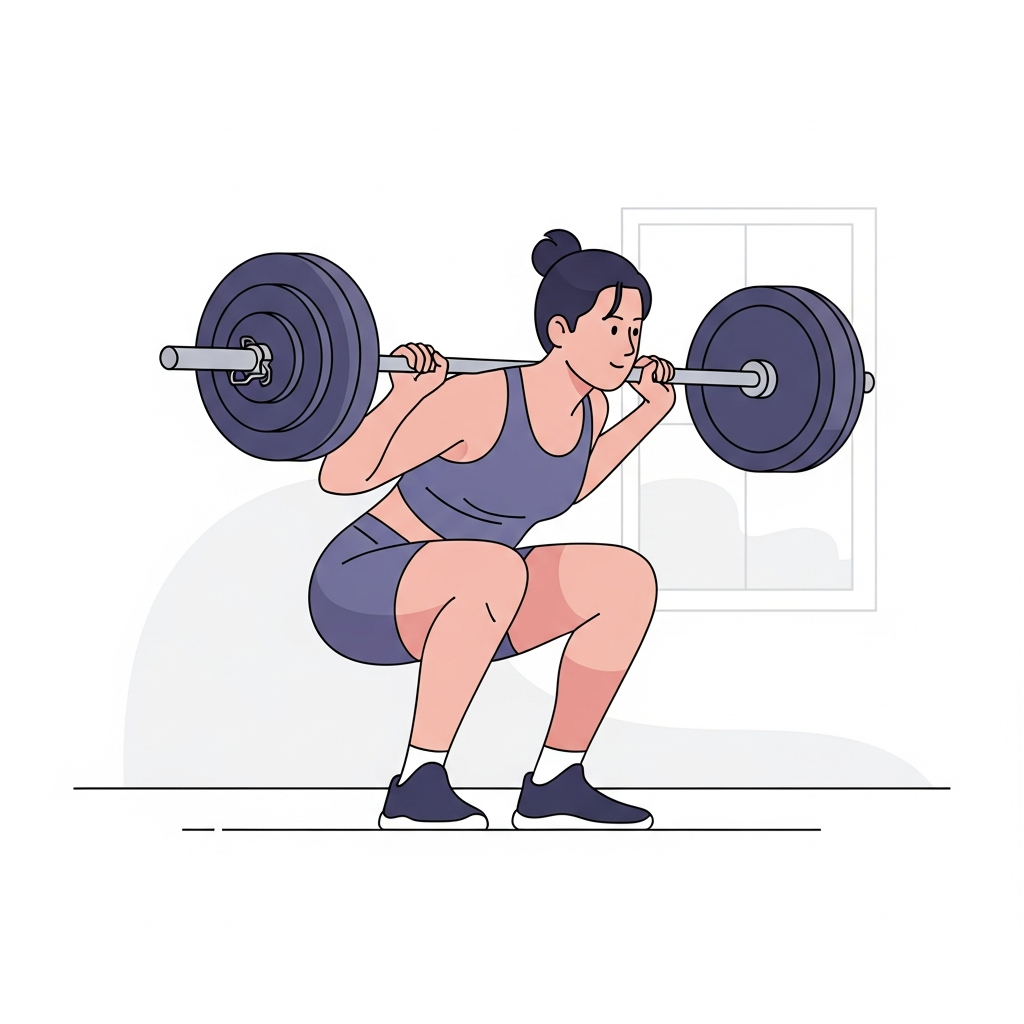
The barbell squat is a classic free weights exercise often hailed as the "king of exercises." It involves placing a loaded barbell across your upper back and shoulders, then squatting down by bending at your hips and knees, similar to sitting in a chair. It requires you to control and stabilize the weight throughout the entire movement.
This exercise is a true full-body challenge. While it’s a lower body movement, it heavily engages your core, lower back, and other stabilizer muscles to maintain balance and proper form. This makes it highly effective for building overall strength and functional fitness.
Because it recruits so many muscles, the barbell squat is exceptional for building total-body muscle mass and strength. It's a foundational movement in many strength sports and is renowned for its ability to develop a powerful and athletic physique.
(TO KNOW MORE : Master the Back Barbell Squat: A Beginner's Guide)
Comparing Mechanics and Technique
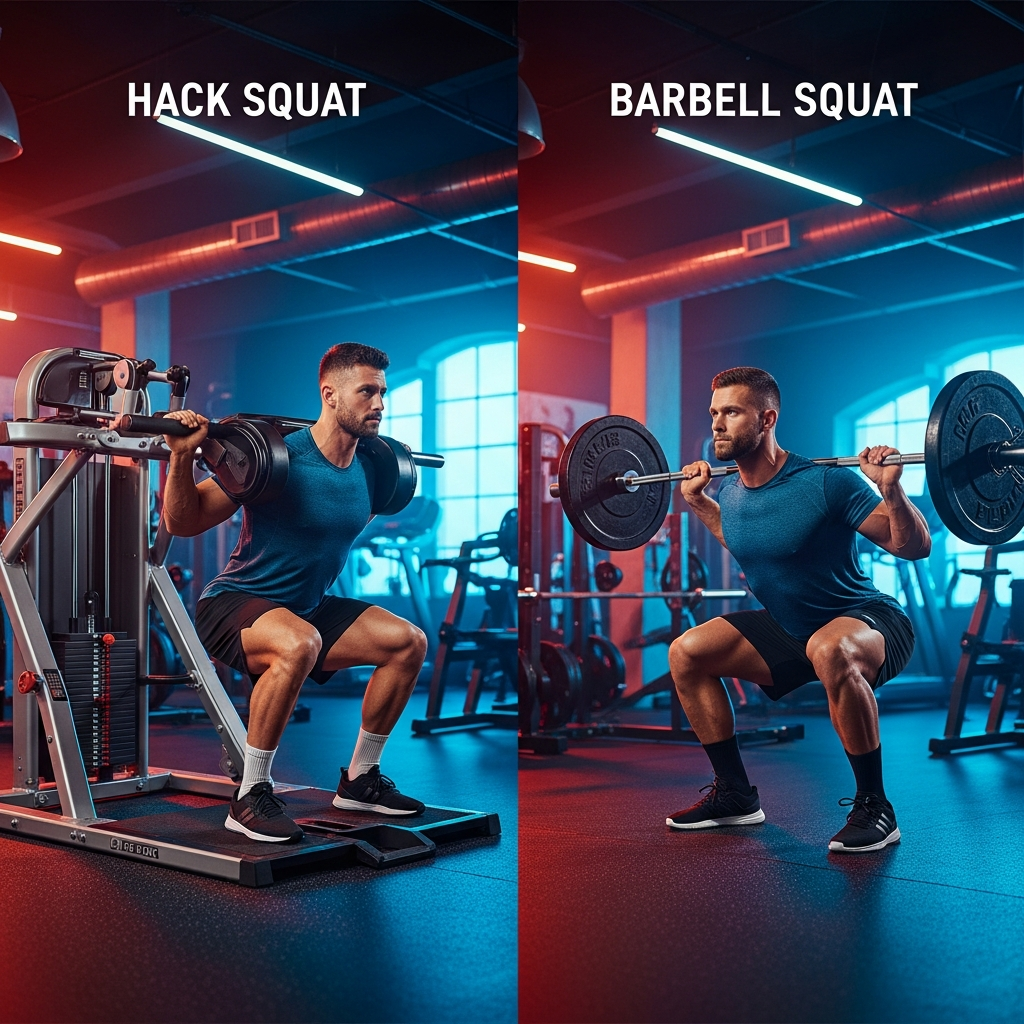
The way you perform a hack squat versus a barbell back squat is quite different, and these differences in mechanics affect everything from muscle activation to safety. The barbell squat is a free-weight movement, demanding you control the path of the bar, which requires significant core engagement and balance.
In contrast, the squat machine used for hack squats has a fixed path, which removes the need for stabilization. This enables you to concentrate solely on moving the weight. Understanding the equipment, setup, and stability factors for each will clarify which is right for you.
Equipment Differences and Requirements
The equipment needed for each squat variation is a key differentiator. For a barbell squat, you'll need a squat rack, a barbell, and weight plates. The rack is essential for safety, providing safety bars to catch the weight if you fail a lift. This setup is common in most gyms and is a versatile choice for a home gym.
On the other hand, the hack squat requires a specific hack squat machine. This is a large piece of equipment with a built-in sled, back pad, and platform. While most commercial gyms have one, they are less common and more expensive for a home gym setup.
The hack squat machine has its own safety features, often with handles that you can rotate to engage the safety stops. This makes it easy to train to failure without a spotter. Here's a quick comparison:
|
Feature |
Barbell Squat |
Hack Squat |
|---|---|---|
|
Main Equipment |
Squat Rack, Barbell, Weight Plates |
Hack Squat Machine |
|
Equipment Access |
Widely available, good for home gym |
Specialized machine, less common for home gyms |
|
Safety Mechanism |
Adjustable safety bars on the rack |
Built-in safety stops on the machine |
|
Type |
Free weights |
Machine-based |
Movement Patterns and Setup
The setup and movement for each squat are distinct. For a barbell back squat, you begin by setting the barbell in a rack at shoulder height. You step under the bar, resting it on your upper back, and take a few steps back. Your feet should be about shoulder width apart with your toes pointed slightly out. The movement involves hinging at the hips and bending the knees simultaneously.
Setting up for a hack squat involves getting into the hack squat machine. You place your back against the pad and your shoulders under the shoulder supports. Your foot placement on the platform can be adjusted to target different muscles, but a shoulder-width stance in the middle of the platform is a good starting point.
The movement pattern of the hack squat machine is fixed, guiding you on a 45-degree angle. You simply bend your knees and hips to lower the weight. This guided path contrasts with the free range of motion of the barbell squat, where you must control the bar's path yourself.
Balancing and Stability Factors
A major difference between these two exercises lies in the demand for balance and stability. The barbell squat is a compound movement that requires a significant contribution from your stabilizer muscles. Your core, lower back, and even your upper body must work hard to keep your torso upright and maintain balance throughout the lift.
The hack squat, being a machine-based exercise, provides all the stability for you. Your back is supported by the pad, and the weight moves along a fixed track. This reduces the need for trunk muscle activation and engagement from smaller stabilizer muscles.
Here's how they stack up in terms of stability:
- Barbell Squat: Engages numerous stabilizer muscles across the core, back, and hips.
- Hack Squat: Minimal activation of stabilizer muscles due to machine support.
- Barbell Squat: Requires a strong upper body to support the bar and maintain posture.
- Hack Squat: Puts less stress on the lower back and requires minimal upper body involvement.
(ALSO READ: 8 Must-Try Barbell Workouts for Total Body Strength)
Muscle Groups Activated
While both exercises target your legs, the specific muscle groups activated, and the degree of muscle activation, differ significantly. The barbell squat is known for being a full-body lift that heavily engages the entire posterior chain—your glutes, hamstrings, and lower back—in addition to your quads.
The hack squat, however, tends to isolate the quadriceps more directly. Because the machine provides support, there's less need for the hamstrings and glutes to act as stabilizers. Let’s explore how each exercise hits the different muscles of your lower body.
Quadriceps Focus in Both Exercises
Both the hack squat and barbell squats are excellent for building your quadriceps, the large muscles on the front of your thighs. If you're looking to add size and strength to your quads, you can't go wrong with either exercise on your leg day.
However, the hack squat is arguably superior for isolating the quadriceps. The angled position and supportive back pad allow you to place greater emphasis on these muscles. By adjusting your foot placement on the platform, you can further intensify the focus on your quads.
While barbell squats also build impressive quads, they distribute the load more evenly across other muscles like the glutes and hamstrings. This makes them a more balanced lower body developer, but if pure quadriceps hypertrophy is your main goal, the hack squat has a distinct advantage.
Glutes, Hamstrings, and Core Activation
When it comes to working your glutes, hamstrings, and core muscles, the barbell squat is the clear winner. This exercise requires a deep hip hinge, which results in significant muscle activation of the entire posterior chain. As you squat down, your glutes and hamstrings lengthen under tension and then contract powerfully to drive you back up.
The hack squat engages these muscles to a lesser extent. Because your back is supported and the movement is on a fixed path, there is less demand on your posterior chain and core muscles to stabilize your body. The primary movers are the quads, with the glutes and hamstrings acting as secondary muscles.
Your core muscles also get a much better workout with barbell squats. They have to fire constantly to keep your spine neutral and your torso upright under a heavy load. The hack squat machine’s back support removes much of this core stabilization work.
Upper Body and Stabilizer Muscles Involvement
The involvement of the upper body and stabilizer muscles is a key distinction. During a barbell back squat, your entire upper body is engaged. Your traps and shoulders create a shelf for the bar, your arms hold it in place, and your upper back muscles must stay tight to maintain a rigid torso.
This trunk muscle activation is crucial for transferring force from your legs to the bar. Furthermore, stabilizer muscles throughout your hips, abs, and lower back work overtime to prevent you from losing balance. This makes the barbell squat a much more holistic, full-body movement.
In contrast, the hack squat machine minimizes the involvement of the upper body and stabilizer muscles. Your shoulders are only there to rest under the pads, and the machine's fixed path eliminates the need for balance. This lack of stabilizer engagement is what allows for greater isolation of the quads but makes it a less functional exercise overall.
(ALSO READ: Barbell Back Squat Alternative )
Strength and Hypertrophy Potential
Both squats are fantastic for strength training and building muscle mass, but they achieve it in different ways. The barbell squat is a powerful compound movement that allows you to lift heavy weight plates, stimulating overall muscle hypertrophy and strength gains across your entire lower body and core.
The hack squat also allows for heavy loading but in a more isolated manner. It's an incredible tool for targeting quad growth specifically. Let's compare which exercise is better for building raw strength versus which one might be superior for packing on muscle.
Which Squat Is Best for Building Leg Strength?
For developing overall leg strength and functional power, the barbell squat is unparalleled. Because it engages a larger number of muscle groups, including the powerful posterior chain and core stabilizers, it allows you to move more total weight and builds a more well-rounded and powerful lower body.
The strength gained from barbell squats translates better to other athletic activities and real-life movements. It builds a foundation of lower body strength that is difficult to replicate with machine-based exercises. The hack squat is effective for building quad strength, but its benefits are more isolated.
Your fitness goals will determine the best choice:
- For functional strength: Barbell squats are superior.
- For athletic performance: Barbell squats have greater carry-over.
- For overall lower body strength: Barbell squats engage more muscle.
- For isolated quad strength: The hack squat is an excellent choice.
Muscle Growth Outcomes Hack Squat vs Barbell Squat
When the goal is muscle growth, or muscle hypertrophy, both exercises are highly effective. The best choice depends on what part of your legs you want to grow. Barbell squats are fantastic for overall leg development, stimulating growth in the quads, glutes, and hamstrings simultaneously.
If your primary goal is to build massive quadriceps, the hack squat can be a more direct tool. The ability to isolate the quads and safely push them to failure makes it a bodybuilder's favorite for achieving that coveted quad sweep. It allows for high volume and intensity focused squarely on the front of your thighs.
Ultimately, for the most impressive muscle growth, the ideal approach is to include both in your training programs. Use barbell squats as your primary mass-builder for the entire lower body and the hack squat as an accessory movement to specifically target and exhaust the quads.
Weight Capacity and Progression Differences
You will almost certainly be able to lift a greater amount of weight on the hack squat machine compared to the barbell squat. This is because the machine supports your body and eliminates the need for stabilization, allowing you to focus all your energy on simply moving the weight.
The 45-degree angle of most hack squat machines also means you are not lifting the total vertical weight. This mechanical advantage, combined with the lack of stability demands, allows for the use of much heavier weights. Don't be surprised if you can hack squat double what you can barbell squat.
Progression in both exercises involves gradually adding more weight over time. With the barbell squat, progression also involves improving your form and stability. For training programs focused on strength, the barbell squat provides a better measure of true, functional strength, while the hack squat allows for a more straightforward progression in load for muscle isolation.
Safety and Injury Considerations
Safety should always be your top priority in the gym. Both squats carry a risk of injury if performed with improper form, but the nature of these risks differs. The barbell squat places more stress on the lower back and requires perfect form to avoid issues, while the hack squat can put more pressure on the knee joints.
The hack squat machine has built-in safety bars, which can make it feel safer, especially when training alone. However, understanding how each movement impacts your joints is crucial for long-term health and injury prevention.
Knee Joint Impact and Protection
The impact on your knee joints is a common concern with squats. The hack squat often places the knees in a more forward position over the toes, which can increase shear forces on the knee. This fixed movement pattern of the squat machine can be problematic if it doesn't align with your body's natural mechanics, potentially leading to strain.
Conversely, barbell squats, when done with proper form where the hips move back, can place less stress directly on the knee joint itself. The load is distributed more evenly between the hips and knees. However, poor form, such as letting the knees cave inward, can quickly lead to knee pain.
Here are some points on knee protection:
- Hack Squat: Can put more direct pressure on the knees due to the fixed path.
- Barbell Squat: Proper form distributes stress away from the knees and onto the hips.
- For sensitive knees: Some find barbell squats better, while others prefer the stability of the hack squat. It's highly individual.
- Key takeaway: Proper form is the most important factor for knee protection in either lift.
Lower Back and Spine Safety
When it comes to lower back and spine safety, the hack squat machine generally has the upper hand. The back pad provides constant support for your spine, significantly reducing the compressive forces on your vertebrae. This makes it an excellent option for individuals with a history of lower back pain or those who want to minimize spinal loading.
The barbell squat, on the other hand, places a direct vertical load on your spine. This requires strong core muscles and perfect form to maintain a neutral spine and prevent injury. Rounding the lower back under a heavy barbell is a common mistake that can lead to serious issues like herniated discs.
While the barbell squat is a fantastic exercise for building a strong back when done correctly, the hack squat offers a safer alternative for training legs intensely without stressing the spine. This is one of the biggest pros of the machine.
Tips for Reducing Injury Risk
Minimizing injury risk is essential for consistent progress. Regardless of which squat you choose, prioritizing good form over heavy weight is the golden rule. Start with lighter weights to master the movement before you start adding more plates.
Using safety features is also critical. For barbell squats, always set up the safety bars in the squat rack at an appropriate height. For hack squats, be familiar with how the machine's safety stops work. These features are there to protect you if you fail a rep.
Follow these tips to stay safe:
- Always warm up properly before squatting.
- Focus on maintaining proper form throughout every single rep.
- Don't ego lift; use a weight you can control through a full range of motion.
- Listen to your body. In the event that you experience intense pain, discontinue right away.
Choosing the Right Squat for Your Goals
So, which squat should you be doing? The answer depends entirely on your personal fitness goals, your training experience, and your individual body mechanics. There is no one-size-fits-all answer. Are you aiming to build functional strength for sports, or are you focused on maximizing muscle mass for aesthetic purposes?
Your skill level also plays a huge role. Beginners may find one exercise more approachable than the other. By considering these factors, you can make an informed decision about how to incorporate these powerful exercises into your routine.
Training Experience and Skill Level
For beginners, the hack squat is often the more accessible option. The machine's supportive design and guided movement pattern make it easier to learn and perform safely. It allows newcomers to build a base level of leg strength and confidence without having to worry about the complex mechanics and balance required for the barbell squat.
The barbell squat has a steeper learning curve. Mastering the correct form takes time, practice, and often, coaching. It requires mobility, stability, and coordination that many beginners may not have initially. Starting with too much weight or poor form can easily lead to injury.
That said, learning the barbell squat early in your training experience can pay huge dividends in the long run for building functional strength. It's a foundational skill, but it should be approached with patience. Beginners can start with just the bar or even bodyweight squats to perfect the movement pattern first.
Functional Strength vs Muscle Mass
Your primary fitness goals will guide your choice between functional strength and isolated muscle mass. If your goal is to build strength that translates to real-world activities—like lifting heavy objects, improving athletic performance, or simply moving better in daily life—the barbell squat is the superior choice. It trains your body to work as an integrated unit, which is the essence of functional strength.
If your main objective is to maximize muscle mass in your quadriceps for aesthetic reasons, the hack squat is an outstanding tool. Its ability to isolate the quads and allow for high-volume, high-intensity training makes it a staple in bodybuilding programs. It helps you sculpt and define the front of your thighs.
Ultimately, the best programs often incorporate both. You can use the barbell squat to build your foundation of strength and mass, and then use the hack squat to add extra volume and focus on your quads, creating a well-rounded and impressive lower body.
Conclusion
In summary, both the hack squat and barbell squat offer unique benefits for muscle building. Your choice should align with your fitness goals, experience, and physical needs. Hack squats provide controlled movement and target the quadriceps, while barbell squats engage multiple muscle groups and boost functional strength. Understanding each exercise helps you choose what’s best for you. Ready to advance your training? Contact us for a free consultation to find your ideal workout plan!
Frequently Asked Questions
Can hack squats replace barbell squats in my routine?
Yes, hack squats can replace barbell squats if your primary goal is quad hypertrophy or if you have limitations (like back pain) preventing you from barbell squatting. However, if your goal is to build overall functional strength, barbell squats are superior and should be prioritized in your training programs.
Is a hack squat machine necessary for leg development?
No, a hack squat machine is not necessary for leg development. You can build impressive legs using free weights like barbells and dumbbells. However, a squat machine is a fantastic tool for isolating the quads and adding variety to your workouts, but it's not a requirement.
REFERENCE:
https://pubmed.ncbi.nlm.nih.gov/20647940/
https://pubmed.ncbi.nlm.nih.gov/2733579/
https://www.precisionnutrition.com/research-review-front-or-back-squats
https://biotest.net/products/p-well