

Key Highlights
- The standard answer is that most safety squat bar options do not share one fixed weight. In many gyms, the weight of a safety squat bar usually falls between 45 and 65 lb.
- However, commercial gym safety squat bars typically do not have their weight labeled directly on the bar, so users often need to check with gym staff or refer to manufacturer details to determine the exact weight.
- In many gyms, the weight of a safety squat bar usually falls between 45 and 65 lb.
- Some heavier specialty barbell models go past 70 lb because of their unique design.
- Padding, handles, and solid steel construction can all change total bar weight.
- A safety squat bar is often heavier than a regular squat bar used for traditional lifts.
- Knowing your exact bar weight helps you track sets, reps, and progress correctly.
Introduction
If you have ever stepped up to a safety squat bar and thought it felt heck different from a regular barbell, you are right. Its unique neoprene design changes how the load sits on your body and can help support proper squat form, especially when shoulder comfort is a concern. Still, one basic question matters before you start adding plates: how much does it weigh? The answer is not always simple, and that is exactly why this guide can help.
(ALSO READ: Belt Squat Alternatives: 10 Variations to Try Today)
How much does safety squat bar weigh
The standard answer is that there is no single fixed weight for every safety squat bar. In most well-equipped gyms, the weight of a safety squat bar, amongst various contraptions, often lands between 45 and 65 lb. That means one squat bar, or this bad boy, may feel close to an Olympic barbell, while another may feel much heavier before you add plates.
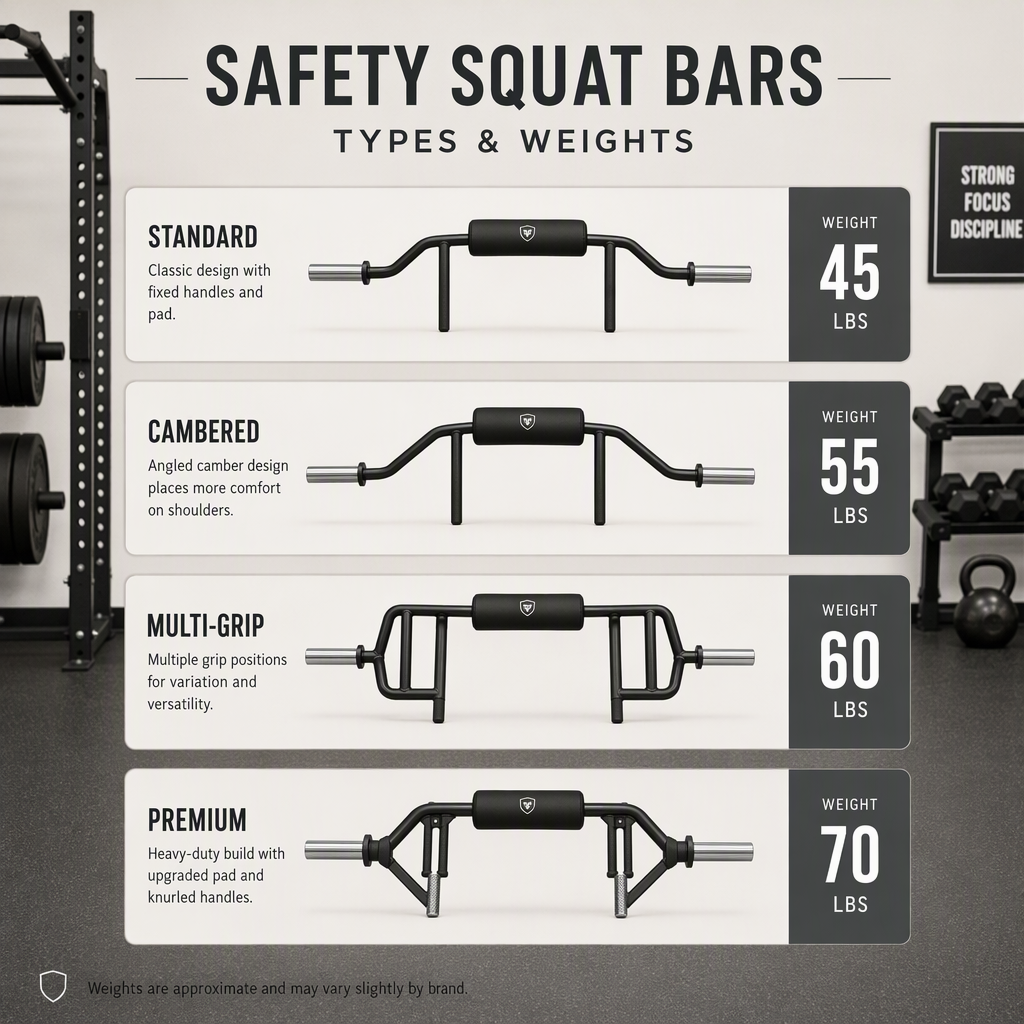
Brand and specific model matter a lot. Some high-performance bars can weigh over 70 lb, and one Rogue model listed in the compiled information weighs 70 lb. So yes, there are different weight options depending on the brand, like the Pit Shark Belt Squat Rack, which offers tremendous flexibility in its design. To understand why, you need to look at common gym ranges and the design details that affect total load.
Typical Weight Range of Safety Squat Bars in U.S. Gyms
In most U.S. gyms, the standard answer is that a safety squat bar usually weighs between 45 and 65 lb. That is the most common range mentioned in the compiled information for intermediate lifters, including male lifters. Some bars match a regular Olympic barbell at 45 lb, while others use more solid steel and come in heavier.
Here is a simple text table to show the common range of the peculiar glory of different bar types:
|
Bar type |
Typical weight |
|---|---|
|
Olympic barbell |
45 lb |
|
Safety squat bar |
45–65 lb |
|
Heavier safety squat bar models |
70+ lb |
That range also means some lighter options may feel better for beginners, especially if they want a less intimidating starting point. Still, not every gym labels the bar clearly, so you should not guess. The weight of a safety squat bar depends on the build, and a heavy-duty 70 lb squat bar like the Rogue model shows how far some versions can go.
How Bar Padding and Unique Features Influence Weight
Yes, padding and design can change the total weight. A padded barbell safety squat bar is a specialty barbell, so makers are free to build it for training goals instead of competition rules. If you’re looking to build stronger and more defined legs, that unique design adds parts a straight barbell does not have, which often makes the bar heavier.
Several features push the number up:
- Thick shoulder padding and a supported yoke add extra mass.
- Solid steel construction increases durability but also raises weight.
- Handle length, handle thickness, and welded parts all contribute.
Take the Rogue example from the compiled information. It uses a 1.5-inch formed solid steel shaft, 1-inch formed solid steel handles, and heavy-duty vinyl with closed-cell foam pads. Those details explain why this safety squat bar weighs 70 lb. So if you wonder why these bars often outweigh standard barbells, the answer is simple: more material, more structure, and more built-in comfort.
Comparing Safety Squat Bar Weight to Other Bars
A regular Olympic barbell is usually 45 lb, which gives lifters a clear starting point for traditional barbell squats. A safety squat bar does not follow that same standard because it is a specialty barbell built for a different training effect. That is why its weight can vary more from model to model, making your current squatting exercises a helpful baseline to give this bar a whirl for comparison.
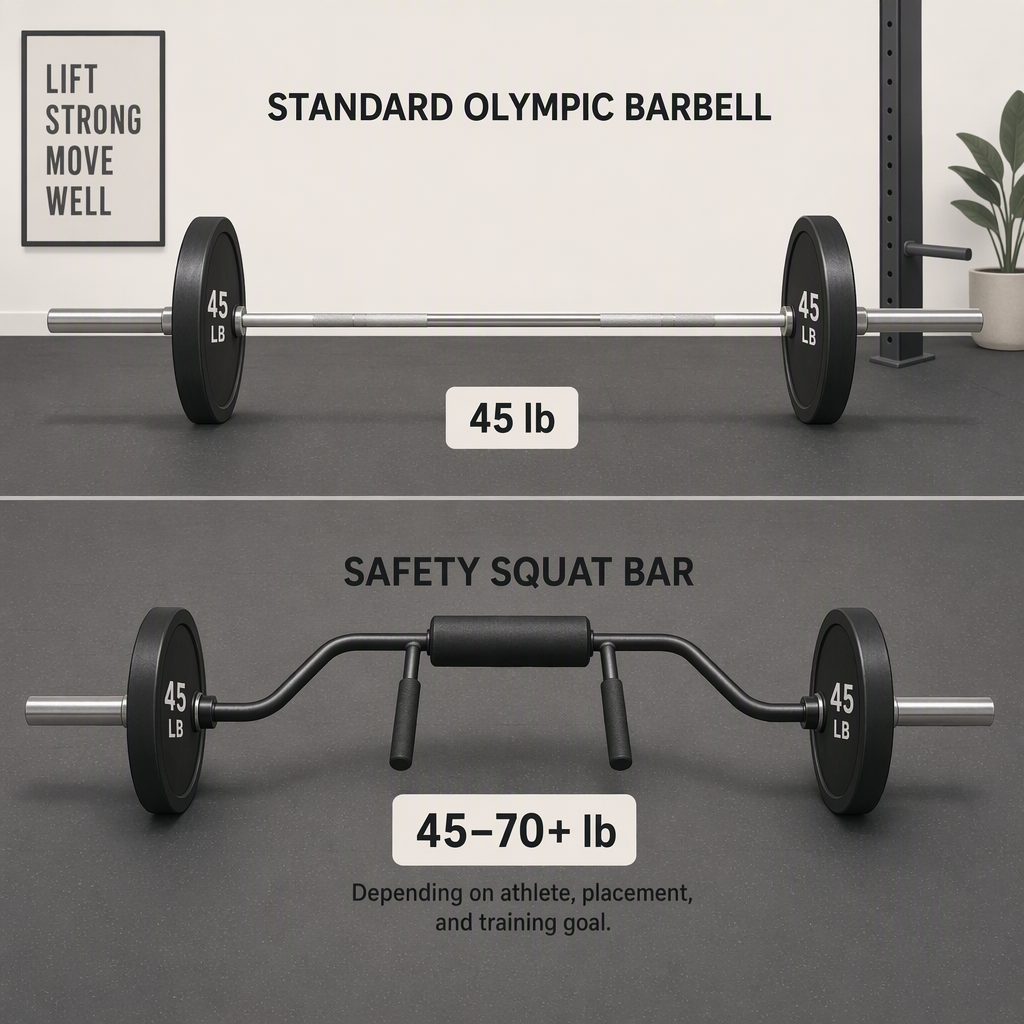
In direct comparison, some safety squat bar options match 45 lb, but many weigh more, often landing between 45 and 65 lb or even above 70 lb. So if you switch from one squat bar to another, do not assume the empty bar feels or weighs the same for your quads, especially if you have mobility issues. The next sections break down those differences more clearly.
Safety Squat Bar vs. Olympic Barbell: Key Differences
The biggest difference starts with the base weight. A standard Olympic barbell is 45 lb. A thick solid steel, knurled bar safety squat bar may also be 45 lb, but many are heavier, making it your new best friend. That alone changes your setup before the first plate goes on. For safety bar squats, the bar itself is often part of the challenge.
Its unique design also changes how the load feels, especially during lunges. The compiled information explains that the weight distribution shifts forward compared with a straight bar. That means the squat bar is not just heavier in some cases. It also places the load differently on your torso and upper back muscles.
Key differences include:
- An Olympic barbell follows competition standards, while a safety squat bar does not.
- A safety squat bar includes padding, handles, and a cambered build.
- Its weight distribution creates a different squat feel than a straight bar.
This is why many lifters treat it as a separate tool, not just another version of the same bar.
(ALSO READ: Belt Squat vs Back Squat: Pros and Cons Explained)
Does Bar Weight Matter When Tracking Your Lifts?
Yes, it matters a lot. If you are logging lifting totals, your empty squat bar weight changes every working set you record. By considering the angle of your body while training, a 45 lb barbell and a 70 lb safety squat bar create a 25 lb difference before plates even enter the picture and can influence how much weight you should load for your exercises. That can throw off your training numbers fast.
For that reason, knowing the exact bar weight is important in any weight training program, especially when targeting specific muscle groups like the quadriceps. The compiled information even suggests weighing the bar yourself instead of assuming the listed number is exact, as this can place a greater emphasis on accuracy. A bathroom scale or luggage scale can help you verify a specific model when labels are missing.
This is especially useful when you train in different gyms or rotate bars, as an effective specialty barbell that velcros in place can improve comfort and target weak points, especially in hip thrusts, but only if your records stay accurate. If you want clean progress data, count the bar correctly every time and avoid guessing.
Conclusion
In conclusion, understanding the weight of a safety squat bar is crucial for any serious lifter looking to enhance their strength training routine and explore various squat variations. With typical weight ranges varying across gyms and factors like padding and unique design features affecting the overall weight, being informed helps you make better decisions tailored to your fitness goals. Whether you're comparing it to an Olympic barbell or simply tracking your lifts, knowing the specifics can directly impact your performance and workout efficiency. Embrace the journey of strength training with confidence, and remember to prioritize your form and technique for optimal results. If you're eager to learn more about integrating the safety squat bar into your workouts, don’t hesitate to reach out for a free consultation!
How Much Does a Squat Bar Weigh?
A safety squat bar typically weighs around 60 to 70 pounds (27 to 32 kg). This bar is designed with safety and comfort in mind, featuring padded shoulders and a unique design that allows for better squat mechanics. Always check the manufacturer's specifications for precise weight information.
REFERENCE:
https://www.bellsofsteel.com/blog/gear-education/how-to-use-a-safety-squat-bar-expert-advice/
https://www.bellsofsteel.com/all-products/barbells/specialty-barbells/premium-safety-squat-bar/