

Key Highlights
- A belt squat loads your hips, while a back squat loads your upper body and spine. Both squat variations train key muscle groups for lower body strength training. The belt squat can ease stress on the lower back during heavy loads.
- While there are no universally accepted standards or benchmarks to directly compare strength in belt squats versus back squats, most lifters typically find they can move less weight with a belt squat due to the mechanics and muscle engagement differences. Strength ratios may vary based on individual training experience and goals.
- Generally, there are no universal standards or benchmarks to directly compare strength in belt squats versus back squats because the mechanics and load placement differ between the two exercises.
- However, lifters often find they can belt squat similar or slightly more weight than they back squat, though individual results can vary.
- When comparing strength between the belt squat and the back squat, there are no universal standards or direct benchmarks due to differences in how each exercise distributes weight and engages muscle groups.
- While some coaches suggest using a percentage of your back squat as a guideline for belt squat loads, these suggestions are often rough estimates and may not apply to everyone. Therefore, standardized benchmarks for strength comparison between the two variations are limited.
- However, many strength training programs may use the back squat as a primary standard for lower body strength, while belt squats are often used as a complementary exercise, especially for those looking to reduce lower back strain.
- Both squat variations train key muscle groups for lower body strength training. The belt squat can ease stress on the lower back during heavy loads.
- While there aren't universally established standards for comparing strength in belt squats versus back squats, many strength training coaches suggest belt squat loads are often lighter due to the reduced involvement of the upper body and spine.
- However, benchmarks may vary based on individual experience and goals, and it's recommended to monitor progress within each squat variation according to your lower body strength gains.
- Both squat variations train key muscle groups for lower body strength training.
- The belt squat can ease stress on the lower back during heavy loads.
- The back squat is a great choice for fuller muscle engagement and overall strength.
- Proper form matters in both lifts to lower the risk of injury.
- Your goals, experience, and comfort should guide your squat choice.
Introduction
When you compare the belt squat and back squat, the best option depends on what you want from strength training. Both lifts help you build stronger legs and glutes and improve leg strength, but they do not feel the same on your body. A belt squat reduces spinal strain, while a back squat asks more from your core and upper body. If you are unsure which one fits your workouts, this guide breaks down the main differences in a simple, practical way.
Understanding Belt Squats and Back Squats
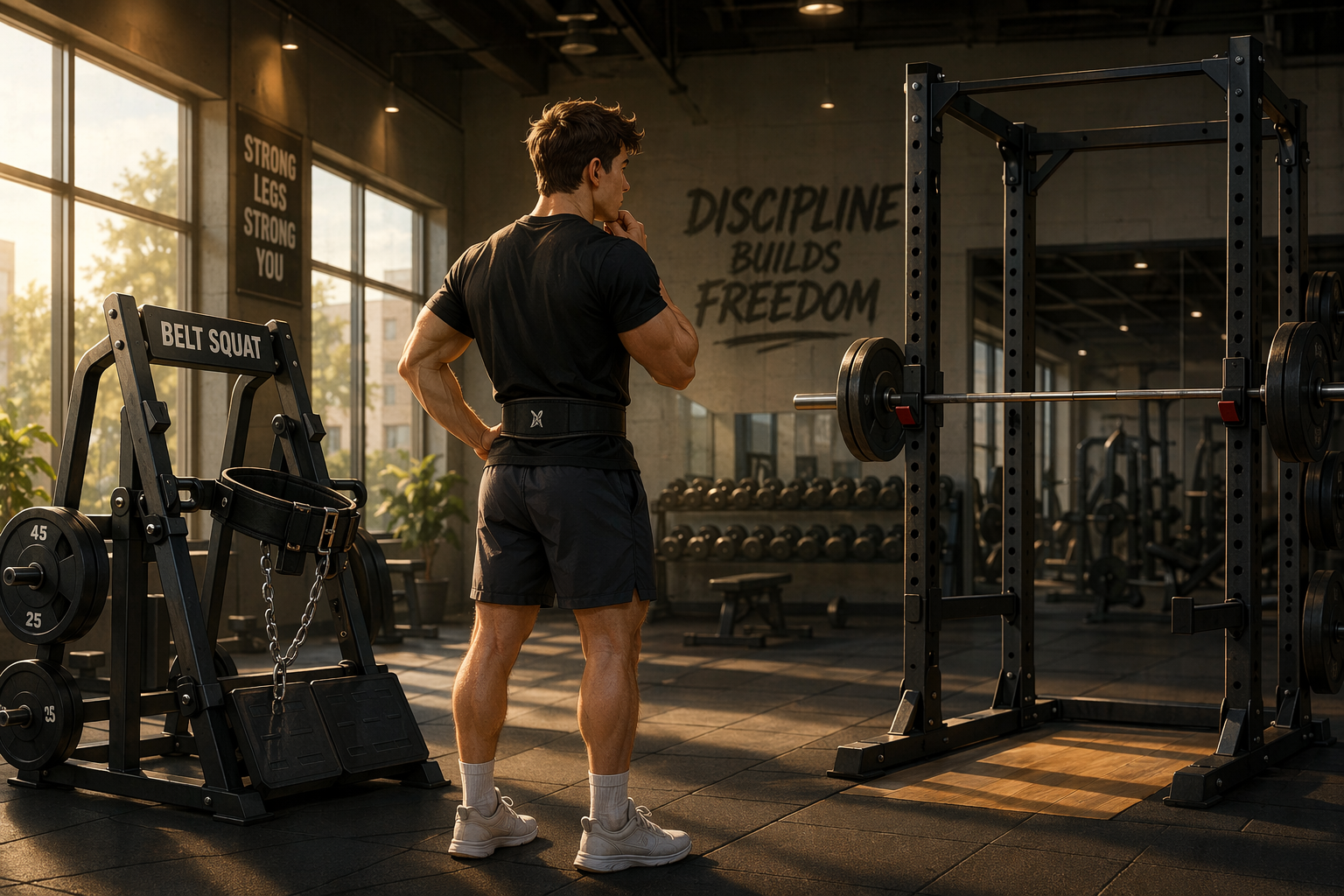
At a basic level, both movements train similar muscle groups in your lower body. The most significant difference is where the weight sits. A belt squat uses a squat machine or belt setup that loads your hips, not your shoulders.
That changes how each exercise fits your training routine. If you have back issues, a belt squat may feel easier to manage. A back squat, on the other hand, demands more total-body control and requires the necessary equipment like a barbell and squat rack. The technique also differs because one uses machine-guided hip loading, while the other uses a barbell across your upper back.
(ALSO READ: Belt Squat Exercises: Build Strength and Power Today)
What Is a Belt Squat and How Does It Work?
A belt squat is a less conventional squat variation that places the load around your hips instead of on your shoulders. You wear a specialized belt, often similar to a dip belt, that connects to a squat machine or weighted setup. From there, you perform various types of squats by squatting down and standing back up much like traditional squats.
Because the resistance hangs from your waist, your lower back does not deal with the same spinal loading found in barbell squats. That is why many lifters see the belt squat as a safer alternative when lower back pain or back issues are part of the picture.
Another benefit is leg isolation. With less upper body involvement, you can focus more directly on the muscles of the lower body, allowing you to achieve a full range of motion. This can make the belt squat useful for building lower body strength, adding training volume, and keeping your squat pattern active while reducing stress on the spine.
What Is a Back Squat and How Is It Performed?
The back squat is one of the classic traditional squats used in strength training, bodybuilding, and powerlifting. You place a barbell across your upper back and shoulders, step out from a squat rack, then lower your body before driving back up. It is a key movement for building strength.
Proper form matters because the lift asks your body to control the bar through the full motion. Your lower body muscles do most of the lifting, but your core and torso have to stay braced to keep the bar stable and your posture solid.
That extra upper body engagement is a major reason the back squat is trusted for overall strength gains. If your main goal is pure leg focus, a belt squat may feel more direct. If you want a broader strength effect that considers your experience level, the back squat often does more at once.
Muscle Activation in Belt Squats vs Back Squats
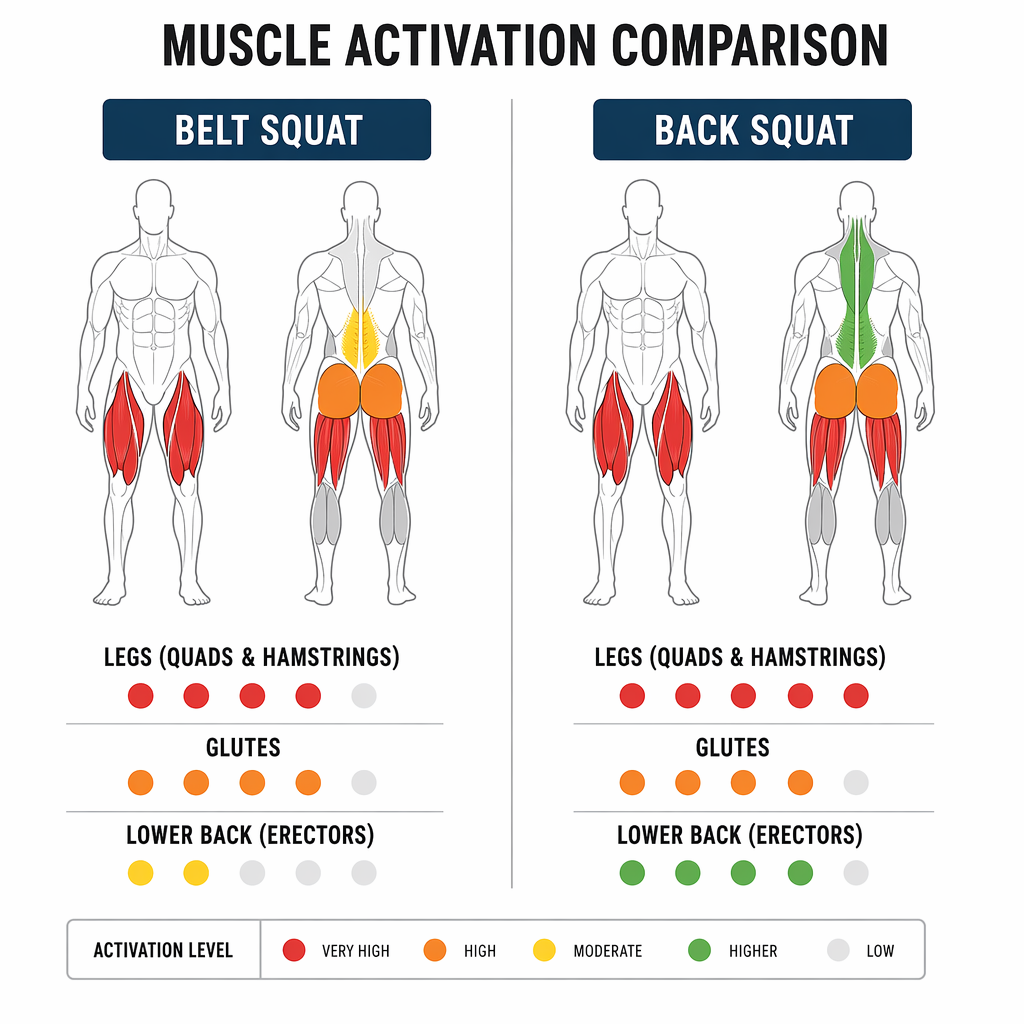
Both lifts train the lower body, but muscle engagement is not identical. The belt squat keeps the load closer to your hips, so it puts a more concentrated focus on the legs and glutes. It also reduces how much the lower back must stabilize.
With a back squat, more muscle groups work together. Along with your lower body, your core, upper back, and spinal stabilizers help control the bar. That difference can shape your training routine, especially if you want either targeted leg work or broader full-body strength.
(ALSO READ: Master the Back Barbell Squat: A Beginner's Guide)
Primary Muscles Targeted by Belt Squats
The belt squat machine mainly targets the muscles of the lower body, making it a great choice for fitness enthusiasts. Because the load sits at your hips, your quads, hamstrings, glutes, and calves can do more of the direct work. The gluteus maximus is especially active as you drive upward from the bottom of the squat.
This setup also helps many lifters move through a strong range of motion without the same upper body demands found in barbell work. For some people, that means better leg isolation and more total training volume. It can also feel safer when handling heavier weights because spinal compression is lower.
Key lower body muscles worked include:
- Quadriceps for knee extension and leg drive
- Hamstrings and gluteus maximus for hip extension
- Calves for support and control through the movement
Muscle Engagement During Back Squats
Back squats train many muscle groups at once. Your quads, hamstrings, and glutes still lead the lift, but muscle engagement spreads further up the body because you must support the bar. That is why the back squat is often treated as a fuller compound exercise.
As you unrack the bar from a squat rack, your upper back helps hold position and your trunk works to resist collapse. The erector spinae plays a major role in keeping your spine stable under load. This added demand is useful for overall strength, even though it also raises technical demands.
Important support muscles include:
- Erector spinae for spinal stability
- Upper back muscles for bar control and posture
- Core muscles that assist balance and force transfer
There are no universal standards given here to compare belt squat and back squat numbers directly, since the loading method and mechanics differ.
Technique Comparison: Belt Squat vs Back Squat
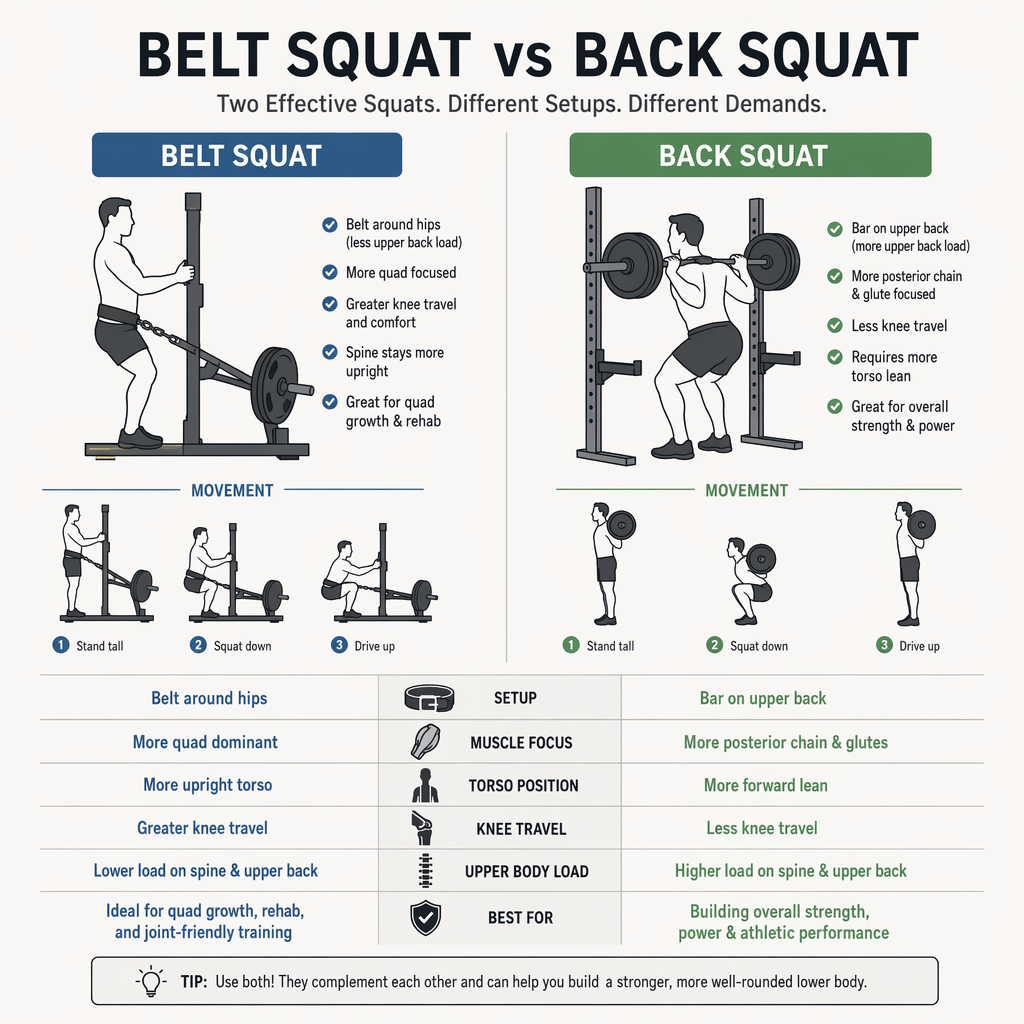
Technique is where these squat variations separate clearly. On a squat machine, the belt squat loads your hips, so your torso does not need to support a bar. That often makes the movement feel simpler and more stable.
A back squat requires more body control from start to finish. You must place the bar correctly, brace your trunk, and maintain proper technique through the range of motion. Both lifts reward good movement, but the back squat usually asks more from your balance, posture, and upper body support.
Key Differences in Setup and Execution
Setup changes the whole feel of the lift. With a belt squat machine, you attach a specialized belt around your waist and let the load hang from your hips. With a back squat, you position a barbell across your upper back, step away from the squat rack, and brace before descending.
That means proper form looks different in each exercise. Belt squats reduce spinal loading and let you focus more on leg drive to maintain an upright posture. Back squats demand more total-body tension, especially when heavy loads are involved. For athletic performance and broad strength, the back squat often carries more full-body value, while belt squats offer a focused lower-body option.
|
Feature |
Belt Squat |
Back Squat |
|---|---|---|
|
Main setup |
Uses a belt squat machine and specialized belt |
Uses a barbell and squat rack |
|
Load position |
Around the hips |
Across the upper back |
|
Stability demand |
Lower upper body demand |
Higher whole-body demand |
|
Best use |
Leg focus and reduced spinal strain |
Overall strength and full-body control |
Common Mistakes to Avoid with Each Technique
Even good exercises can create problems when your setup gets sloppy. With both lifts, poor control, rushed reps, or ignoring proper technique can raise the risk of injury. That matters even more if you are using these movements often in your training routine.
For injury prevention, pay attention to how your body handles each pattern. Belt squats can help you train around fatigue or back stress, while back squats challenge full-body coordination. If you have issues with shoulder pain, using both can also help manage muscle imbalances by giving you one lift for focused leg work and another for broader strength practice.
Common errors include:
- Letting form break down under load
- Using more weight than you can control safely
- Treating one squat as a replacement for all other lower-body work
Pros and Cons of Belt Squats and Back Squats
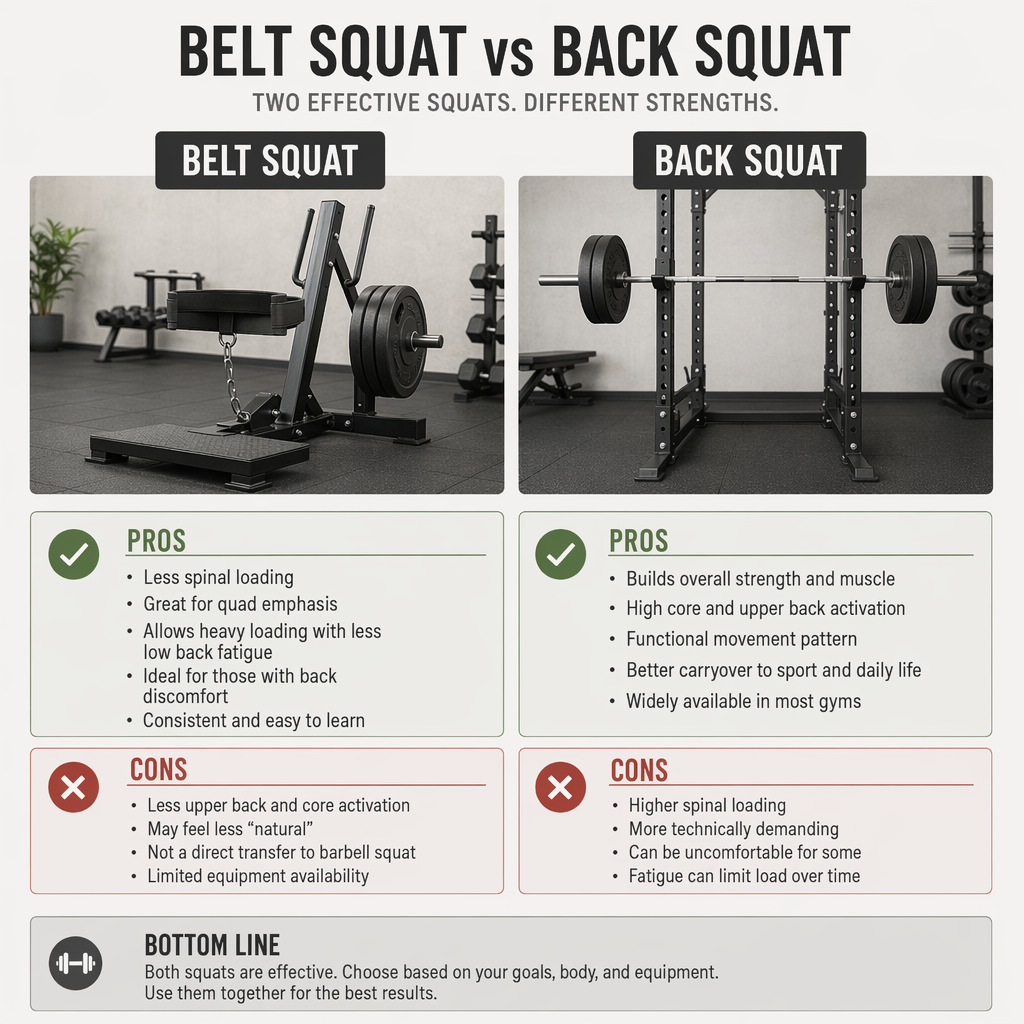
When you weigh the pros and cons, neither option wins for everyone. A back squat offers strong strength gains and more total-body involvement, but it also comes with higher technical demands and more spinal loading. That can increase injury risk if form slips.
A belt squat lowers much stress on the spine and can be easier to fit into a training routine when lower back injuries, mobility limits, or recovery are concerns. Your choice should match your goals, your physical condition, and the kind of stress your body handles well.
Advantages and Limitations of Belt Squats
The biggest advantage of the belt squat is reduced spinal load and strain. Since the weight is attached around your hips, your lower back is not forced to carry the same compressive load as in barbell squats. For many people, that makes it a safer option, especially when back discomfort affects training.
It also works well for lower body strength and leg isolation. If your goal is to keep building your legs without asking as much from your shoulders or spine, this lift can fit well. That is why it is often used by beginners, people returning from injury, or lifters managing their physical condition.
Main limitations include:
- Belt squat equipment is not always available
- There is less upper body and core involvement
- It may not replace back squats for total-body strength goals
Belt squats tend to be a safer option for individuals experiencing lower back pain; however, your reaction may vary based on your own comfort level and how the equipment is arranged.
Benefits and Drawbacks of Back Squats
The back squat remains one of the most effective exercises in strength training because it develops many muscle groups at the same time. Your legs drive the movement, but your core, upper body, and back all help stabilize the bar. That makes it valuable for building overall strength and handling a wide range of training styles.
Still, the drawbacks matter. Spinal loading is much higher than in a belt squat, and the movement needs good mobility and control, particularly in the thoracic spine. If your technique breaks down, injury risk can rise in the lower back, hips, knees, shoulders, or wrists.
Key drawbacks to consider:
- More spinal loading and joint stress
- Greater need for mobility and bar control
- Higher injury risk with poor execution
For home gyms with limited equipment, the back squat is usually the better fit because a barbell and squat rack are more common than a belt squat machine.89
(TO KNOW MORE: Discover the Barbell Exercise Benefits for Strength)
Conclusion
In summary, both belt squats and back squats offer unique benefits and drawbacks that can cater to different fitness goals and individual needs. Understanding the mechanics and muscle activation patterns of each squat variation can help you make informed decisions about which exercise to incorporate into your routine.
Whether you're looking to alleviate lower back strain or enhance overall strength, there’s a squat option tailored for you. Always consider your personal fitness level, goals, and any existing injuries when choosing between these two powerful exercises. If you’re ready to take your training to the next level, explore each squat variation further and see which one best meets your needs.
Frequently Asked Questions
Are belt squats safer for people with lower back pain than back squats?
Yes, a belt squat is often a safer alternative for people with lower back pain because the load sits around the hips instead of on the spine. Compared with a back squat, it lowers spinal compression and may reduce the risk of lower back injury while still training the legs, ultimately helping you find the right balance in your workout routine.
Which squat variation is better for strength and athletic performance?
For strength training and athletic performance, the back squat usually has the edge because it trains more muscle groups and builds overall strength. Among squat variations, the belt squat is better when you want hard leg work with less spinal stress, especially during recovery or high-volume phases.
REFERENCE :
https://pubmed.ncbi.nlm.nih.gov/30273281/
https://pubmed.ncbi.nlm.nih.gov/36760079/