

Key Highlights
- Pendulum squats train key lower body muscle groups with a guided squat machine path.
- The pendulum design supports a deep, full range of motion for strong quad-focused reps.
- Many lifters like pendulum squats because they place less stress on the lower back.
- This setup can help beginners learn cleaner squat mechanics with more control.
- Advanced lifters can also use the machine for hard leg day sets and progressive loading.
- For a home gym, a pendulum squat machine can add safe, versatile lower body work.
Introduction
Pendulum squats are getting more attention for good reason. They give you a guided way to build lower body strength while keeping the movement controlled and repeatable. If you want strong legs without relying only on free weights, this machine-based option can help. It creates solid muscle activation in the quads, glutes, and other leg muscles, which makes it useful for many training styles. The real value, though, becomes clearer when you look at how the machine works.
What Is a Pendulum Squat?
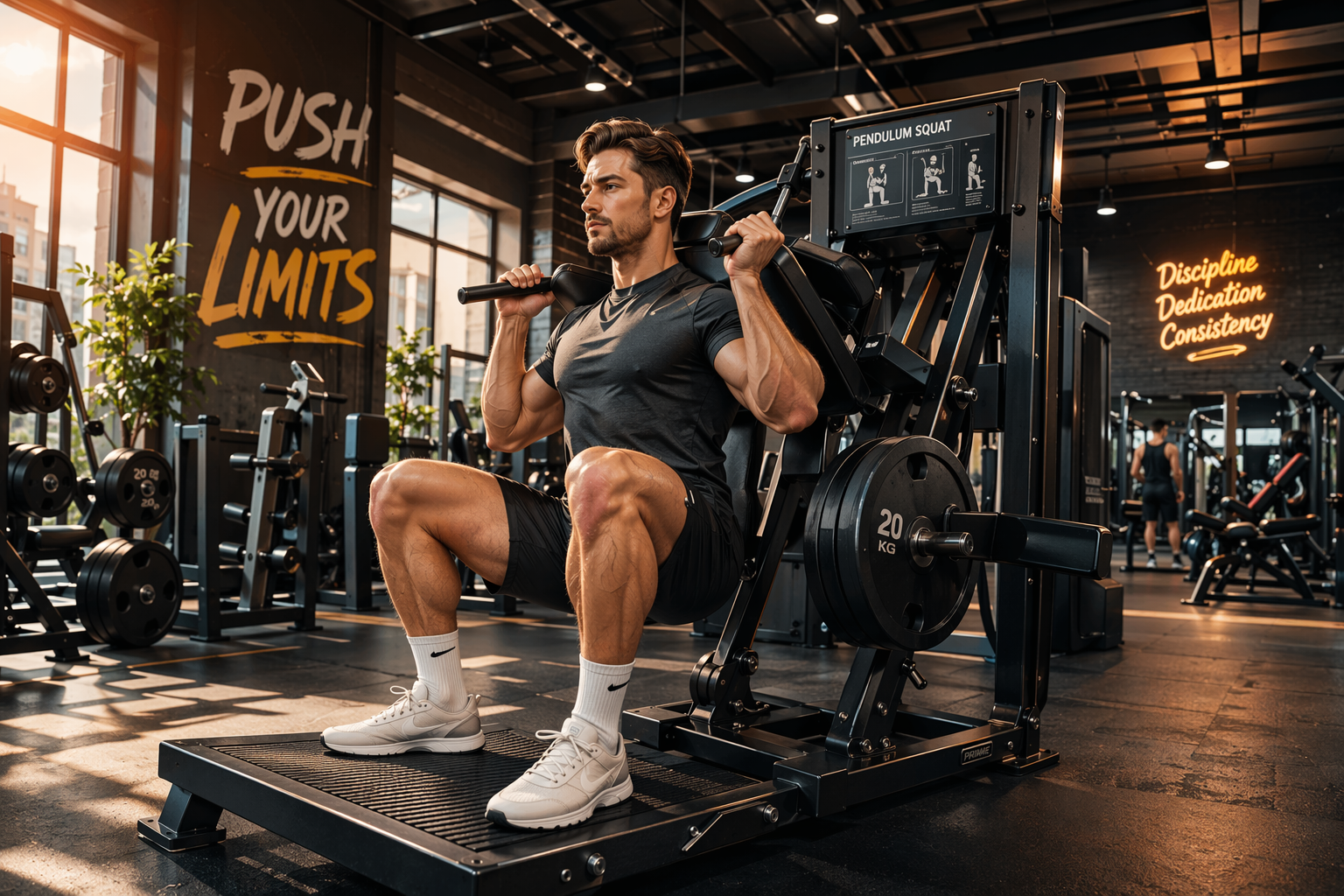
A pendulum squat is a machine-based squat done on a specialized squat machine where the load moves in a curved arc. Instead of balancing a bar on your back, you use shoulder pads and back support while the pendulum squat machine guides your movement. By providing a steadier setup, this machine design allows the exercise to feel more fluid and manageable.
What makes it stand out is its unique movement pattern. The arcing path supports a deep squat while reducing balance requirements and lowering spinal loading compared with traditional squats. That means the main benefits of pendulum squats include stronger quadriceps focus, less lower back stress, and a safer way to push hard sets. You will often see these machines in commercial machines, though some are made for a home setup too.
(TO KNOW MORE: What Is a Pendulum Squat? Form Tips and Techniques)
Unique Movement Pattern and Machine Setup
The movement pattern is what gives this exercise its identity. Instead of a fixed path straight up and down, the pendulum design moves through an arcing motion. That changes how the load feels across the rep and helps many lifters stay more upright during the squat.
On the machine, your shoulders press into pads while your feet stay planted on the platform. The machine setup matters because foot placement, depth, and body position all affect comfort and muscle engagement. A lower foot position usually increases quad demand, while a higher and wider stance can bring in more glutes and adductors.
For a home gym, setup also includes practical concerns. You need enough floor space and ceiling clearance for safe use and plate loading. Even with that, many lifters like the controlled feel because it supports smooth movement from start to finish.
How the Pendulum Squat Differs from Other Squat Variations
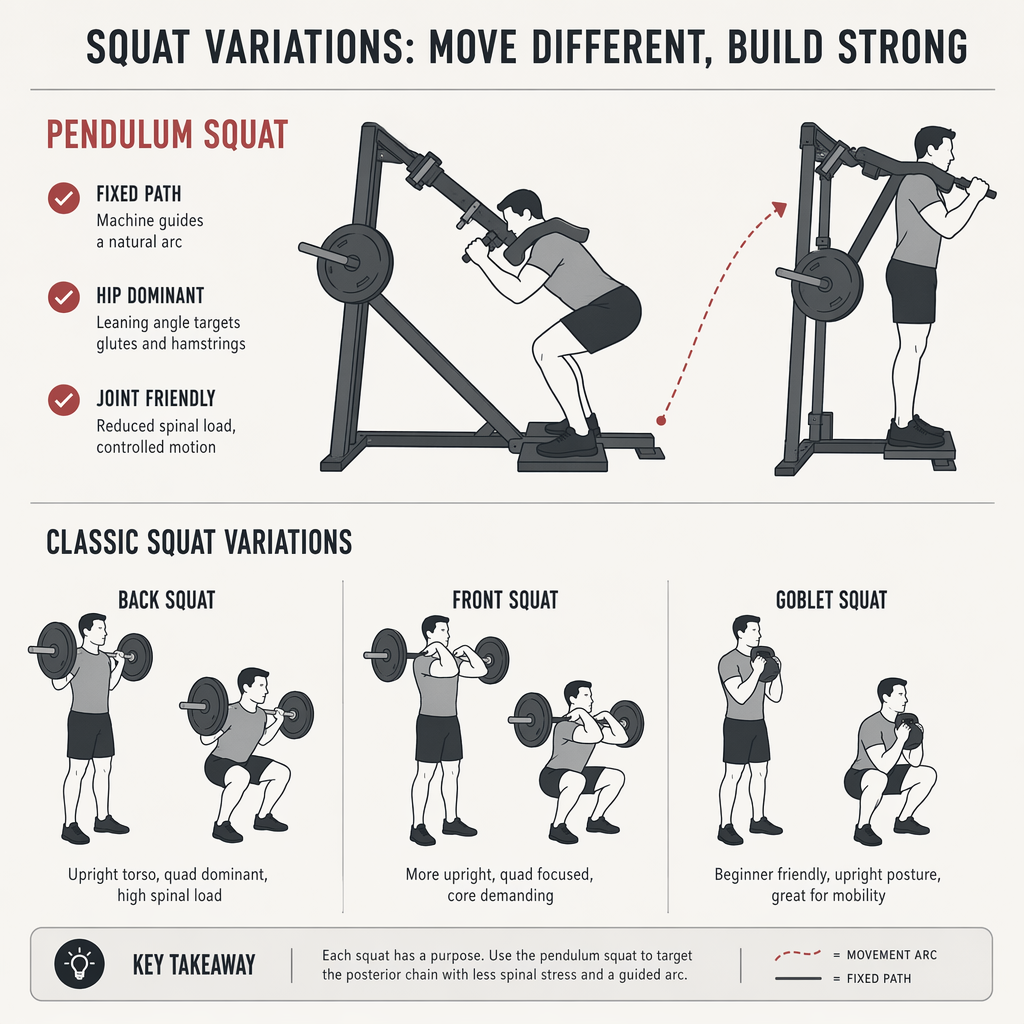
Compared with a barbell squat, the pendulum squat removes much of the balance challenge. You do not need to control the bar in open space, so the squat machine can help you focus more on leg drive, depth, and repeatable reps. That does mean you get less demand on stabilizers than you would with back squats.
The hack squat is the closest comparison, but the movement path feels different. A hack squat uses a more fixed angled track, while the pendulum squat follows an arc. That arc can create a different resistance feel and smoother transitions through the rep.
- A barbell squat builds more balance and core stabilization.
- A hack squat usually allows heavier loads with a consistent resistance profile.
- A pendulum squat often feels better for deep quad tension and reduced spinal loading.
So, how does the pendulum squat compare with the hack squat in benefits? The pendulum squat often has unique benefits for quad-focused hypertrophy and joint comfort, while the hack squat may suit heavier loading.
Muscles Worked by Pendulum Squats
Pendulum squats work several lower body muscle groups at once. The quadriceps do most of the work, but the glutes, hamstrings, calves, adductors, and core also help during the movement. That makes it more than a simple machine exercise.
In strength training, this kind of broad muscle activation is useful because it lets you train the lower body hard with support from the machine. If you want to understand why the exercise feels so quad heavy, it helps to break down the primary and secondary muscles involved.
(TO KNOW MORE: Pendulum Squat Muscles Worked: Why They Matter)
Primary Muscle Activation: Quadriceps Focus
The quadriceps are the primary movers in pendulum squats. This includes the vastus medialis, vastus lateralis, vastus intermedius, and rectus femoris. Because the machine often keeps your torso more upright, your knees can travel forward more easily, which increases demand on the front of the thighs.
That is one reason pendulum squats target the quadriceps differently from other squats. In a free-weight lift, balance and torso position can shift effort around. Here, the guided pattern lets you stay locked into strong knee flexion with steady muscle engagement through the rep.
Another key factor is depth. Many lifters can reach a greater range of motion on this machine with controlled tempo and planted heels. That deeper squat pattern can help keep the quads under tension, especially near the bottom position where the movement feels demanding.
Secondary Muscles Engaged: Glutes, Hamstrings, and Calves
Although the quadriceps initiate the movement, various other muscles are also essential contributors; the glutes assist particularly as you push up from the bottom and extend your hips. Placing your feet higher or wider increases the activation of the glutes even further.
The hamstrings support hip control during the rep, though they are not the main force producer in most setups. They work alongside the adductors and core to keep your body stable as the machine moves through its arc. This matters when you want clean, repeatable reps.
Your calves help maintain ankle position and foot pressure on the platform. So, what muscles are worked during pendulum squats? You train the quads most, with support from the glutes, hamstrings, calves, adductors, and trunk muscles. That mix makes the exercise useful for complete lower body training.
pendulum squat benefits
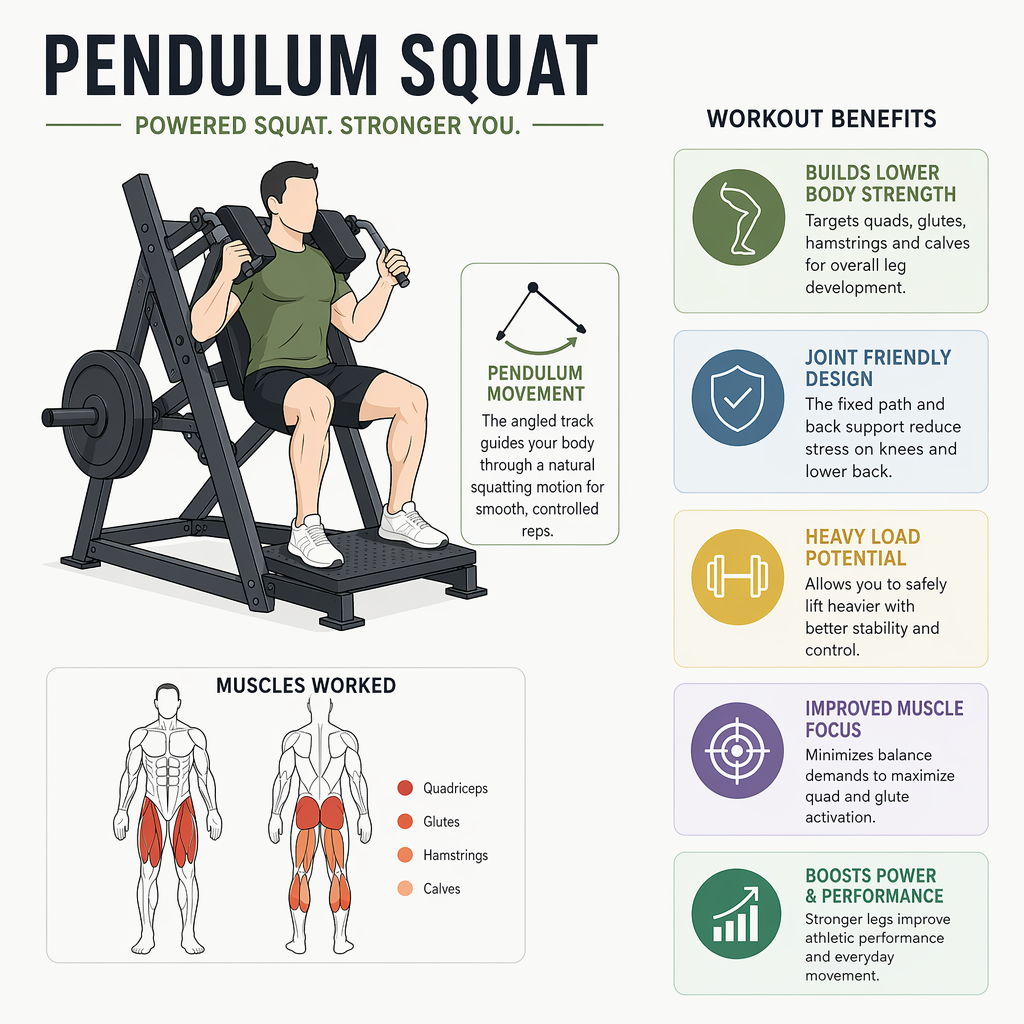
Pendulum squats offer several unique benefits in strength training. They are especially useful when you want hard quad work without the same balance demands as free weights. The guided design helps you stay controlled, which makes each rep easier to repeat with solid technique.
Another big plus is comfort. Many lifters find pendulum squats easier on the lower back because the machine reduces spinal loading. The arcing pattern can also change joint stress across the rep, which may feel smoother than other squat options. Those advantages stand out even more in the sections below.
(ALSO READ: Top 5 Pendulum Squat Alternatives for Stronger Legs)
Enhanced Quadriceps Development
For those aiming to build larger quads, the pendulum squat is an excellent option, as its machine configuration typically maintains consistent tension on the quadriceps and allows you to concentrate on your reps without having to worry about load stability. This enhanced focus can maximize muscle activation, particularly when you employ a controlled tempo and achieve full depth during the exercise.
A greater range of motion can also help. Many lifters are able to squat deeper on this machine while keeping heels down and knees tracking well. That deeper bottom position increases the training challenge and can support muscle growth over time.
Yes, pendulum squats can be used to increase muscle mass in the legs, especially in the quads. They fit well into hypertrophy work when paired with progressive overload, enough weekly volume, and consistent technique. For many people, they become a reliable leg day staple for front-thigh development.
Lower Back Relief and Joint-Friendly Mechanics
One of the biggest reasons people choose this machine is lower back relief. Because the machine supports your torso and guides the load, spinal loading is reduced compared with a heavy barbell squat. That can make training feel more manageable for lifters with back issues or those returning from discomfort.
The machine can also feel friendlier on the joints. Its arcing path creates a different loading pattern than a fixed sled or free-weight lift, and the counterbalanced mechanism helps create smoother transitions at the critical moment of direction change. For some lifters, that means less harsh joint stress during hard reps.
Is the pendulum squat effective for those with knee issues? It can be more comfortable for some people because stress is distributed differently, but proper form, controlled depth, and smart load selection still matter. A guided machine may lower the risk of injury, but it does not remove it.
Pendulum Squat for Different Fitness Levels and Goals
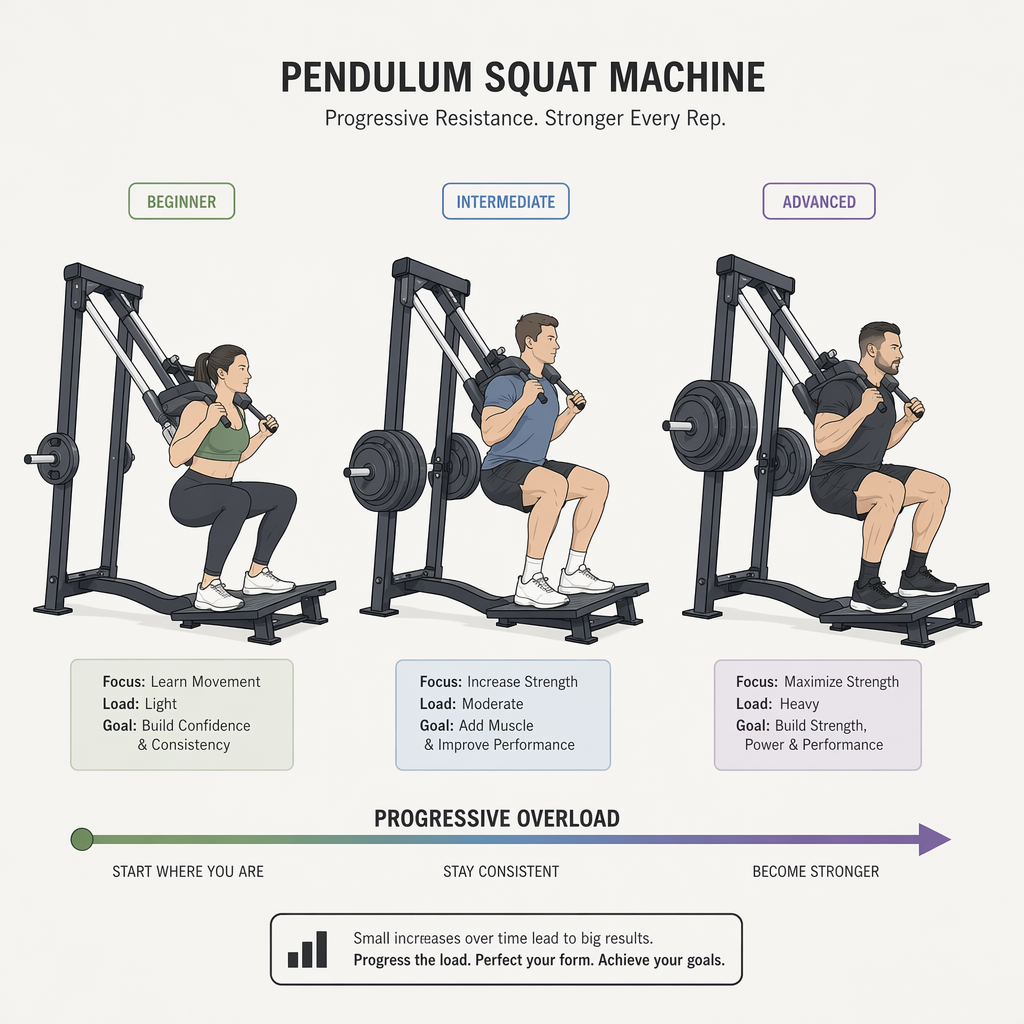
Pendulum squats can fit many training plans because they work for different experience levels and fitness goals. Some people use them to learn squat mechanics. Some people rely on these to aggressively build muscle mass or enhance lower body strength, rather than exclusively using free weights.
Your individual goals should guide how you use the machine. A beginner may focus on proper form and smooth reps, while a more experienced lifter may chase harder sets and progressive loading. That flexibility is why this movement can fit so many leg training programs.
Suitability for Beginners and Proper Technique Guidance
Yes, pendulum squats are suitable for beginners. Having a guided machine setup minimizes balance requirements and establishes defined movement limits, potentially simplifying the learning process. By removing the need to manage a bar in midair, you’re able to concentrate on correct technique, consistent foot placement, and maintaining a controlled rhythm.
It still helps to start light. Beginners should learn the arc of the machine, keep the heels planted, and make sure the knees track with the toes. Smooth movement matters more than loading heavy weights early. Adjustable positions on the machine can also improve comfort and fit.
|
Setup Point |
Beginner Guidance |
|---|---|
|
Shoulder pads |
Set them so you feel secure without shrugging or pushing the neck forward |
|
Foot position |
Start around shoulder width with toes slightly turned out |
|
Depth |
Go as low as you can while keeping heels down and posture controlled |
|
Tempo |
Lower with control and drive up smoothly |
|
Load |
Begin light and add weight only when each rep looks consistent |
Building Leg Strength and Muscle Mass for Athletes
For advanced lifters and athletes, the pendulum squat offers a way to train hard without the same balance requirements as free weights. That can be useful when the goal is adding quality leg volume, pushing near fatigue safely, or keeping lower body work productive during a demanding training week.
It also supports lower body strength and muscle mass through repeatable mechanics. Athletes can use it for 3 to 4 sets of 8 to 12 reps for hypertrophy or heavier sets of 5 to 8 reps for strength-focused work. The machine makes progressive overload easier to track because the movement stays consistent.
What are the benefits of pendulum squats for athletes? They help build strong quads, support complete leg day training, and reduce balance demands so effort stays on the legs. They are not a full replacement for competition movements, but they add valuable lower body work to a smart plan.
Conclusion
In conclusion, incorporating pendulum squats into your workout routine can yield remarkable benefits for both beginners and seasoned athletes alike. This unique squat variation not only hones in on your quadriceps but also engages multiple muscle groups while providing a joint-friendly alternative to traditional squats. With its emphasis on proper form and technique, pendulum squats can enhance your overall leg strength, muscle mass, and lower back health. Whether you're aiming for athletic performance or simply looking to diversify your fitness regimen, the pendulum squat is a fantastic addition. Why not give it a try? Engage with our community to discover more tips and techniques to elevate your fitness journey, or reach out for personalized guidance!
Frequently Asked Questions
How does the pendulum squat compare with the hack squat in benefits?
A hack squat usually offers a fixed path and often allows heavier loading, while a pendulum squat uses an arcing motion with a different resistance feel. Both train similar muscle groups, but the pendulum squat has unique benefits for deep quad tension, smoother transitions, and reduced spinal loading.
Can you use pendulum squats to increase overall lower body stability?
Pendulum squats can support lower body stability by helping you practice proper form, full foot pressure, and controlled reps under load. Even though the machine reduces balance demands, the resistance curve still challenges your legs through the movement, making it a useful part of strength training.
REFERENCE:
https://blog.myarsenalstrength.com/completeguide-pendulumsquat
https://pubmed.ncbi.nlm.nih.gov/33440446/