

Key Highlights
- The pendulum squat targets major lower body muscle groups, with the quadriceps doing most of the work.
- Its guided path of motion helps you use a deeper range of motion with more control.
- Compared with some free-weight squats, it places less stress on the lower back.
- Proper form matters, especially back position, knee tracking, and steady tempo.
- Glutes, hamstrings, calves, and stabilizer muscles also assist during the movement.
- Beginners and experienced lifters can both use it for safer leg training.
Introduction
If you want a lower body exercise that feels stable, challenges your legs, and supports muscle growth, the pendulum squat deserves your attention. This machine-based squat variation is a popular and ideal choice for a reason. It creates a controlled movement pattern that helps you train hard without the same balance demands as free weights. That makes it useful whether you are new to leg training or already experienced. The real value comes from the muscles it works and how well it can support long-term progress.
Understanding the Pendulum Squat Movement
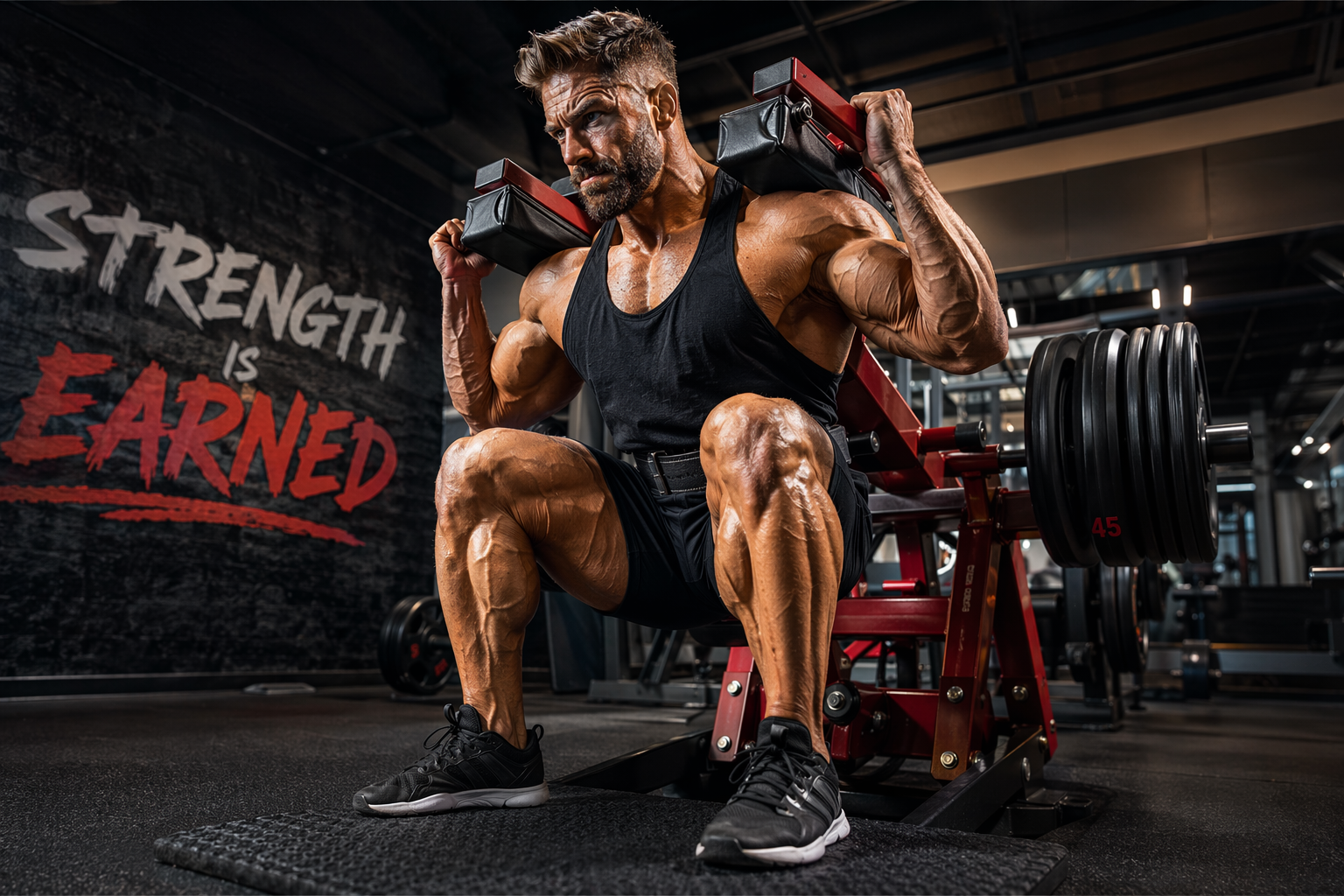
At its core, the pendulum squat is a machine-based lower body movement that follows a fixed, curved path of motion. The squat machine supports your body while still letting you perform deeper squats, which can improve muscle engagement across the legs.
To maximize muscle activation, you need proper form from the start. Keep your back against the pad, brace your core, keep your chest up, and lower with control. That setup helps you move through the machine’s arc safely while keeping tension where you want it most.
(TO KNOW MORE:What Is a Pendulum Squat? Form Tips and Techniques)
How the Pendulum Squat Machine Works
The pendulum squat machine uses a lever system that moves in an arc, creating the swinging action that gives the exercise its name. Unlike some other squat variations, it does not leave you to control every angle on your own. The machine guides the lift through a set path of motion, helping users achieve a full range of motion.
Your upper body stays supported by the back pad and shoulder pads while your feet stay planted on the platform. That machine setup helps keep your torso more upright and reduces the need to balance a free weight. For many lifters, this makes the movement feel smoother and easier to learn.
To perform it well, adjust the machine for your height first. Then lock your back into the pad, position your shoulders securely, release the safety, and squat down under control. Push through your feet to return to the starting point without rushing the rep.
Proper Setup and Form for Beginners
If you are new to the movement, the good news is that beginners can experience good muscle activation using the pendulum squat. The machine’s guided motion helps you focus on proper setup and body position instead of worrying about balance. That makes it easier to learn sound squat mechanics.
Start with an appropriate weight, or even no added plates if the machine already feels heavy. Set your back firmly on the pad, place your shoulders under the supports, and find a starting position that feels stable. Keep your core tight and your chest lifted before each rep.
- Use lighter weights until proper form feels natural.
- Keep your knees tracking in line with your toes during the descent.
- Lower with control and avoid using momentum to stand back up.
Primary Muscles Worked in the Pendulum Squat
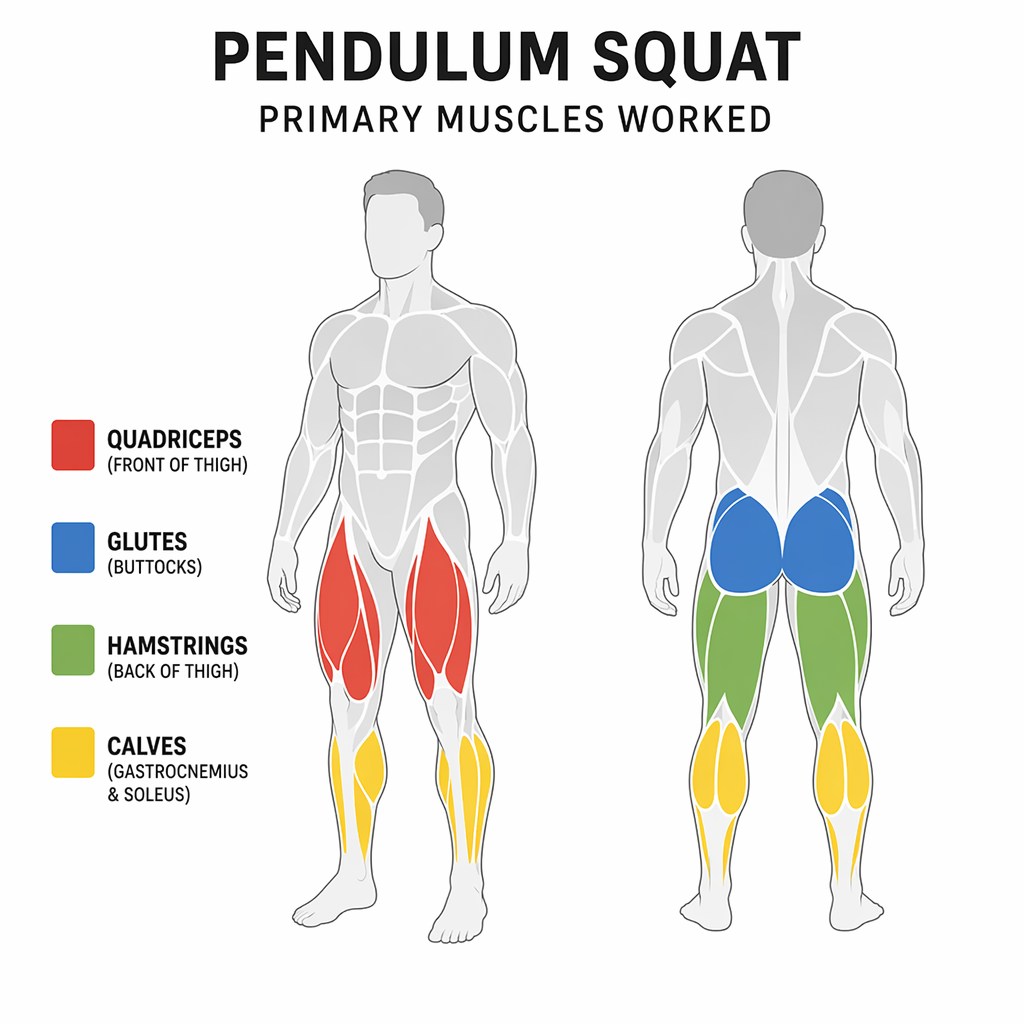
So, which muscle groups are primarily worked during the pendulum squat? The main answer is the quadriceps. This exercise places a strong emphasis on the front of the thighs, especially when you use controlled reps and achieve an entire range of motion during a full movement.
That said, the pendulum squat is not a one-muscle lift. It also drives significant muscle hypertrophy and activation in the glutes and brings the hamstrings into the movement. If your goal is building muscle across the legs, this combination makes the exercise a strong option. The next sections break those roles down more clearly.
Quadriceps Activation and Development
The quadriceps are the biggest drivers in the pendulum squat. From the moment you lower into the rep to the point where you stand back up, the quads stay active across the movement, helping to stabilize the knee joint. That steady tension is one reason this exercise is so effective for leg development.
Compared to other squat variations, the pendulum squat often makes it easier to keep an upright torso and reach a deeper position with control, enhancing leg strength. That squat form can increase quadriceps muscle engagement without forcing you to manage a bar on your back. Many lifters feel their quads working hard through the whole set.
If your goal is growth, the machine also works well with progressive overload. Once your form is solid, you can slowly add resistance over time. Pair that with controlled reps and enough training volume, and the quadriceps get a strong signal to adapt and grow.
Glute Engagement: How the Pendulum Squat Targets Glutes
Yes, the pendulum squat also works the glutes effectively in a home gym setting. While the quads lead the movement, the glutes play an important role, especially as you drop deeper into the squat. The machine’s design helps you reach a strong bottom position with more control.
That deeper range of motion is a big reason glute engagement improves. As you descend, the glutes help control hip movement and support the drive back up. On a squat machine, many people find it easier to stay stable enough to feel this working pattern clearly.
Still, the exercise is usually more quad-heavy than glute-dominant. So if muscle growth in the glutes is your top priority, this lift works best as part of a broader lower body plan. It contributes meaningful glute work, but it should not be your only tool.
(ALSO READ:Pendulum Squat vs Hack Squat: Which One Should You Choose?)
Secondary and Stabilizing Muscle Groups
Beyond the main movers, several secondary muscle groups, including specific muscle groups like the hamstrings, calves, core, and other stabilizer muscles, are also active during the pendulum squat.
That support matters more than many people think. When proper form stays in place, these lower body muscles help create a smoother, safer movement. Their role may be smaller than the quads or glutes, but they still add to the exercise’s full-body control. Let’s look at them one by one.
Hamstring Involvement During the Exercise
Are hamstrings significantly engaged when performing a pendulum squat? They are involved, but they are not the main focus. In this squat machine movement, the hamstrings act more as assisting muscles, helping stabilize the lower body and support the transition out of the bottom position.
You will usually notice more hamstring muscle activation when you squat deeper and stay controlled through the lowering phase. They lengthen as you descend, then contribute as you rise. That makes them useful contributors, even though the exercise is still led by the quadriceps and glutes.
For most lifters, the pendulum squat should not replace hamstring-specific work. It can support total leg training, especially in a moderate hypertrophy rep range like 8 to 12 reps, but you would still want other movements if hamstring growth is a primary goal.
Calves, Core, and Other Supporting Muscles
The calves, core, and smaller stabilizer muscles also help during the pendulum squat. They are not the stars of the lift, but they support balance, posture, and force transfer. Without them, the movement would feel far less controlled.
Your calves assist as your feet stay grounded on the platform. At the same time, your core helps keep your torso steady against the pad. This is one reason the exercise can still improve lower body strength beyond just the thighs and glutes.
- Calves help maintain foot pressure and stability through the rep.
- The core supports posture and helps resist unwanted movement.
- Other stabilizer muscles improve coordination and control during the squat.
Together, these supporting muscles make the exercise more complete. They may not drive the load, but they help you move better and keep the working muscles in a stronger position.
Pendulum Squat vs. Other Squat Variations
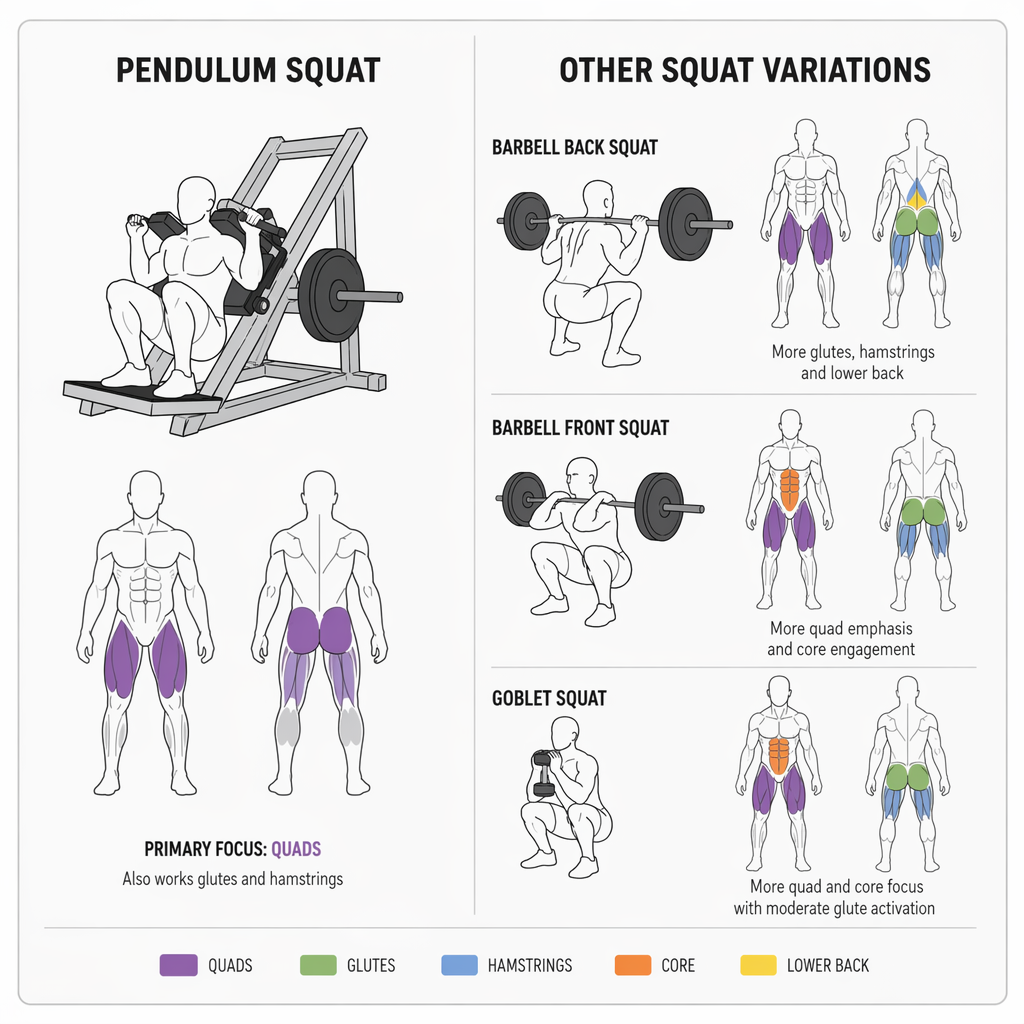
Not all squat variations feel the same, even when they train similar muscle groups. The pendulum squat stands out because of its curved machine path, which often allows a deeper, more controlled squat than many free-weight options found in advanced workout routines.
When you compare it with a hack squat or barbell squats, the differences show up in stability, torso position, and lower back demand. Those details affect how hard the quads work and how comfortable the lift feels. The next two sections compare these points in a practical way.
Comparing Quadriceps Activation to Hack Squat and Back Squat
The pendulum squat is often favored for quadriceps training because it combines support with a deeper range of motion, promoting optimal muscle development. That lets many lifters keep constant tension on the quads without needing to stabilize a bar. The result is strong front-thigh emphasis through the full rep.
A hack squat also hits the quadriceps hard, but the path feels different. A back squat spreads the work more broadly because it demands greater balance, coordination, and trunk control. That can make the pendulum squat feel more direct if your main goal is quad-focused work.
|
Exercise |
Quadriceps Focus |
Movement Feel |
Range of Motion |
|---|---|---|---|
|
Pendulum squat |
Very high |
Curved, guided, stable |
Often deeper and more comfortable |
|
Hack squat |
High |
Fixed sled path |
Strong, but can feel less natural |
|
Back squat |
Moderate to high |
Free-weight and less supported |
Depends more on mobility and skill |
Impact on Lower Back Stress Compared to Traditional Squats
One of the biggest reasons people choose the pendulum squat is reduced lower back stress, making it a better option for individuals with lower back issues. Traditional barbell squats place the load directly through the torso, which increases spinal loading and demands more from the back and core to stay stable under the bar.
By contrast, the pendulum machine supports your upper body with pads and guides the motion. That changes how force is distributed, shifting more of the work into the legs instead of asking the spine to manage a heavy free weight. For people with back issues, that can make training feel far more manageable.
This does not mean squat form stops mattering. You still need a neutral spine, controlled reps, and proper alignment. But compared with traditional barbell squats, the pendulum squat, including variations like Bulgarian split squats, can be a safer workout option when lower back comfort is a major concern.
(ALSO READ: Pendulum Squat vs Barbell Squat: Which Is Right for You?)
Key Benefits of Pendulum Squats for Muscle Growth
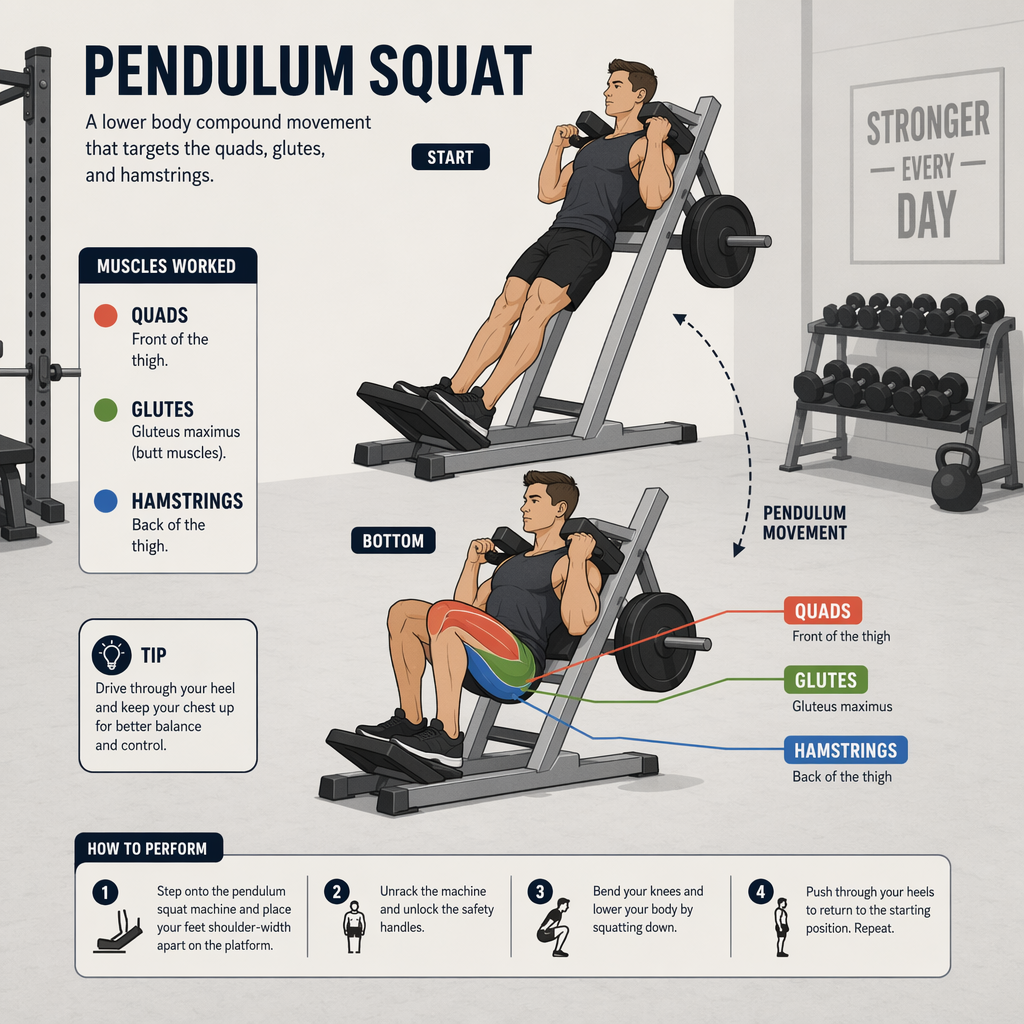
The pendulum squat offers several benefits for muscle growth, especially if you want to train hard while engaging the leg muscles without the same technical demands as free weights. Its guided design helps you focus on effort, depth, and control, which are all useful for muscle hypertrophy.
It also trains several lower body muscles at once, with a clear emphasis on the quads and meaningful support from the glutes and hamstrings. That mix makes it effective for overall lower body development. The next sections cover why it works well for different lifters and why it can be a safer choice.
Enhanced Leg Development for All Fitness Levels
The pendulum squat and leg press can support leg development across different fitness levels. If you are a beginner, the machine helps you learn the movement with more confidence because the path is guided. If you are more advanced, it gives you a way to push your legs hard with less balance demand.
That is why beginners can absolutely experience good muscle activation using the pendulum squat. The machine helps them stay stable enough to feel the target muscles working. At the same time, experienced lifters can use it to chase higher effort and cleaner reps, incorporating advanced techniques to enhance their workouts.
It also supports balanced leg development because several muscle groups are involved at once. Add progressive overload over time, and the exercise stays productive for a long stretch. You can begin with lighter resistance, sharpen your technique, and build from there in a measured way.
Improved Safety and Reduced Injury Risk
Safety is one of the clearest selling points of the pendulum squat. Because the machine guides the movement, you are less likely to drift out of position than you might with free weights, which can lead to using excessive weight too early. That can lower injury risk, especially when fatigue sets in.
It also reduces back strain compared with traditional squats by limiting how much the spine has to support the load directly, especially when performing belt squats. With the body supported by the machine, lower back stress is often lower. That makes it a useful option for people who still want a hard leg session without the same strain.
- The guided path helps maintain proper form through each rep.
- The supported setup can reduce the risk of injury from poor balance.
- Lower back stress is often lower than in traditional barbell squats.
Even so, safe workout habits still matter. Control the tempo, choose an appropriate load, and do not sacrifice technique for extra plates.
Conclusion
In conclusion, the pendulum squat is an excellent exercise for targeting multiple muscle groups, particularly the quadriceps and glutes. By understanding how to execute this strength training movement correctly, you can maximize its benefits while minimizing the risk of injury. The differences between pendulum squats and traditional squat variations highlight the unique advantages this machine offers, making it a valuable addition to your workout routine. Regardless of your fitness level, incorporating pendulum squats into your training can enhance leg development and overall strength. If you're ready to take your leg workouts to the next level, don’t hesitate to reach out for a free consultation with our fitness experts!
Frequently Asked Questions
Is the pendulum squat better for leg growth than the hack squat?
The pendulum squat can be better for muscle growth if you respond well to its deeper motion and stable setup, especially during leg day workouts. The hack squat is still effective, though. Among squat variations and leg exercises, neither is universally best. Your results depend on comfort, effort, range, and consistent progression.
Does foot placement on the pendulum squat influence muscle activation?
Yes, foot placement on the pendulum squat can influence muscle activation. A stable stance helps you keep proper form, maintain alignment, and move through the rep with control. Since different setups can shift emphasis across muscle groups, it is worth finding the position that feels strongest and safest for you.
REFERENCE:
https://blog.myarsenalstrength.com/completeguide-pendulumsquat
https://pubmed.ncbi.nlm.nih.gov/33440446/
https://www.livescience.com/time-under-tension
https://www.sciencedirect.com/science/article/pii/S2666061X21002364
https://stamped.io/go/d3xXaWRnZXRTaWRlRHJhd2VyfDMzMDU0M3xyfDE0Mjc5NjIzMg2