

Key Highlights
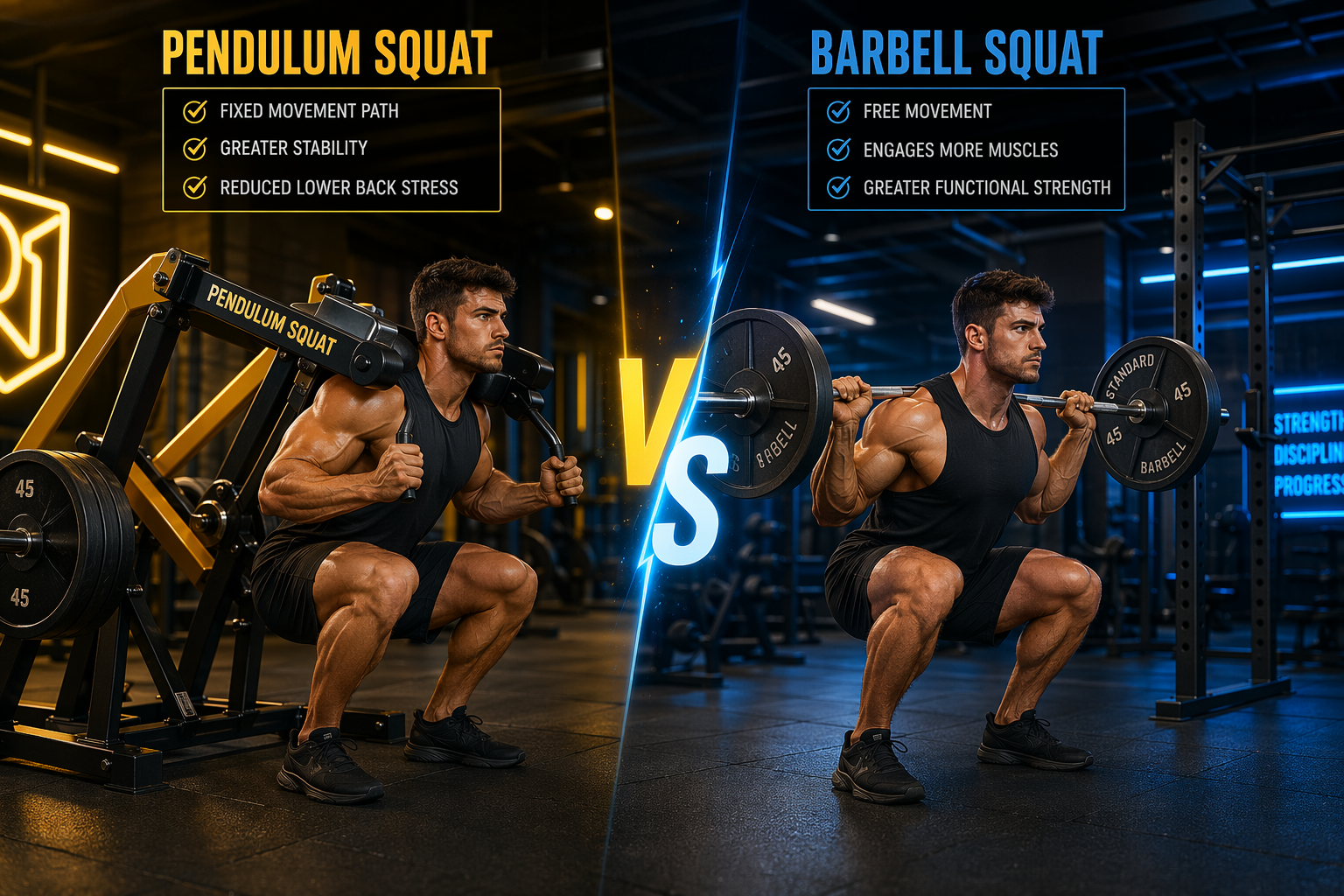
- Pendulum squats use a guided movement path, while the barbell squat relies on your balance and coordination.
- The pendulum squat machine helps you reach a deep range of motion with more constant tension on the quads.
- A barbell squat builds broader lower body strength, including glutes, hamstrings, and core.
- Pendulum squats are often easier for solo training and simpler for beginners to learn.
- Your fitness goals decide the better option: quad growth, full-body strength, or a mix of both.
- Introduction
Pendulum squats and the barbell squat can both build strong legs, but they do it in very different ways. One uses a machine to guide your body, while the other asks you to control the load from start to finish. That difference affects muscle focus, technique, and overall training feel. So which option fits your fitness goals better? If you want clearer answers on strength, comfort, and quad growth, comparing them side by side makes the choice much easier.
Pendulum Squat vs Barbell Squat: Key Differences
The biggest difference is support. A pendulum squat machine guides the load through a fixed arc, so you can focus on pushing hard without worrying much about balance. That makes the movement pattern more controlled and more quad-focused.
With traditional barbell squats, you control everything. The bar, your posture, and your balance all depend on you. This creates a more demanding lift that trains more of the lower body and core, but it also takes more skill and practice to perform well.
Movement Patterns and Technique
Technique feels very different between these two lifts. With pendulum squats, the machine sets the movement path for you, so the exercise feels more locked in. That usually makes proper form easier to maintain, especially when fatigue kicks in. Many lifters also find it easier to reach a deeper range of motion because the machine supports the pattern.
Barbell squats ask more from you. You have to brace, balance, and guide the bar through the full rep. If your posture slips, the lift changes right away. That is why traditional squats reward patience and practice.
- Pendulum squats follow a fixed path with an arcing motion.
- Barbell squats depend on your own control and body movement.
- The machine reduces balance requirements during hard sets.
- Barbell technique needs stronger coordination from hips, back, and core.
(TO KNOW MORE: What Is a Pendulum Squat? Form Tips and Techniques)
Equipment Requirements and Accessibility
Before you choose, think about what equipment you actually have. Pendulum squats require a pendulum squat machine, which is a large piece of equipment usually found in a commercial gym or a well-equipped home gym. Some machines, like the Bells of Steel Pandemonium Squat, can also work as a calf press and Viking press.
Barbell squats are more accessible. You mainly need an olympic barbell, weight plates, and enough space to lift safely. That makes them easier to include in many setups, especially if you want a simpler strength training option.
|
Exercise |
Main Equipment Needed |
Best Fit |
|---|---|---|
|
Pendulum squats |
Pendulum squat machine |
Commercial gym or advanced home gym |
|
Barbell squats |
Olympic barbell and plates |
Home gym or standard gym |
Skill Level and Ease of Learning
If you are new to squatting, pendulum squats usually feel easier to learn. The machine gives you structure, which lowers the perceived difficulty of the movement. You can focus on pushing through your legs instead of thinking about balance, bar position, and overall coordination. That is a big plus for solo training.
Barbell squats come with a bigger learning curve. They are highly effective, but they ask for timing, bracing, and control. For many beginners, that makes the first few weeks slower and more technical.
Still, both lifts can support progressive overload. The difference is how you get there. Pendulum squats simplify the setup and let you train hard sooner, while barbell squats build skill and strength together over time.
Targeted Muscle Groups in Each Squat Variation
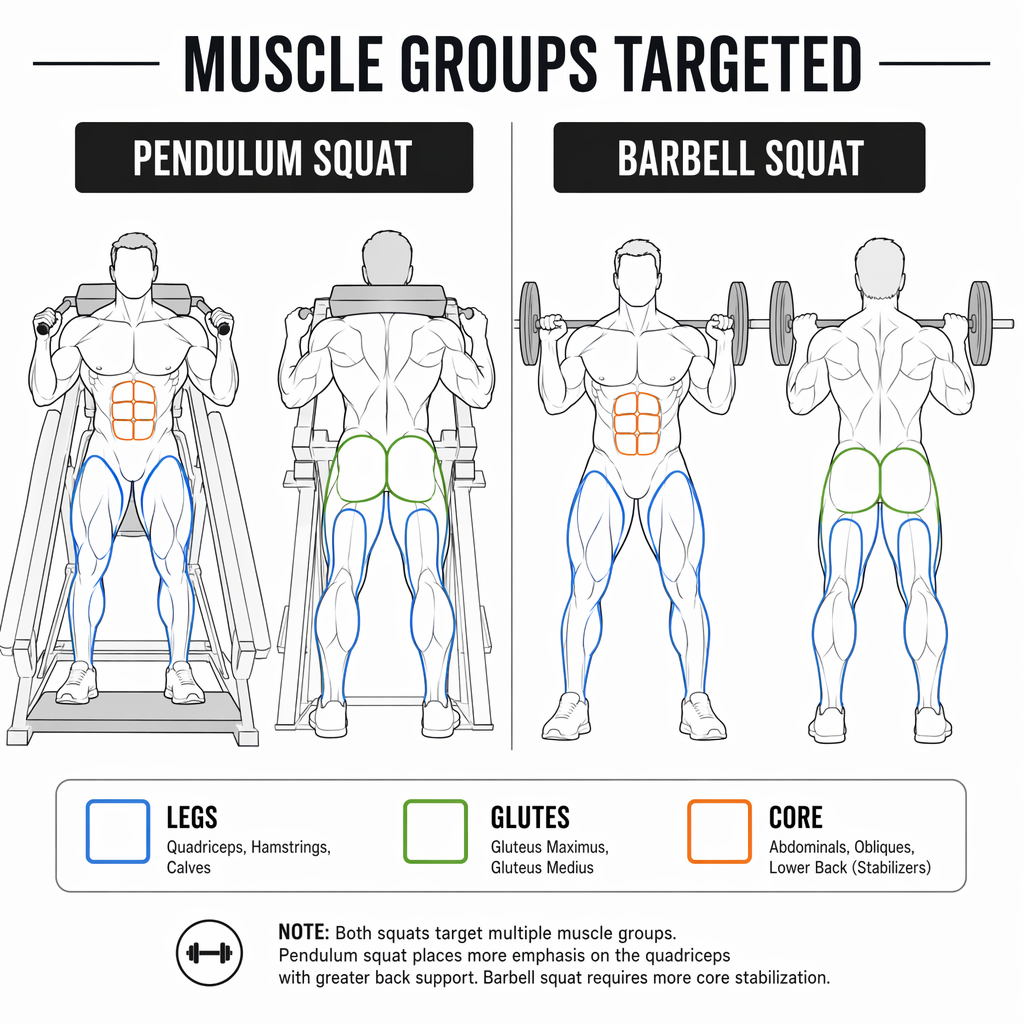
Both squat variations train the lower body, but the emphasis is not the same. Pendulum squats are more quad-dominant, keeping tension centered on the quadriceps muscles through a guided path. That makes them popular for lifters chasing focused leg development.
A barbell squat spreads the work across more leg muscles. Your quads still drive the lift, yet the glutes, hamstrings, core, and stabilizers all contribute in a bigger way. To see that more clearly, it helps to break down muscle activation by role.
Quadriceps, Glutes, and Hamstrings Activation
Pendulum squats place a strong demand on the quadriceps muscles. The machine’s fixed arc and deep knee bend keep the load centered where many lifters want it most. If your goal is quad development, this setup is hard to ignore. The tension stays on the front of the thighs and often feels intense even with lighter weights.
Barbell squats still train the quads well, but they do not isolate them in the same way. Because you must control the full lift, the glutes and hamstrings share more of the effort. That creates a more balanced lower-body training effect.
So which muscles are worked more? Pendulum squats usually stress the quads more directly, while barbell squats spread the work across quads, glutes, hamstrings, and supporting muscles.
Stabilizer and Core Engagement
One of the clearest differences is how much your trunk has to work. A barbell squat demands more core strength because you have to support the load and keep your torso steady. Your stabilizer muscles work hard to hold a neutral spine from top to bottom.
Pendulum squats reduce that challenge. Since the machine supports the path, you do not need the same level of balance or total-body control. Your core still works, but the demand is lower than with free weights. That is one reason many lifters feel less lower back fatigue.
- Barbell squats train more stabilizer muscles through the whole rep.
- Pendulum squats make it easier to stay in a neutral spine position.
- The machine lowers balance demands and shifts focus to the legs.
Muscle Isolation Potential
If your goal is to hammer one main muscle group, pendulum squats have the edge. The machine limits extra movement, which makes muscle isolation easier. Instead of dividing effort between balance, posture, and bar control, you can direct more energy into your quads.
Another reason is constant tension. The guided setup helps keep the legs working throughout the rep, which can make the exercise feel brutally direct. Many lifters choose it when they want a targeted leg day movement without as much whole-body fatigue.
Barbell squats are different. They build muscle well, but they are not built around muscle isolation. They are better for broad strength and full lower-body involvement than for isolating one area.
(ALSO READ: Master the Back Barbell Squat: A Beginner's Guide)
Safety Considerations and Joint Impact
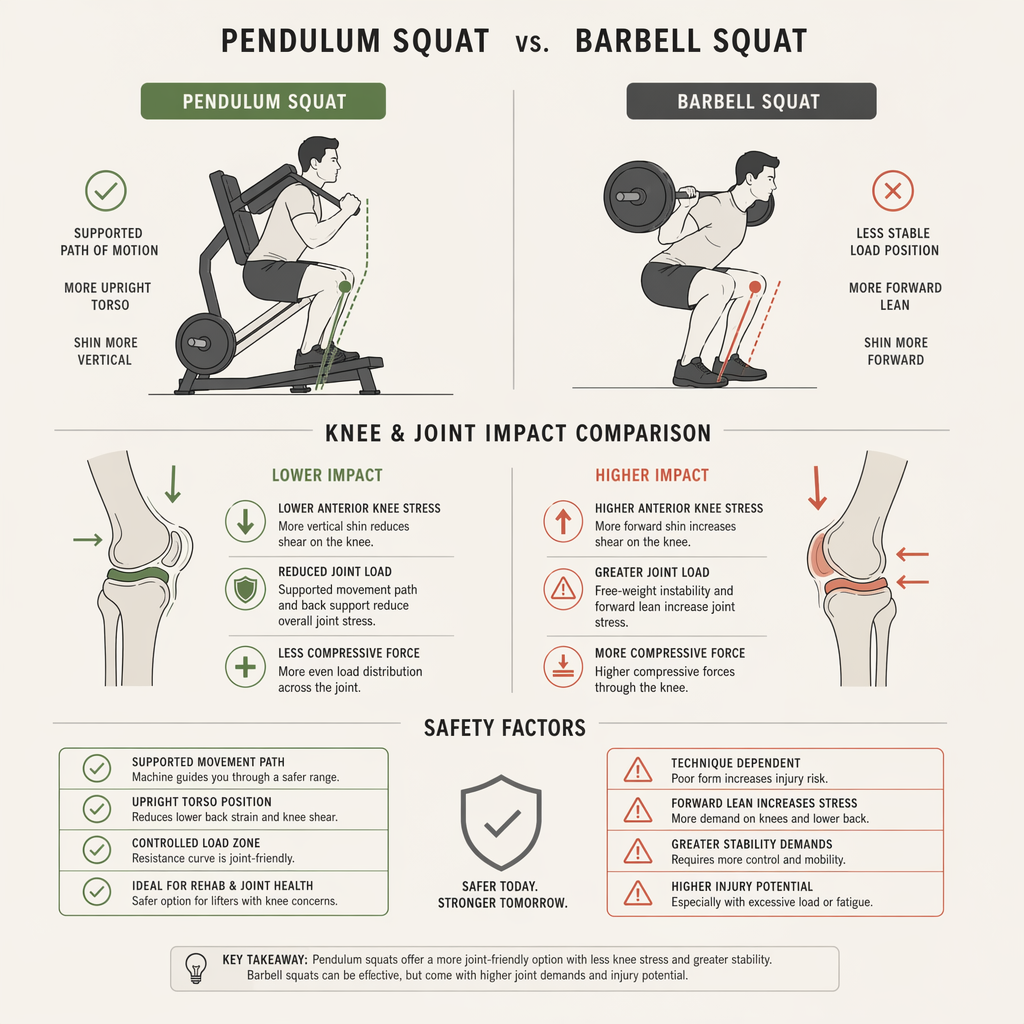
Safety depends on the exercise and how you perform it. Pendulum squats reduce spinal loading because the machine supports the body and guides the rep. That can make them feel friendlier when you want hard leg work with less strain through the torso.
Barbell squats are not unsafe, but proper form matters more because you control the full load. Poor setup or loss of position can increase joint stress. Looking closer at the knees, lower back, and common mistakes helps you decide what fits your body best.
Knee Health: Stress and Support
Many people ask if pendulum squats are safer on the knees than barbell squats. Based on the available information, they can feel more comfortable for some lifters because the machine creates a guided arc and spreads joint stress more variably across the knee joint. That may reduce peak pressure at one single point.
Barbell squats can also be knee-friendly when done well, but comfort depends more on your mobility, control, and squat depth. If your form shifts, the lift can become less predictable.
Machine setup matters too. Some squat machines offer adjustable positions, which can help you find a stance that feels more natural. That does not guarantee zero discomfort, but it can improve support and consistency when training hard.
Lower Back Strain Comparison
Pendulum squats usually put less stress on the lower back than barbell squats. The reason is simple: the machine supports your body and reduces spinal stress while still letting you train the legs hard. For lifters with back limitations, that can make a big difference on leg day.
Barbell squats place the load directly on your body, so your trunk and back have to stabilize the weight. That creates more total demand, but also more fatigue through the spine and surrounding muscles.
Even then, position still matters. Whether you use a machine or a bar, keeping a neutral spine is important. The difference is that the pendulum setup makes that position easier to hold, especially when the set gets challenging.
Injury Risks and Preventive Tips
Neither option is risk-free. Injury risks go up when fatigue changes your mechanics or when the load exceeds what you can control. Barbell squats usually carry more technical risk because you manage every part of the rep. Pendulum squats reduce that complexity, which is why they are often a smart move for lifters training alone or working around back issues.
That does not mean you can switch off and rush the set. Proper form still matters. Machines help, but they do not fix careless training or poor setup.
- Use loads you can control through the full rep.
- Keep your posture steady instead of chasing sloppy heavier weights.
- Stop the set if your body movement changes sharply.
- Choose the pendulum squat as an alternative if back squats irritate your back.
(ALSO READ: 7 Effective Barbell Back Squat Alternatives to Try Toda)
Training Goals: Which Squat Fits Your Objective
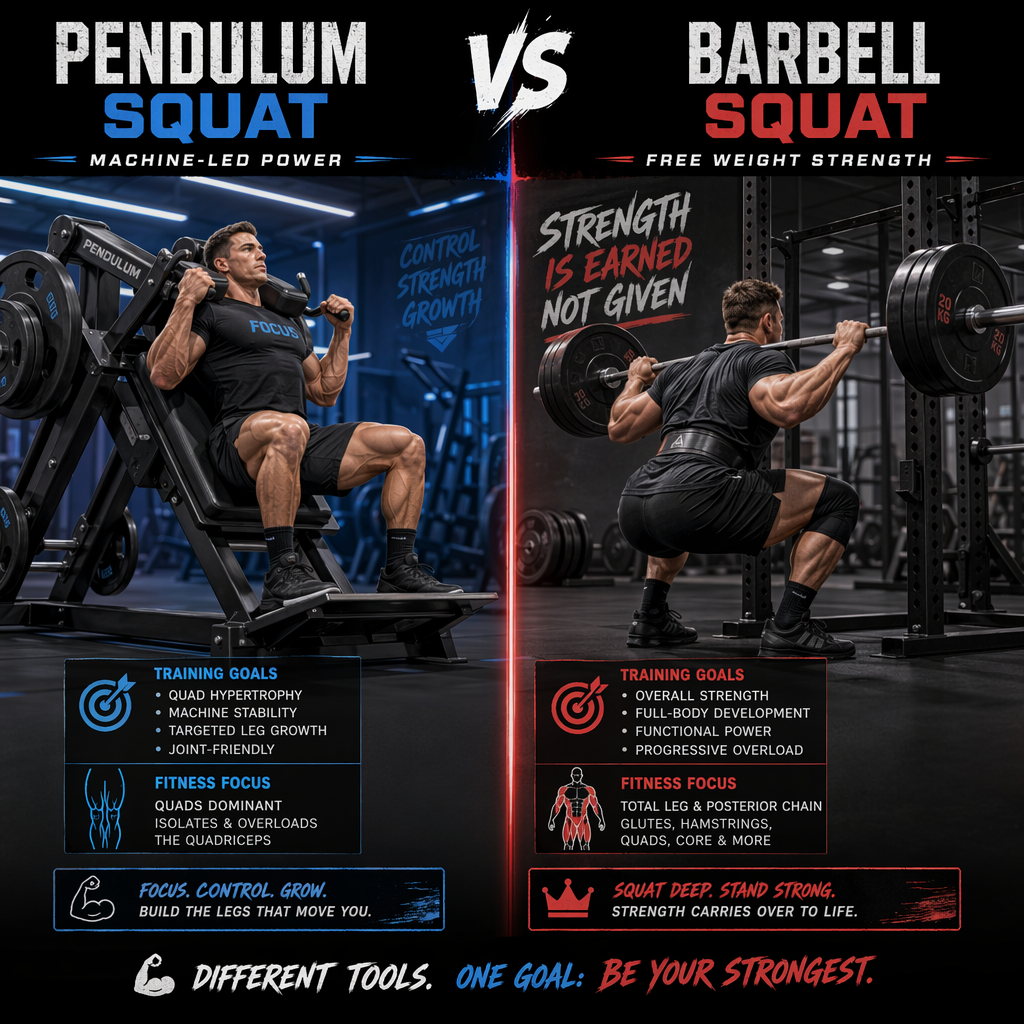
The right squat depends on what you want from your training. If your fitness goals center on quad growth, easier solo sessions, and less spinal demand, pendulum squats are often the ideal choice. They make it easier to push the legs hard without as much technical fatigue.
For broader strength training, barbell squats still stand out. They build coordination, balance, and full lower-body strength in one lift. To choose well, match the squat to the result you care about most.
Building Quad Size and Strength
If your main goal is quad development, pendulum squats usually come out ahead. The machine keeps tension on the quads, supports deep knee bend, and makes the bottom of each rep feel especially demanding. Many lifters say the quads give out before anything else, which is exactly the point when size is the target.
Barbell squats also build strong quads, but the effort is shared more widely. You may move heavier loads over time, yet the exercise is not as direct in its quad focus.
- Pick pendulum squats for focused quad growth and machine-guided tension.
- Pick barbell squats if you want strength with wider lower-body carryover.
Athletic Performance and Functional Fitness
Barbell squats have a strong case for athletic performance because they train more than just the legs. You have to brace, stabilize, and control the weight through space. That makes them useful for building functional strength that carries into sports and daily movement.
Pendulum squats still help, especially by strengthening the quads and building confidence in deeper squats. They can support a training routine focused on muscle growth, volume, or lower-back-friendly leg work. They are also beginner-friendly, which helps new lifters train hard earlier.
For many people, the best answer is not either-or. Using pendulum squats for hypertrophy and barbell squats for strength can create a balanced leg program without forcing one lift to do everything.
(ALSO READ: Why Do My Knees Hurt When I Squat? Expert Insights)
Conclusion
In conclusion, choosing between pendulum squats and barbell squats ultimately depends on your fitness goals, skill level, and personal preferences. Both exercises effectively target key muscle groups, but they differ in technique, equipment requirements, and safety considerations. Whether you're aiming for increased quad size, athletic performance, or functional fitness, understanding these differences will help you make an informed decision. Remember to listen to your body and prioritize proper form to minimize injury risks. If you're ready to elevate your training and would like personalized guidance, don’t hesitate to reach out for a free consultation. Your journey to stronger, healthier workouts starts today!
Frequently Asked Questions
Which muscles are worked more in pendulum squats versus barbell squats?
Pendulum squats place more emphasis on the quadriceps muscles because the machine guides the rep and supports a deep range of motion. A barbell squat still trains the quads, but it spreads the effort across more of the lower body, including the glutes, hamstrings, core, and stabilizers.
REFERENCE:
https://www.powermaxfitness.net/the-benefits-of-doing-squats-a-comprehensive-guide-bd-294.html