

Key Highlights
- A pendulum squat uses a squat machine with a fixed path, while a barbell squat depends on your balance and control. The pendulum squat usually keeps more constant tension on the quads through a deep range of motion.
- Compared to hack squats and belt squats, pendulum squats offer a unique combination of a deep range of motion and constant tension without relying on balance, like hack squats, but using a fixed path like both hack and belt squats.
- Each squat machine variation provides distinct mechanical advantages for targeting the lower body.
- The pendulum squat usually keeps more constant tension on the quads through a deep range of motion.
- Traditional squats train more muscle groups at once, including the core, glutes, and hamstrings.
- Many lifters find pendulum squats easier on the lower back because spinal loading is lower.
- Your best choice depends on muscle activation, training style, and fitness goals.
Introduction
When you compare a pendulum squat with other squat variations, the answer is not as simple as “better” or “worse.” Both can help you build strong legs, but they serve very different reasons in a workout routine. One gives you a machine-guided path and focused leg work. The other challenges your whole body strength and coordination. So which lift fits your fitness goals? That depends on whether you want easier quad-focused training, broader lower-body strength, or a smart mix of both. When performing pendulum squats, common mistakes to avoid include using too much weight at the expense of proper form, not adjusting the machine settings to fit your height and limb length, letting your knees collapse inward, and not maintaining a controlled pace throughout each rep. Paying attention to these details can help prevent injury and maximize the effectiveness of your workout.
Are pendulum squats better than squats
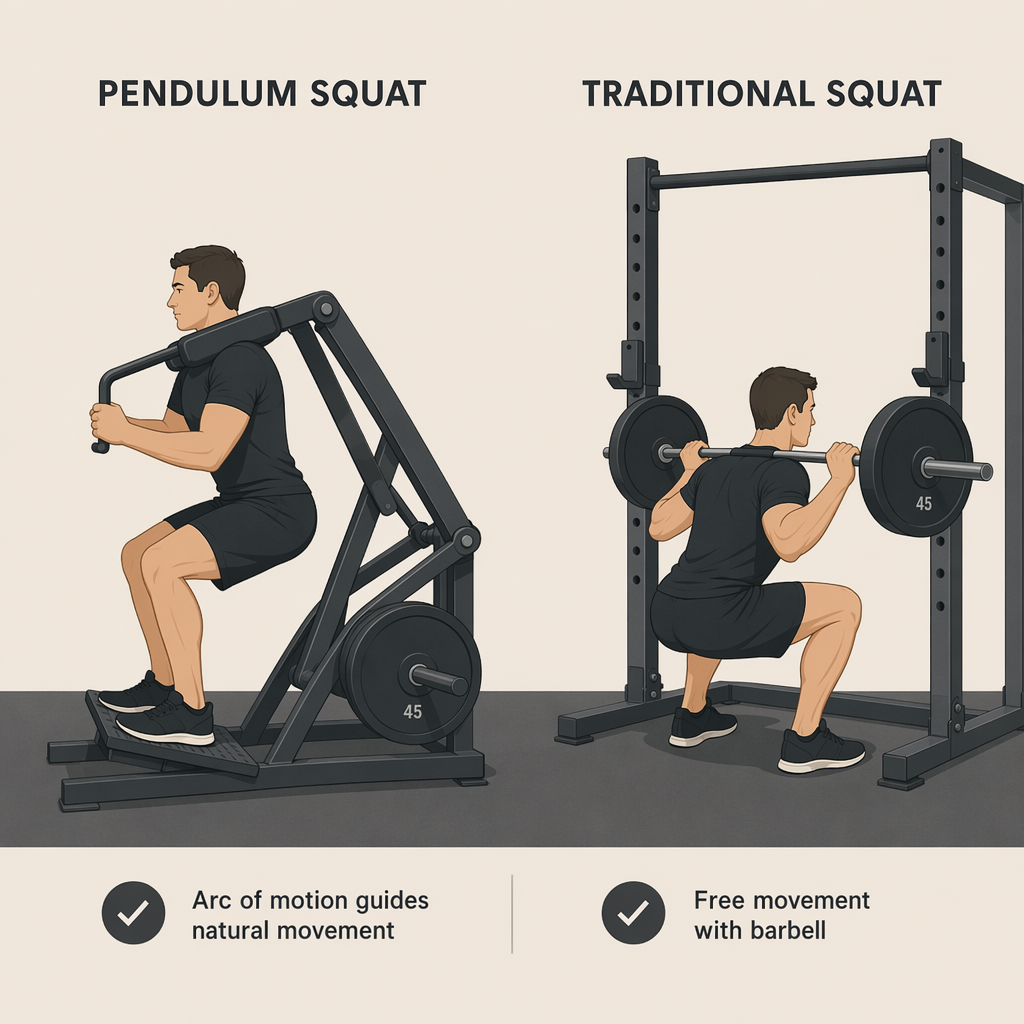
A pendulum squat is a machine-based movement where the load travels in a guided arc. The squat machine helps control the movement path, so you can focus more on pushing hard through your legs and less on balance. That makes it popular for lifters who want consistent reps and serious quad work. When performing pendulum squats, common mistakes to avoid include allowing your knees to cave inward, rounding your lower back, setting the seat or foot placement improperly, and moving too quickly without full control through the range of motion. Paying attention to form and machine settings can help you maximize results and reduce injury risk.
Traditional squats are different. You support the weight yourself, which asks for more coordination, bracing, and body strength. To see why these lifts feel so different, it helps to break each one down.
What Are Pendulum Squats? Features and Form
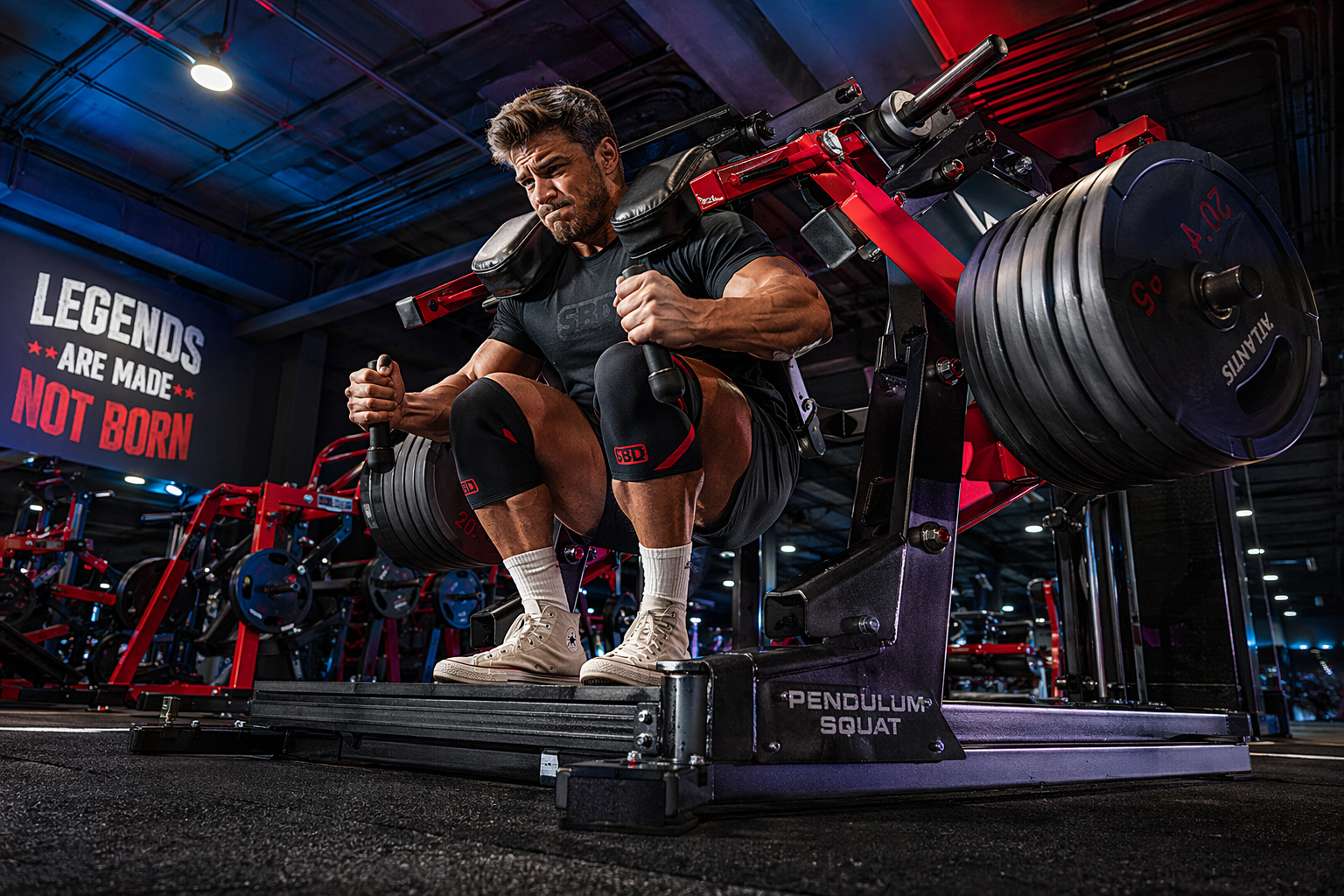
A pendulum squat is a machine-based squat where the load moves on a fixed, arcing path. Instead of balancing a bar on your back, you stand under pads and drive through the machine. The main difference between pendulum squats and regular squats is simple: the squat machine guides the rep for you.
Because of that setup, the exercise often creates constant tension through the working range. Many lifters can also reach a strong range of motion with deep knee bend and repeat it more consistently from set to set.
For that reason, the pendulum squat is often an ideal choice when you want quad-focused work without as much technique stress. Among squat variations, it stands out for easier solo training, a controlled feel, and less balance demand.
(ALSO READ: What Is a Pendulum Squat? Form Tips and Techniques)
What Defines a Traditional Barbell Squat?
Traditional barbell squats are free-weight squats where you place a loaded bar on your back, brace your torso, lower down, and stand back up. You control the path, posture, and balance the whole time. That makes the lift highly effective, but also more technical than a machine squat.
What defines the movement is full-body involvement. Muscle activation spreads across the quads, glutes, hamstrings, core, and stabilizers. At the same time, spinal loading is higher because your body has to support and steady the bar from top to bottom.
Are pendulum squats more effective than regular barbell squats for building leg muscle? They can be more effective for focused quad growth, but traditional barbell squats do more for overall lower-body strength and broader leg muscle development.
Comparing Movement Patterns and Techniques
The movement pattern is one of the biggest differences between these lifts. On a squat machine, the rep follows a guided arc, so the path stays more predictable. That can make proper form easier to hold when sets get hard.
With a barbell, your body creates the path. You have to brace, balance, and keep the load centered over your feet. That raises the skill demand and can increase spinal stress if your position slips. Next, let’s compare setup and safety more closely.
Setup, Range of Motion, and Equipment Needed
Before choosing between these lifts, think about setup. A pendulum squat needs a dedicated squat machine, which is usually found in a commercial gym or a well-equipped home gym. Some models do more than one job, such as a calf press or Viking press, which makes the piece of equipment more useful.
Setting up barbell squats is more straightforward since they require just a barbell, weight plates, and sufficient space to safely lift heavy loads, which means they fit easily into most spaces, particularly in home gyms focused on fundamental strength equipment.
|
Exercise |
Equipment Needed |
Training Feel |
Best Setting |
|---|---|---|---|
|
Pendulum squat |
Pendulum squat machine |
Guided path, deep range of motion, quad focus |
Commercial gym or advanced home gym |
|
Hack squat |
Hack squat machine |
Supported squat pattern |
Gym with machine access |
|
Belt squats |
Belt squat setup |
Lower spinal demand with leg focus |
Gym or specialty setup |
|
Barbell squat |
Barbell and plates |
Free movement, full-body demand |
Standard gym or home gym |
Safety and Proper Alignment: Lower Back and Knee Concerns
For many lifters, pendulum squats do put less stress on the lower back compared to standard squats. The machine supports your body and reduces spinal demand, which can be helpful if you have back issues or want hard leg work without as much torso fatigue. That lower support burden is one of the machine’s biggest unique benefits.
Knee comfort is a little more personal. The movement pattern of a pendulum squat can feel safer for the knees because the path is controlled and repeatable, but that does not mean every setup feels perfect for every body. Proper form still matters in both lifts.
Keep these points in mind:
- Use a stance that lets you move without sharp joint stress.
- Stay controlled instead of dropping too fast into the bottom.
- Avoid sloppy reps, especially when fatigue increases risk of injury.
- Stop if pain replaces normal training effort.
(ALSO READ: Pendulum Squat Foot Placement: Key Tips for Better Form)
Muscle Groups Targeted and Activation Differences
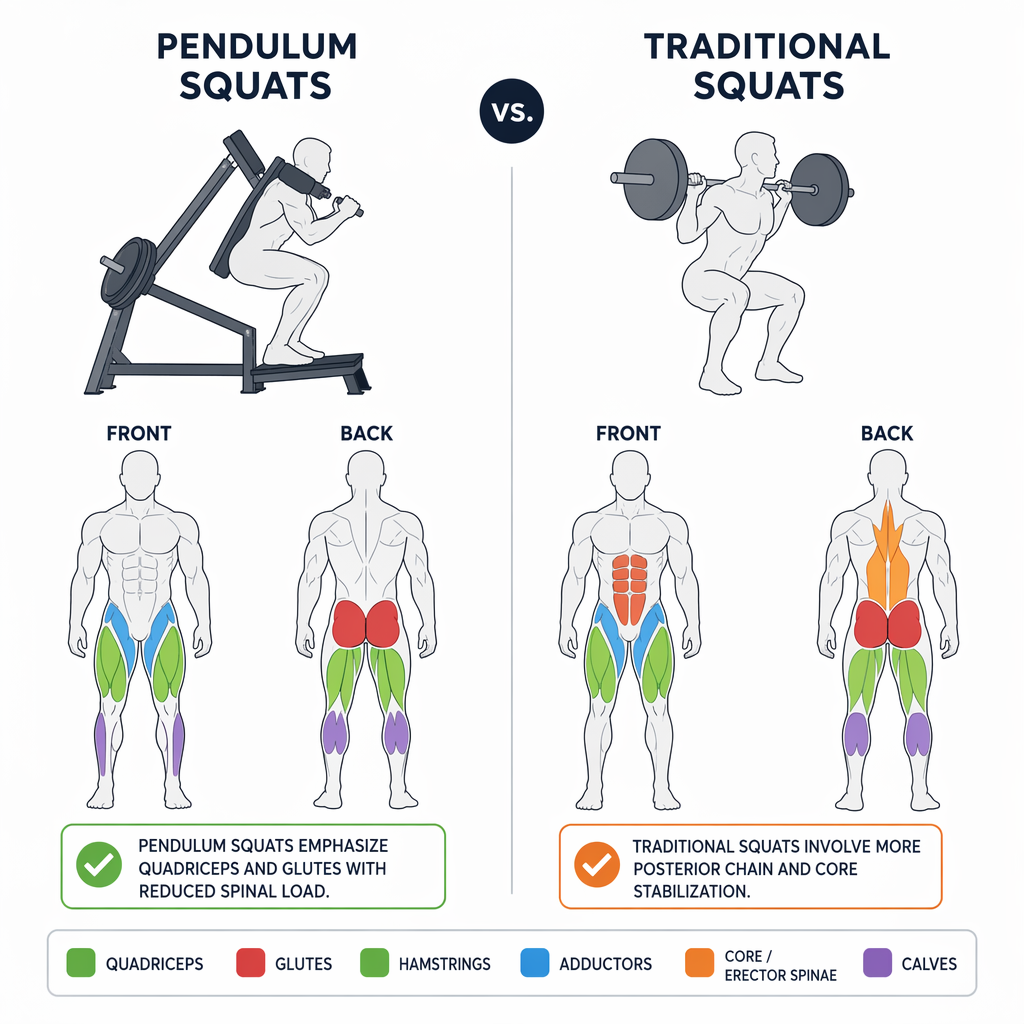
Both lifts train major muscle groups, but the emphasis changes. The pendulum squat usually pushes more work toward the quads because the machine limits balance demands and keeps the effort centered on the front of the legs.
A barbell squat spreads muscle activation across more leg muscles and support muscles. Your glutes, hamstrings, core, and stabilizers all contribute more because you have to control the weight yourself. To understand which helps you build muscle better, it helps to separate the lower body roles.
(TO KNOW MORE: Pendulum Squat Muscles Worked: Why They Matter)
Quad and Glute Emphasis in Pendulum vs. Barbell Squats
If your main goal is quad growth, the pendulum squat has a strong case. The guided path, deep knee bend, and constant pressure through the rep make the quads work hard, especially at the bottom of each rep. Many lifters feel their thighs give out before anything else.
Barbell squats still train the quad well, but they spread the work more evenly. The glute and hamstrings share more of the load, which is great for balanced lower-body strength and athletic carryover. That wider involvement can make the lift feel less direct for front-thigh muscle development.
So, are pendulum squats better for quad development than other squat variations? Based on the available information, they are one of the better options when your priority is stronger quads and targeted leg growth rather than broad strength alone.
Role of Core and Stabilizers in Each Variation
Here is where the gap becomes obvious. Traditional squats demand much more core strength because your torso has to support the load and keep the bar steady. Your stabilizers stay active through the whole movement pattern, and that helps train more muscle groups at once.
The pendulum squat reduces that challenge. Since the machine guides the path, you do not need the same level of balance or trunk control. Instead, the lift keeps more constant tension on the legs. That is part of why beginners often benefit more from pendulum squats when learning to train hard safely.
Key differences include:
- Barbell squats ask more from the core and stabilizers.
- Pendulum squats let you focus more on leg drive.
- Beginners usually find the machine easier to learn and repeat.
Conclusion
In conclusion, whether you choose pendulum squats or traditional barbell squats, both exercises offer unique benefits tailored to different fitness goals.
Pendulum squats offer a greater degree of control throughout the movement, making them especially advantageous for individuals worried about putting strain on their lower back.
. Meanwhile, traditional squats remain a tried-and-true staple for overall strength training. By understanding the differences in muscle activation and safety, you can make informed decisions that align with your personal fitness journey. So, explore these variations and find what works best for you! If you're looking for personalized guidance, don’t hesitate to reach out for a consultation.
Frequently Asked Questions
Do pendulum squats put less stress on the lower back compared to standard squats?
Yes, a pendulum squat usually places less stress on the lower back than standard squats. Because the squat machine supports the movement, spinal loading is reduced. That can make it a useful option for lifters with back issues who still want a hard leg workout.
Are pendulum squats better than traditional squats for quad development?
Often, yes. A pendulum squat tends to keep more focused muscle activation on the quad through the full rep, which can support muscle growth and leg development. Traditional squats still build the quads well, but they spread effort across more areas of the lower body.
Can pendulum squats fully replace traditional squats in a strength training program?
Not completely for most people. A pendulum squat can replace traditional squats during some phases of a strength training plan, especially for hypertrophy. Still, traditional squats train more muscle groups and coordination, so many lifters benefit most from including both in a workout routine.