

Key Highlights
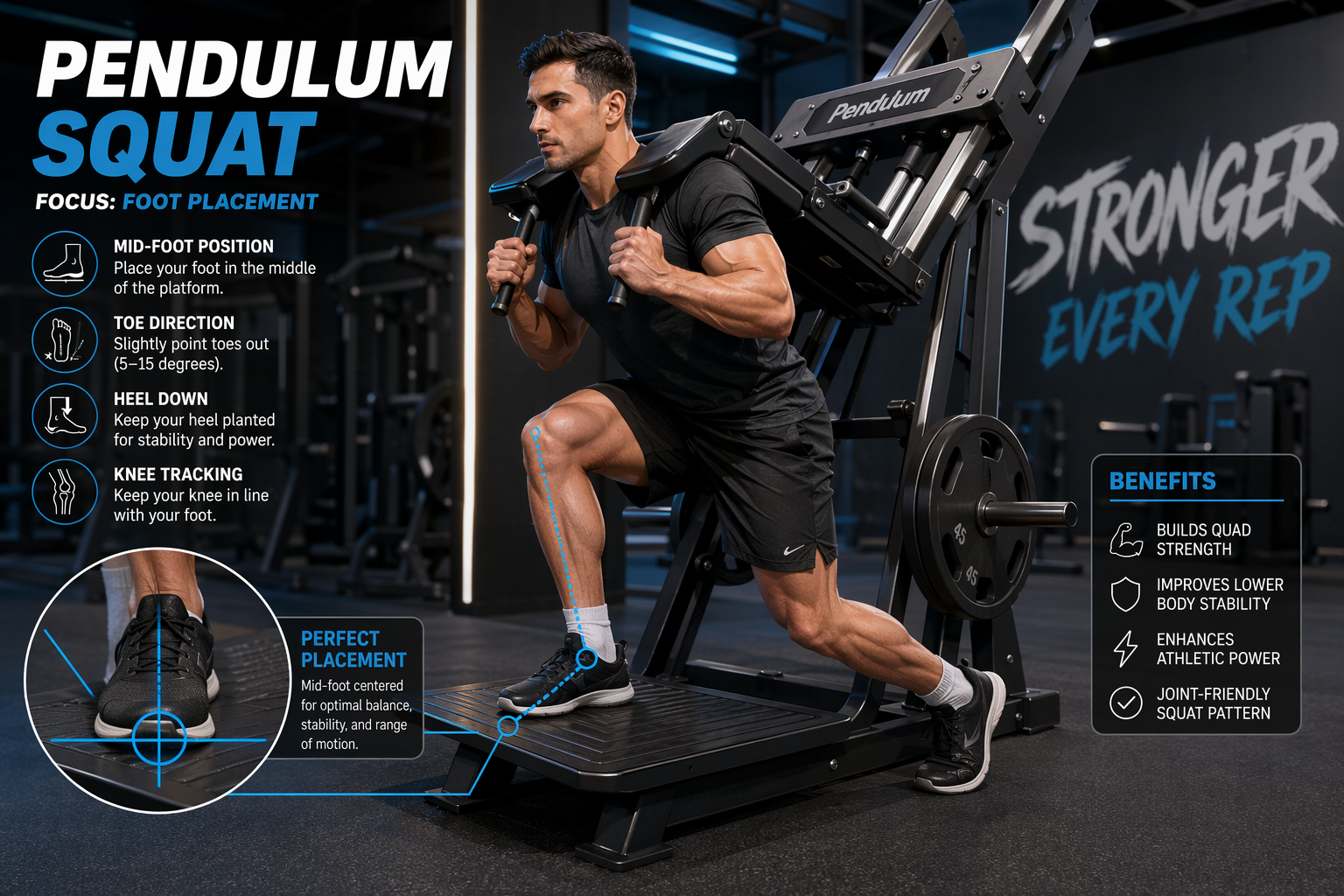
- Pendulum squat foot placement changes muscle activation more than most lifters expect.
- A lower foot placement usually increases quadriceps demand and knee flexion.
- A higher setup often shifts more work toward the glutes during the full range of motion.
- Your best stance depends on comfort, mobility, and your training goals.
- Keeping your heels planted helps protect form and supports smoother reps.
- Small setup changes can improve range of motion, comfort, and lower body results.
Introduction
The pendulum squat is one of the best machine-based options for training your lower body with less spinal loading than many free weights. Still, your results depend heavily on proper form, and foot placement is a big part of that. Where you place your feet changes knee travel, comfort, and which muscles work hardest. If you want optimal results from this squat, you need a setup that fits your body, supports control, and lets you move through strong, clean reps.
Understanding the Pendulum Squat Machine
The pendulum squat machine guides you through a fixed path that feels like a pendulum. That built-in arc helps create a controlled movement pattern and keeps the exercise focused on the legs. Because the machine supports you, many lifters find it easier to stay upright and push hard.
Your back and shoulders stay against the back pad while your feet press into the platform. This setup reduces some of the balancing demands seen in traditional squats. To use the machine well, you need to understand how that path changes the squat itself.
(TO KNOW MORE: What Is a Pendulum Squat? Form Tips and Techniques)
How the Pendulum Squat Differs From Other Lower Body Exercises
Unlike a back squat or other barbell squats, this squat variation gives you more support from the machine. You do not have to balance a barbell on your torso, so you can focus more directly on the legs. That alone changes how the exercise feels under fatigue.
Another big difference is the fixed arc of motion. The machine often makes it easier to reach a deeper range of motion while keeping your torso upright. For many lifters, that means more constant tension on the quadriceps and glutes across the rep.
Foot position also has a bigger effect here than some people realize. A lower setup usually increases knee travel and quad demand, while a higher one can shift more work toward the glutes. So yes, changing foot position on the foot plate affects which muscles are worked by altering joint angles and the stretch you get.
Key Muscles Targeted by the Pendulum Squat
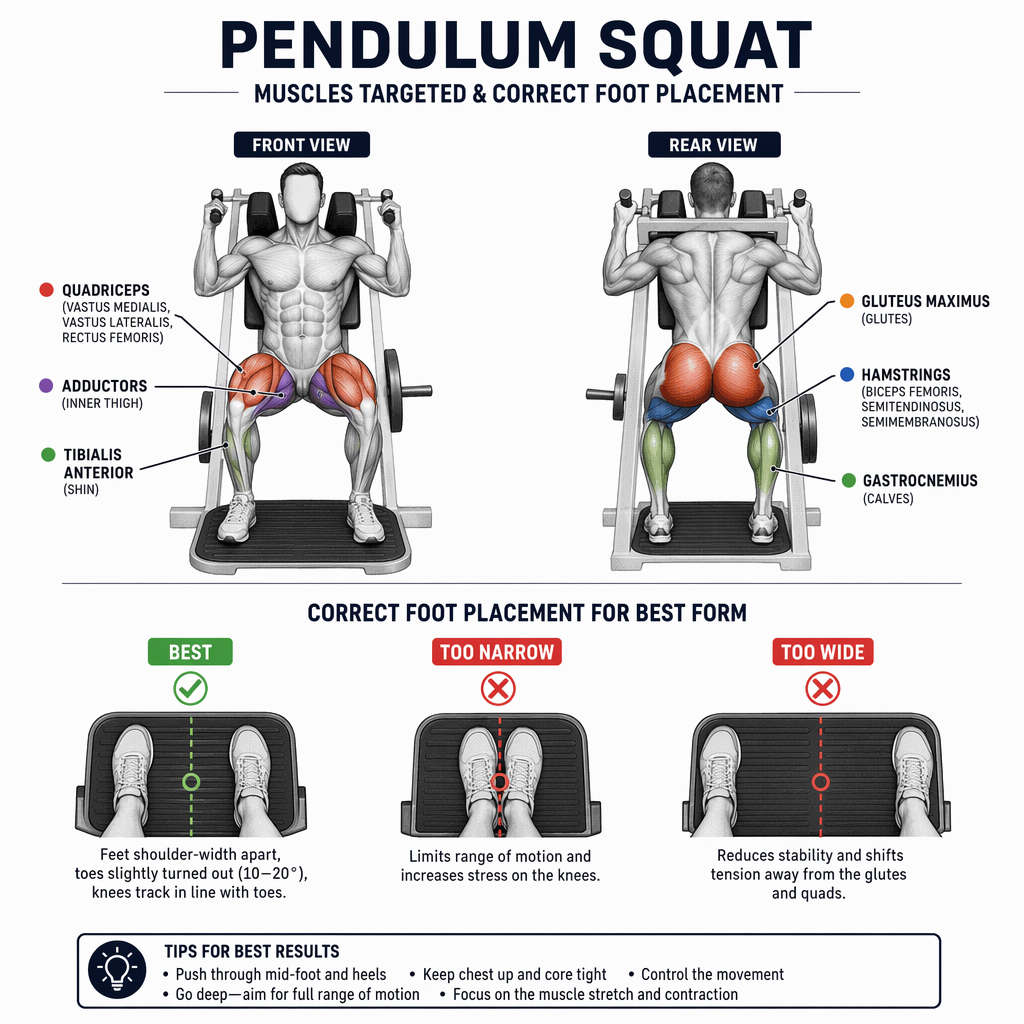
If you are asking what muscles are worked in pendulum squat, the main answer is simple: the legs do most of the job. The exercise heavily trains the quadriceps and also gives strong stimulus to the gluteus maximus, especially when you use a full range of motion.
Support muscles matter too. Depending on your stance and execution, the adductors and calves contribute during the rep. The machine can also help you train hard without your lower back becoming the main limiter.
- Quadriceps are the primary movers in most pendulum squat setups.
- Gluteus maximus helps drive the ascent, especially with feet placed higher.
- Adductors and calves assist with stability and force through the platform.
(TO KNOW MORE: Pendulum Squat Muscles Worked: Why They Matter)
pendulum squat foot placement
There is no single foot placement that works best for every person. Your ideal setup depends on your mobility, comfort, and what your training program is trying to improve. Some lifters want a quad-focused squat, while others want more glute work.
That is why testing small changes matters. A slight shift up, down, wider, or narrower can change how the rep feels and where the stress lands. If you want better muscle growth, match your stance to your goal instead of copying someone else blindly.
Best Foot Position for Maximum Quad Activation
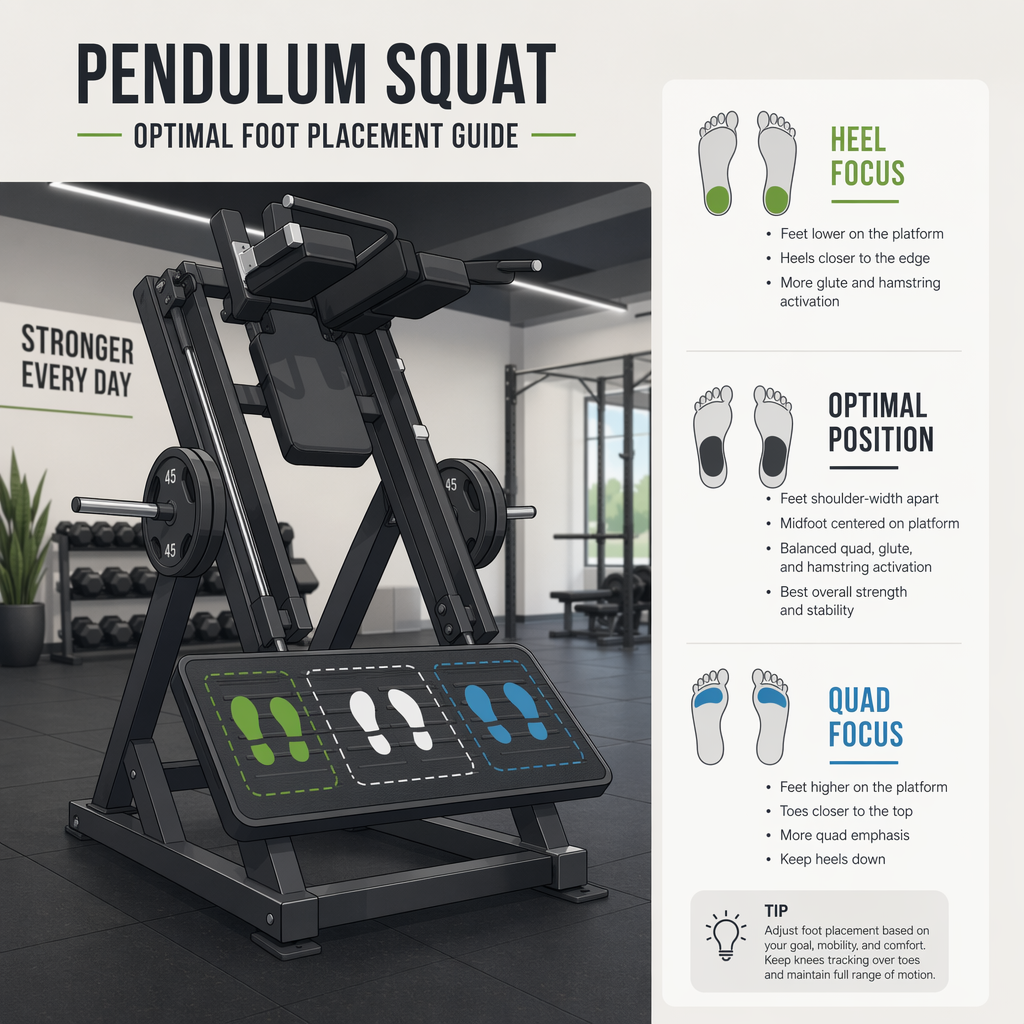
For most lifters, the optimal foot placement for the pendulum squat to maximize quad activation is slightly lower on the platform. Keep your feet around hip-width apart, with toes facing forward or turned out just a little. This tends to allow more forward knee travel.
That setup usually creates more knee flexion and a stronger stretch on the quad, which can lead to intense quadriceps stimulation through the eccentric phase and bottom position. It also helps the machine stay focused on the front of the thighs instead of shifting stress higher into the hips.
- Place your feet slightly lower on the foot plate.
- Use a hip-width foot position for cleaner tracking.
- Let your knees move forward while keeping your heels down.
If your heels lift, adjust the setup or use tools that support better ankle motion.
Adjusting Foot Stance for Improved Glute Engagement
If you want more glutes, move your foot placement higher on the platform. This change often increases the stretch on the hips and lets the glutes contribute more during the ascent. A flatter shoe may also help if your goal is to feel more of the gluteus maximus.
So, is a wider or narrower foot stance better for glute activation in pendulum squats? Based on the available guidance here, hip-width works well, and some lifters may also feel good with a slightly wider stance if the position stays comfortable. The bigger factor is often foot height on the plate, not an extreme width.
- Start with feet higher on the platform.
- Stay around hip-width or only slightly wider.
- Use your hip mobility to find a strong, deep position.
Keep the rep smooth and drive with control instead of bouncing.
The Importance of Foot Placement in Pendulum Squats
Foot placement is not a minor detail in the pendulum squat. It changes how much knee flexion you can reach, how stable you feel, and whether the rep stays smooth from top to bottom. Even a small adjustment can affect comfort right away.
It also influences what becomes the limiting factor. A solid stance helps you train the legs without unnecessary strain elsewhere, including the lower back. When your feet are placed well, the movement feels natural, controlled, and easier to repeat with quality.
How Foot Position Influences Muscle Activation
Your foot position directly affects muscle activation because it changes the joint angles used during the rep. Lower feet usually create more knee travel and more quad demand. Higher feet often increase hip involvement and can bias the glutes more.
It also changes your usable range of motion. If a position lets you descend deeper while keeping your heels planted and your back against the pad, you will usually get a better training effect. If the stance feels cramped or unstable, force may shift away from the muscles you want.
- Lower on the plate usually favors the quadriceps.
- Higher on the plate can increase glute involvement.
- A stance that fits your body improves rep quality and control.
That is why foot placement should match both your goal and your structure.
Overview of Foot Plate Angles and Stances
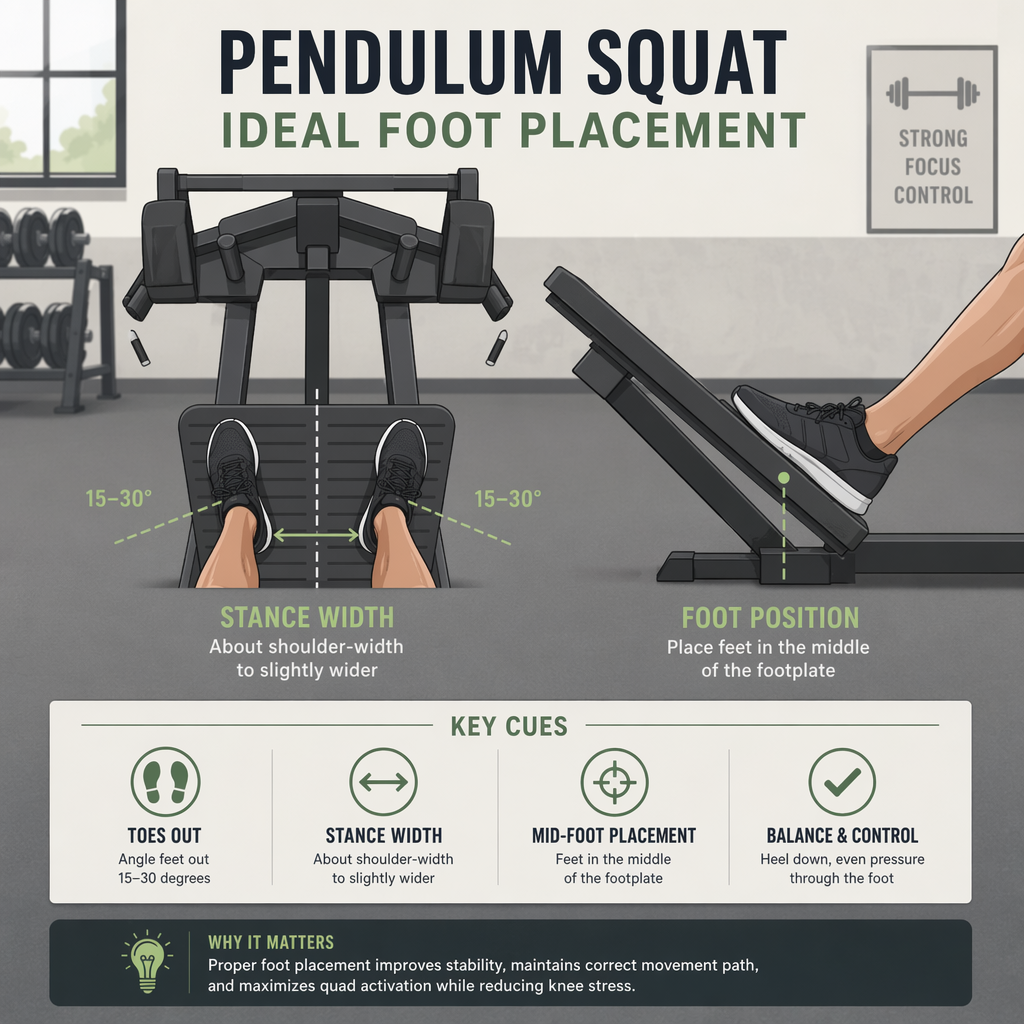
The angle of the foot plate in a pendulum squat influences your stance by shaping how naturally your ankles, knees, and hips line up during the movement. Since machines can vary, you may need small changes in stance or toe angle to feel balanced and strong through the full rep.
Most lifters do well with feet around the middle of the platform for general use, then adjust slightly based on goals. Toes can point forward or turn out a bit if that helps the knees track comfortably.
|
Foot plate setup |
Likely effect on stance and feel |
|---|---|
|
Mid-platform |
Balanced starting point for most lifters |
|
Lower placement |
More forward knee travel and quad bias |
|
Higher placement |
More hip contribution and glute focus |
|
Toes forward |
Simple, direct tracking for many users |
|
Slight toe-out |
Can improve comfort if hips need more room |
Because foot plate design differs between commercial gyms, testing matters.
(ALSO READ: Pendulum Squat Benefits: Why You Should Add This Move)
Technique Breakdown: Setting Your Feet for Success
A good setup starts before the first rep. You want your shoulders secure, your back pressed into the pad, and your feet placed where you can move well without shifting or losing tension. That foundation makes proper form much easier to hold.
Once the pendulum squat starts, your goal is simple: stay braced, descend under control, and drive evenly through the platform. The next two sections break down how to set your feet and keep that position safe under load.
Step-by-Step Guide to Proper Foot Setup
If you are new to the machine, start with a basic foot setup instead of chasing the perfect stance right away. Put your feet near the middle of the platform, around hip-width apart, and point the toes forward or slightly out. Then test how the squat feels with light weight.
Beginners should look for a position that allows a strong range of motion without the hips coming off the pad or the heels lifting. If pendulum squats feel awkward or uncomfortable, that is usually your signal to make small changes, not big ones.
- Start with mid-platform placement.
- When familiarizing yourself with the movement pattern, opt for a lighter weight.
- Adjust one variable at a time.
- Keep the descent slow and controlled.
These beginner tips make it easier to find a repeatable setup that matches your body.
Maintaining Heels on the Platform for Form and Safety
Yes, your heels should stay firmly on the platform during pendulum squats in most cases. When the heels rise, pressure shifts forward and the rep often becomes less stable. That can reduce the quality of your form and make the bottom position feel less controlled.
Heel lift is often a sign that the feet are too low or that your mobility is limiting the position. For a quad bias, some lifters use weightlifting shoes to support better ankle motion while still keeping the whole foot connected.
- Keep even pressure across the full foot.
- Move the feet slightly higher if the heels pop up.
- Use supportive footwear when needed for your goal.
Planted heels help reduce injury risk and support cleaner mechanics.
Troubleshooting Foot Placement Problems
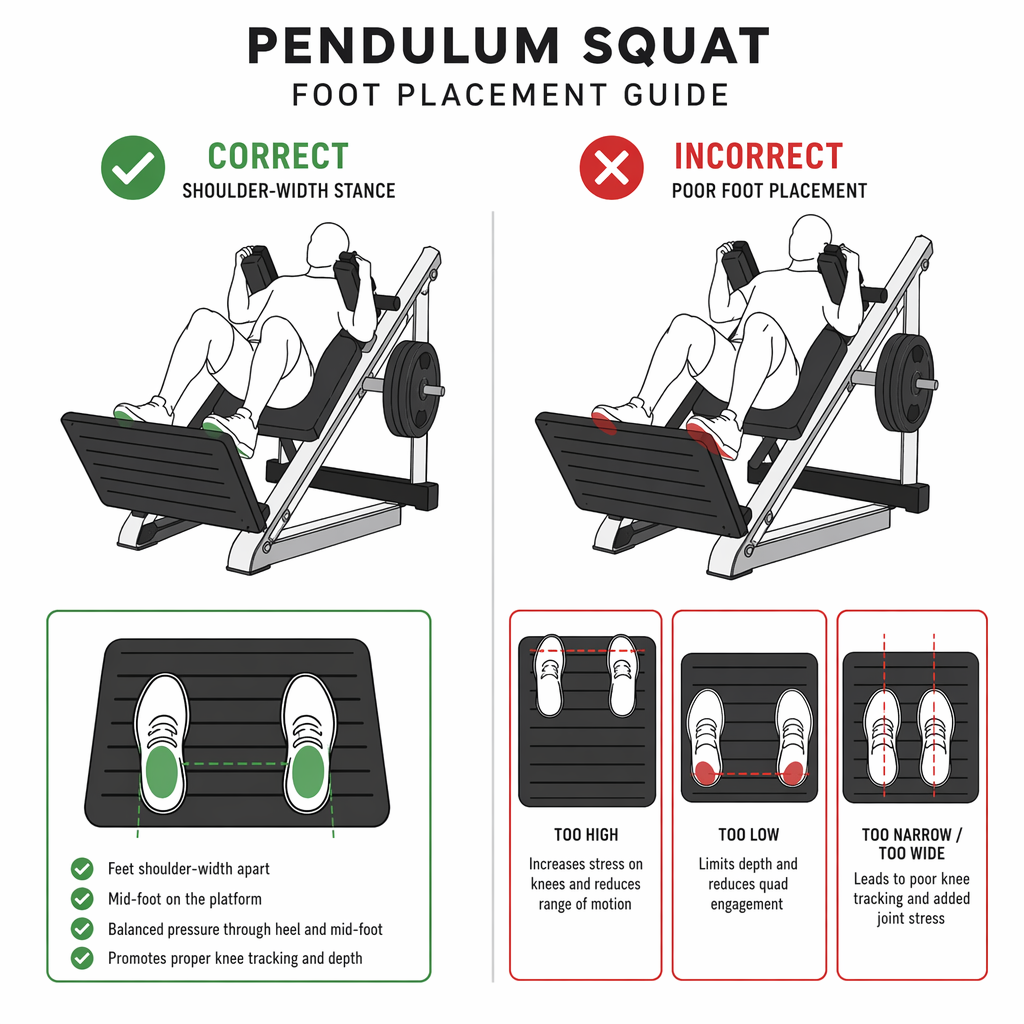
At times, the pendulum squat machine instantly feels fantastic. Other times, it feels awkward, cramped, or unstable. In many cases, the issue is not the exercise itself. It is your foot placement, mobility, or the way the machine fits your frame.
The good news is that small changes usually solve the problem. You do not need a dramatic overhaul. There needs to be improved alignment between your body and the machine. That starts with adjusting for structure, then fixing the most common setup errors.
Modifying Foot Placement According to Body Type
Yes, foot placement in the pendulum squat can differ depending on height or limb length. The compiled guidance makes that clear by noting that machines vary and users need to find a setup that feels comfortable for a full range of motion. A stance that feels natural for one person may feel awkward for another.
Lifters who are taller or have unique body proportions might have to adjust their foot position by moving them a bit higher or lower to ensure their joints align optimally during the squat; the best setup is the one that enables you to remain stable, maintain contact between your back and the pad, and execute the movement fluidly.
- Adjust based on comfort, not ego.
- Use machine position changes when available.
- Cross-check whether depth and control improve.
Your body type should guide the setup, not force you into one template.
Common Mistakes and How to Correct Them
The most common pendulum squat foot placement mistakes are setting the feet too low, letting the heels rise, and using a stance that does not match your mobility. Another issue is rushing reps, which can hide setup problems until the set gets hard.
Incorrect foot placement can increase injury risk by creating unstable reps, reducing control, and shifting stress to places you do not want it. It could indicate inadequate knee alignment, insufficient foot balance, or the rear pad not being in contact anymore.
- Bring the feet up if your heels keep lifting.
- Slow down the eccentric phase to check control.
- Rebuild the setup with lighter weight if reps feel uneven.
Fix the position first, then load the movement.
Conclusion
In conclusion, mastering the pendulum squat's foot placement is crucial for optimizing your workouts and achieving your fitness goals. By understanding how different foot positions impact muscle activation, you can tailor your technique to target specific areas effectively. Remember to maintain proper form and avoid common pitfalls to ensure safety and maximize your results. Embracing these tips will not only enhance your performance but also make your training sessions more enjoyable. If you're ready to elevate your fitness journey, consider trying out these techniques in your next workout session!
heel lifting off platform when doing pendulum machine squat?
If your heel lifts off the platform during a pendulum machine squat, it may indicate improper foot placement or insufficient stability. Ensure your feet are firmly planted, with the entire foot on the platform. Adjust your stance to maintain balance and engage the correct muscle groups effectively for better form.
REFERENCE:
https://blog.myarsenalstrength.com/completeguide-pendulumsquat
https://www.livescience.com/time-under-tension
