


Key Highlights
- The barbell sumo deadlift uses a wide stance to target the glutes, quads, and adductors while reducing lower back strain compared to conventional deadlifts. Alternatives such as wide-stance leg presses, trap bar deadlifts, and sumo squats offer similar muscle engagement with less stress on the lower back.
- It primarily works the glutes, quads, and adductors, with less strain on the lower back compared to a conventional deadlift.
- This variation has a shorter range of motion, which can allow some lifters to move more weight.
- Proper form, including a neutral spine and engaged core, is crucial for safety and effectiveness.
- The sumo deadlift is excellent for building leg strength, improving hip mobility, and adding variety to your workout routine.
Introduction
Are you looking to switch up your deadlift routine and unlock new strength gains? The barbell sumo deadlift might be the perfect exercise for you. This powerful compound movement is a fantastic alternative to the conventional deadlift, offering unique benefits for building a strong posterior chain and lower body. Whether you're a seasoned lifter or just starting, understanding how to perform the sumo deadlift correctly can help you lift safer, build muscle, and reach your fitness goals.
Understanding the Barbell Sumo Deadlift
The sumo deadlift is a variation of the classic deadlift, distinguished by its very wide stance. This setup changes the mechanics of the lift, shifting more emphasis onto your legs and hips and away from your lower back. It’s a popular choice among powerlifters and gym-goers who want to target specific muscle groups or find a more comfortable pulling position.
Compared to the conventional deadlift, the sumo style alters which muscles do the most work. It’s essential to grasp these differences to decide which lift best suits your body and training objectives. We will explore what makes this lift unique and how it stacks up against its traditional counterpart.
What Makes the Sumo Deadlift Unique
The most defining feature of the sumo deadlift is its wide stance, which significantly shortens the range of motion. Your feet are positioned outside shoulder-width, with toes pointed out. This posture requires greater hip mobility and external rotation, allowing your hips to get closer to the barbell in the starting position.
This unique setup places a greater emphasis on the quadriceps, adductors (inner thighs), and glutes to initiate the lift. Although the posterior chain plays a significant role, initiating the bar's lift from the floor primarily depends on the strength of your leg drive.This can be advantageous for individuals looking to build muscle mass in their legs.
For beginners, the key is to start with a light weight to master the form. Focus on keeping your chest up, spine neutral, and pushing the floor away with your legs rather than pulling with your back. The movement should feel like a coordinated push from the ground up, with your hips and chest rising together.
Key Differences Between Sumo and Conventional Deadlift
The primary distinction between the sumo deadlift and the conventional deadlift lies in the setup, specifically the stance and grip. A conventional deadlift uses a narrower, hip-width stance with the hands gripping the barbell outside the legs. In contrast, the sumo version employs a wide stance with the hands gripping the bar inside the legs.
This change in setup directly impacts the range of motion and muscle engagement. The sumo deadlift has a shorter path for the barbell to travel, and it keeps the torso more upright, which can reduce stress on the lower back. The conventional style involves a deeper hip hinge and places more demand on the hamstrings and spinal erectors.
Here’s a quick comparison:
|
Feature |
Sumo Deadlift |
Conventional Deadlift |
|---|---|---|
|
Stance |
Very wide, feet outside hands |
Hip to shoulder-width, feet inside hands |
|
Grip |
Inside the legs |
Outside the legs |
|
Torso Angle |
More upright |
More hinged forward |
|
Range of Motion |
Shorter |
Longer |
|
Primary Muscles |
Quads, glutes, adductors |
Hamstrings, glutes, lower back |
The Role of Stance and Grip in Sumo Deadlifts
Your stance is the foundation of a successful sumo deadlift. The ideal wide stance can vary based on your body proportions and mobility, but your shins should be nearly vertical when you're in the starting position. Your toes should be pointed out at a comfortable angle, typically between 30 and 40 degrees, allowing your knees to track over your feet as you lift.
For proper grip, position your hands inside your knees, usually about shoulder-width apart.A common grip technique is the mixed grip (one palm facing forward, one back), but a hook grip or double overhand grip also works. Gripping the barbell tightly is crucial for maintaining control and transferring force efficiently from your body to the bar.
To improve your form, focus on creating full-body tension before the lift begins. Pull the slack out of the bar and brace your core. Ensure your hips and chest rise at the same time to avoid your hips shooting up too early. Keeping the bar close to your body throughout the entire movement will make the lift more efficient and safer.
(ALSO READ: Barbell Deadlift Basics: Your Guide to Safe Lifting)
Essential Equipment for the Barbell Sumo Deadlift
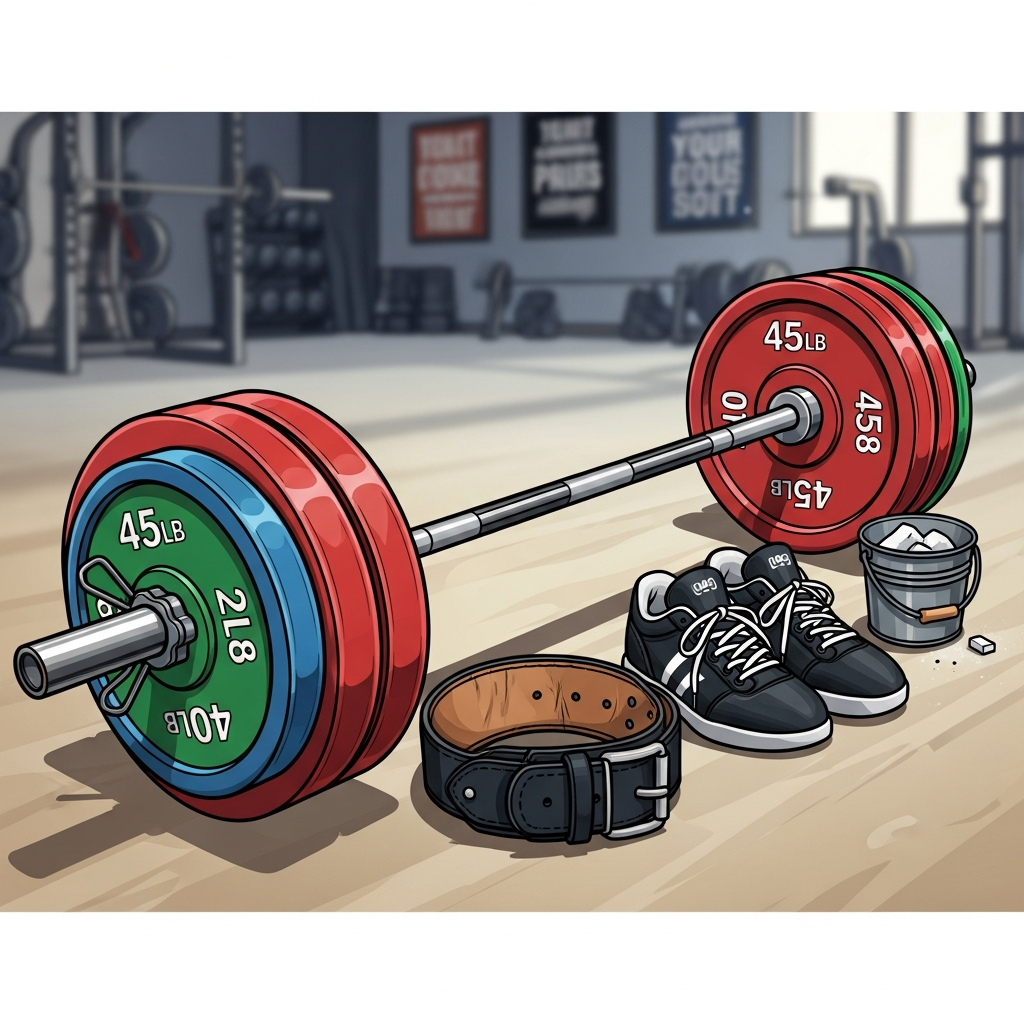
To perform a barbell sumo deadlift, the primary piece of equipment you need is, of course, a barbell and some weight plates. However, using the right supporting gear can enhance your performance and safety. Simple additions to your gym bag can make a big difference in your lifting experience.
From the type of shoes you wear to optional safety accessories like belts, each piece of lifting gear serves a purpose. Let's look at the essential and recommended equipment that can help you execute the sumo deadlift effectively and safely.
Choosing the Right Barbell and Plates
The foundation of any deadlift is a quality barbell and plates. A standard Olympic barbell, which weighs 45 pounds (or 20 kilograms), is the most common choice for this exercise. These bars are designed to handle heavy loads and have a good amount of whip and knurling (the textured part) for a secure grip, which is essential in powerlifting.
When selecting plates, bumper plates are often preferred, especially if you plan on dropping the weight. They are made of dense rubber and are designed to be dropped without damaging the floor, the plates, or the barbell. Standard iron plates are also effective, but they are noisier and can cause more wear and tear if dropped.
Regardless of the type of plates you use, always secure them with weight clips. This simple safety measure prevents the plates from sliding off the barbell during your lift, which could cause an imbalance, disrupt your form, and lead to potential injury.
Footwear and Lifting Gear Recommendations
The right footwear can significantly impact your stability and power during a sumo deadlift. You want a shoe with a flat, thin, and hard sole. This allows your feet to be as close to the ground as possible, providing a stable base and efficient force transfer. Many lifters prefer specialized deadlifting slippers, Chuck Taylors, or even lifting barefoot or in socks.
Beyond footwear, other lifting gear can support your performance. While not strictly necessary, they can be beneficial as you progress to heavier weights. Consider these items to add to your gym kit:
- Chalk: Improves grip by absorbing sweat from your hands, preventing the bar from slipping.
- Lifting Straps: Can be used to assist grip strength on heavy sets, allowing you to focus on the pulling motion without your hands giving out.
- Knee Sleeves: Provide compression and warmth to the knee joints, which can be helpful but are not essential for the lift itself.
Ultimately, the best lifting gear for deadlifting is what makes you feel most stable and confident. Start with solid footwear and add other accessories as you identify specific needs in your training.
Safety Accessories: Belts and Optional Supports
A lifting belt is one of the most common safety accessories you'll see in the gym, especially during heavy deadlifts. Its purpose is not to directly support your lower back but to increase intra-abdominal pressure. When you brace your core against the belt, it creates a more rigid and stable torso, which helps protect your lumbar spine under heavy loads.
The use of a lifting belt is a personal choice. It's generally recommended for experienced lifters who are working with near-maximal weights. For beginners, it's more important to learn how to brace the core properly without a belt. This builds foundational strength and ensures you're not relying on equipment to maintain a safe posture.
If you decide to use a belt, make sure it's worn correctly—tight around your midsection, where you can press your abs against it. Remember, a belt is a tool to enhance your natural bracing, not a replacement for it. Proper form should always be your top priority for safety.
(ALSO READ: Trap Bar vs Barbell Deadlift: Which Should You Choose?)
Proper Sum Deadlift Technique Step-by-Step
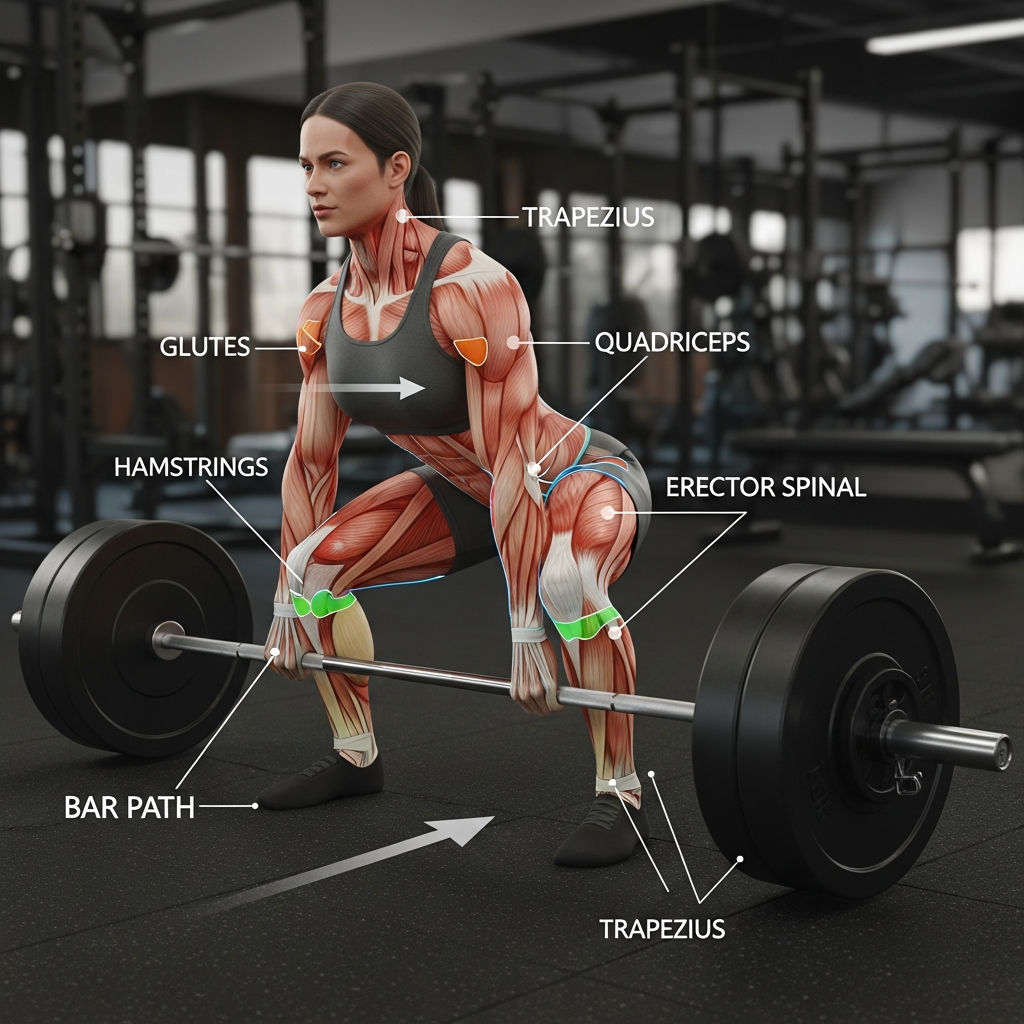
Starting with your feet placed wider than shoulder width, ensure that your toes point slightly outward. As you approach the barbell, focus on keeping your spine neutral and engaging your core. Grip the bar with either a hook grip or mixed grip, aligning your hands inside your knees. Lower your hips until you find a slight tension in the hamstrings and glutes while maintaining an upright torso. As you drive through your heels, use leg drive to lift, ensuring your shoulder blades stay retracted throughout the entire lift.
Pre-lift Setup and Positioning
The effectiveness of your lift is dictated by your initial setup. Position yourself in front of the barbell so that your feet are placed much wider apart than shoulder-width, and make sure your shins are roughly one inch from the bar.
Once your foot placement is set, hinge at your hips and bend your knees to lower yourself down to the bar. Your hands should grip the bar at shoulder-width, inside your knees. It's crucial to maintain a flat back and a neutral spine throughout this process. Your chest should be up, and your shoulders should be pulled back and down to engage your lats.
Before you initiate the pull, create tension throughout your body. Here are a few key points for your starting position:
- Brace your core: Take a deep breath into your belly and tighten your abdominal muscles.
- Pull the slack: Gently pull up on the bar until you feel the weight of the plates. This ensures a smooth start.
- Engage your legs: Feel the pressure through your feet, ready to drive the floor away.
Lifting Mechanics and Execution
With your setup secure, the lift begins with a powerful leg drive. Think of it as pushing the floor away with your feet rather than pulling the barbell up with your back. Your torso angle should remain consistent as the bar breaks from the floor; your hips and chest should rise together in one fluid motion.
A common mistake is letting the hips shoot up faster than the chest. This turns the lift into a conventional deadlift and puts unnecessary strain on your lower back. To avoid this, focus on driving through your heels and keeping your chest proud. The barbell should travel in a straight line, staying close to your shins and thighs throughout the rep.
Don't jerk the bar off the ground. The initial movement should be strong but controlled. As the barbell passes your knees, you can accelerate the movement by driving your hips forward aggressively to meet the bar. This powerful hip extension is key to completing the lift.
Lockout and Descent Best Practices
The lockout is the final phase of the lift, where you stand fully upright. To achieve a proper lockout, extend your knees and hips completely. Squeeze your glutes at the top to ensure full hip extension. It's important not to hyperextend your back by leaning backward; simply stand tall with your shoulders back.
The descent is just as important as the lift itself and contributes to the overall work done. Don't simply let the barbell fall; make sure you control its descent. To lower the weight, reverse the motion: push your hips back first, and once the bar passes your knees, bend your knees to guide it back to the floor. This controlled negative engages your glutes and hamstrings further.
Maintaining a neutral spine throughout the descent is critical for safety. As you bring the weight down, make sure not to round your back.For multiple reps, you can either let the bar come to a dead stop on the floor before the next rep or perform a "touch-and-go" rep, but a dead stop is often better for maintaining form.
(ALSO READ: Single Leg Deadlift Barbell: A Game Changer for Lifters)
Muscles Worked During Barbell Sumo Deadlift
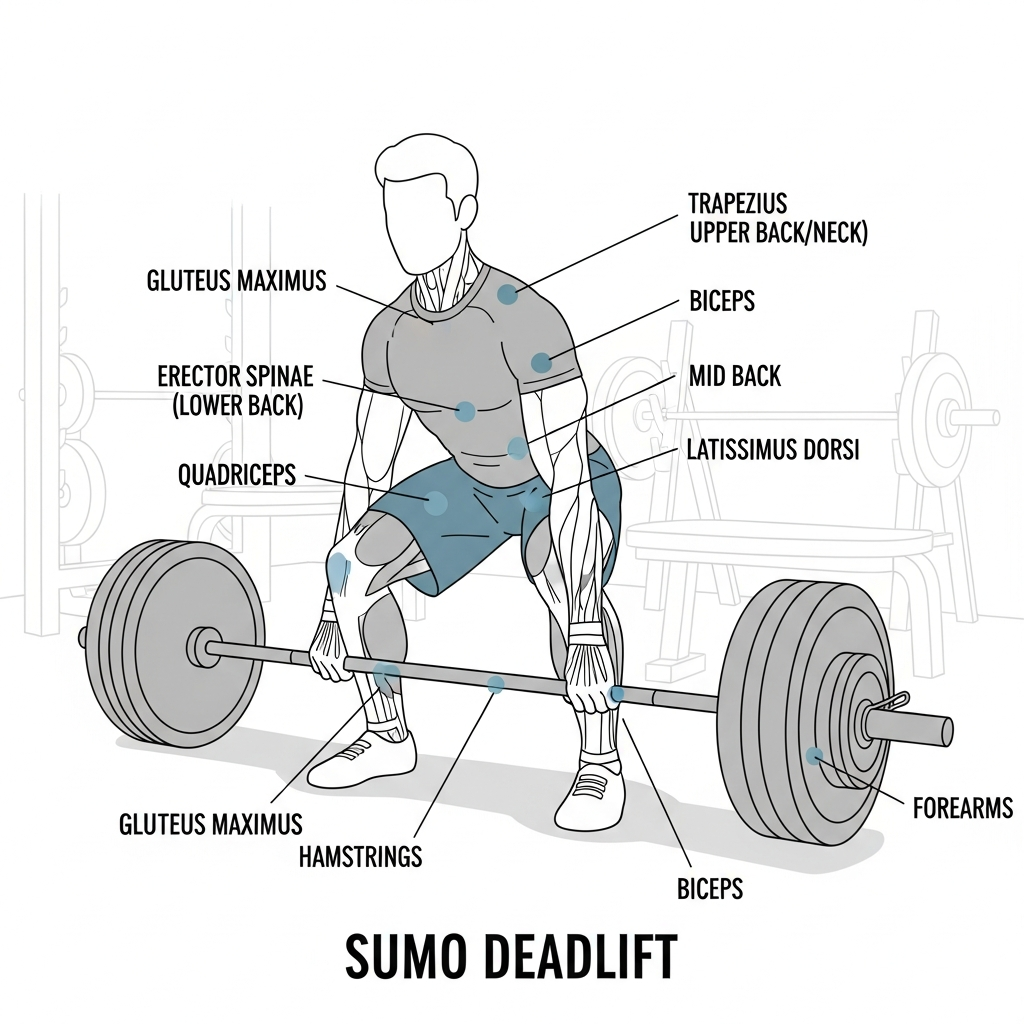
The sumo deadlift is a fantastic compound exercise that engages a wide array of muscle groups throughout your body. While it's known for being a powerful lower-body builder, it also requires significant contribution from your back and core to maintain stability and posture.
Understanding which muscles are working helps you focus on proper activation and appreciate the full-body benefits of the lift. We'll break down the primary movers and the secondary muscles that get a great workout during the sumo deadlift.
Primary Muscles Targeted
The wide stance of the sumo deadlift shifts the emphasis heavily onto the muscles of the legs and hips. These primary movers are responsible for generating the force needed to lift the weight off the floor. If you're looking to build muscle mass in your lower body, this exercise is an excellent choice.
The main muscles targeted are the quadriceps and the adductors. The quads, located on the front of your thighs, are crucial for extending the knees and initiating the powerful leg drive at the start of the lift. The adductors, or inner thigh muscles, work hard to stabilize your legs in the wide stance and contribute to hip extension.
Here are the key primary muscles worked:
- Glutes: The gluteus maximus is a powerful hip extensor, responsible for driving your hips forward to lock out the weight at the top.
- Quadriceps: These muscles initiate the lift by extending the knees.
- Adductors: The inner thigh muscles are heavily engaged due to the wide stance.
- Secondary Muscles Activated
While the legs and glutes are the prime movers, many other muscles work in a supporting role to make the sumo deadlift happen. These secondary muscles are essential for stability, posture, and transferring force throughout the body. The hamstrings, for example, play a significant role in hip extension, working alongside the glutes to bring you to a standing position.
Your entire back and torso are also engaged to keep your spine stable and safe. The lower back muscles, or spinal erectors, work isometrically to prevent your spine from rounding. Your upper back and lats are activated to keep the barbell close to your body and maintain a proud chest.
This comprehensive muscle engagement makes the sumo deadlift a highly efficient exercise. Your core muscles, including your abs and obliques, must brace tightly to stabilize your torso and protect your spine, making it a true full-body movement.
Muscle Engagement Compared to Conventional Deadlift
The muscle engagement between the sumo and conventional deadlift is one of their most significant differences. The sumo deadlift's wide stance and more upright torso angle place a greater emphasis on the quadriceps and adductors. Since the hips start lower and closer to the bar, the leg muscles do more of the initial work to break the bar from the floor.
In contrast, the conventional deadlift, with its narrower stance and more pronounced hip hinge, relies more heavily on the posterior chain. This means the hamstrings and spinal erectors (lower back muscles) are more dominant in the conventional pull. While the glutes are heavily involved in both lifts, their role is slightly different.
Ultimately, the choice between the two often comes down to individual anatomy and goals. A lifter with strong quads might find the sumo deadlift more natural, while someone with a powerful posterior chain might prefer the conventional style. Both are excellent for building overall strength, but they achieve it by emphasizing different muscle groups.
Benefits of the Barbell Sumo Deadlift
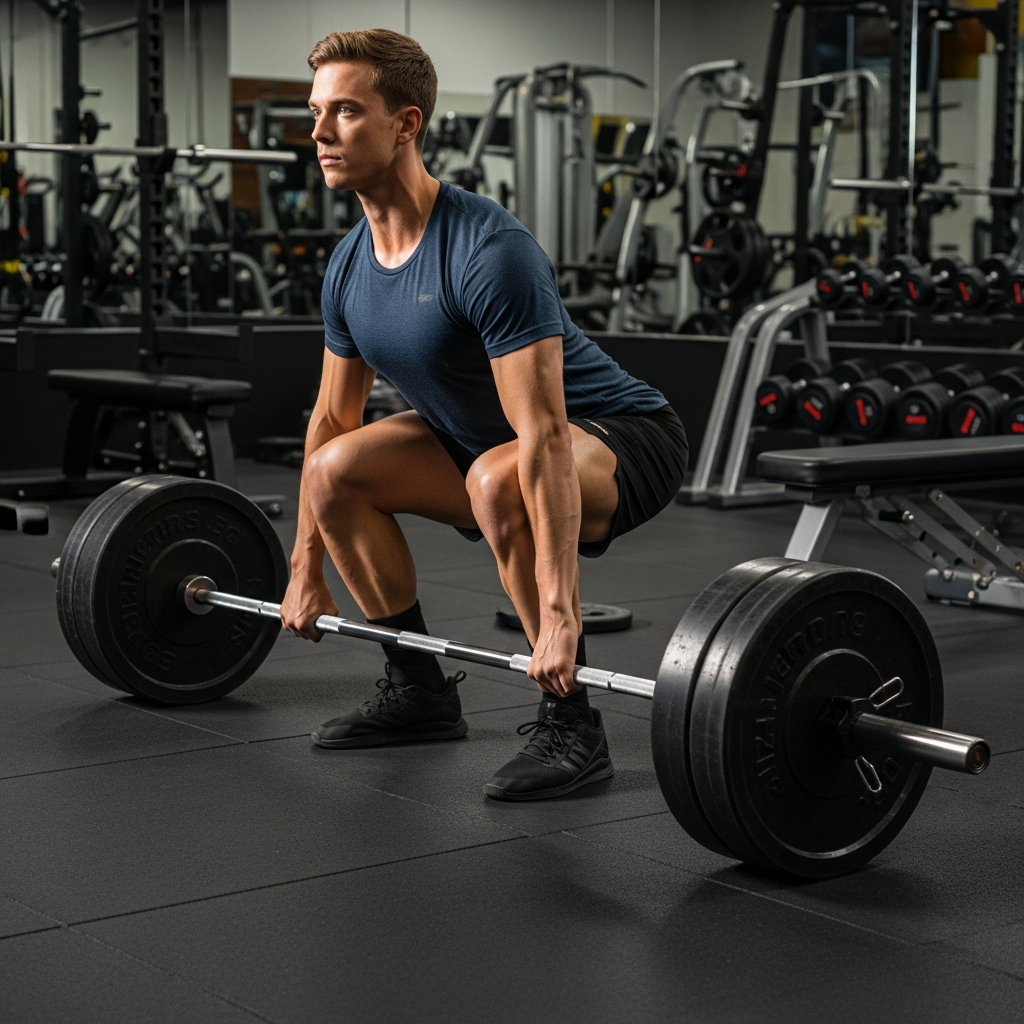
The benefits of the sumo deadlift extend beyond just lifting heavy weight. Incorporating this exercise into your strength training routine can lead to significant improvements in muscle development, mobility, and overall power output. It’s a versatile movement that offers unique advantages for a wide range of lifters.
Whether your goal is to build a stronger physique, improve your athletic performance, or find a deadlift variation that feels better on your body, the sumo deadlift has something to offer.Here are several major advantages you can gain by practicing this highly effective exercise.
Strength Gains and Muscle Development
The sumo deadlift is a powerhouse for building lower body strength and muscle mass. Because it allows many lifters to move heavier loads due to the shorter range of motion, it's an excellent tool for progressive overload, a key principle of strength training. This increased weight can stimulate significant muscle growth in the targeted areas.
The exercise heavily recruits the quads, glutes, and adductors, making it one of the most effective movements for developing these muscle groups. The high demand placed on these large muscles leads to an increase in overall power output, which can translate to better performance in other lifts and athletic activities.
By regularly including the sumo deadlift in your routine, you can expect to see substantial improvements in your leg and hip strength. It's a compound movement that delivers a lot of bang for your buck, helping you build a strong, powerful lower body and a solid foundation for overall fitness.
Impact on Mobility and Flexibility
While it may seem like just a strength exercise, the sumo deadlift can also be a great tool for improving mobility and flexibility, particularly in the hips. The wide sumo stance requires a good degree of hip external rotation and adductor flexibility to get into the correct starting position.
By practicing the movement, you are actively working through this range of motion under load, which can help increase your functional flexibility over time. Many lifters find that consistently performing sumo deadlifts improves their hip mobility, making it easier to get into deep squat positions and perform other athletic movements.
Think of it as a form of dynamic stretching for your hips. As long as you approach the exercise with proper form and don't push beyond a comfortable range of motion, the sumo deadlift can be a valuable addition to your routine for both strength and mobility goals.
Suitability for Individuals with Lower Back Concerns
For many lifters, the sumo deadlift is considered a more back-friendly alternative to the conventional deadlift. The primary reason for this is the more upright torso angle throughout the lift. This posture reduces the amount of shear stress placed on the lumbar spine, potentially lowering the risk of injury for some individuals.
By keeping the spine neutral and the chest up, the load is distributed more toward the legs and hips and less on the lower back. This makes it a viable option for people who experience discomfort or have a history of lower back pain when performing more hinge-dominant movements.
However, it's crucial to note that "back-friendly" does not mean "no-risk." Proper form is paramount, and if you have pre-existing back issues, you should consult with a doctor or physical therapist before attempting any deadlift variation. If performed correctly, the sumo deadlift can be a safe and effective way to build strength while minimizing stress on the lower back.
Conclusion
In conclusion, the barbell sumo deadlift is a powerful exercise that offers numerous benefits, from enhancing strength and muscle development to improving mobility and accommodating those with lower back concerns. Mastering the proper technique is crucial to maximize these advantages while minimizing the risk of injury. By integrating this unique lift into your workout routine, you can effectively boost your overall fitness and achieve your strength goals. If you're ready to elevate your training, consider incorporating the barbell sumo deadlift into your regimen and feel the difference it can make. For personalized advice, don’t hesitate to reach out for a free consultation!
Frequently Asked Questions
How much weight should I use when starting out?
For beginners, it's crucial to start with a very light weight, or even just the barbell, for your first time. The focus should be on learning the movement and perfecting your own technique. Once you are confident in your form and can maintain a proper starting position, you can gradually increase the weight.
How often should Sumo Deadlifts be included in a workout regimen?
Because the sumo deadlift is a demanding compound exercise that taxes multiple large muscle groups, it requires adequate recovery. For most people, including it in your workout routine once a week is sufficient. This frequency allows your muscles and central nervous system to recover fully between sessions, preventing overtraining.
REFERENCE:
https://www.physio-pedia.com/Introduction_to_Human_Biomechanics_-_External_Forces
https://www.medicalnewstoday.com/articles/intra-abdominal-hypertension
https://www.ncbi.nlm.nih.gov/pmc/articles/PMC6683626/
https://everflexfitness.com/how-much-does-a-deadlift-bar-weigh/
https://pubmed.ncbi.nlm.nih.gov/11932579/
https://barbell-logic.com/how-to-sumo-deadlift/
https://peaksware.uservoice.com/forums/942745-trainheroic-customer-feedback
https://www.elitefts.com/education/choosing-conventional-or-sumo-based-on-your-bone-structure/