

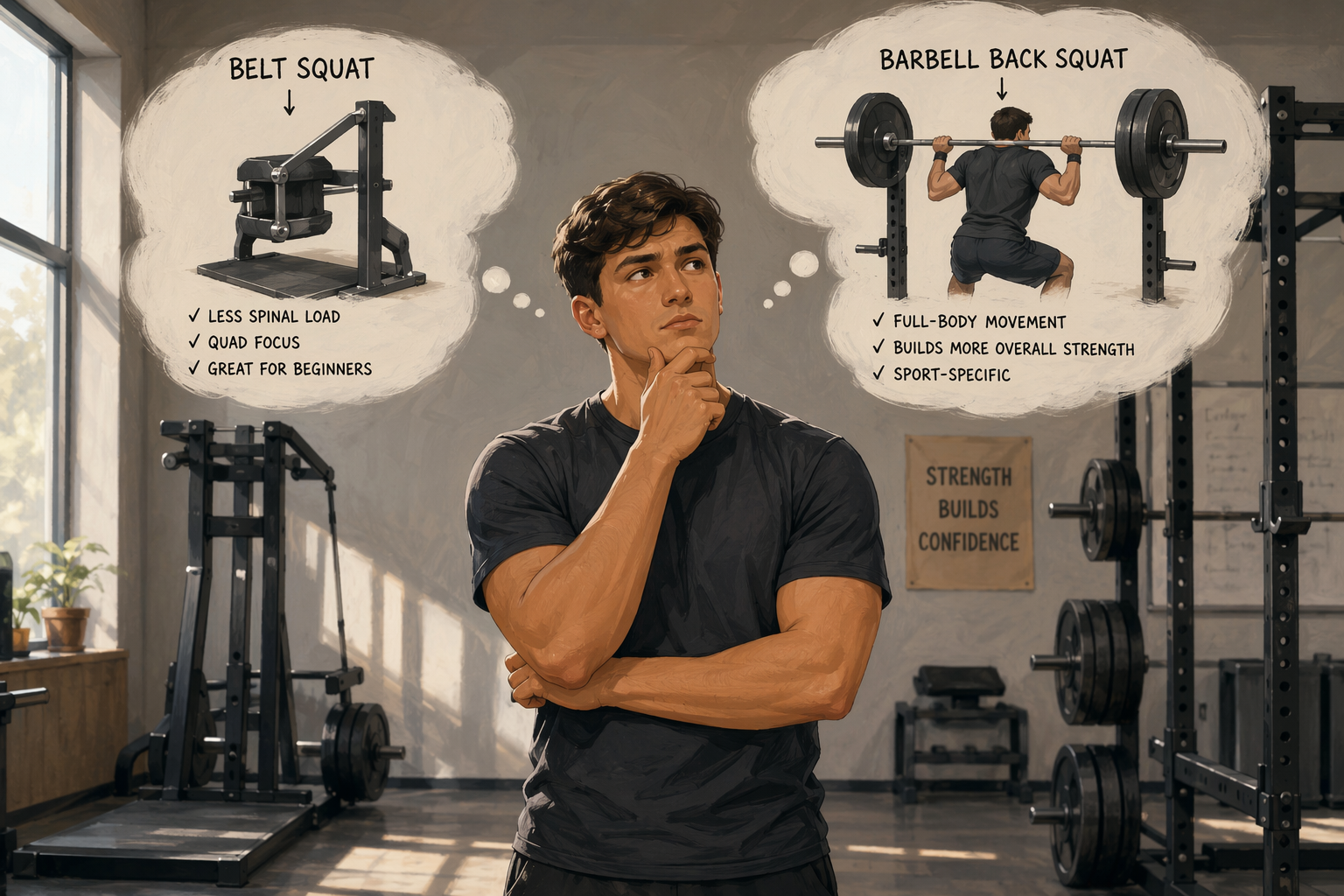
Key Highlights
- The back squat loads a barbell on your upper body and challenges full-body squat strength.
- A belt squat shifts load to the hips, so your lower back takes far less stress.
- Many lifters compare both lifts to judge leg drive versus torso support.
- Your setup matters, especially when using a squat machine or DIY option.
- Belt squat performance can help add lower body volume alongside a leg press.
- Different numbers between lifts are common and do not mean one exercise is wrong.
Introduction
If you are new to squatting, the belt squat to back squat ratio can seem confusing at first. You might wonder why your numbers differ when both movements look similar. The simple answer is that the load sits in a different place. In a back squat, a barbell rests across your upper back. In a belt squat, the weight hangs from your hips. That one change affects balance, muscle use, and how hard your torso has to work.
(ALSO READ: Belt Squat Exercises: Build Strength and Power Today)
Understanding the Belt Squat and Back Squat
At a basic level, the belt squat and back squat use a similar squat pattern, but the setup changes the training effect. A back squat places a barbell across your shoulders, while a belt squat uses a belt or squat machine to load your hips directly. Both train the lower body well.
Athletes compare the two because they want to know how much of their squat comes from the legs versus the torso and back. If your numbers differ, that does not mean the belt squat should fully replace the back squat. It usually means each lift fills a different role, which becomes clearer when you look at technique and muscle demands.
Key Differences in Exercise Setup and Technique
The biggest difference starts with setup. In a back squat, you unrack a barbell from a rack, place it across the upper back, step back, and brace the torso before each rep. In a belt squat, the load hangs from a belt around your hips, often on a machine or from a platform setup.
That change affects how you move and why your belt squat number may be different from your back squat number. Your back squat depends on how well you stabilize the bar and keep position under load. The belt squat removes much of that demand from the spine and upper body.
- In a back squat, you must brace hard to support the barbell.
- In a belt squat, the torso stays more upright, and the legs do more direct work.
- Yes, it is normal for the two lifts to feel very different, even when the squat pattern looks similar.
Muscle Groups Worked in Belt Squat vs. Back Squat
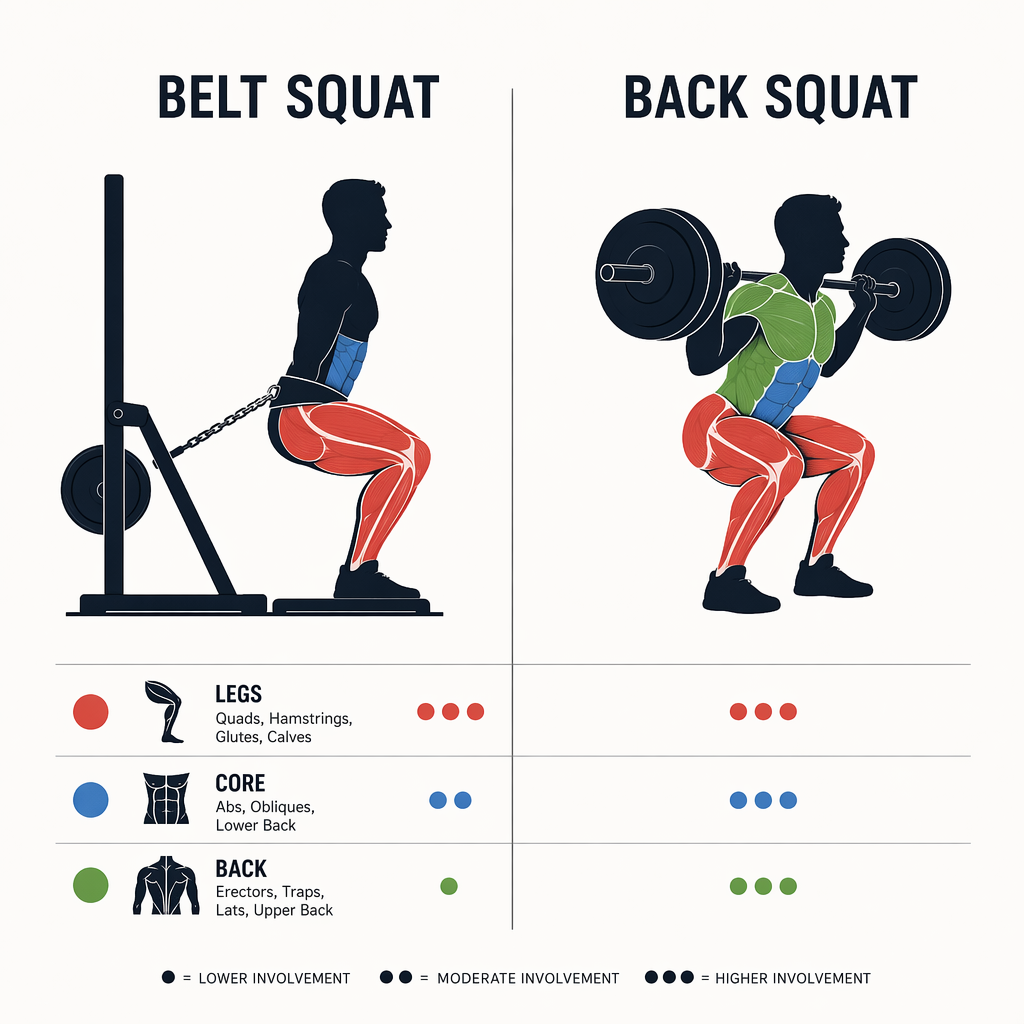
Both lifts train the lower body, but they do not spread the work in the same way. The belt squat places most of the stress on the legs because the load hangs from the hips. That means the quads do a lot of the lifting, while the adductors and glutes assist.
With a back squat, the lower body still drives the movement, but the upper body has a bigger job. Your trunk, spinal erectors, and other muscles around the lower back help hold position and keep the bar stable. That extra demand is one reason many lifters can feel more overall fatigue from back squats.
- Belt squat: more direct focus on quads, adductors, and glutes
- Back squat: more total-body involvement, especially the torso and lower back
- Both can train the hamstrings and legs well, but the back squat spreads stress more broadly
(TO KNOW MORE: Belt Squat vs Back Squat: Pros and Cons Explained)
What Is the Belt Squat to Back Squat Ratio?
The belt squat to back squat ratio is simply a way to compare your performance in both lifts. Lifters use it to see how their leg-focused belt squat performance lines up with their full-body squat strength. It is not a perfect scorecard, but it can give helpful context.
To calculate your ratio, divide your belt squat weight by your back squat weight. For example, if you belt squat 200 pounds and back squat 250 pounds, your ratio is 0.80. Typical numbers vary because setup, skill, and recovery all change how each squat feels.
Create a high-quality image on How Strength Standards and Ratios Are Determined
Many people want a calculator-style answer, but belt squat and back squat comparisons are less fixed than standard gym lifts. Back squat strength standards are easier to think about because the lift has a clearer loading style and a common setup. Belt squat numbers are harder to compare because machines, belts, and platforms can change the feel.
Your bodyweight also matters. A lighter or heavier lifter may handle each movement differently, especially when the torso or back becomes a limiting factor in the back squat. So, standards can exist in a broad sense, but direct one-to-one comparison is less precise.
|
Measure |
Back Squat |
Belt Squat |
|---|---|---|
|
Load position |
Bar rests across upper back |
Weight hangs from hips |
|
Main limit |
Leg drive plus torso support |
Mostly lower body output |
|
Comparison value |
Easier to compare across lifters |
Less uniform because setup varies |
|
Best use |
Tracking total squat strength |
Tracking leg-focused squat work |
Typical Ratios for Beginners and Intermediate Lifters
For beginners, the ratio often changes quickly because technique improves fast. A new lifter may not know how to brace well in the back squat yet, and that can make the belt squat feel easier to learn. On the other hand, some beginners start light on the belt squat because the machine or belt feels unfamiliar.
Intermediate lifters usually have a more stable ratio because their movement pattern is more consistent. Training experience does matter. The more time you spend under a barbell, the better you often get at supporting heavy weight in the back squat. More time on a belt squat can also improve confidence and output there.
- Beginners often see bigger swings in ratio due to learning the setup
- Intermediate lifters usually show more repeatable back squat and belt squat numbers
- Experience with one variation can skew the ratio toward that lift
(ALSO READ: Belt Squat Benefits: A Game Changer for Lower Body)
Factors Affecting Your Personal Belt Squat to Back Squat Ratio
Your personal ratio is shaped by more than leg strength. Belt squat performance can rise or fall based on machine design, comfort around the hips, and how natural the setup feels. Back squat numbers also depend on confidence under a bar and your ability to keep position.
Injury history matters too. If your lower back gets tired or irritated during a back squat, your number may drop even when your legs are strong. That is one major reason your two lifts may not match, and it leads directly into the role of back concerns.
Impact of Injury History and Lower Back Concerns
If you have a past injury or ongoing lower back discomfort, the ratio can shift a lot. A back squat places load through the spine and demands more from the trunk, so back fatigue may stop the set before the legs are truly challenged. In that case, the belt squat may become the stronger movement.
A squat machine can help here because it lets you train the legs without placing the same compressive stress on the spine. That is why many people use the belt squat to keep training hard while giving the back a break. It can also be easier to recover between sessions.
- A lower back issue can reduce back squat output even if leg strength is solid
- The belt squat often feels safer when spinal loading is a concern
- A different ratio after injury does not automatically mean weaker legs
Conclusion
To sum up, grasping the belt squat to back squat ratio is vital for beginners looking to improve both their lifting form and overall results; by understanding how these two exercises differ, you can customize your workout plan to match your unique goals and needs. Take into account the muscle groups each movement targets and evaluate your current strength, as this information will help shape your training for both exercises. Consistent practice and maintaining proper technique are key for building strength. If you're motivated to elevate your fitness routine, reach out for a complimentary trial session or consultation so we can help guide you on your journey!
REFERENCE:
https://alexleonidas.com/best-conjugate-training-tips-for-raw-lifters/