

Key Highlights
- The belt squat is a smart squat exercise for building lower body strength with less spinal loading.
- It places direct work on the gluteus maximus while keeping your upper body more comfortable.
- A belt squat machine can help you train hard even if back issues limit back squats.
- Small changes in stance, depth, and tempo can improve glute focus.
- For growth, use controlled reps, solid form, and enough weekly volume.
- It also fits well into many leg day plans.
Introduction
If you want stronger glutes and legs without piling stress on your spine, the belt squat deserves your attention. This lower body training option has earned incredible success because it lets you load the hips and legs while keeping the weight off your shoulders. That makes it useful for many lifters, especially during hard strength training phases. You can use it to build power, improve muscle balance, and make your glutes work harder in a focused, practical way.
(ALSO READ: Belt Squat Exercises: Build Strength and Power Today)
Understanding Belt Squats and Their Role in Glute Training
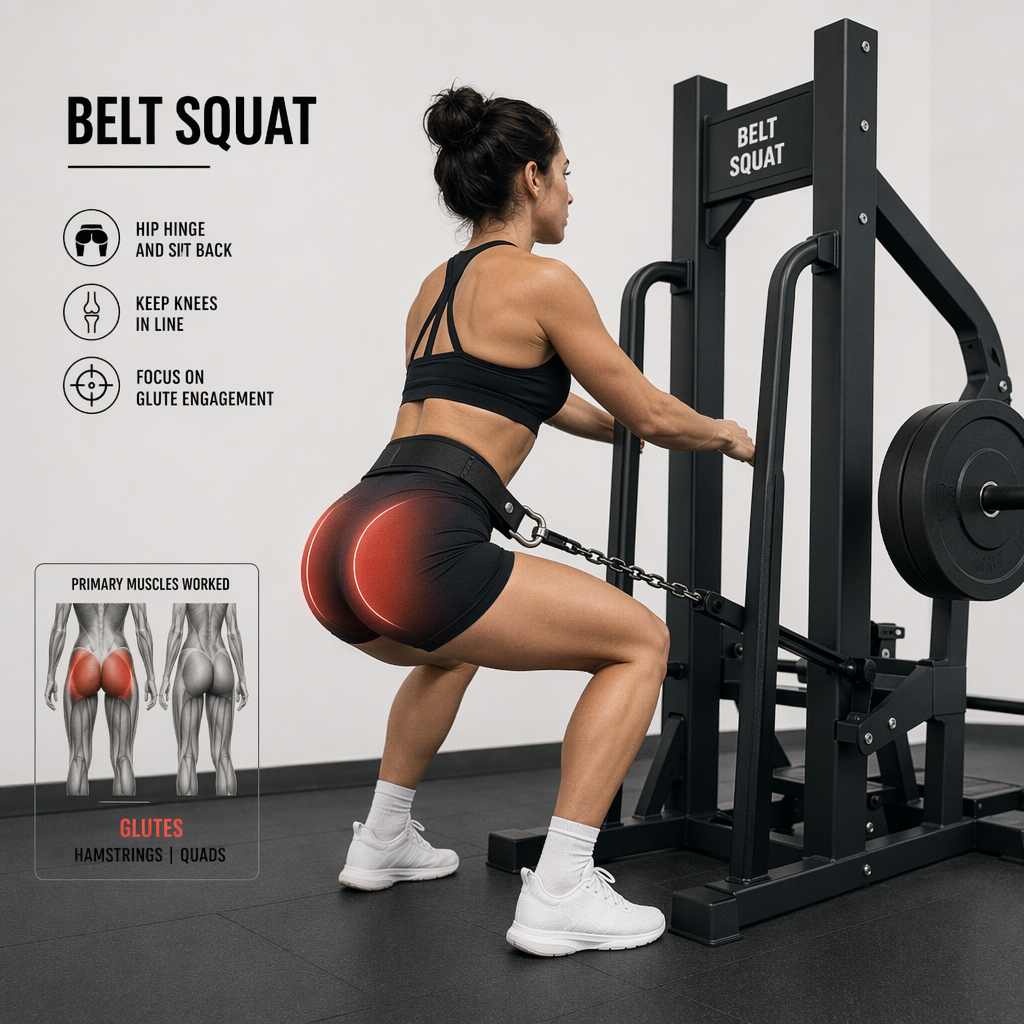
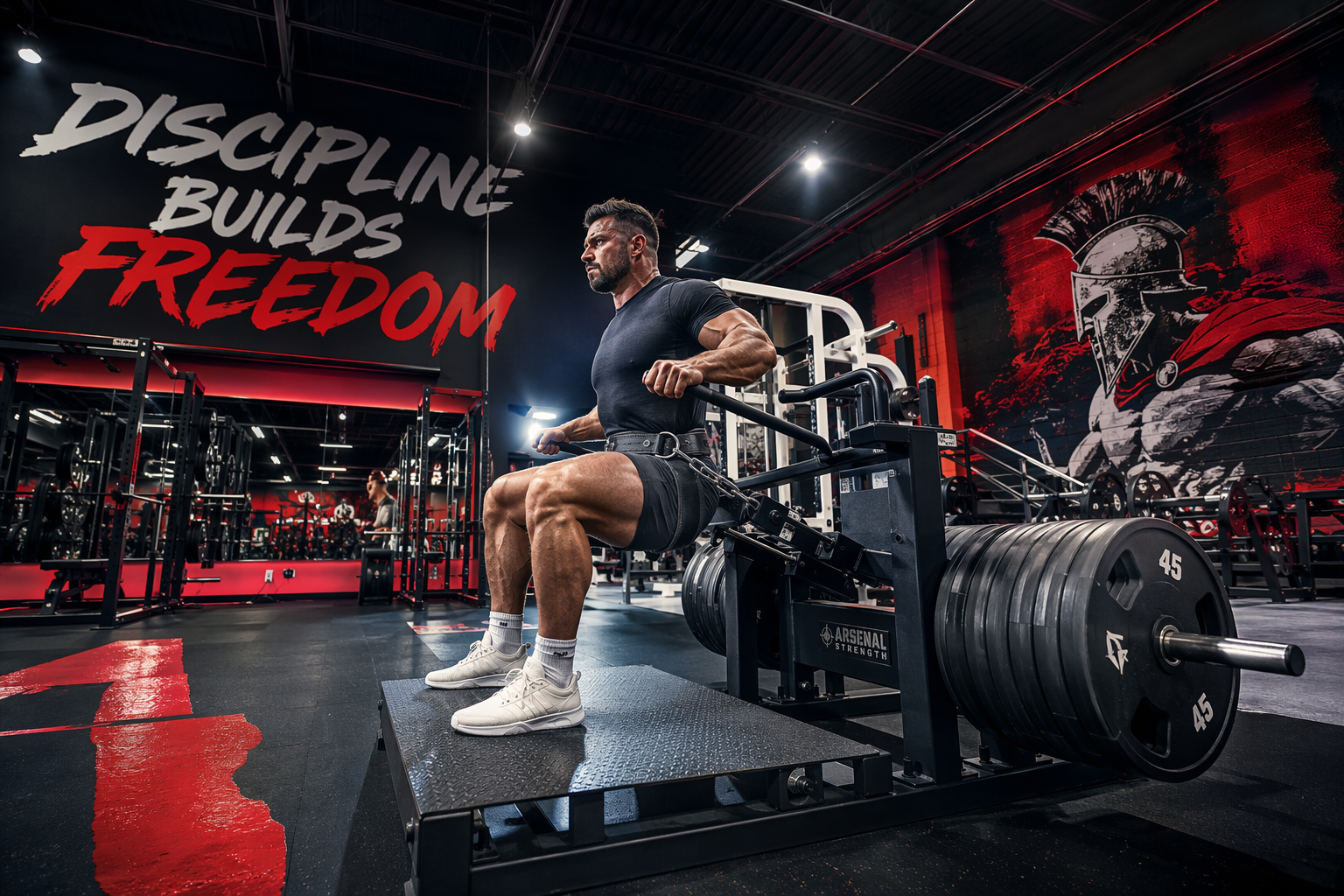
A belt squat machine is a lower body training tool that loads resistance around your hips instead of across your upper body. That simple change matters. It helps you train the legs and hips hard while reducing spinal loading and compressive force.
For many people with back issues, this squat machine creates a more manageable way to keep building strength. To target your glutes effectively, you focus on controlled depth, strong hip drive, and the right stance for your build. The next sections explain why this setup works so well.
What Makes Belt Squats Unique for Leg and Glute Development
The main distinction lies in the location of the load. With a squat belt, resistance hangs from the hips instead of resting on your shoulders. That means your lower body muscles can work hard without the same level of compressive force that comes with a bar on your back.
This is a great way to train the gluteus maximus when you want strong hip extension but do not want extra spinal loading. It can also help if heavy back squats leave your lower back tired before your glutes and legs are fully challenged.
Another benefit is flexibility. A belt squat machine can support different exercise options, including the belt squat walk, high squat, and pause squat. That gives you more ways to match the movement to your needs, weaknesses, and goals while still keeping the focus on the hips and lower body muscles.
Comparing Belt Squats to Traditional Squat Variations
Traditional barbell back squats are excellent for full-body strength, but they also ask more from your upper body and lower back. A belt squat shifts the challenge downward, so your hips and legs can take center stage during the squat exercise.
That makes belt squats useful when your goal is glute work with less spinal compression. Hip thrusts also target the glutes well, but belt squats bring a more squat-like pattern and train the legs at the same time. Both have value, yet a belt squat can feel more natural if you want glute work tied to standing strength.
|
Exercise |
Main Difference |
|---|---|
|
Belt squat |
Loads the hips directly and reduces stress on the lower back |
|
Back squats |
Use a traditional barbell and create more spinal loading |
|
Hip thrusts |
Emphasize hip extension strongly but are less squat-specific |
Anatomy of the Glutes: Why Belt Squats Work
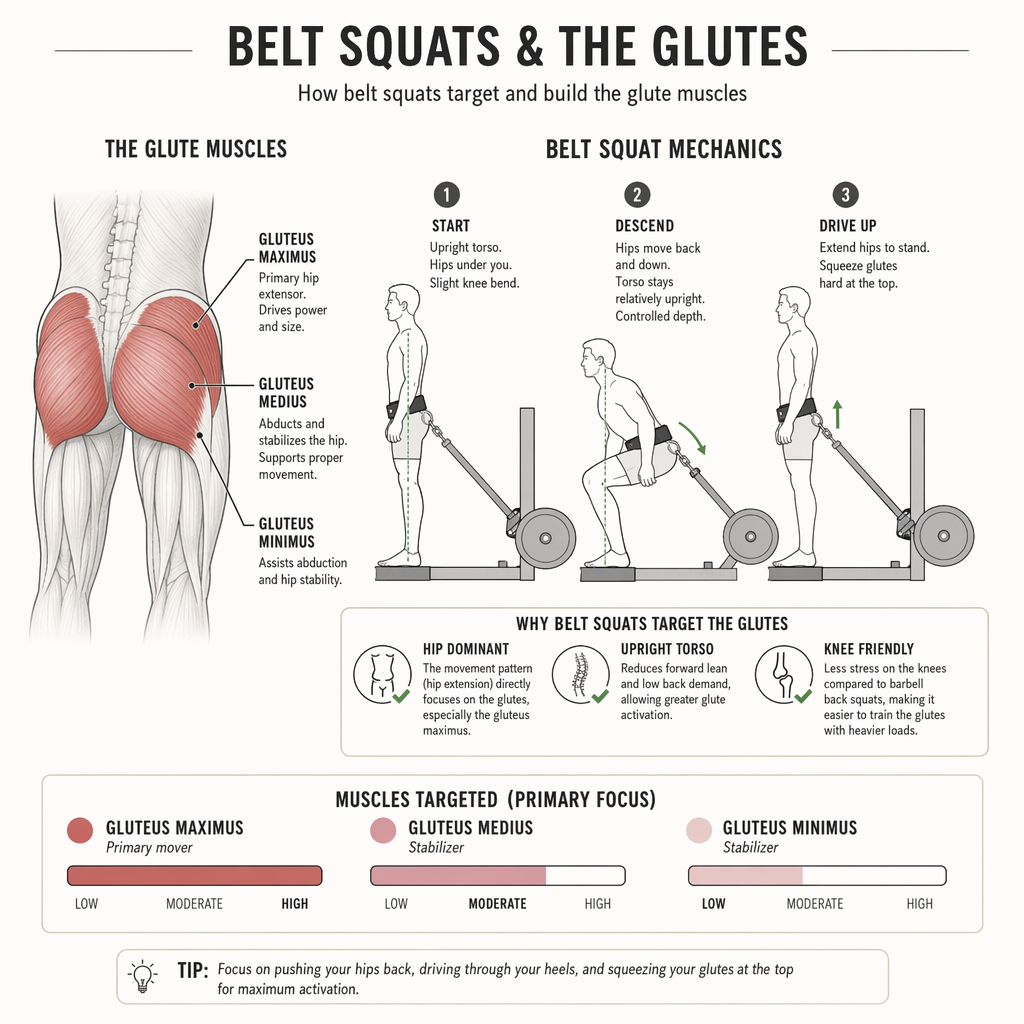
Your gluteus maximus is the biggest muscle in the gluteal group and plays a major role in hip extension. When that muscle is strong, you can create more force in many lower body movements.
Belt squats work because they challenge the hips through squat patterns that recruit key lower body muscle groups without loading the spine the same way as barbell lifts. If you want better glute engagement, you need the right movement style, depth, and setup. That is why the next two sections matter.
Targeting Glute Muscles with Belt Squat Movements
If your goal is glute growth, belt squats are a great way to train the gluteus maximus through loaded squat mechanics. The glutes drive hip extension, especially when you rise from deeper positions or work through challenging joint angles.
The compiled training methods show this clearly. Belt squat walks target the gluteal group while helping posture and hip function. Belt squat high squats focus on hip loading with less knee flexion. Belt squat pause squats increase demand out of the hole, where weak glutes often limit force production.
So yes, they can be a strong alternative if you cannot do traditional squats. You still get meaningful glute work, useful posterior chain strength, and lower body training options that can be adjusted to your current ability and recovery needs.
Secondary Muscles Activated During Belt Squats
Although the glutes get plenty of attention, belt squats do not isolate one area only. Several lower body muscles and supporting muscle groups join in, which is one reason this exercise works so well for complete leg development.
As knee flexion changes, the emphasis can shift. A high squat limits knee bend and places more focus on the hips. A pause squat with deeper positions increases the challenge where the hips must work hard to regain full extension. Even though the load is not on the shoulders, your upper back still helps you maintain posture.
Common contributors include:
- Glutes for hip extension and force production
- Quadriceps as knee flexion increases
- Hamstrings and other posterior chain areas for support
- Core and upper back muscles for balance and ideal posture
(ALSO READ: Belt Squat Benefits: A Game Changer for Lower Body)
Proper Belt Squat Form for Maximized Glute Activation
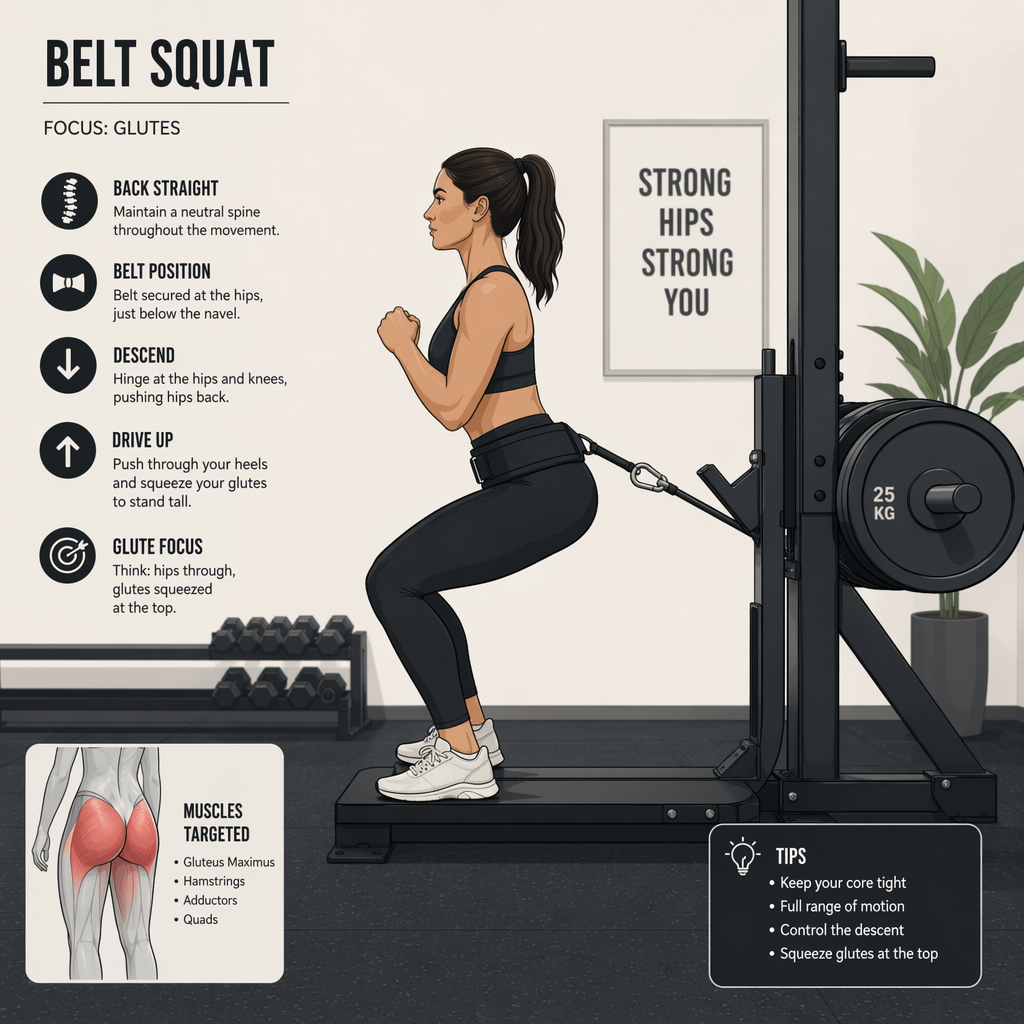
Proper form starts before the first rep. You need the squat belt secured well, the load centered, and your body balanced on the elevated platform so the movement path stays smooth.
From there, focus on ideal posture. Keep your chest up, control the lowering phase, and drive through the hips as you stand. That helps the glutes do more of the work. Good setup and clean execution matter just as much as the amount of weight, so let’s break both down step by step.
Setting Up Equipment and Safety Considerations
Start with the right equipment setup. In a gym, that usually means a belt squat machine with an elevated platform and enough room for the weight to travel freely. Some versions also use a cable belt squat design, and larger platform models offer different exercise options.
At home, you need a secure squat belt, a loading point beneath you, and a stable raised surface if your setup requires the plates to hang through the middle. Safety comes first because poor alignment can throw off the whole movement.
Check these basics before each set:
- Make sure the belt is snug and centered
- Confirm the platform is stable and not slippery
- Use a weight you can control with proper form
- Ensure the plates or cable move without catching
Step-by-Step Guide to Performing Belt Squats
First, attach the squat belt and stand tall with your feet set comfortably under you. Brace yourself, keep your chest up, and begin the descent with control. If you have back issues, this setup can feel more comfortable because the resistance doesn't press down on your spine.
Slowly descend, maintaining control over your movement and ensuring you don’t compromise your form; avoid hurrying. Once you've reached the intended depth, powerfully push upward through your hips to achieve full extension. For pause squats, remain below parallel for a brief moment before rising.
Use these cues:
- Keep your torso steady and posture tall
- Lower under control instead of dropping fast
- Work through a consistent range of motion
- Finish each rep with strong hip drive and full extension
Foot Placement and Technique Tweaks for Glute Engagement
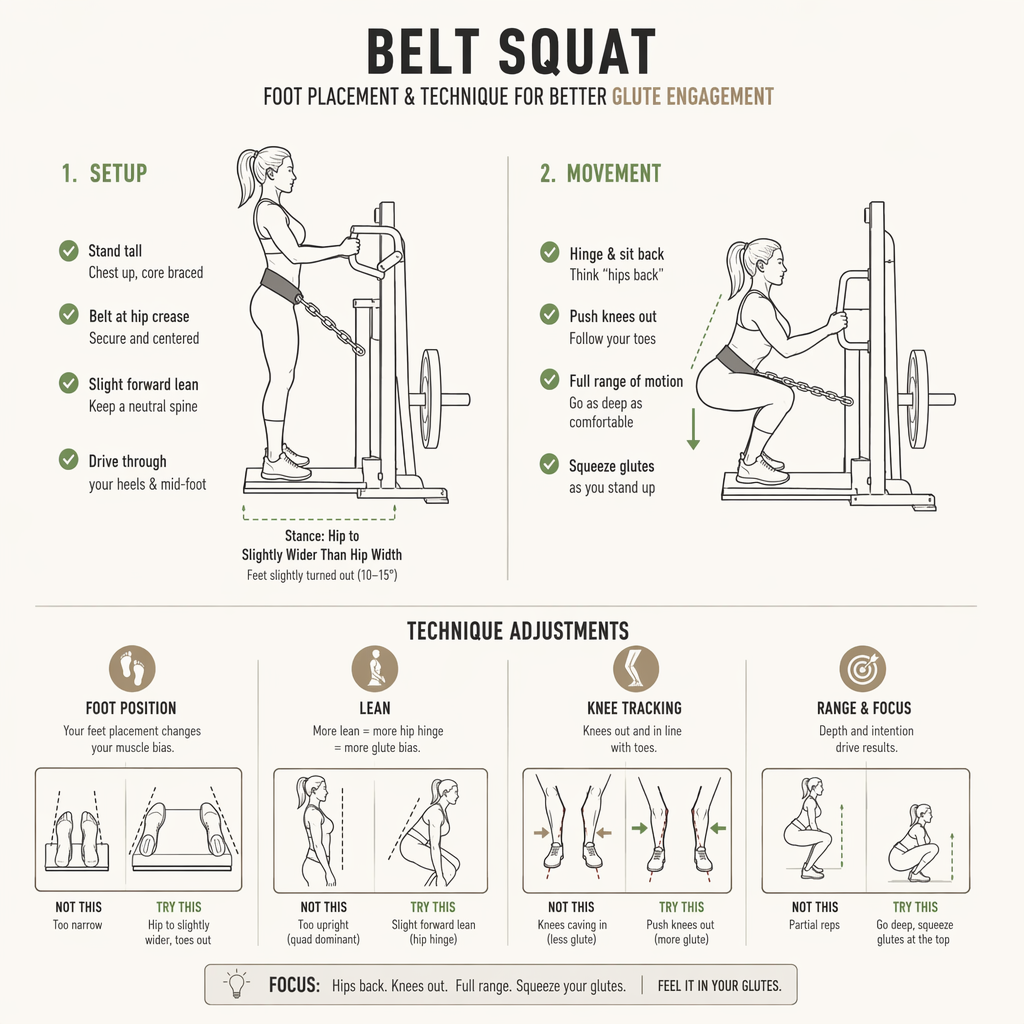
Small technique changes can shift where you feel the exercise. Your stance width, toe position, and depth all influence joint angle and how much work the glutes take on during each rep.
The same idea shows up in the ideal belt squat walk and box-based variations. Westside-style programming changes stance and range to match the athlete’s weakness. If you want better glute engagement, you should test controlled adjustments instead of copying one fixed setup. Here is how those changes affect the movement.
Stance Width and Toe Position Effects
Your stance width can change which hip muscles work hardest. On a squat machine, a slightly wider setup may help some lifters load the hips more effectively, while a moderate stance can feel stronger and more balanced for others.
Toe position matters too. Turning the toes out a bit can make it easier to sit into the movement and reach depth without losing alignment. That can improve how well you feel the gluteus maximus during the upward drive.
Try these controlled adjustments:
- Use a moderate stance width as your starting point
- Test a wider stance if you want more hip emphasis
- Turn toes out slightly if that helps depth and comfort
- Keep tracking consistent so each rep looks the same
Adjusting Depth and Range of Motion
Altering squat depth modifies the impact of training; namely, when performing lower body exercises, deeper squats typically place greater emphasis on the glutes since the hips are required to exert more effort during the upward phase. This increased challenge for the glutes is a key reason why pause squats are particularly beneficial for targeting glute development.
Still, more depth is only useful if you can control it. A limited range of motion may reduce the challenge on the glutes, but going too low without stability can break form. The best option is the deepest position you can own with balance and posture.
Box height can help you manage that. A higher box limits depth and knee flexion, which shifts focus toward the hips. A lower target can increase the challenge. Whatever depth you choose, finish every rep with full extension and steady control.
Programming Belt Squats for Glute Hypertrophy
For hypertrophy, your programming should match the version of the exercise you are using. Belt squat walks, high squats, and pause squats each stress the body a little differently, so the sets, reps, and intensity should fit the goal.
The compiled information gives useful ranges. Strength-focused work uses fewer reps with more load, while work capacity and size can benefit from longer sets or higher rep sets. The right amount of weight is the most you can manage while keeping proper form and consistent output.
Recommended Sets, Reps, and Intensity
If your main goal is glute hypertrophy, a mix of moderate and higher rep sets works well within the provided methods. Pause squats are often done for 3-5 sets of 5-10 reps, with occasional 12-15 or 15-20 rep sets. High squats can range from 3-10 reps for strength or 15-50 for work capacity.
Belt squat walks are also valuable. They are commonly programmed for 4-6 sets of 40-60 steps when strength is the goal, or 1-2 minute walks when improving capacity. That variety lets you build a workout routine around both muscle tension and volume.
A simple approach:
- Use 3-5 sets for squat variations
- Add higher rep sets for extra volume
- Save heavy weights for strong, clean reps
- Choose an amount of weight you can fully control
Integrating Belt Squats into Leg Workouts
Belt squats fit into a leg workout routine in different approaches depending on your needs. If your goal is pure leg strength, place a heavier belt squat variation earlier in the session and keep the reps tighter. If you need more volume, use walks or higher-rep squats later.
This is especially useful for athletes dealing with lower body work capacity issues. Marches for time and repeated sets can build tolerance while still training the glutes and hips. That means the exercise can support both performance and development.
To target your glutes effectively, match the variation to the weak point. Use high squats for hip-focused loading, pause squats for force production out of the hole, and belt squat walks for glute work with posture and endurance benefits.
Common Mistakes When Training Glutes with Belt Squats
Most belt squat mistakes come from poor equipment setup, rushed movement patterns, or loading too much weight too soon. When that happens, your glutes stop being the main driver, and the lift loses its purpose.
Another common problem is using a limited range of motion without a clear reason. That can reduce the training effect, especially if your goal is glute growth. People with back issues also need to avoid sloppy form just because the setup feels easier on the spine. Here is what to watch for.
Avoiding Equipment Setup Errors
A bad setup can ruin an otherwise good squat exercise. If the belt sits unevenly, the platform is unstable, or the load path gets blocked, your reps become awkward and less safe. On a belt squat machine, smooth movement is part of proper setup.
Home training demands even more care. You need a secure belt, enough elevation for the plates or cable to move freely, and a stable surface under your feet. Without those basics, the exercise becomes harder to control and less useful for glute work.
Avoid these setup errors:
- Loose belt positioning that shifts during reps
- Unsteady foot support or poor platform safety
- Resistance catching on the floor or frame
- Starting with too much load before checking setup
Correct Movement Patterns and Loading
Good movement patterns matter as much as the exercise choice. In the ideal belt squat walk, you should stay chest up and lift each foot as you would during normal walking. Short, lazy steps reduce the intended training effect on the hips and glutes.
Loading errors are just as common. Many people chase the heaviest weight before earning control. That often leads to poor depth, sloppy timing, and weaker force production. A belt squat works best when the resistance matches your ability to stay precise.
Keep these points in mind:
- Control the descent instead of dropping fast
- Do not cut reps short without a reason
- Use the squat belt with balanced, manageable loading
- Increase resistance only when your form stays solid
(ALSO READ: Belt Squat Alternatives: 10 Variations to Try Today)
Conclusion
In conclusion, incorporating belt squats into your leg training routine can significantly enhance your glute development. By understanding the unique mechanics and proper techniques involved, you can maximize your workouts for optimal results. Remember to focus on form, adjust your foot placement, and program your sessions effectively to avoid common mistakes. With patience and consistency, belt squats can be a game-changer in achieving stronger, well-defined glutes. If you're ready to elevate your fitness journey, consider reaching out for personalized training advice or tips tailored to your goals!
Frequently Asked Questions
Are belt squats effective for glute growth?
Yes. A belt squat can be very effective for hypertrophy because it loads the gluteal group through squat-based lower body movement while reducing spinal loading. In strength training, it also lets you use walks, high squats, and pause squats to challenge the glutes in different ways.
Can beginners use belt squats safely for stronger glutes?
Beginners can use a belt squat safely if they start light, learn proper form, and check their setup carefully. A squat machine can be especially helpful for people with back issues because the load sits at the hips, but safety still depends on control, posture, and sensible progression.
REFERENCE:
https://pubmed.ncbi.nlm.nih.gov/36760079/
