

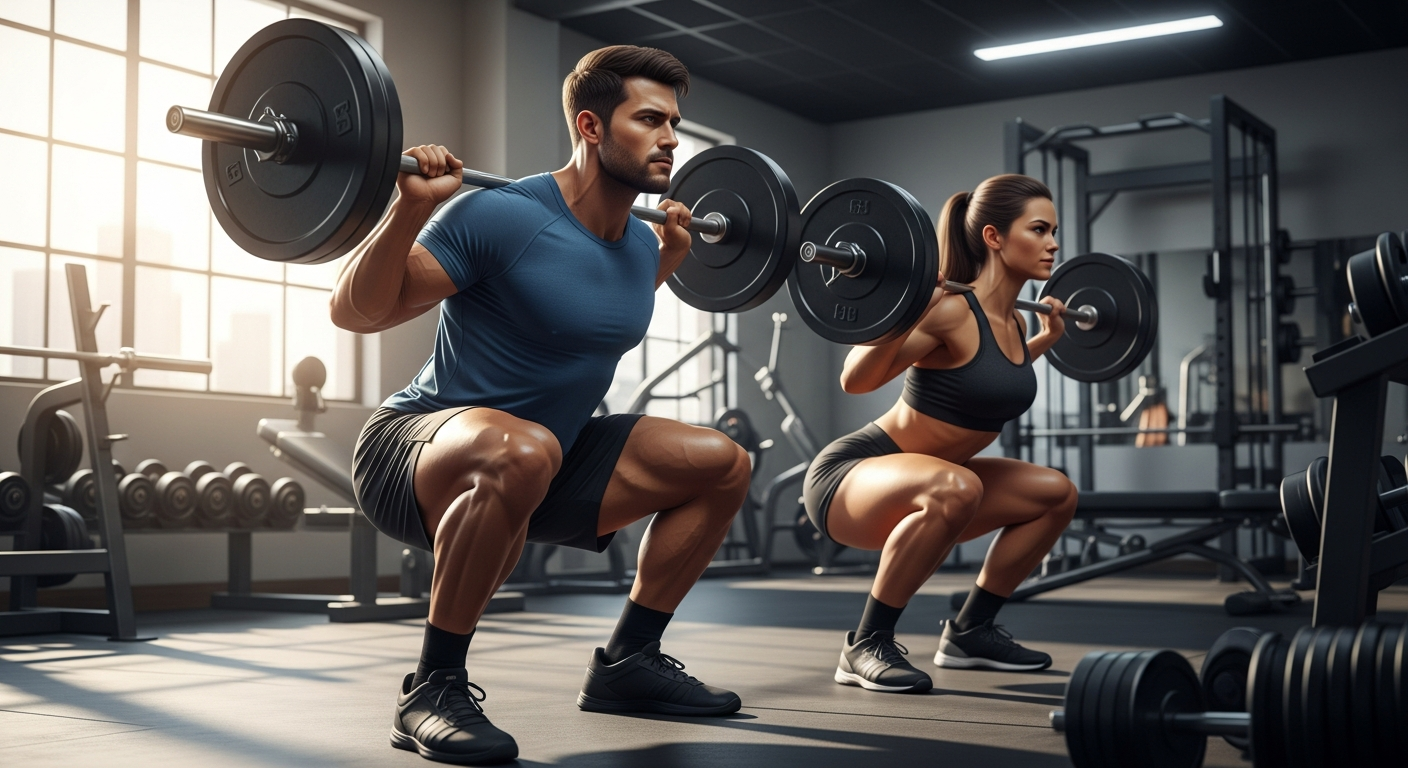
Key Highlights
Here's a quick look at what we'll cover in the front squat vs. back squat debate:
- The primary difference between the front squat and back squat is the bar placement, which changes muscle activation.
- Front squats emphasize your quads and core, requiring an upright torso and challenging your front rack position.
- Back squats are better for building overall strength as they target the posterior chain and allow you to lift heavier loads.
- Your fitness goals should determine which of these squat variations you choose.
- Proper form is crucial for both exercises to maximize benefits and prevent injury.
Introduction
Squats are a powerhouse exercise for building lower-body strength. But when you step up to the barbell, you have a big choice to make: front squat or back squat? These two squat variations might seem similar, but they target your muscles in different ways and offer unique benefits. Understanding the distinctions between a front squat and a back squat is key to choosing the right one for your fitness goals. Let's explore which squat is the best addition to your routine.
Understanding front squat vs back squat
Both the front squat and back squat are fundamental strength training exercises, but the key difference lies in the bar placement. This simple change in where the barbell rests on your body alters the entire movement pattern and shifts the focus to different muscle groups.
In a front squat, the bar sits on your front shoulders, while in a back squat, it rests on your upper back. This variation in bar placement changes your body’s center of gravity and how your muscles engage during the lift. Let's examine each of these squat variations more closely.
What Is a Front Squat?
A front squat involves placing the barbell on the front of your shoulders, in what is known as the front rack position. You can hold the bar with your palms up and elbows high or by crossing your arms over the bar. This anterior load forces you to maintain a very upright torso throughout the movement to keep the bar balanced.
This upright posture is what makes the front squat so effective. It significantly increases core muscle activation, particularly in your rectus abdominis, as your abs work hard to stabilize your body. The forward shift in the center of gravity also places a greater emphasis on your quadriceps, making it a fantastic exercise for building quad strength and definition.
Mastering proper form is essential. You need to focus on keeping your elbows up and your chest tall. If you lean too far forward, you risk dropping the bar. This makes the front squat a technically demanding but highly rewarding exercise for developing core strength and quad power.
What Is a Back Squat?
The back squat is the more traditional squat variation, where the barbell rests across your upper back. You'll typically set up in a squat rack, step under the bar, and position it on your trapezius muscles. This setup allows you to lift significantly heavier loads compared to a front squat.
Because the weight is on your back, the movement pattern involves more of a hip hinge. This means your torso will naturally lean forward more than in a front squat. This forward inclination shifts the emphasis to your posterior chain — the powerful muscles on the back of your body.
The primary muscle groups targeted are your glutes and hamstrings, along with your lower back. While your quads are still heavily involved, the back squat is superior for developing the entire posterior chain. This makes it a go-to exercise for anyone looking to build overall lower body strength and explosive power.
(ALSO READ: Master the Back Barbell Squat: A Beginner's Guide)
Major Distinctions Between Back Squats and Front Squats
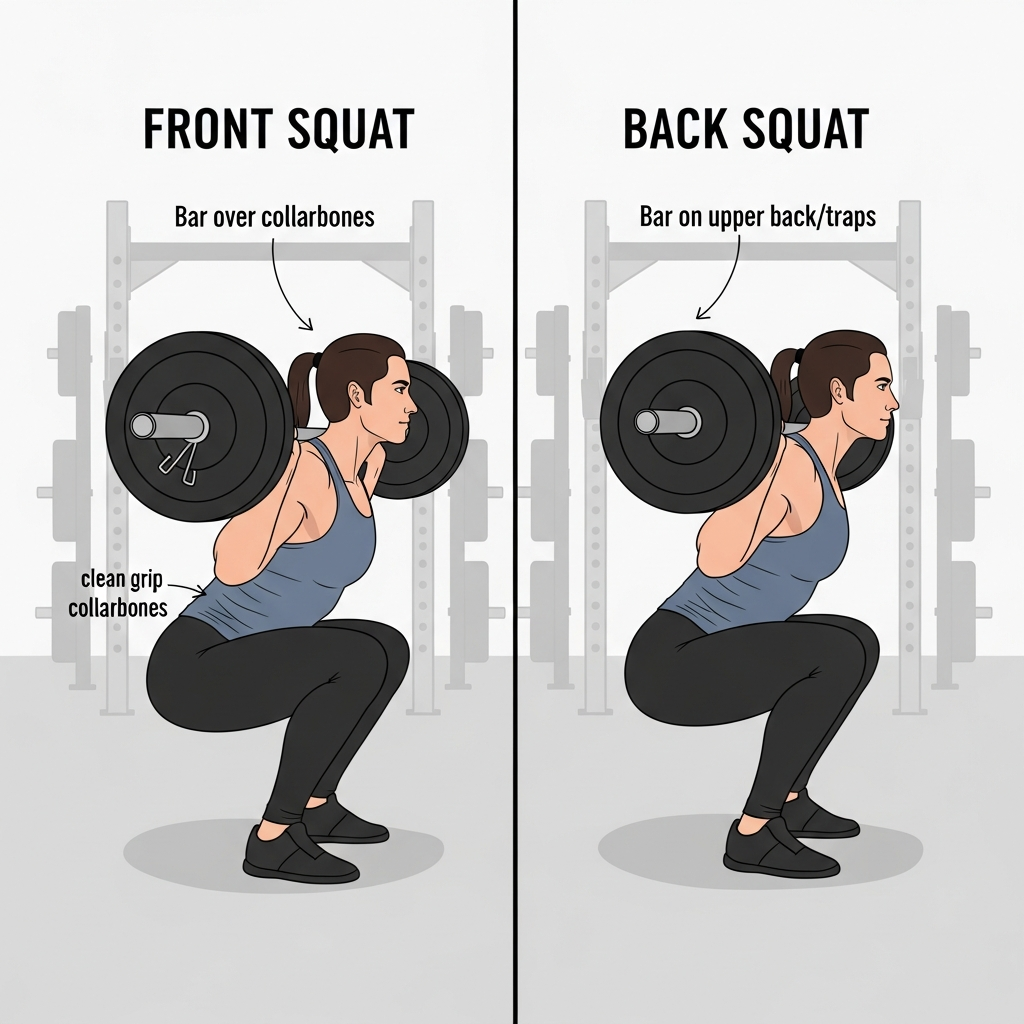
The front squat vs. back squat debate ultimately comes down to a few key distinctions. The most obvious difference is the bar placement, which directly influences your posture, muscle activation, and the amount of weight you can lift.
A front squat forces an upright torso, targeting the quads and core more intensely. A back squat allows for a forward lean, which better engages the posterior chain, including the glutes and hamstrings. We will explore these differences in technique and muscle engagement in more detail.
Bar Position and Technique Comparison
The position of the bar dictates the entire technique of the squat. For a front squat, the bar rests on the front of your shoulders, requiring you to keep your elbows high and torso vertical. This upright posture is non-negotiable; if you lean forward, you'll lose the bar. This technique is more demanding on upper body mobility, specifically in the wrists and shoulders.
In contrast, the back squat places the barbell across your upper trapezius muscles. This bar position is more stable, allowing lifters to handle heavier loads. Your torso will have a natural forward lean as you hinge at the hips. Because the bar position is more secure, you will generally be able to lift more weight with a back squat than a front squat. Many coaches suggest you should be able to front squat about 90% of your back squat weight, but this can vary based on individual anatomy.
Here’s a quick comparison of the technique differences:
|
Feature |
Front Squat |
Back Squat |
|---|---|---|
|
Bar Position |
Rests on the front of the shoulders (front deltoids) |
Sits atop the trapezius muscles in the upper back. |
|
Torso Angle |
Very upright to maintain balance |
More forward lean, hinging at the hips |
|
Primary Challenge |
Maintaining an upright posture and front rack position |
Bracing the core to support a heavier load on the spine |
|
Mobility Needs |
High wrist, shoulder, and thoracic spine mobility |
Good shoulder external rotation and hip mobility |
Muscle Group Activation Variation
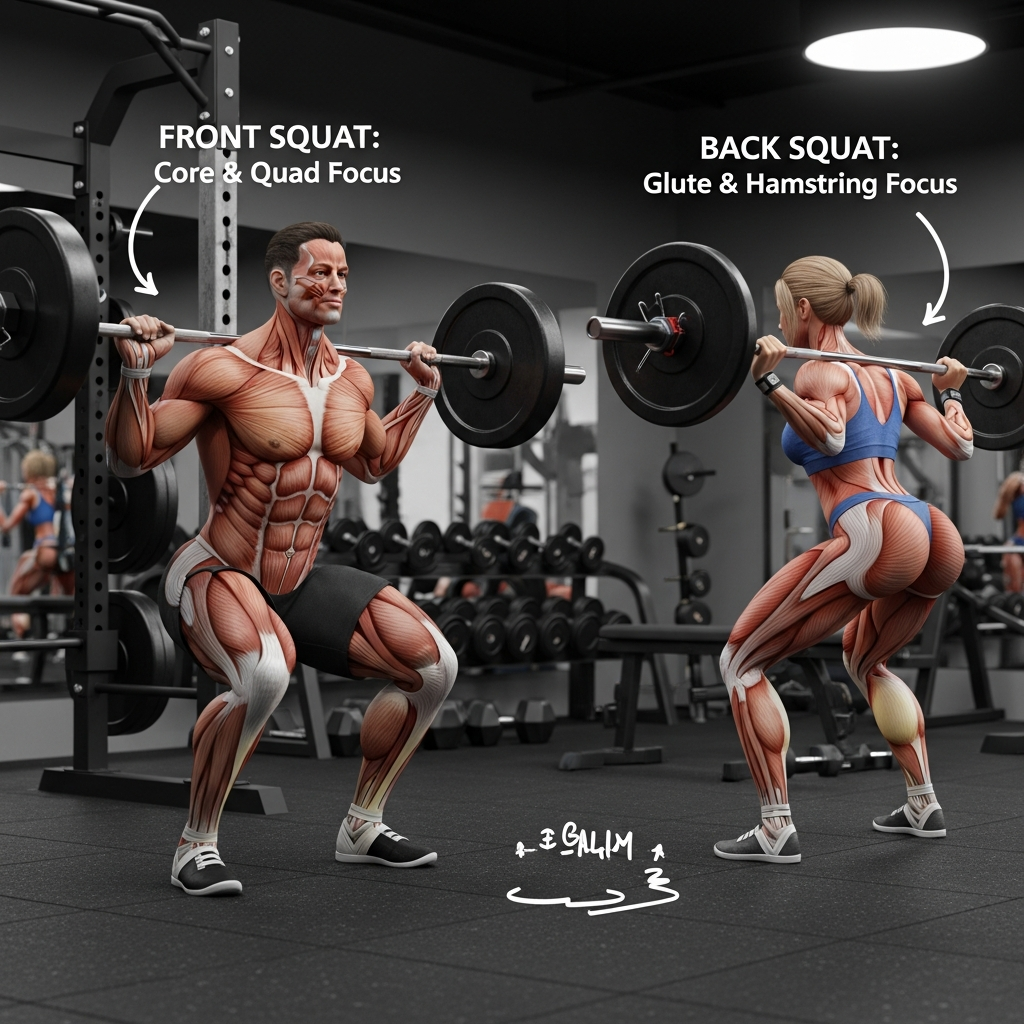
While both squats work the major muscle groups of your legs, the bar placement significantly alters the muscle activation. The front squat, with the barbell on the front of your shoulders, shifts your center of gravity forward, placing more emphasis on the anterior chain.
This means your quadriceps and core muscles work harder. Research has shown that the front squat leads to greater activation of the vastus medialis, one of the four quad muscles. Your upper back muscles also work intensely to keep your torso upright and prevent you from rounding forward.
The back squat, however, places more load on the posterior chain. Because you can hinge more at the hips and lean forward, your glutes and hamstrings are more engaged to power the lift.
- Front Squats Emphasize: Quads (anterior chain), Core (rectus abdominis), Upper Back
- Back Squats Emphasize: Glutes, Hamstrings (posterior chain), Lower Back
(ALSO READ: 7 Effective Barbell Back Squat Alternatives to Try Toda)
Benefits of the Front Squat
Adding the front squat to your routine offers several distinct advantages, particularly related to core strength and joint health. The upright torso required for this lift makes it an incredible tool for building a stronger midsection and can be a safer option for your lower back.
The movement also encourages greater mobility and can be easier on the knees compared to its back-loaded counterpart. Let's look at how front squats can benefit your core stability and joint health.
Core Strength and Stability
If you want to build serious core strength, the front squat is an excellent choice. The front-loaded position forces your core muscles to work overtime to keep your upright torso position stable and prevent you from collapsing forward. This constant tension results in significant muscle activation in your midsection.
Imagine doing a plank while standing and squatting at the same time. You need to keep your core engaged during the whole exercise to stabilize the load and ensure your squat technique stays correct. Studies demonstrate that front squats trigger more activity in the core muscles, such as your obliques and rectus abdominis, than back squats do.
This enhanced core engagement provides several benefits:
- Builds a stronger, more stable midsection.
- Improves your posture by strengthening upper back muscles.
- Enhances your ability to brace during other heavy lifts, like deadlifts.
Mobility and Knee Health Advantages
Front squats can be a great option for improving mobility and protecting your joints. The exercise requires excellent flexibility in your wrists, shoulders, and upper back to hold the front rack position. While this can be a challenge initially, consistently practicing front squats forces you to improve your mobility over time.
Additionally, the front squat may be a better option for those concerned about knee health. Studies have shown that front squats place significantly less compressive force on the knees compared to back squats. The movement encourages greater knee flexion while keeping the torso upright, which can help strengthen the muscles around the knee joint.
This can be particularly beneficial for individuals who experience lower back pain during back squats. The vertical posture reduces shear forces on the lumbar spine, making it a safer alternative for many lifters. By promoting a deeper range of motion with less spinal stress, front squats can be a key tool for long-term joint health.
Benefits of the Back Squat
Widely regarded as the "king of all exercises," the back squat has earned its reputation for good reason.It is unparalleled for building overall strength and muscle mass in the lower body. By allowing you to lift heavier loads, the back squat provides a powerful stimulus for strength gains.
This squat variation is particularly effective for developing the posterior chain, which is crucial for athletic power and performance. Let's explore how back squats contribute to posterior chain development and overall strength.
Posterior Chain Development
If your goal is to build a powerful posterior chain, the back squat should be a staple in your routine. The posterior chain refers to the group of muscles on the back of your body, including your glutes, hamstrings, and erector spinae muscles along your lumbar spine.
Due to the greater hip hinge and forward lean inherent in the back squat movement, a substantial load is imposed on these muscles.As you drive up from the bottom of the squat, your glutes and hamstrings work together to extend your hips, generating immense power. This makes the back squat an incredibly effective exercise for building a stronger, more shapely behind.
A strong posterior chain is not just for aesthetics; it's essential for athletic performance, improving everything from your sprint speed to your vertical jump. By strengthening these crucial muscles, the back squat helps create a more balanced and powerful physique.
Building Overall Strength and Power
When it comes to building maximum strength and explosive power, the back squat has a clear advantage. The stable bar position across your upper back allows you to lift heavier loads than any other squat variation. This ability to progressively overload with more weight is the primary driver of strength gains.
Lifting heavy in the squat rack translates directly to increased power. The back squat has been shown to improve key athletic performance metrics like jumping ability and sprint speed. By strengthening the entire lower body and posterior chain, it provides the foundation for powerful, explosive movements.
Here's why the back squat is superior for building strength:
- It allows for the use of heavier loads, maximizing the stimulus for muscle growth.
- It effectively targets the large, powerful muscles of the posterior chain.
- It has a direct carryover to improving athletic performance in sports that require explosive power.
(ALSO READ: Smith Machine Squat vs Barbell Squat: Which Is Best?)
Choosing a Squat Variation Based on Your Fitness Goals
Deciding between squat variations ultimately depends on your individual fitness goals, abilities, and mobility. There is no single "best" squat; the right choice for you is the one that aligns with what you want to achieve in your strength training.
Whether you're prioritizing muscle growth, athletic performance, or simply mastering proper form, both the front squat and back squat have a place. Let’s look at which squat is better for beginners and which is optimal for performance goals.
Which Squat Is Better for Beginners?
For beginners new to barbell work, the back squat is often considered the more accessible starting point. The front squat is a more technically challenging lift due to the front rack position, which requires significant upper body mobility that many beginners lack. The back squat's bar position is generally more comfortable and easier to learn.
However, a great way for beginners to learn proper squat form for both variations is to start with a goblet squat. Holding a dumbbell or kettlebell in front of your chest mimics the upright torso of a front squat and helps you learn to keep your chest up and core engaged. This can build the foundational strength and mobility needed before moving to a barbell.
Before attempting either barbell squat, prioritize mastering the basic movement pattern.
- Start with bodyweight squats or goblet squats to perfect your form.
- Focus on achieving a full range of motion while maintaining a neutral spine.
- Once you are comfortable and have solid form, the back squat is a good first barbell squat to learn.
Squat Selection for Athletic Performance and Muscle Growth
When your goal is to enhance athletic performance and maximize muscle growth, the ideal approach is to incorporate both squat variations into your training. The back squat is king for building overall strength and power due to the heavier loads you can lift, which directly translates to better sprint speeds and jump heights. It's a foundational exercise for any athlete looking to build a powerful lower body.
However, the front squat is invaluable for athletes in sports like soccer, basketball, or Olympic weightlifting. It builds tremendous quad and core strength, improves posture, and mimics the upright body position needed for many athletic movements. The front squat is also a key component of the clean and jerk, making it essential for weightlifters.
For a well-rounded leg day that builds strong legs and promotes balanced muscle growth, you can't go wrong with using both. They complement each other perfectly, with one strengthening the posterior chain and the other targeting the anterior chain.
Common Form Mistakes and Injury Prevention Strategies
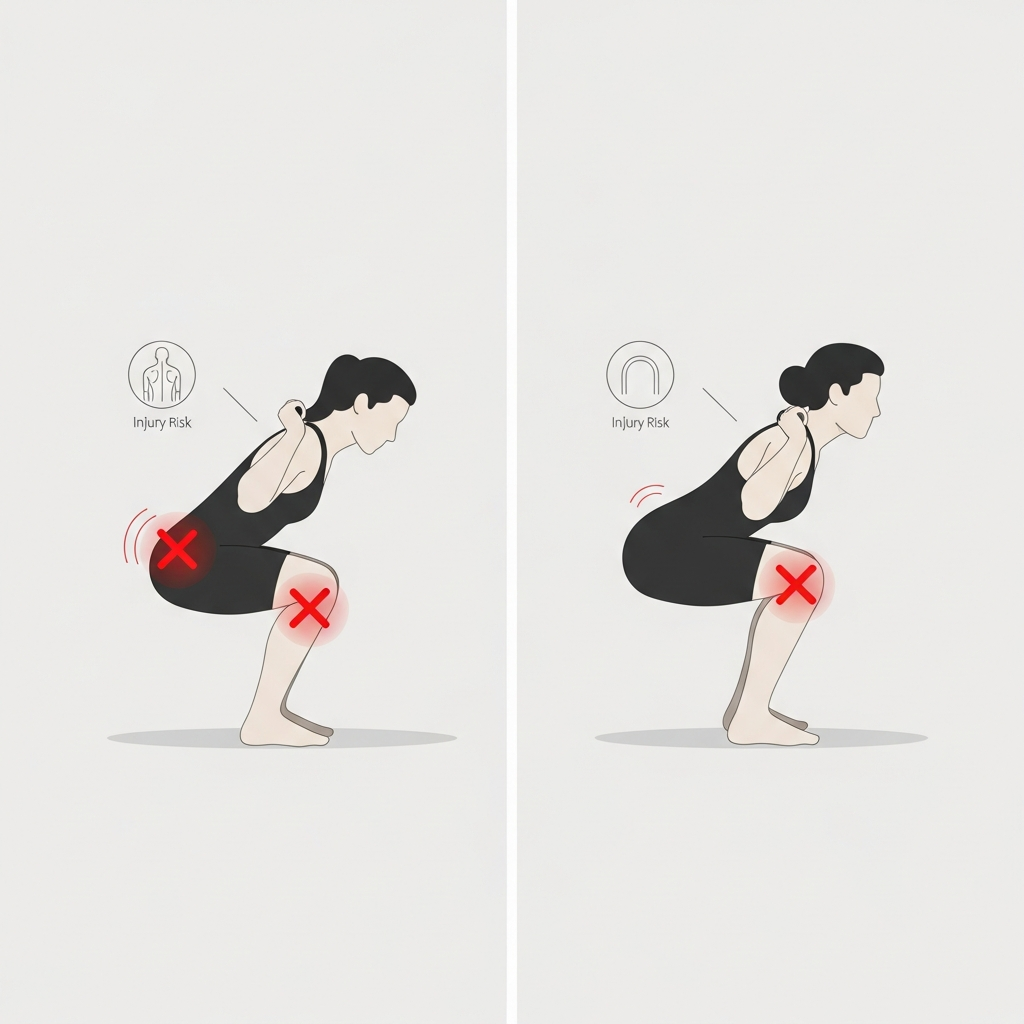
Maintaining proper form is the most important aspect of injury prevention when squatting. Whether you're in the squat rack for front or back squats, mistakes in technique can lead to issues like lower back pain or knee pain.
Understanding the common errors for each lift can help you perform them safely and effectively. Let's review the frequent mistakes made during front squats and back squats and how to correct them.
Frequent Errors in Front Squats
The most common mistake in the front squat is dropping the elbows. When your elbows drop, your upper back rounds, and your upright torso collapses forward. This not only puts you at risk of dropping the bar but also shifts stress to your lower back. You must actively push your elbows up throughout the entire lift.
Another frequent error is letting the bar rest on your collarbone instead of the front of the shoulders. This can be uncomfortable and unstable. Focus on creating a solid shelf with your front deltoids for the barbell to sit on. This requires good shoulder and wrist mobility.
To perfect your front squat form and avoid these errors, remember to:
- Keep your elbows pointing forward and high to maintain an upright torso.
- Sit straight down, not back, to prevent leaning forward.
- Ensure your upper back stays straight and engaged to support the weight.
Ensuring Proper Technique in Back Squats
With back squats, one of the most frequent errors is letting the chest drop and the lower back round. This often happens when the weight is too heavy or when the hips rise faster than the shoulders on the way up. This mistake places dangerous shear forces on the lumbar spine. To fix this, focus on keeping your chest up and maintaining a neutral spine.
Another common issue is letting the knees cave inward, known as knee valgus. This puts unnecessary stress on your knee ligaments. To prevent this, actively think about pushing your knees outward, in line with your toes, throughout the entire movement. Drawing your shoulder blades back and down also helps create a stable shelf for the bar.
To ensure proper form in your back squat:
- Brace your core and keep your spine neutral to protect your lumbar spine.
- Push your knees outward so they don’t collapse inward.
- Squat to a depth where your thighs are at least parallel to the floor to get the full benefit.
- Conclusion
In summary, understanding the differences between front squats and back squats can significantly enhance your workout regimen. Both squat variations offer unique benefits, catering to various fitness goals, whether it's improving core strength, enhancing mobility, or building overall power. By choosing the right squat type based on your needs and ensuring proper form, you can maximize your results while minimizing the risk of injury. Remember, it’s all about finding the balance that works for you. If you have further questions or need personalized guidance, feel free to reach out for a consultation. Happy squatting!
Frequently Asked Questions
Can I include both front squats and back squats in one workout?
Yes, you can include both squat variations in the same workout routine. A common approach is to perform your heavier, more demanding squat (typically the back squat) first, followed by the other variation at a lighter weight. Just be sure to allow adequate recovery and prioritize proper form for both lifts.
REFERENCE:
https://www.ncbi.nlm.nih.gov/pubmed/25630691
https://pubmed.ncbi.nlm.nih.gov/25630691/
https://www.garagegymreviews.com/expert-panel
https://www.ncbi.nlm.nih.gov/pmc/articles/PMC3761744/
https://www.sciencedirect.com/science/article/abs/pii/S8756328215002446
https://powerliftingperfection.com/post/should-you-squat-in-flat-shoes-or-heels/