

Key Highlights
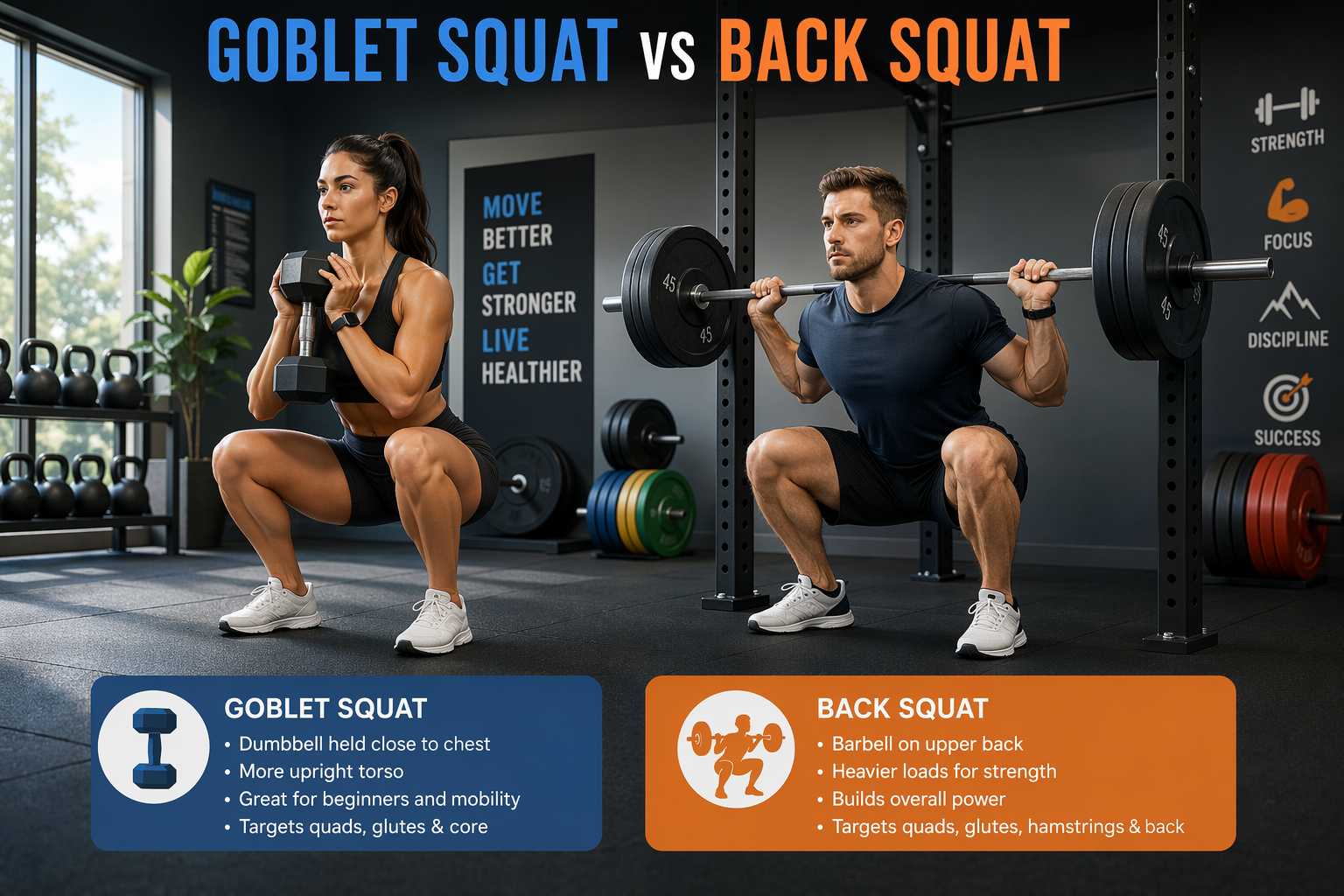
- The goblet squat is a front-loaded squat variation that helps you keep proper form and an upright torso.
- The back squat is the gold standard for lower body strength development and building muscle mass with heavy weights.
- Goblet squat loading often hits a limiting factor like grip fatigue before leg strength gives out.
- Back squat setup needs a squat rack and solid form development, often with a personal trainer.
- Goblet squat can feel easier on your lower back while still challenging core strength from the starting position.
Introduction
Choosing between a goblet squat and a back squat can feel confusing when both train your lower body and both count as a squat variation. The main differences come down to where the load sits and what that does to your lower back, your technique demands, and how much weight you can use. Curious about the key distinctions between a goblet squat and a back squat? This guide lays out the differences in straightforward, easy-to-understand language.
(ALSO READ: Master the Back Barbell Squat: A Beginner's Guide)
Overview of Goblet Squat vs Back Squat
A goblet squat is a lower body exercise where you hold a dumbbell or kettlebell in front of your chest. That front load acts like a natural counterbalance, helping you stay tall and hit deeper squats with proper form.
A back squat places a barbell across your upper back, and many lifters treat it as the gold standard. Since the load is heavier and sits differently, a personal trainer often helps with form development, especially if you have lower back concerns. Next, let’s define each setup.
Defining the Goblet Squat Technique and Equipment Needed
Think of the goblet squat as a squat variation where the weight stays close to your chest. You hold a dumbbell vertically or a kettlebell, and that front-loaded position creates a natural counterbalance that helps you keep an upright torso.
From your starting position, you sit back and down while keeping a braced core. Your elbows can track between your knees if your mobility allows, and you aim for a controlled range of motion without losing proper form.
Equipment is simple: one dumbbell or kettlebell, and an equipment mat can help you feel stable at home. Unlike barbell work, you don’t need a squat rack just to start training the pattern.
Understanding the Back Squat Setup and Execution
With a back squat, you’re doing one of the classic barbell squats for lower body strength. The bar sits across your upper back, supported by your back muscles and the position of your shoulder blades, then it travels straight down as you squat.
Because the load can get heavy, most people use a squat rack to set the bar at a safe height. That setup is a big part of why the movement fits well in a gym environment.
The tradeoff is that form development matters more. If you have lower back concerns, you’ll want to earn the weight through good technique, because a poorly controlled rep can feel rough when the bar is on your back.
(ALSO READ: 7 Effective Barbell Back Squat Alternatives to Try Toda)
Key Muscles Worked in Goblet Squats vs Back Squats
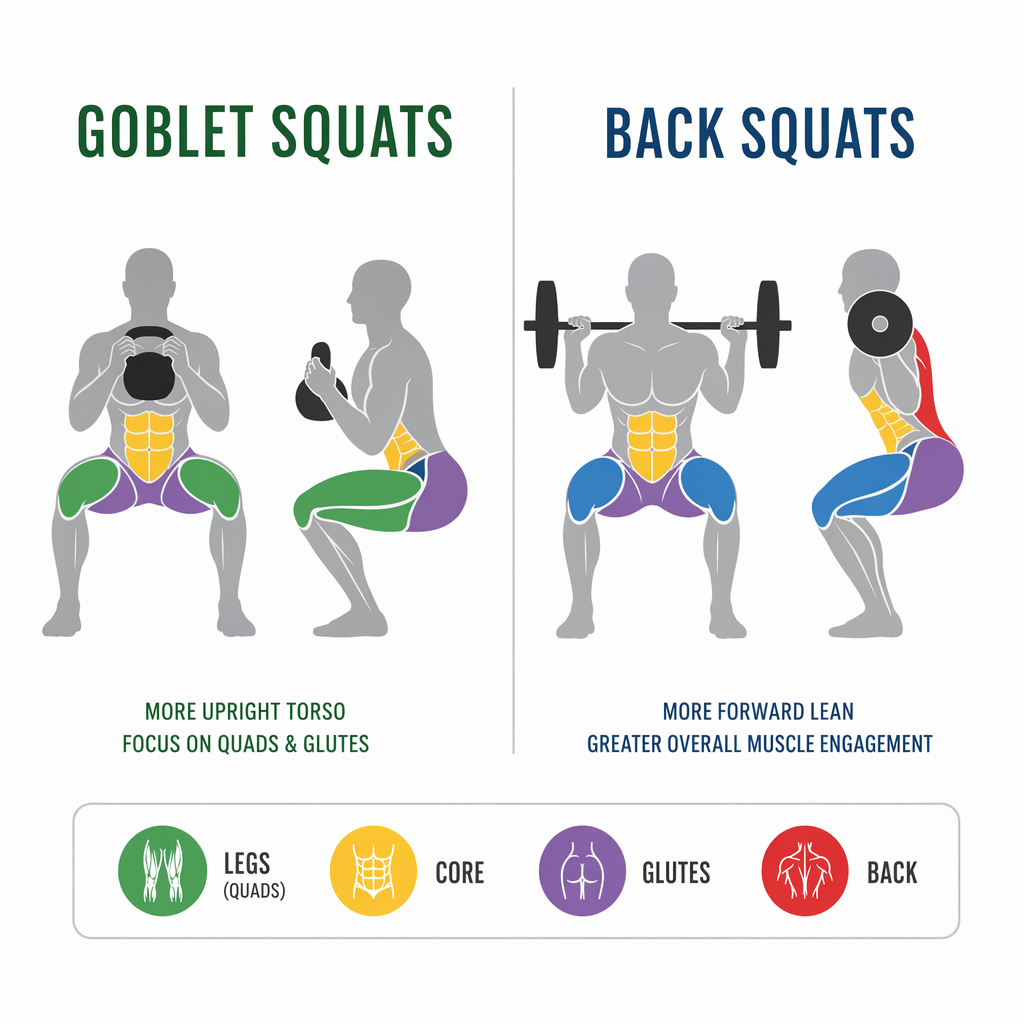
Both the goblet squat and back squat hit the primary muscles that drive lower body strength, mainly the quads and glutes. You’re still training a big squatting pattern that supports strength training goals.
The difference is emphasis. The goblet squat’s upright torso tends to push more work toward the quadriceps and core muscles, while the back squat places greater activation of the glutes and hamstrings and can be loaded heavier for muscle mass. Next, we’ll break down each pattern.
Major Muscle Groups Activated in Goblet Squats
In a goblet squat, your lower body does the main work, especially the quads and glutes. Because the weight is held in front, your center of mass stays more balanced, and that often makes it easier to sit into a deeper position.
Your core stability ramps up fast. Holding the load against your chest turns the set into a “don’t fold forward” challenge, so your core muscles work hard to keep you tall and controlled.
You still get plenty of help from chain muscles like hamstrings, but the squat variation is known for posture control and cleaner mechanics. That’s why many people use it to practice solid movement before going heavier.
Muscular Engagement Differences in Back Squats
A back squat is built for big loading. When the bar sits on your upper back, you can typically use far more weight than you can hold in your hands, which is a key driver for muscle mass.
This setup often creates greater activation of the glutes and hamstrings compared with front-loaded squats. That posterior chain focus is a big reason the movement is tied to athletic performance and power-focused training.
Many lifters structure a heavy barbell squat day around a squat rack for safe setup. If knee tracking is an issue, some people add resistance bands below the knees as a cue to keep position while they build control.
(ALSO READ: Front Squat vs Back Squat: Pros, Cons, and Best Uses)
Benefits of the Goblet Squat
The goblet squat is a lower body exercise that makes proper form feel more natural. The front load encourages a tall posture, strong bracing, and cleaner depth, which fits many strength training plans.
This squat variation is accessible to nearly all skill levels, and thanks to the counterbalance, it allows individuals to naturally discover proper form, making it easy for most people to practice without the need for a personal trainer; in fact, it’s usually the first type of squat that people learn successfully—let’s take a look at why that is.
Why Goblet Squats Are a Great Choice for Beginners
If you’re new, the goblet squat usually wins because it takes less technical knowledge to look and feel right. You hold the load where you can control it, and the movement often feels closer to daily lifting than balancing a bar.
It can also mean less stress when you’re still learning. The front-loaded position can be a helpful option if you have physical limitations, mobility limitations, or you simply want to groove the pattern before chasing the gold standard barbell numbers.
A simple beginner focus looks like this:
- Keep the weight close and your core muscles braced the entire rep.
- Aim for smooth depth and balance, not speed or ego loading.
- Stop sets when proper form starts to fade, even if you “could” grind more.
Improving Core Stability and Mobility with Goblet Squats
A big reason goblet squat training works so well is the demand for core strength. Since the weight is in front, you have to resist folding, which trains core stability with every rep.
It also tends to expose mobility limitations without punishing you for them. Many lifters notice improved ankle mobility and a more comfortable squat pattern because the counterbalance helps you stay in an upright torso position.
Can it build strength and muscle like back squats? You can still get impressive results, especially when you load what you can and use a solid range of motion. The main catch is that the limiting factor often shows up before your legs fully max out.
Drawbacks and Limitations of Goblet Squats
Goblet squat work has a ceiling. Even when your legs could handle more, the limiting factor often becomes grip fatigue or upper body endurance, so the set ends early.
That can slow goblet squat development if your goal is continuous progressive overload with heavy weights. For many people, it fits best as a moderate goblet squat day, a form builder, or a home-friendly strength option. Next, let’s get specific about progression limits and when they matter.
Weight Restrictions and Progression Challenges
The goblet squat can get heavy, but it’s hard to match barbell loading. Many people top out because holding a big dumbbell or kettlebell becomes awkward before their legs are truly challenged.
That’s where grip fatigue shows up. Your arms and core may tire out first, turning your upper body into the limiting factor instead of the quads and glutes you’re trying to train.
So, is it a good replacement for the back squat? It depends on your goal. For general fitness and useful strength, it can cover a lot. But if you need long-term progressive overload with truly heavy weights, a squat rack and barbell setup usually makes that progression simpler.
When Goblet Squats Might Not Be Enough
At a certain point, goblet squat loading stops matching what your legs can do. For advanced lifters chasing maximum strength or the biggest possible muscle mass stimulus, that cap can feel limiting.
Back squats allow heavier work and often place greater emphasis on the posterior chain. Still, goblet squats can be the right call when you want a practical, front-loaded pattern you can train almost anywhere.
Choose goblet squats over back squats when:
- You’re training at home and don’t have a squat rack available.
- You want cleaner depth, posture control, and core demand in the same lift.
- You’re managing lower back concerns and want a more upright option.
Advantages and Disadvantages of Back Squats
Back squat training is one of the most direct ways to build lower body strength, because barbell squats let you add load steadily over time. That loading potential supports muscle mass goals and performance-focused training.
The downside is that a heavy barbell squat day demands more setup, usually a squat rack, and your proper form needs to stay sharp. Since the bar is on your back, the movement can feel less forgiving if your positions break down. Next, let’s cover growth potential and then safety.
Building Maximum Strength and Muscle with Back Squats
The most compelling argument for the back squat is loading. Because the bar is supported across your body, you can usually handle far more weight than you can hold in a goblet position, which helps drive muscle mass.
That makes it a strong choice for lower body strength and maximum strength goals. You’re training a powerful muscle group, especially when the glutes and hamstrings can contribute hard through the movement.
It also supports continuous progressive overload in a clear way: add weight, keep your reps strong, and repeat. Some lifters even pay attention to details like stable footwear and a free sole feel underfoot so their squat setup stays consistent from set to set.
Potential Downsides and Safety Considerations for Back Squats
A back squat can be safe and effective, but it typically places more stress on the lumbar spine than a front-loaded goblet squat. That isn’t automatically bad, yet it does mean heavy weights demand good form every time.
If you have lower back concerns, you may prefer squat variation choices that keep you more upright. The key is respecting the load and not letting your positions shift under fatigue, because that’s when lower back joints can feel irritated.
Simple safety checks include:
- Use a load you can control without your torso collapsing or hips shooting up.
- Set the bar securely and unrack with intention, not rushed steps.
- Stop the set when your good form fades, even if the weight feels tempting.
Frequent Errors in Squats and Tips for Preventing Them
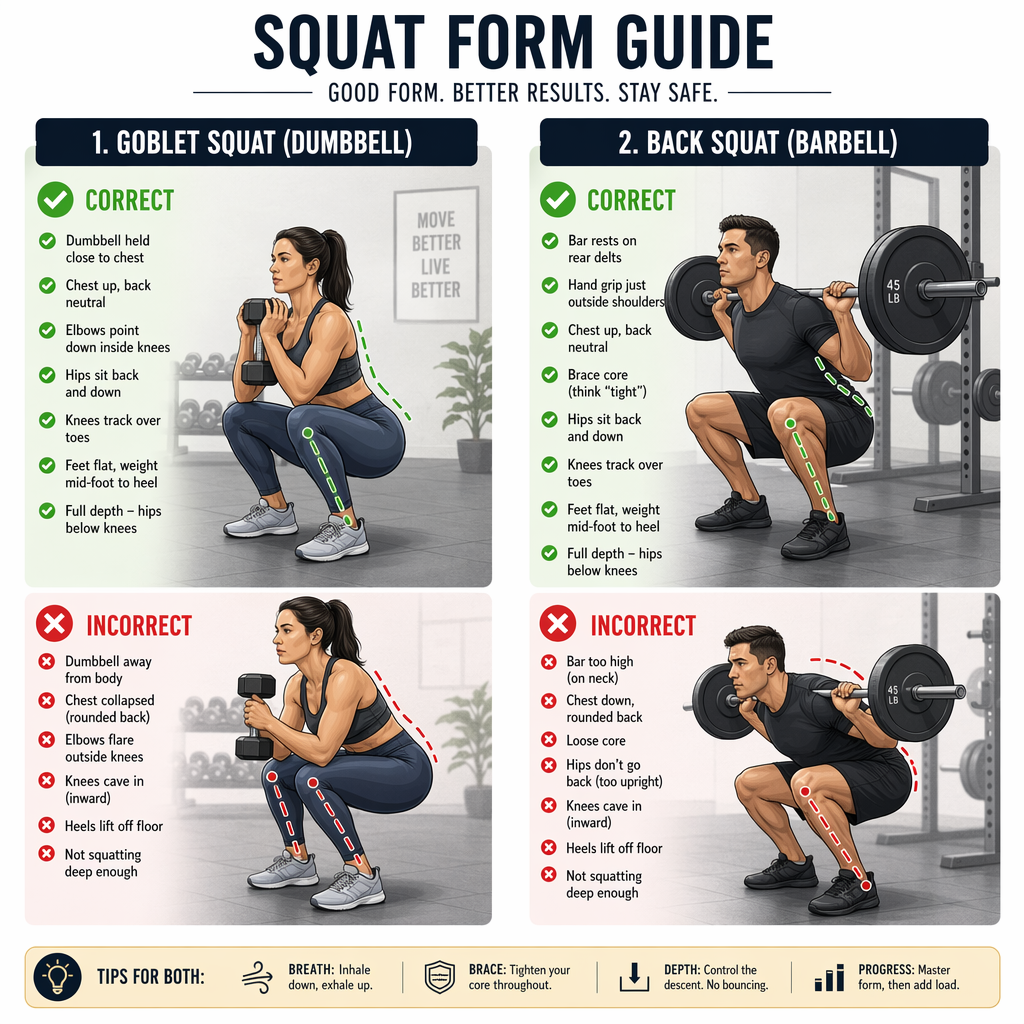
Even with a goblet squat or back squat, the biggest wins come from avoiding the same common mistake patterns. When you rush, you’ll often lose your braced position, cut depth, or let balance drift.
Watch for excessive forward knee travel, knees collapsing, or a torso angle that changes mid-rep. These issues slow form development and can derail safe progression. If you’re unsure, a personal trainer can spot problems fast. Next are the most common technique errors and clean fixes.
Technique Errors that Affect Safety and Results
One goblet squat issue is leaning forward as you get tired, even though the lift is designed to help you stay tall. In the back squat, that forward drift can be even more costly because the bar path and balance can change.
Another common mistake is knee control. Excessive forward knee travel or knees caving in can show up in both variations, especially when the load is too heavy for your current proper form.
Keep these errors on your radar:
- Letting your chest drop instead of keeping an upright torso and braced core.
- Allowing knees to collapse inward instead of tracking with your toes.
- Rushing the setup, especially when using a squat rack for back squats.
Tips for Proper Form and Safe Progression
Cleaner reps start before you even move. For a goblet squat, hold the load tight to your chest. For a back squat, create a stable shelf with your upper back and keep your steps controlled after the unrack.
Progress should feel earned, not forced. Safe progression comes from repeating the same positions and only adding load when you can own the entire range of motion with the same bar path or weight path.
Try these practical cues:
- Brace first, then descend under control, then drive up without losing posture.
- Use resistance bands below the knees if you need a reminder to press out and stay aligned.
- When in doubt, get a personal trainer to coach form development before adding weight.
Conclusion
In conclusion, both goblet squats and back squats have their unique benefits and drawbacks, making them suitable for different fitness levels and goals. Goblet squats are excellent for beginners looking to improve form and core stability, while back squats are ideal for those aiming to build maximum strength. Understanding the key differences, such as muscle engagement and safety considerations, is essential to making informed choices in your workout routine. Remember to avoid common mistakes and focus on maintaining proper form to ensure the best results.Ready to take your squats to the next level? Schedule a complimentary session with our specialists now!
Frequently Asked Questions
Are goblet squats safer for your lower back than back squats?
Often, yes. A goblet squat keeps the load in front, which helps you stay more upright and can reduce stress on the lower back compared with a back squat. Since back squats can place more force on the lumbar spine, people with lower back concerns may prefer goblet work.
How much weight should I use for goblet squats if I usually back squat?
Expect a big drop from your back squat numbers. Goblet squat loads are often limited by what you can hold at your chest, plus the limiting factor of grip fatigue. Start with a weight that lets you keep good form for clean reps, then build gradually before chasing heavy weights.
REFERENCE:
https://www.acefitness.org/resources/everyone/exercise-library/362/goblet-squat
https://www.t-nation.com/training/goblet-squats-101
https://www.roguefitness.com/weightlifting-bars-plates/barbells
https://strongmadesimple.com/blog/2014/7/goblet-squat-strength-mobility