

Key Highlights
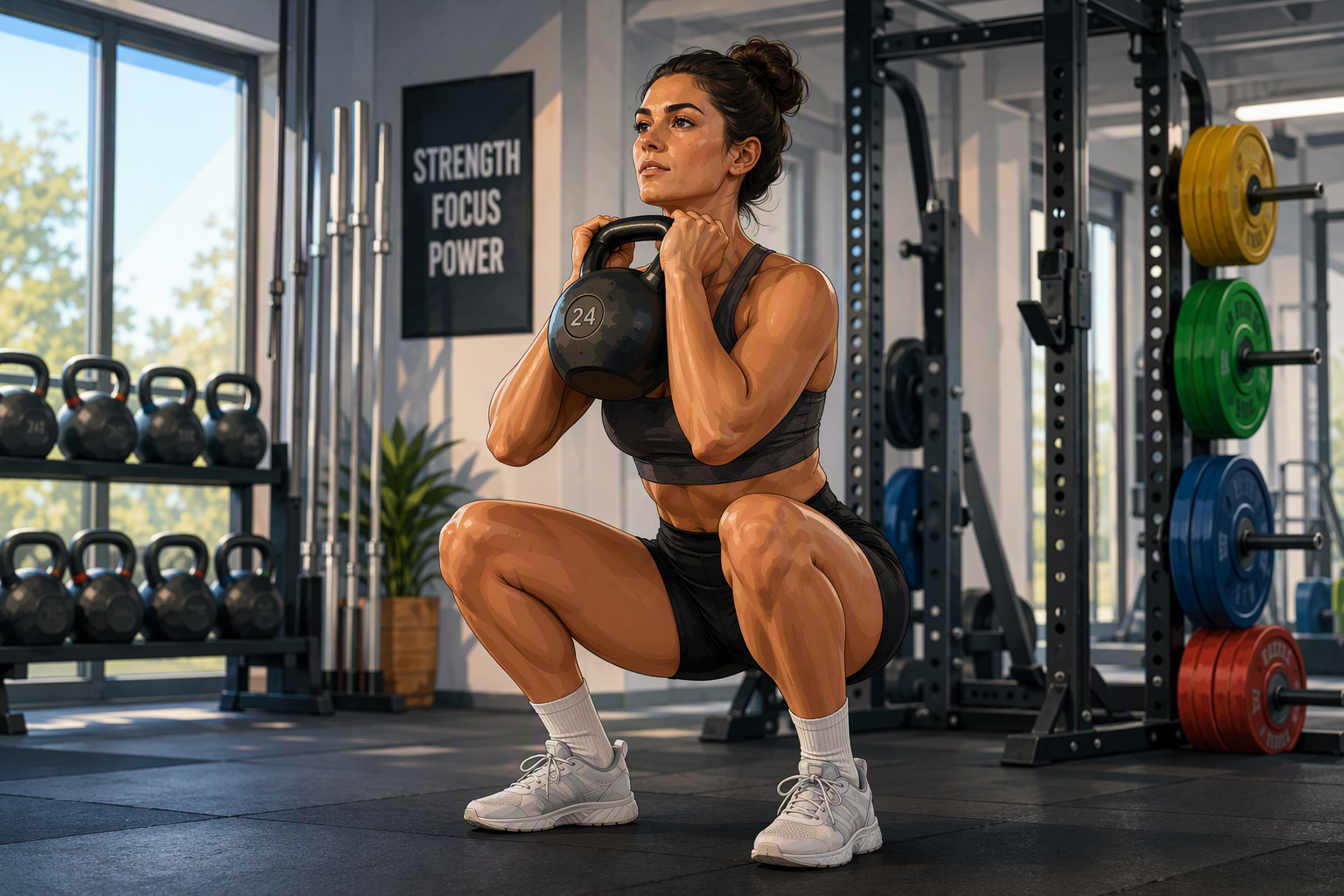
- Kettlebell front squats are a great compound exercise for building lower body strength and improving functional strength. This front squat variation challenges your quads, glutes, hamstrings, calves, shoulders, and core stability.
- Performing 1-arm kettlebell front squats offers additional benefits by increasing unilateral strength, enhancing core engagement, and improving balance, as the asymmetrical load forces your body to stabilize and activate more muscle groups throughout the lower body and core.
- This front squat variation challenges your quads, glutes, hamstrings, calves, shoulders, and core stability.
- Proper form matters most, especially keeping an upright torso, braced core, and knees tracking over your toes.
- Compared with other squat variations, this option needs less upper body mobility than a barbell front squat.
- Good technique supports injury prevention and better movement quality as you progress.
(ALSO READ: Front Squat Exercise: Key Form Tips for Success)
Introduction
If you want a lower body exercise that builds strength and teaches better control, the kettlebell front squat deserves your attention. Many fitness enthusiasts use it in strength training because it trains the legs while improving movement quality and functional strength. It also feels more accessible than some loaded squat variations, especially if upper body mobility is limited. Whether you are new to squatting or refining technique, this movement can add real value to your routine.
Understanding the Kettlebell Front Squat
The kettlebell front squat is a variation of the front squat that uses kettlebell resistance instead of a barbell. It mainly targets the lower body, with a strong focus on the quadriceps, while also asking your core and upper body to stay organized throughout the lift.
For proper form, you keep the weight racked at shoulder height, brace your trunk, and sit down while keeping your torso tall. A common challenge when learning it is maintaining knee tracking and balance through the whole foot. The next sections break down the muscles involved and what makes this exercise different from other options.
CLICK HERE
Key Muscles Targeted by the Kettlebell Front Squat
This exercise is known for its strong effect on the quads, but that is only part of the picture. Several muscle groups work together to control the lowering phase, maintain posture, and drive you back up. That combined effort is one reason it helps build lower body strength.
The primary and secondary muscles include:
- Quads as the main driver during the squat
- Gluteus maximus to assist hip extension on the way up
- Hamstrings and calves for support and control
- Shoulders and core stability to keep the rack position and upper body steady
As squat depth increases, the demand on your legs and trunk usually rises as well, as long as you keep a neutral spine. So, which muscles are primarily worked during the kettlebell front squat? The quads lead the movement, while the glutes, hamstrings, calves, shoulders, and core help stabilize and complete it.
(ALSO READ: What Muscles Do Front Squats Work? A Complete Guide)
Kettlebell Front Squat vs. Barbell Front Squat: What’s Different?
A kettlebell front squat and a barbell front squat both train similar patterns, but the setup changes the feel of the lift. The kettlebell version is often more accessible because it needs less upper body mobility to hold the load in place. That can make it easier for many people to learn upright posture and postural control.
Here are the key differences:
|
Feature |
Kettlebell Front Squat |
Barbell Front Squat |
|---|---|---|
|
Equipment |
Kettlebells |
Barbell and often a squat rack |
|
Mobility demand |
Less upper body mobility needed |
Higher upper body mobility needed |
|
Position |
Weight held in the rack at shoulder height |
Bar rests across the front of the shoulders |
|
Learning focus |
Postural control and balance |
Heavier loading and strict proper movement mechanics |
If you ask how a kettlebell front squat differs from a barbell front squat, the biggest answers are setup, mobility demands, and loading potential. The kettlebell version can be a smart step toward stronger movement mechanics, while also helping reduce the risk of injury when technique is still developing.
Mastering Proper Form and Technique
Strong results start with proper form. Your starting position should place your feet just outside shoulder-width, with toes slightly turned out and the kettlebells racked at shoulder height. From there, you brace your core and keep an upright torso as you lower under control.
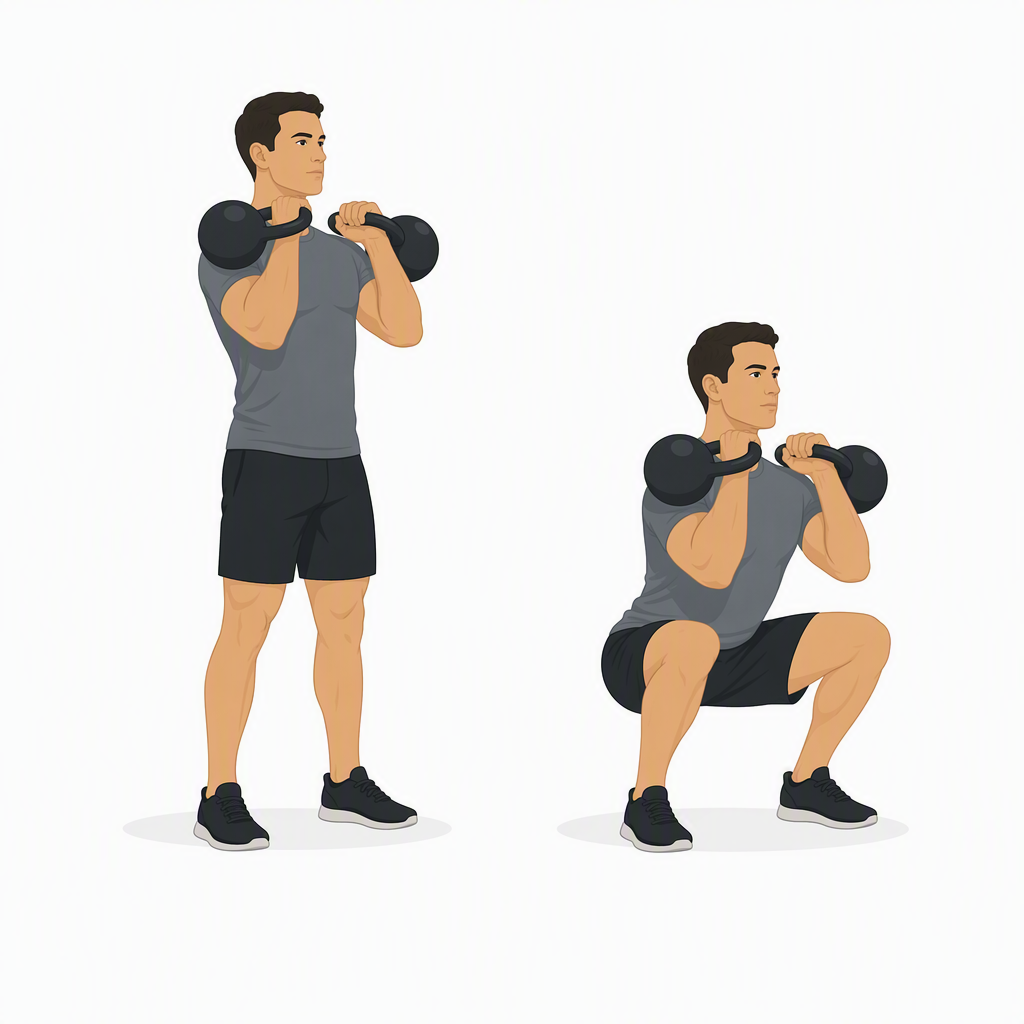
Just as important, postural awareness helps you keep proper movement mechanics from start to finish. Beginners often lose position by letting the knees collapse inward or by shifting pressure unevenly through the feet. Learning the lift this way supports better injury prevention. Next, let’s walk through the movement and the mistakes to avoid.
Step-by-Step Guide to Performing a Kettlebell Front Squat
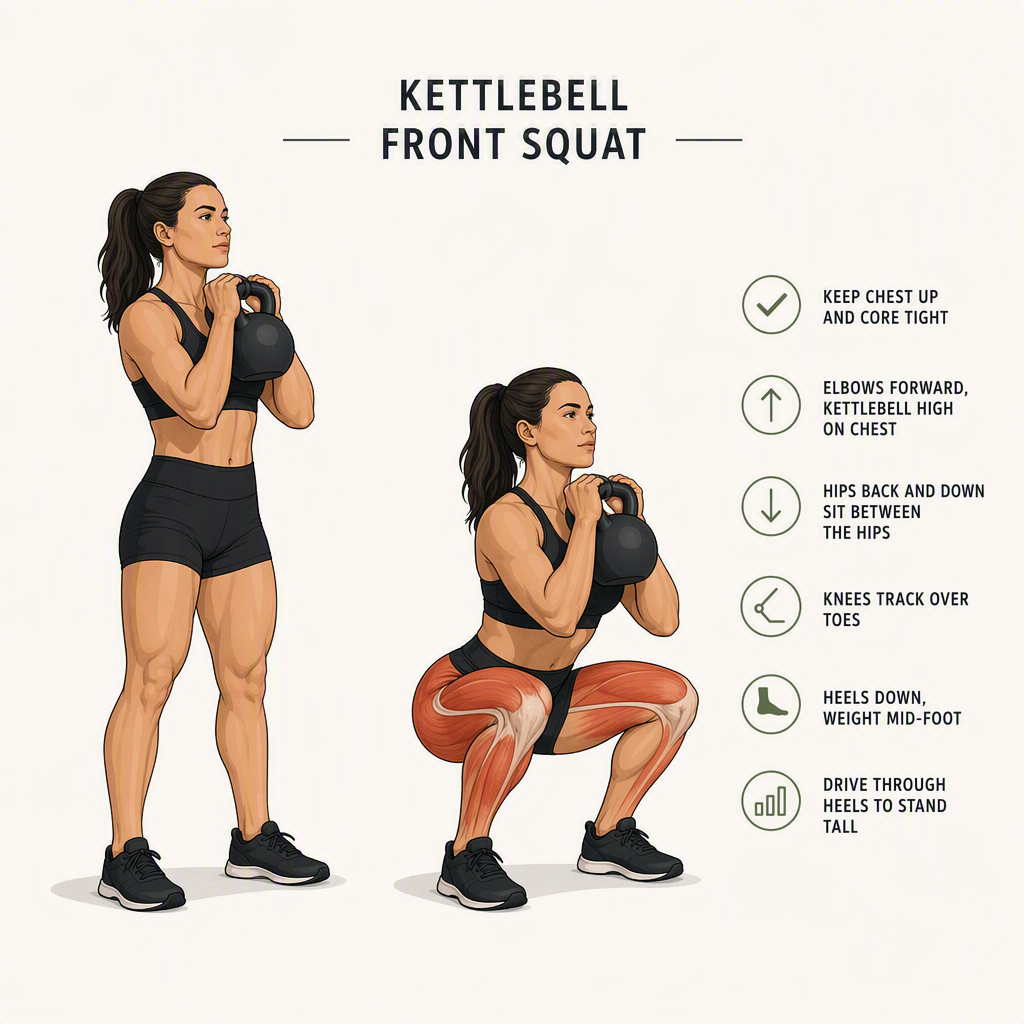
Start in a solid starting position. Place your feet just outside shoulder-width and angle them slightly outward. Hold the kettlebells in the racked position at chest height with your forearms vertical and palms facing in. Before moving, brace your trunk and set your chest upright.
Use these steps for proper form:
- Keep your weight evenly distributed through your feet
- Reach your hips slightly back as you begin the descent
- Let your knees track outward over your second toe
- Lower to a squat depth that keeps your spine neutral, then stand by extending your hips and knees
Throughout the entire movement, stay controlled and avoid rushing. Your range of motion should match what you can do with a neutral spine and steady balance. This helps reinforce functional movement patterns and gives you a cleaner, safer squat every time.
Common Technique Mistakes and How to Avoid Them
Many beginners make the same mistake first: knees caving inward during the descent. That issue can hurt movement quality and raise the risk of injury because it places extra stress on the knees. It can also throw off your balance and make the lift feel unstable.
Watch for these problems:
- Knees collapsing inward instead of tracking over the toes
- Losing even pressure through the feet
- Dropping into depth that your spine cannot control
- Letting postural awareness fade as fatigue builds
To avoid these errors, keep your weight spread evenly through the foot and pay attention to knee position from top to bottom. Stop your squat at a depth you can own with sound proper movement mechanics. If you have lower back concerns, controlled depth and a neutral spine matter even more.
(ALSO READ: Are Front Squats Better Than Back Squats? The Truth Revealed)
Maximizing Results with Kettlebell Front Squats
Once your technique is consistent, kettlebell front squats become a great compound exercise for strength training and functional strength. They fit well into routines focused on quads, lower body control, and athletic development. They also work as a bridge toward more advanced squat patterns.
For optimum performance training, smart programming tips include progressing the load only when your position stays stable and your reps stay clean. Helpful variations from the available options include the kettlebell goblet squat, kettlebell sumo squat, and double kettlebell front squat. Next, let’s look at how to choose weight and progress with confidence.
Choosing the Right Weight and Progression Tips
Choosing the right load starts with honesty. If the kettlebell pulls you out of position, it is too much weight for now. The compiled standards show beginner work around 22.5 lbs for 8 reps, intermediate around 30 lbs, and advanced around 35 lbs, giving you a general starting point rather than a fixed rule.
A great way to manage progression is to earn it:
- Start with a single kettlebell and master clean reps
- Increase only when posture and depth stay consistent
- Move to a double kettlebell front squat after control improves
- Use the added load to support strength and muscle mass goals
If you are wondering how to progress from a single to a double kettlebell front squat, the answer is simple: build skill first, then add complexity. That same idea helps you choose the ideal kettlebell weight for front squats. Good reps come before heavier reps.
Conclusion
In conclusion, incorporating kettlebell front squats into your workout routine can significantly enhance your strength, stability, and overall fitness. By mastering the proper form and understanding the unique benefits of this exercise, you can effectively target key muscle groups while minimizing the risk of injury. Remember, progress takes time, so be patient with yourself as you work towards perfecting your technique and increasing your weights. If you’re looking to elevate your fitness journey even further, don’t hesitate to reach out for a free consultation with our trainers who can help you personalize your kettlebell workouts for optimal results. Start boosting your workout routine today!
What is a barbell front squat?
A barbell front squat is a strength training exercise that targets the quadriceps, glutes, and core. In this movement, a barbell rests on the front shoulders while you squat down, maintaining an upright torso. It's an excellent variation for improving overall leg strength and enhancing balance during workouts.
REFERENCE:
https://tonygentilcore.com/tag/how-to-kb-front-squat/
https://tonygentilcore.com/tag/2-kb-front-squat/