

Key Highlights
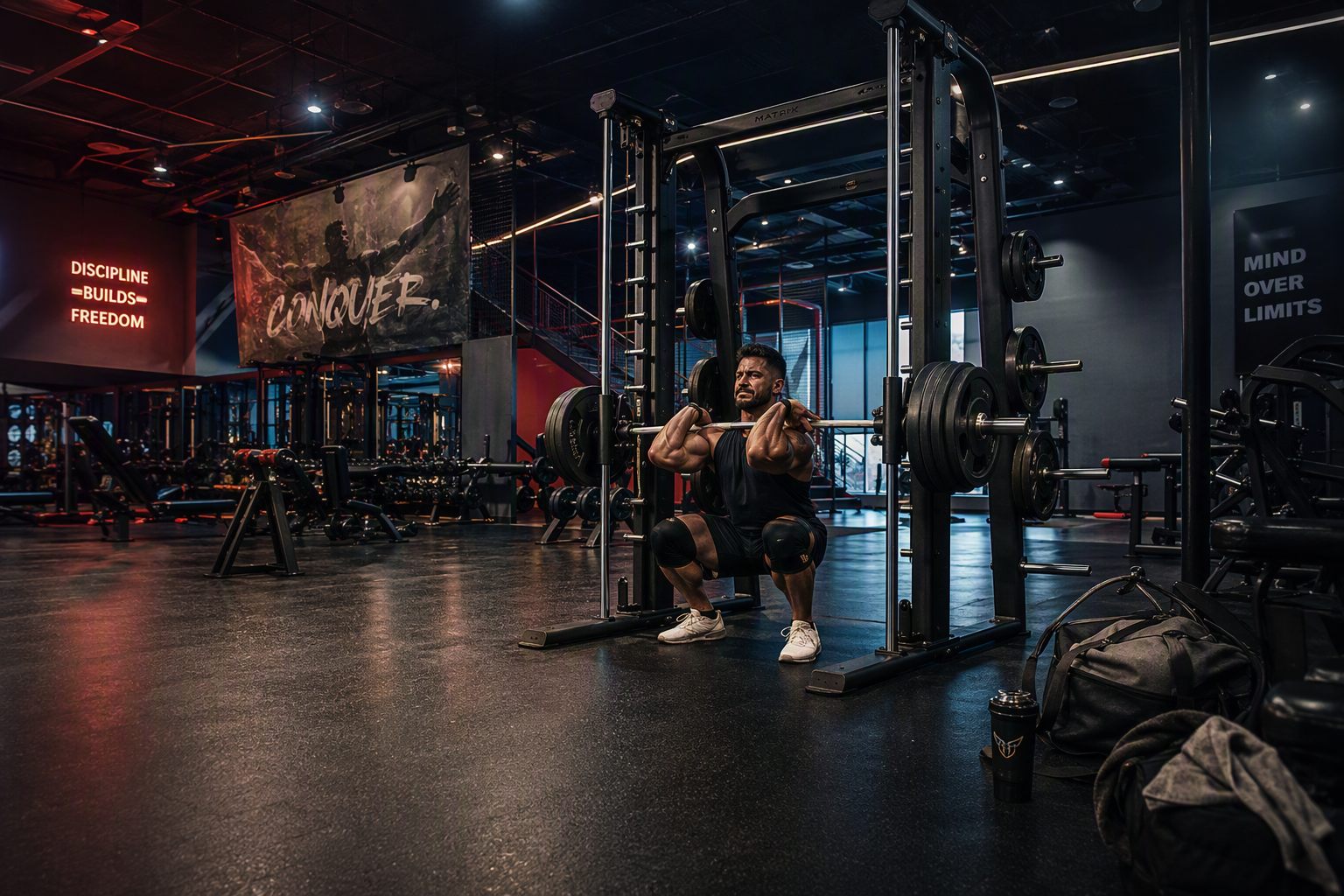
- The smith machine front squat helps you train your lower body with a fixed bar path. It places more stress on the quads while still working glutes, hamstrings, calves, and core strength.
- There are several variations of the smith machine front squat you can try for added challenge or variety. Options include performing the squat with a wider stance to target the inner thighs, elevating your heels to increase quad emphasis, or using pauses at the bottom of the squat to further engage your core and lower body muscles.
- You can also experiment with different tempos, single-leg positioning, or adding pulse reps to adjust the intensity.
- While still engaging the glutes, hamstrings, calves, and core, it puts greater emphasis on the quad.
- Because balance demands are lower, a beginner can focus more on posture and control.
- The smith machine often makes extra reps easier when free weights feel limited by upper-back fatigue.
- This front squat variation is useful when your goal is leg size and cleaner bar path practice.
Introduction
If you want a front squat that feels more controlled, the smith machine is worth a look. It gives you a guided setup for training the lower body while keeping the bar in a fixed track. That can make it easier to learn the movement, hold position, and focus on your legs. The correct approach is simple: set the bar near collarbone height, brace well, keep your chest up, squat with control, and drive back to standing through your full foot.
Understanding the Smith Machine Front Squat
The smith machine front squat is a front-loaded squat done with the smith machine bar moving on a fixed track. That set bar path changes how you balance and how hard your stabilizers need to work.
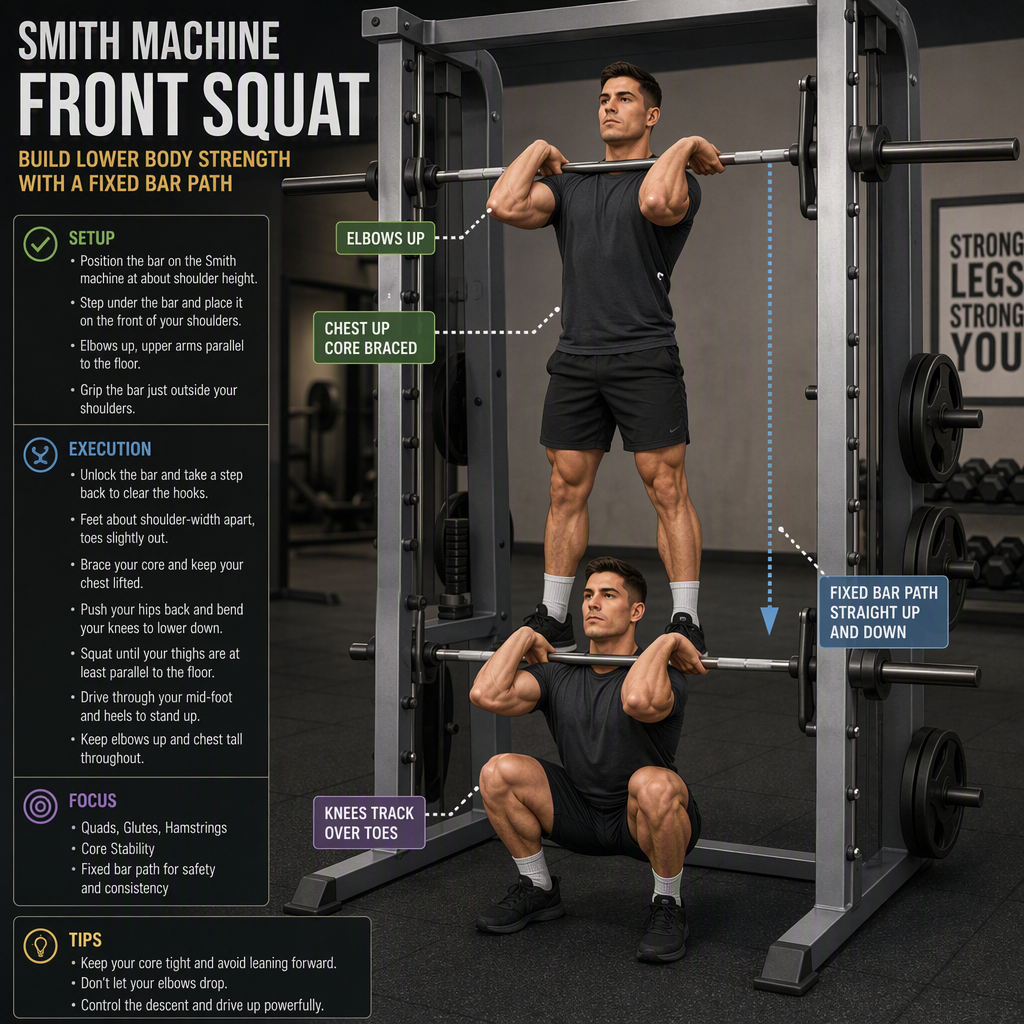
In many cases, this makes the exercise feel more direct for lower body training. You spend less effort controlling the bar and more effort driving through the squat itself. That is the big difference from free weights, and it shapes both the feel and the training effect.
What Sets the Smith Machine Front Squat Apart from Free Weights
With free weights, you have to guide the barbell through space and control balance from start to finish. The smith machine changes that because the bar path is already set. You still squat, but the machine removes much of the stabilizing work.
That difference can change your posture demands too. A free-weight front squat challenges your upper back and smaller support muscles sooner. On the smith machine, it is often easier to keep the bar in place and maintain a more repeatable position through each rep.
Your range of motion can still be useful, but the movement feels more guided than natural. For sport carryover, free weights have value. For focused leg training, the smith machine can be very effective because your lower body becomes the main limiter instead of balance and bar control.
(ALSO READ: Front Squat Exercise: Key Form Tips for Success)
Advantages of Using the Smith Machine for Front Squats
One clear advantage of the smith machine is support. Since the barbell follows a fixed line, you can pay closer attention to your squat pattern instead of constantly correcting balance. That makes it friendlier for learning and for higher-rep sets.
It also reduces how much your smaller stabilizers have to help. When those muscles are not the weak link, your legs can keep working longer. That may help you do more total reps while placing less strain on the lower back than a shaky set with poor control.
- The guided track helps a beginner feel safer training alone.
- It can improve focus on form and core stability.
- It makes holding the front rack position easier as fatigue builds.
- It may let you use more weight than with free-weight front squats.
Key Benefits of Smith Machine Front Squats
The biggest benefit of this smith machine squat is targeted leg work. The fixed bar path reduces the need for constant balance, so your posture can stay more consistent while your quads do a larger share of the effort.
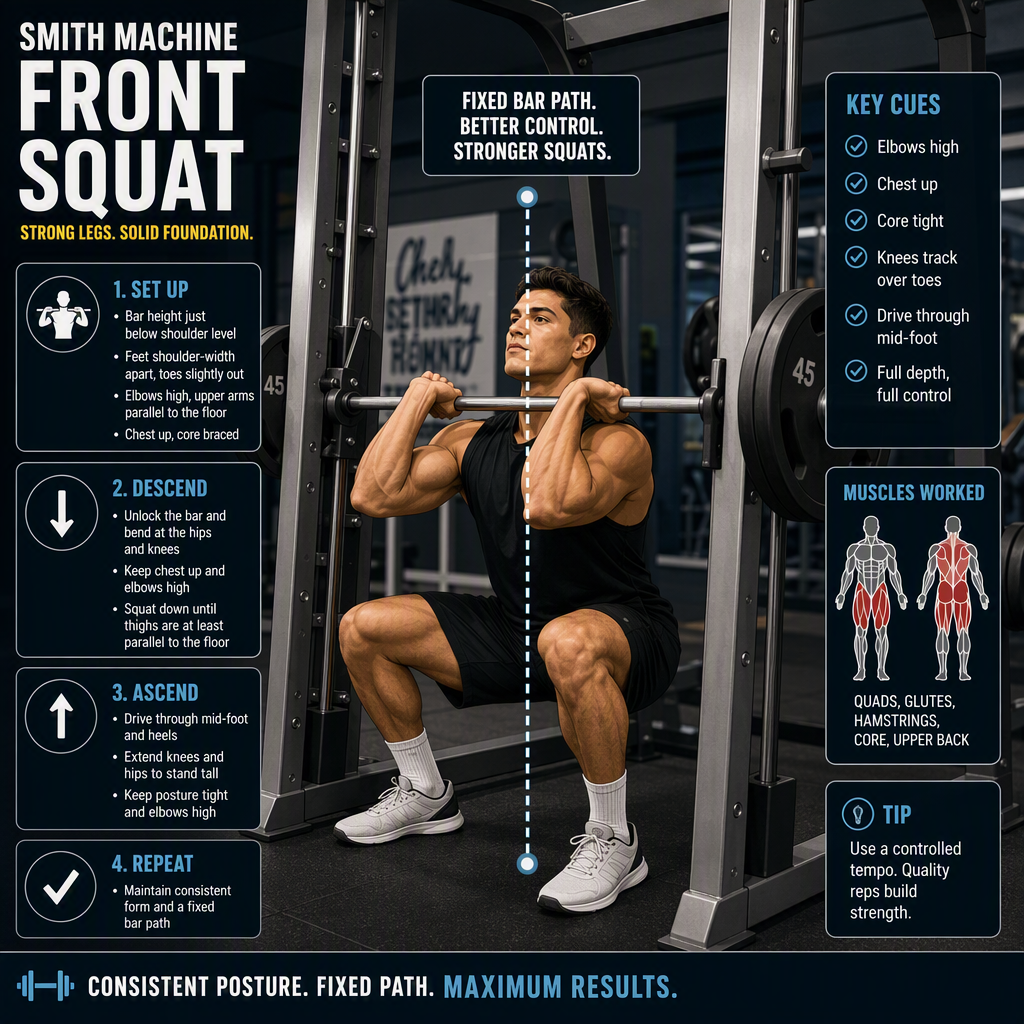
It also supports better focus during the set. Instead of worrying about the bar drifting, you can concentrate on depth, pressure through the feet, and smooth reps. Even without tools like a resistance band, that simpler setup can make your training feel more precise and productive.
(ALSO READ: Discover the Benefits of Front Squats for Strength Gains)
Muscle Groups Targeted and Activation
The smith machine front squat mainly targets the quadriceps. Because the machine limits stabilization demands, the upper legs take on more of the load. That is why many lifters use it when they want a stronger quad emphasis.
Still, it is not a one-muscle move. Your glutes, hamstrings, and calves also assist through the squat. The exercise can also recruit the abs, hip flexors, adductors, and even parts of the lower back as you stay braced.
|
Muscle group |
Role in the exercise |
|---|---|
|
Quadriceps |
Primary driver, especially during the ascent |
|
Glutes |
Help extend the hips and support power out of the bottom |
|
Hamstrings |
Assist with control and support the squat pattern |
|
Calves |
Help stabilize the ankle and lower leg |
|
Abs and lower back |
Help brace the torso and maintain position |
Why Smith Machine Front Squats Are Ideal for Quad Isolation
If your goal is quad growth, this front squat variation stands out. The smith machine keeps the load moving in a set line, so you do not lose effort to side-to-side balance or bar correction. That keeps tension where many people want it most.
The front-loaded position also helps. Since the weight stays in front of your midline, the quadriceps stay highly involved through the squat. A slight bend before each rep and steady control can help keep that quad tension from dropping off.
- The smith machine reduces stabilizer interference.
- The front squat setup naturally favors the quadriceps.
- Consistent bar travel helps repeat the same quad-focused pattern.
- Higher reps are often easier once balance is no longer the main issue.
How to Set Up for Smith Machine Front Squats
A good setup makes every rep better. Start by setting the smith machine bar just under shoulder height, around collarbone level, so you can unrack it without shrugging or bending awkwardly.
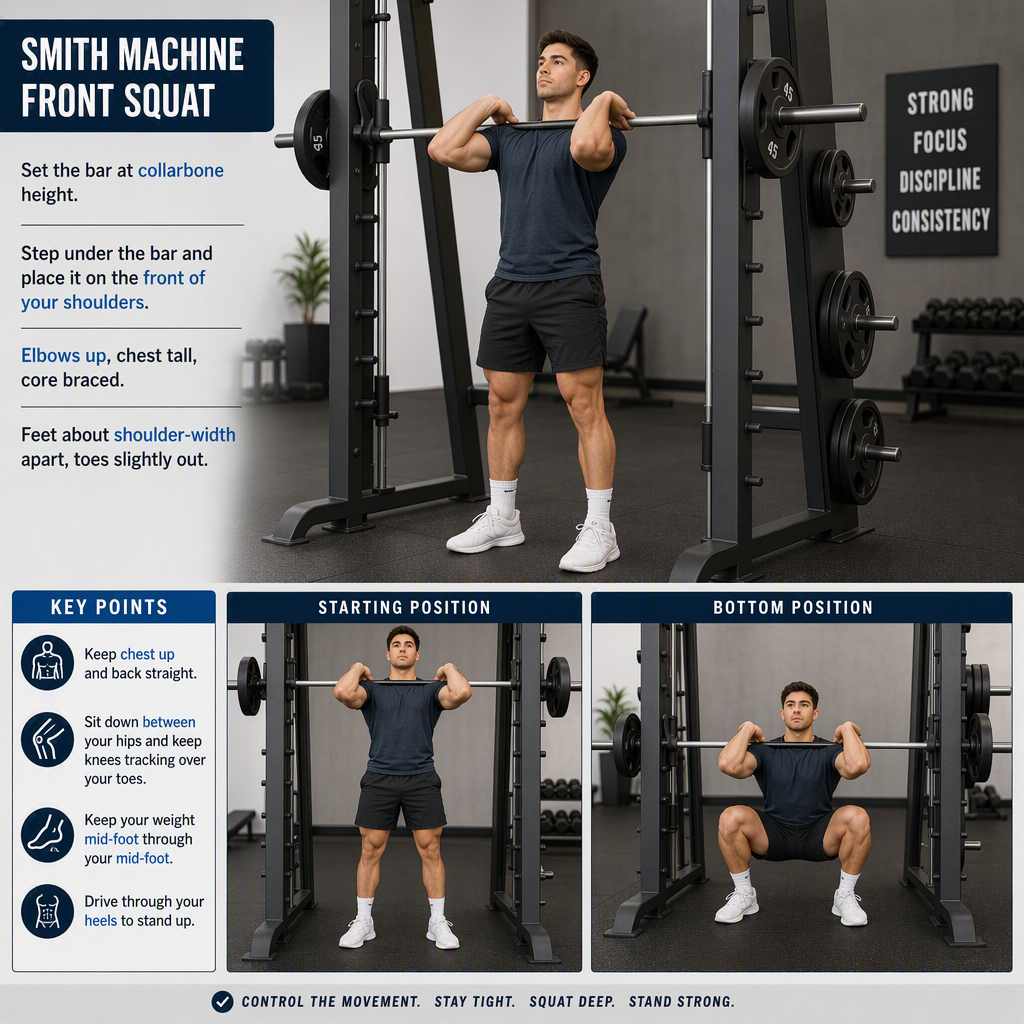
From there, take your starting position with feet about shoulder-width apart and toes turned slightly out. Hold the barbell across the front of your shoulders, brace your trunk, and keep your lower back neutral. Whether you track workouts in a kovo app or on paper, consistent setup matters. The next points help you lock that in.
Proper Positioning and Bar Placement
Bar placement can make or break the lift. Rest the smith machine bar across the front of your shoulders near the collarbone. A cross-arm grip works well here, and your elbows should stay roughly parallel to the floor.
Once you unrack it, settle into your starting position before moving. Keep your chest high, spine straight, and shoulders packed so the bar stays secure. Good posture helps you follow the machine’s bar path without folding forward.
- Set the bar just below shoulder height before stepping in.
- Keep elbows up so the bar does not roll forward.
- Stand with feet shoulder-width apart.
- Turn your toes out about 15 to 30 degrees for comfort and balance.
Essential Safety Tips for Beginners
Yes, a beginner can safely use this exercise when the load is sensible and the setup is correct. The fixed bar path gives you a more predictable movement, which lowers the chance of losing balance during the set.
That said, safety still depends on control. Start with the bar alone or a very light load. Build good core strength, stay upright, and do not chase heavy weight before your movement feels smooth. Protecting the lower back starts with solid bracing and patient progress.
- Practice the motion before adding plates.
- Keep your chest up and core engaged on every rep.
- Use controlled speed instead of bouncing at the bottom.
- Stop the set when posture breaks down.
Smith Machine Front Squat Technique and Form
Proper form for smith machine front squats focuses on control rather than speed; having a secure rack position, a strong torso brace, and a controlled, steady descent that maintains tension in your legs is essential because it makes your technique consistent every time.
Your range of motion should match your mobility and comfort. Squat down until your thighs are about parallel to the floor, or to a depth you can own without losing position. The step-by-step method below makes that easier to follow.
Step-by-Step Guide to Performing the Exercise
Begin by setting the bar near collarbone height and placing it across the front of your shoulders. Unrack it, step into your starting position, and brace before you move. Your torso should stay tall from the first inch to the last.
When squatting, keep your chest lifted by bending your knees and pushing your hips back a bit. Lower yourself in a controlled manner until your thighs are nearly parallel to the ground, pause for a moment, then press through your whole foot to return to standing. Here, proper coordination should be prioritized over speed.
- Set feet shoulder-width apart with toes slightly out.
- Keep elbows up and core tight throughout the squat.
- Lower under control and pause for a second at the bottom.
- Push back to standing without letting the torso collapse.
Common Mistakes and How to Avoid Them
A common mistake on the smith machine is treating the movement like an easy ride. The bar is guided, but your squat still needs strong posture and active bracing. If you relax too much, your form can break down fast.
Another issue is leaning too far forward. That can shift stress away from the legs and into the lower back. Rushing reps also causes trouble, especially when you lose bar position or cut depth just to finish the set.
- Do not let your elbows drop as you descend.
- Avoid rushing the lowering and lifting phases.
- Keep the chest up so posture stays solid.
- Do not add weight until you can control every rep cleanly.
Conclusion
In conclusion, mastering the Smith Machine front squat can significantly enhance your workout routine. By focusing on proper technique and understanding the benefits this machine offers, you can effectively target key muscle groups, especially your quads. Moreover, knowing how to set up the machine correctly and adhering to essential safety tips will ensure that you make the most of this exercise while minimizing the risk of injury. Remember, consistency is key, and as you incorporate the Smith Machine front squat into your regimen, you'll likely notice improvements in strength and stability. For personalized guidance and to take your fitness journey to the next level, consider booking a consultation today!
(ALSO READ: Top 6 Front Squat Alternatives for Building Leg Strength)
Is a Smith machine okay for squatting?
Yes, a Smith machine is suitable for squatting as it provides stability and safety by guiding the bar's movement. This allows lifters to focus on form, making it a great option for beginners or those recovering from injuries. However, always ensure proper technique to avoid strain or injury.
REFERENCE:
https://pmc.ncbi.nlm.nih.gov/articles/PMC3666467/
https://www.ritfitsports.com/products/ritfit-m2-series-multi-functional-modular-home-gym-package
https://www.ritfitsports.com/products/ritfit-p3-pink-power-cage-1200lbs-home-gym-package