

Key Highlights
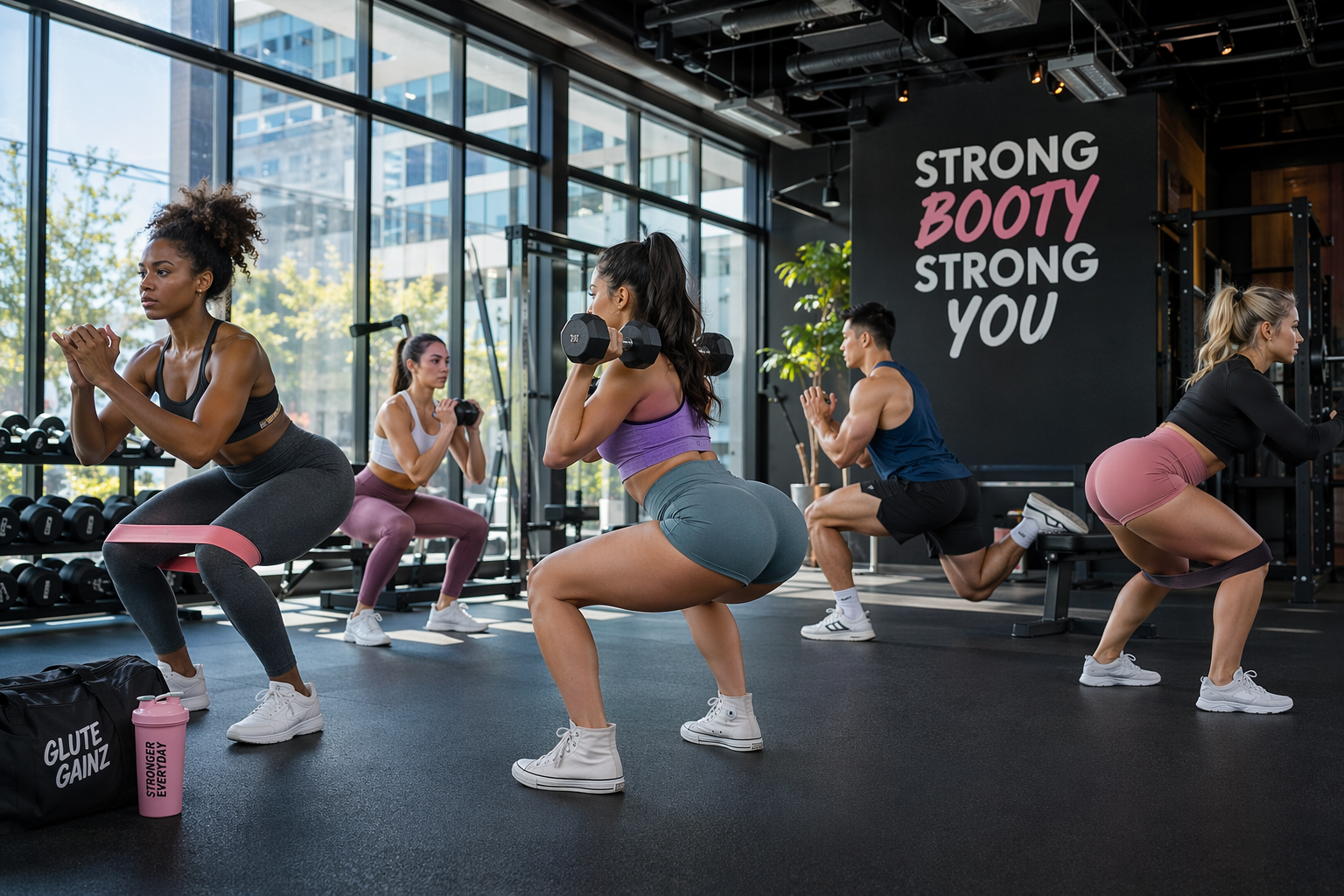
- The best exercises for glutes often use a squat variation that shifts work away from the front thighs.
- A wider stance can improve glute activation and bring in the hips more during lower body training.
- Sumo squat, Bulgarian split squat, goblet squat, and box squat are strong options to build muscle.
- The intensity of your glute engagement is affected by your squat technique, the depth you go, and your foot placement.
- Resistance band work and single-leg moves can increase glute activation in a workout routine.
- Good technique helps target muscle groups better and limits stress on the lower back.
Introduction
Squats are one of the best ways to train your lower body, but not every squat variation hits your glutes the same way. Many people feel regular squat work more in the quads than in the glutes, which can affect overall calorie burn. That is where smart changes help. A wider stance, better depth, and stronger squat form can improve glute activation and make each rep more useful. If you want a rounder, stronger backside, the right variations matter more than just doing more reps.
what squats are best for glutes
If you are asking what are the best squat variations for building glutes, start with moves that increase hip work and reduce knee dominance to effectively target different parts of your legs.
Typically, that adjustment enhances glute engagement and alters which muscles bear most of the effort; often, opting for a wider stance or a single-leg variation proves more effective than a traditional squat.
Some of the best exercises for this goal include the sumo squat, Bulgarian split squat, goblet squat, low bar back squat, curtsy squat, resistance band squat, pulse squat, box squat, and pistol squat. Each squat variation brings something different to your workout routine and can significantly improve your overall strength, and the next sections break them down one by one.
(ALSO READ: Master the Back Barbell Squat: A Beginner's Guide)
1. Sumo Squat
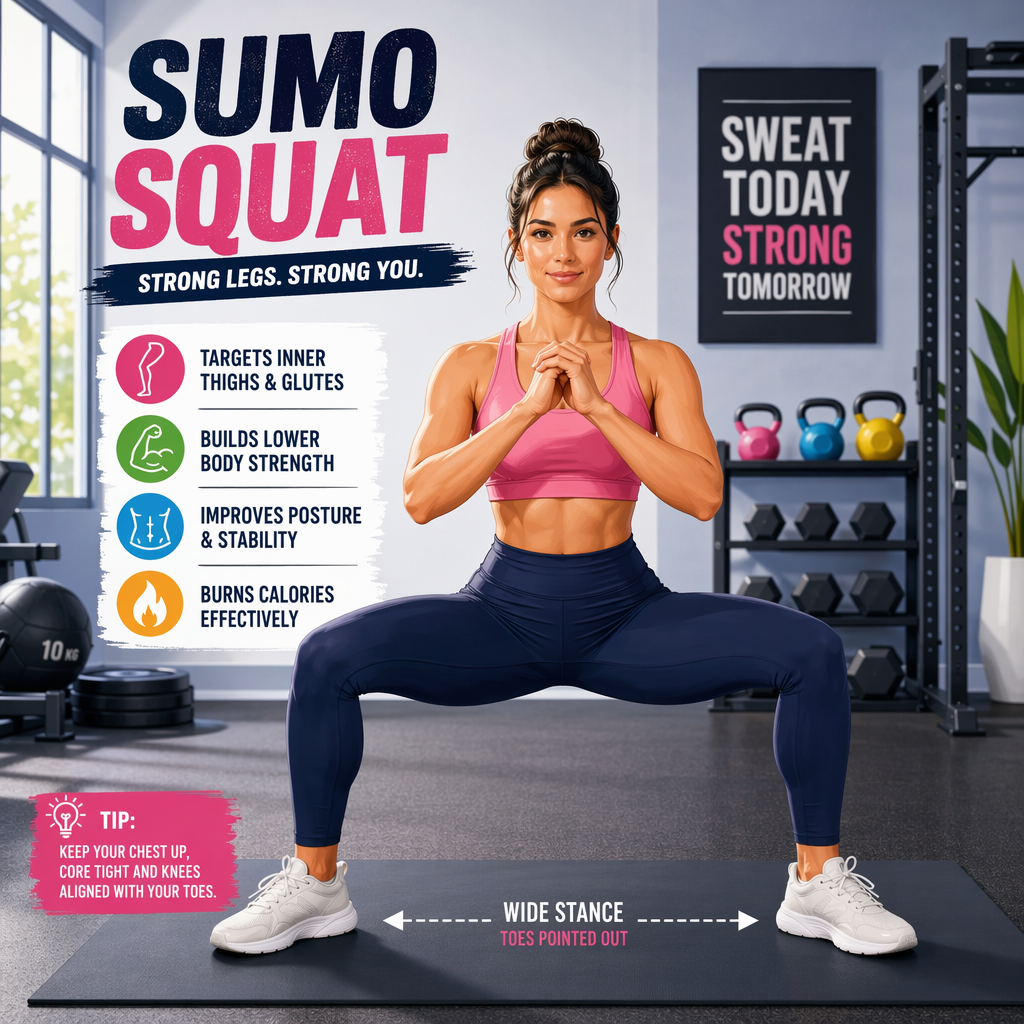
The sumo squat is one of the clearest answers if you want more glute activation without turning the movement into a quad-heavy regular squat. Its wide stance keeps the hips externally rotated, which can help your lower body use the glutes more.
Your inner thighs are also engaged, meaning it targets multiple muscle groups simultaneously and gets you ready for your next squat.
To do it, stand with your feet wider than shoulder width and turn your toes out slightly. Push your hips back, lower with control, and keep your chest up.
As you rise back up to a standing position, press through your heels and contract your glutes at the peak.
A wide stance helps shift tension toward the hips.
- It can target glutes better than a narrow squat position.
- The inner thighs also assist, making it a strong lower body option.
2. Bulgarian Split Squat
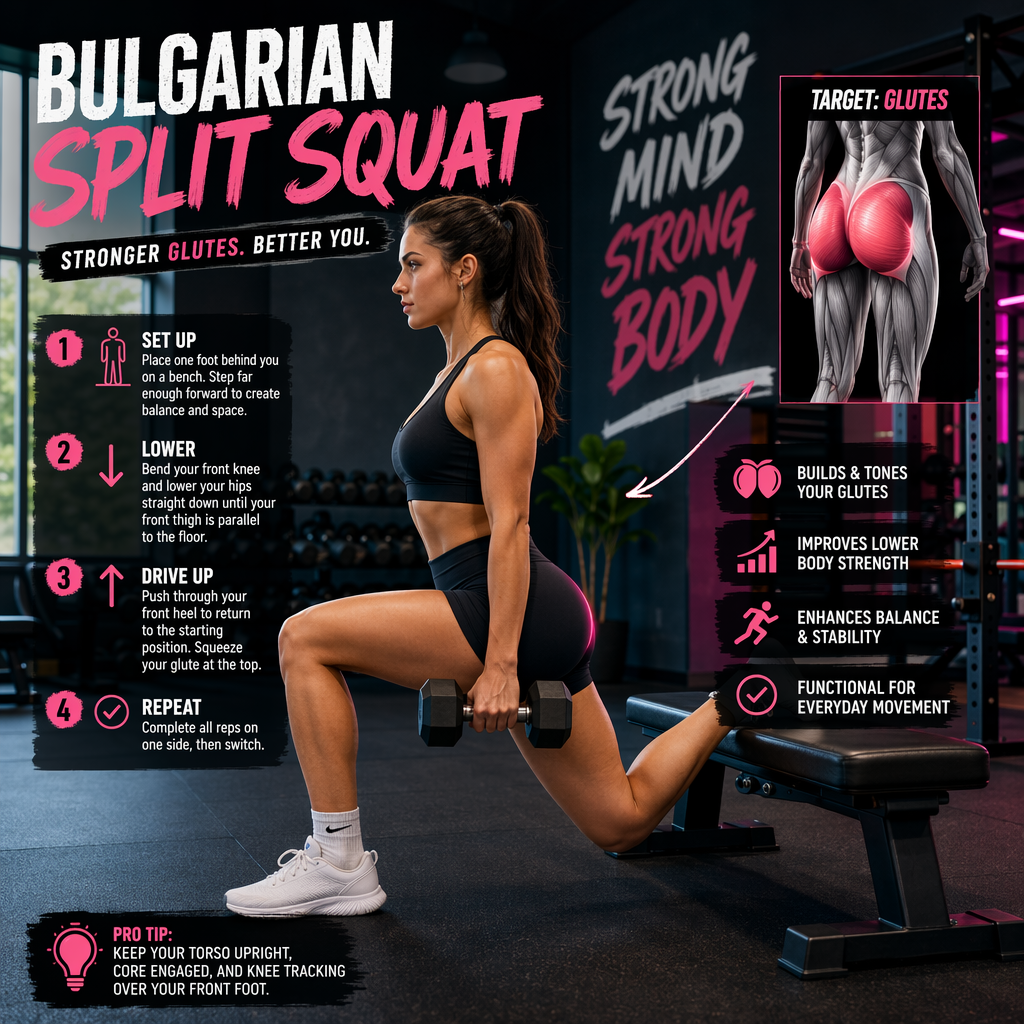
The Bulgarian split squat is one of the best exercises for glute growth because it trains one side at a time and creates a deep stretch through the front leg. To maximize the effectiveness of this exercise, make sure to hold weights, which also challenges balance and forces your lower body to stabilize harder. That extra demand can improve glute activation while still training different muscle groups.
Setup matters here. Place your back foot on a bench or support, then step your front foot far enough forward so your shin stays more upright as you lower. A slightly longer stride and a small forward lean can help bias the glutes instead of making it all about the quads.
- It is a strong squat variation for a glute-focused workout routine.
- A longer stride helps shift work toward the hips.
- It also builds balance and control on each side.
3. create me high quality image on Barbell Hip Thrust Squat
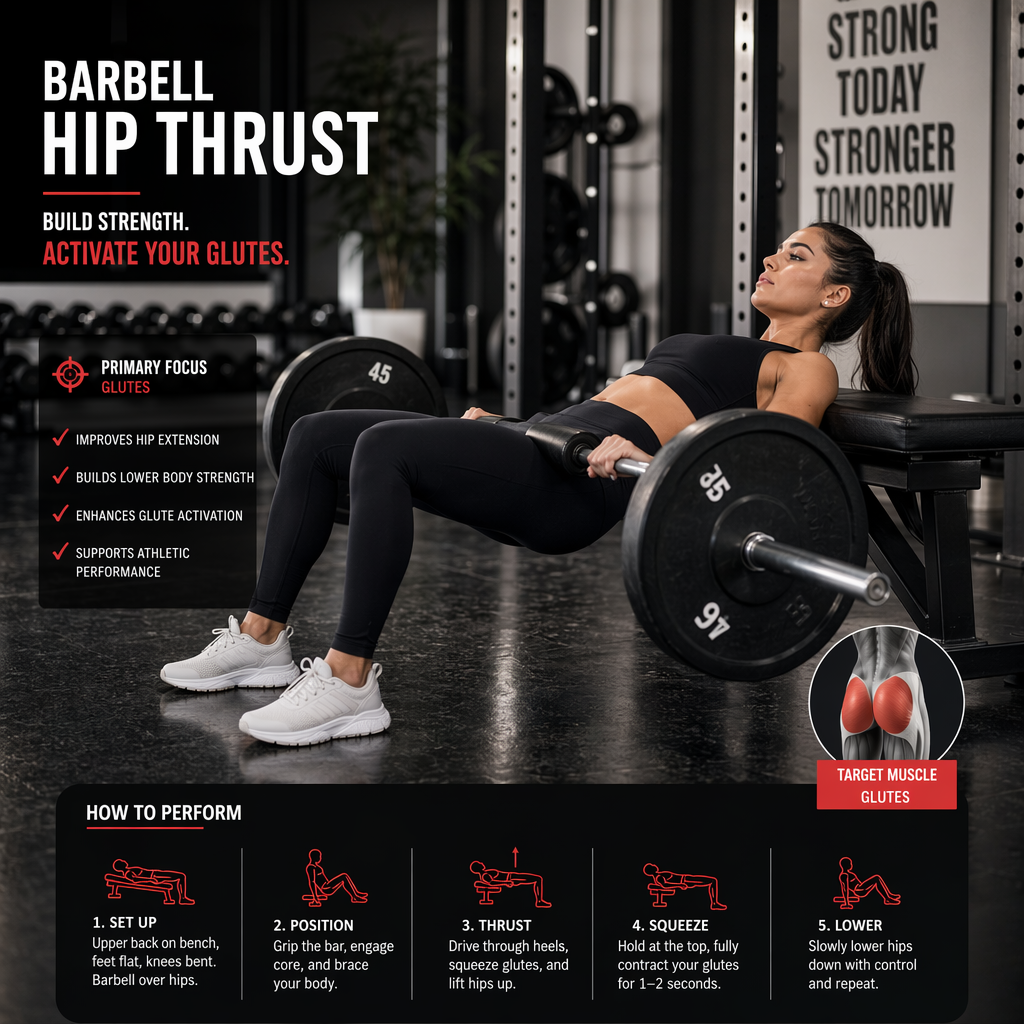
Squats can help make your butt bigger, but they are not the only answer. Other exercises can be even more direct. The barbell hip thrust stands out because it puts strong tension on the gluteus maximus and the posterior chain with less focus on the quads. If your squats mostly hit the front of your legs, this is a smart addition.
What makes the kettlebell swing useful is the way it trains hip extension through a focused range of motion. That can help you feel the glutes working more clearly than in some squat patterns. It still supports several muscle groups, but the glutes do much of the main work.
- Use it when you want direct glute activation beyond standard squats.
- It pairs well with squat training for fuller posterior chain development.
4. Goblet Squat
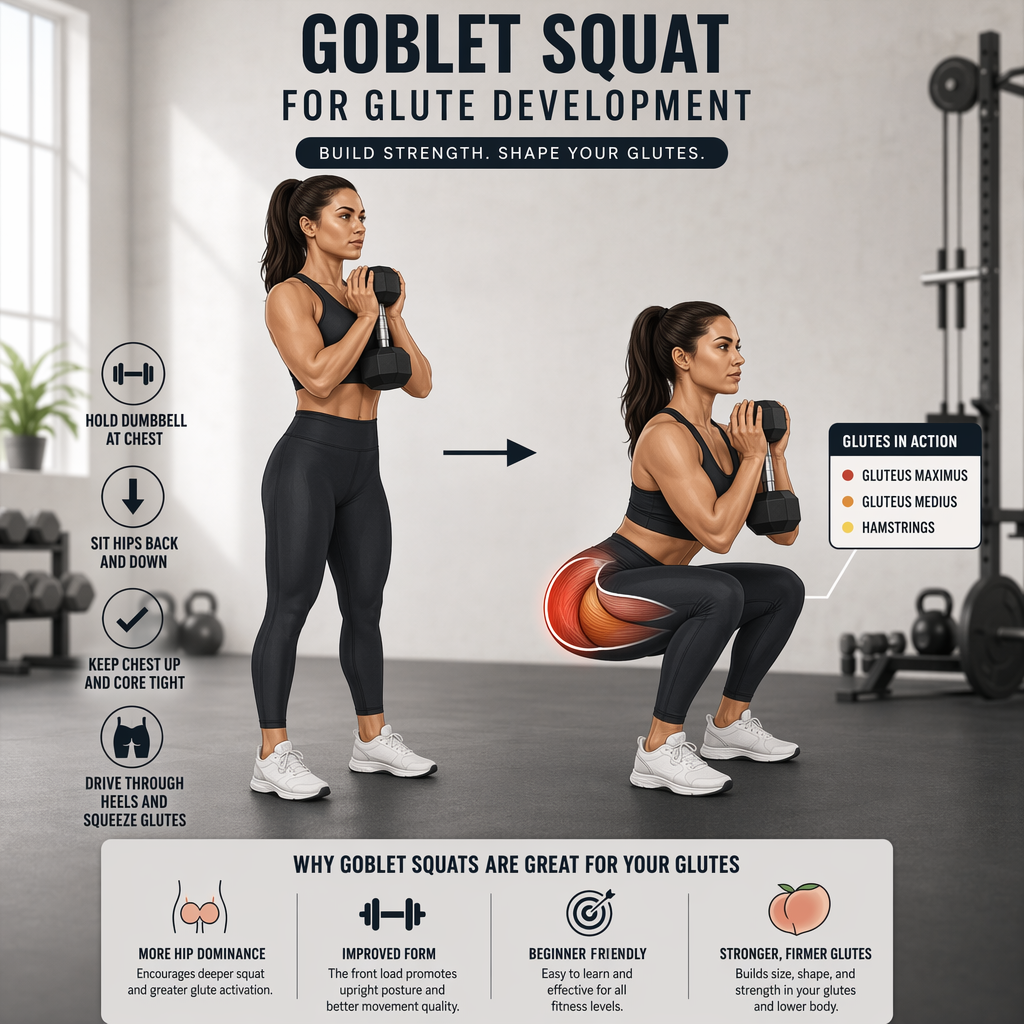
The goblet squat is a great way to improve proper form while still training the glutes. Holding the weight at chest height helps you maintain an upright posture, keeps you more stable, and makes it easier to stay in a strong squat position. That helps beginners and experienced lifters clean up movement patterns without overthinking every rep.
Hold a dumbbell close to the front of your chest with both hands and keep your elbows tucked. As you lower, let your elbows travel inside your knees. This setup can help stop your knees from collapsing inward, ensuring that your upper body is properly engaged. Your core muscles also work harder to keep your torso steady throughout the movement.
- The goblet squat builds lower body strength with cleaner mechanics.
- It is one of the best exercises for learning a glute-friendly squat position.
(ALSO READ: Goblet Squat vs Back Squat: Benefits and Drawbacks)
5. Low Bar Back Squat
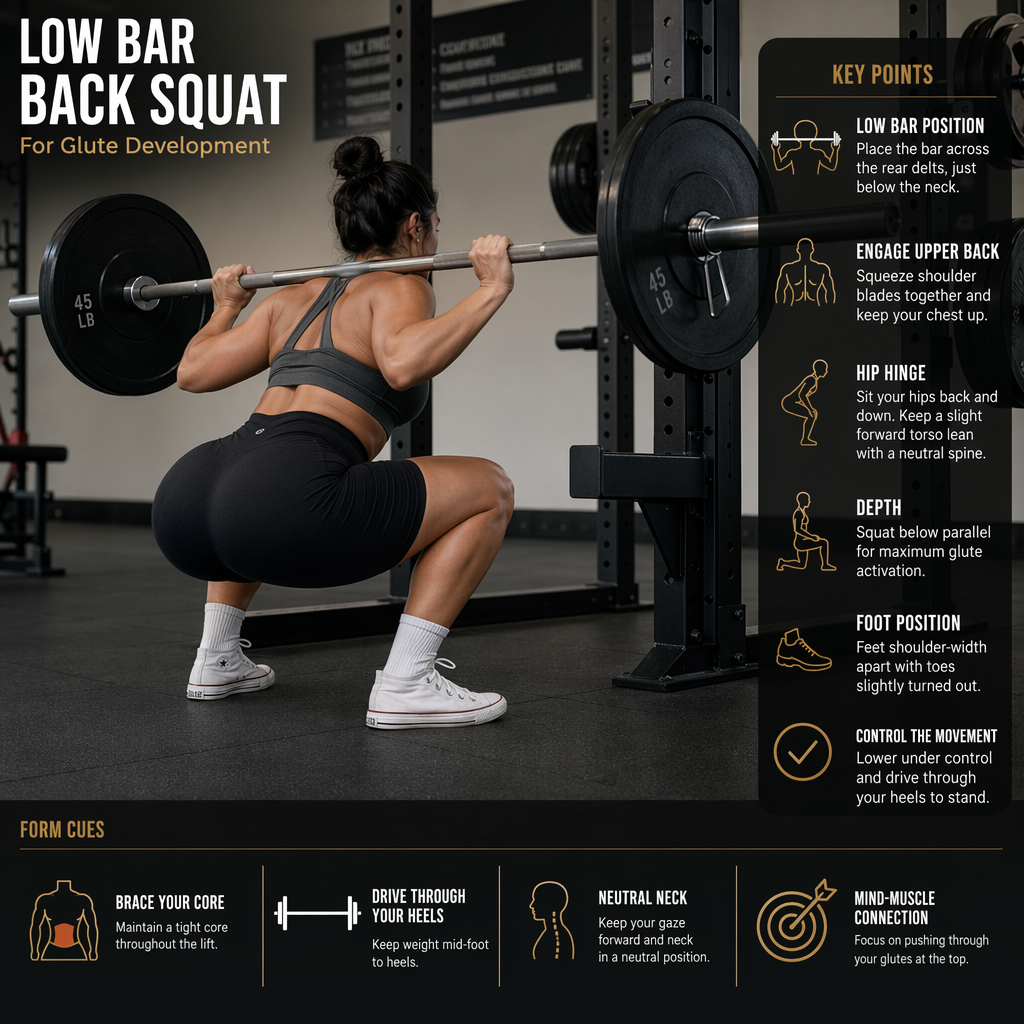
The low bar back squat can be one of the best barbell squat variations for glute growth compared to a high bar version because the bar sits lower on your rear delts.
By altering your body angle, you increase hip hinge, so the motion shifts from being upright to putting greater emphasis on your glutes.
Because of that shift, this compound movement loads the posterior chain more heavily. Your glutes and hamstrings help drive you up from the bottom, while your squat form has to stay controlled to protect the lower back. If you like barbell training and want more hip involvement, this variation earns a place in your routine.
Front squats can also be excellent for glute activation, especially when loading the bar across the front of your body, but low bar back squats are useful when you want heavier loading with a stronger hip hinge. Your structure and form will decide which feels better.
6. Curtsy Squat
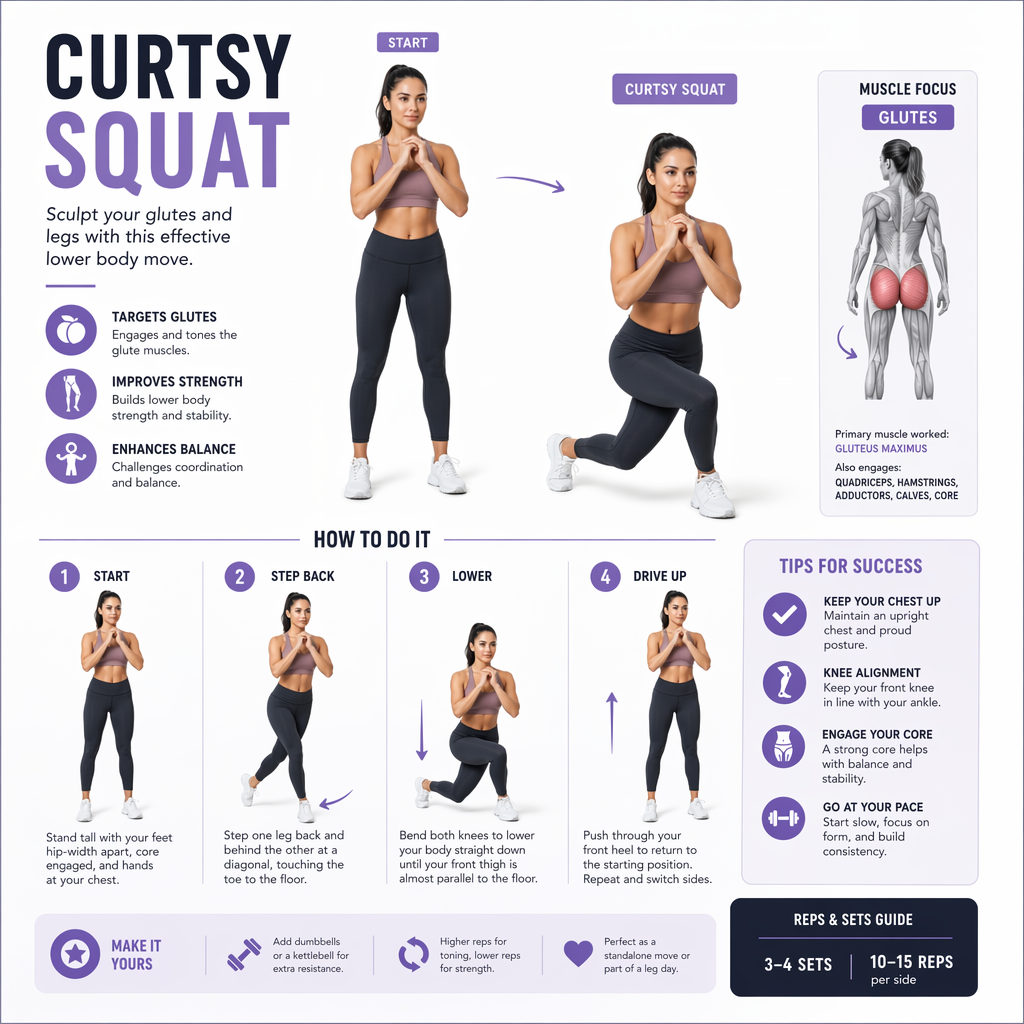
The curtsy squat adds a different angle to lower body work. Instead of dropping straight down, you step your left leg diagonally behind the other in a curtsy movement. That pattern shifts attention toward the side of the hips, especially the gluteus medius, which helps with pelvic control and balance.
This means it does not replace heavy squat patterns like the sumo squat or low bar back squat, but it fills a useful gap. If you want a workout routine that trains more than just straight up-and-down strength, the curtsy squat is worth using. It can help target the outer glutes while still involving the legs.
- It is helpful for the gluteus medius and hip stability.
- It adds variety when standard squats feel too similar week after week.
7. Resistance Band Squat
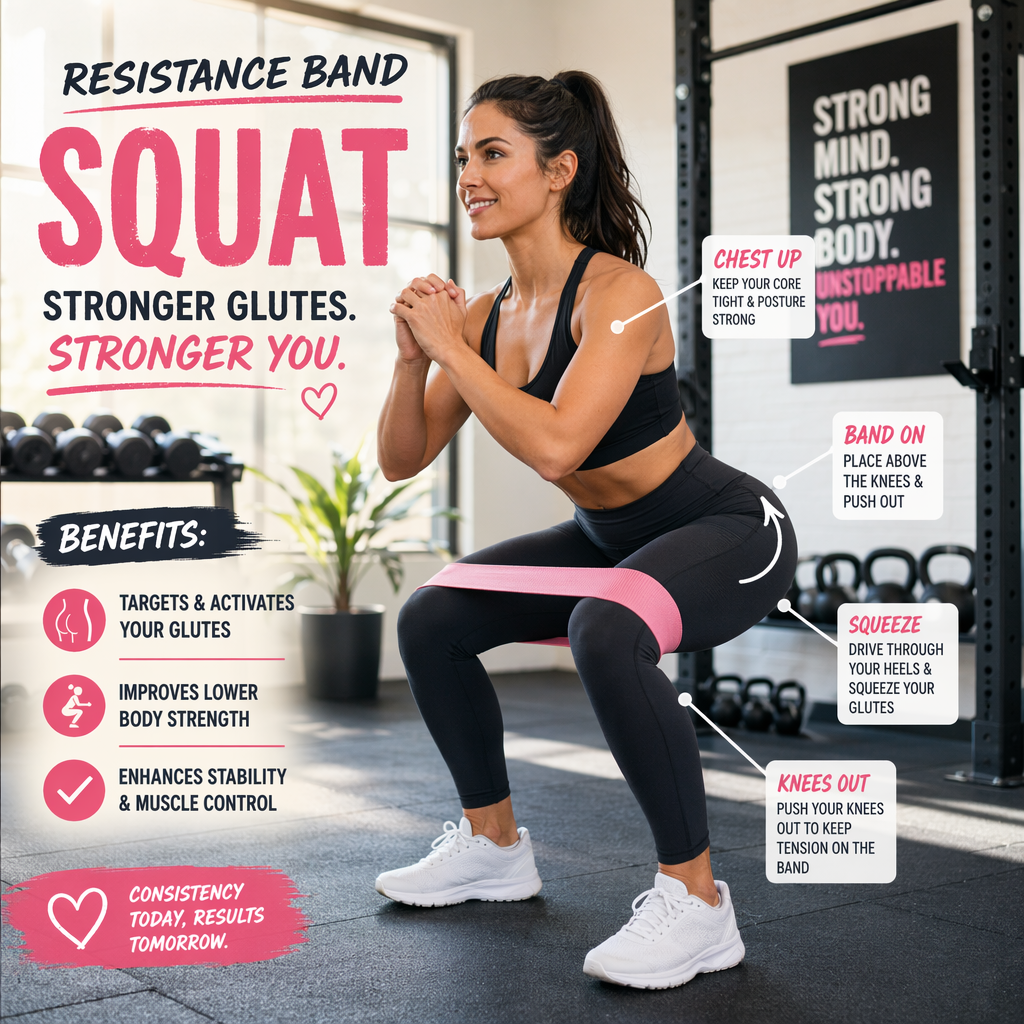
Bodyweight squat work can help you learn control, but many people need more resistance over time to grow their glutes and engage large muscle groups. A resistance band squat is a simple next step. The band adds tension and can improve glute activation by making your hips work harder to hold the right squat position.
Place a resistance band above your knees and squat with control, pressing out gently as you rise. Some training methods also place the band lower on the leg, which may increase glute activity while helping you avoid knee collapse. Either way, the band gives your lower body a stronger reason to recruit the glutes.
- This is an easy upgrade from a basic squat or bodyweight squat.
- It helps train several muscle groups while reinforcing better alignment.
8. Pulse Squat
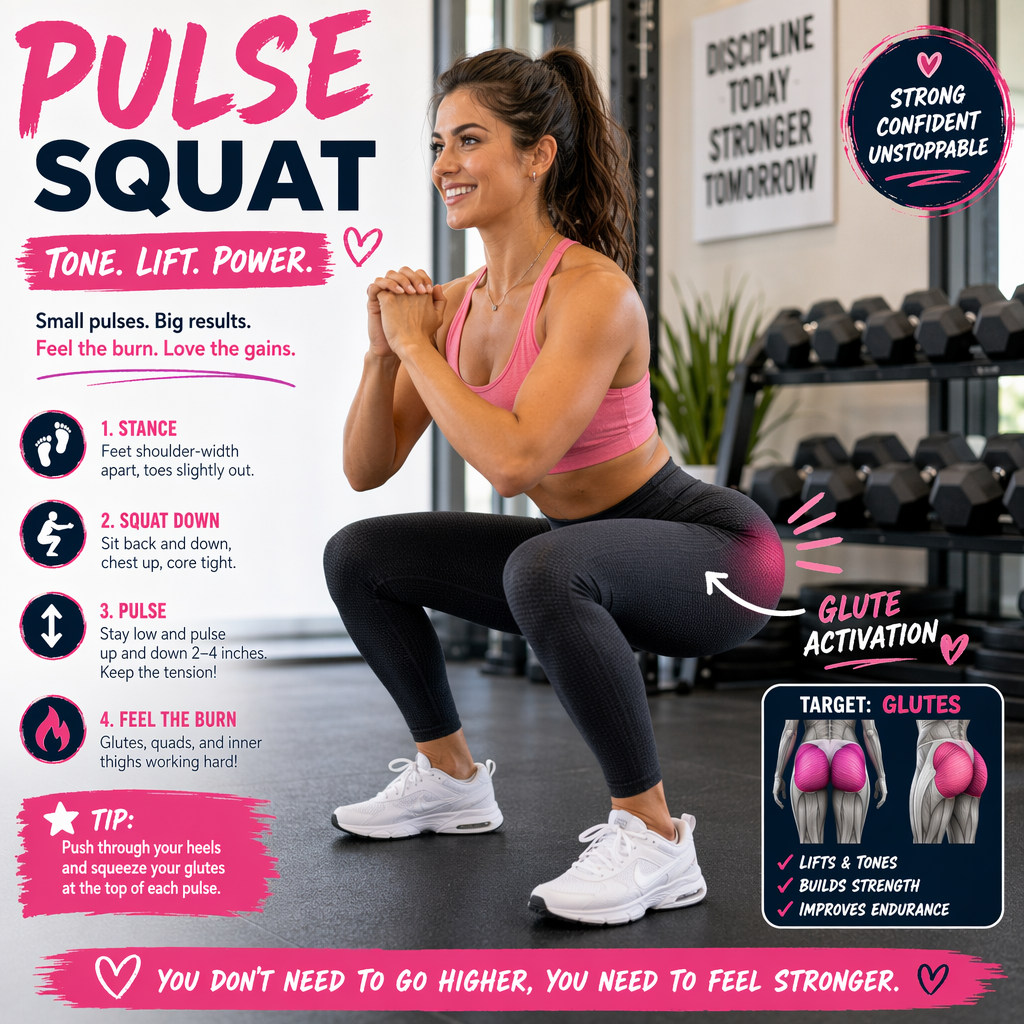
A pulse squat keeps you near the bottom of the movement and uses short, controlled reps instead of standing all the way up each time. That makes your lower body stay under tension longer before you prepare for the next rep. If your goal is to feel the glutes working, this variation can help because it keeps you in the part of the squat where the hips are loaded.
The key is staying low with good form. Small pulses should not turn into rushed bouncing. Keep your chest up, maintain control, and use a range of motion you can own. You will likely feel your quads too, but glute activation can increase when you keep the hips back and stay deep.
It is not the heaviest option, but it is one of the best exercises for adding challenge without adding much equipment.
9.Box Squat
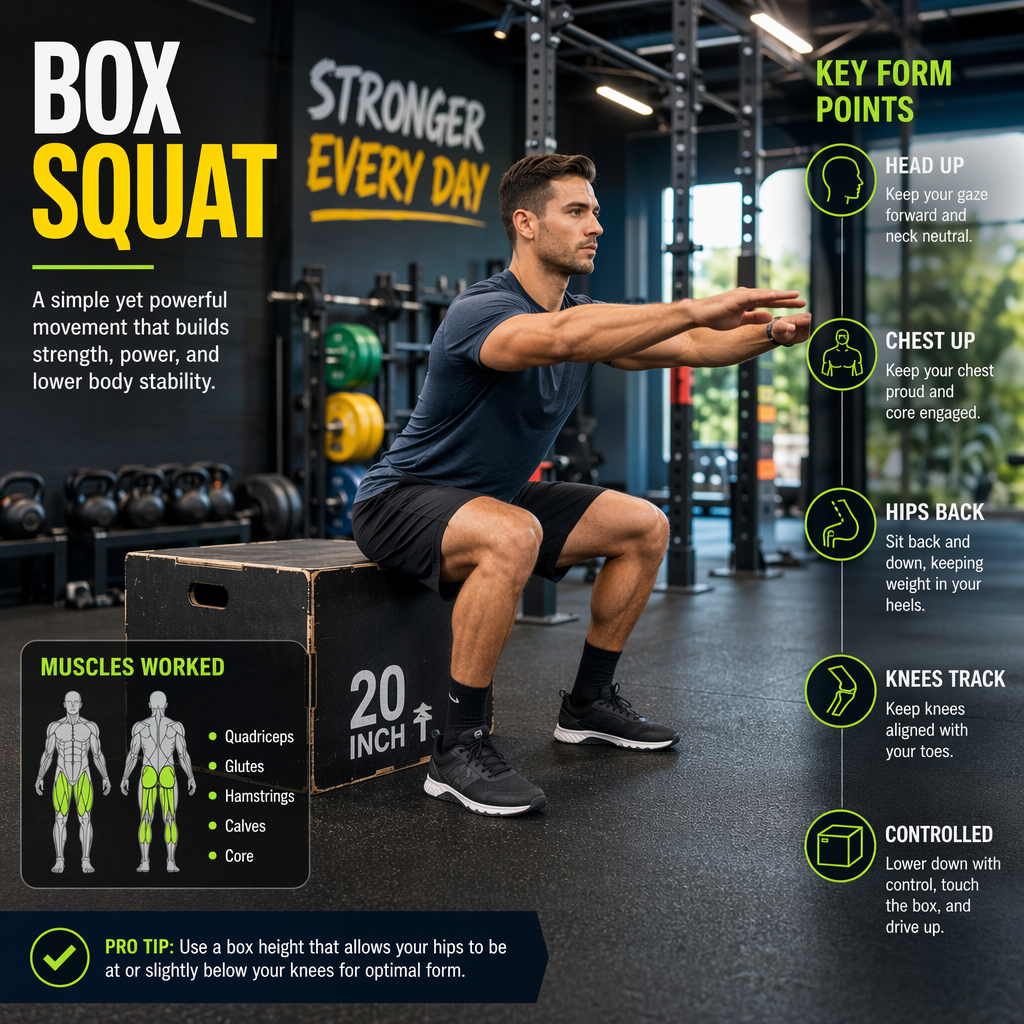
The box squat is a smart choice if you want better control and cleaner mechanics. By using a box or bench behind you, you learn to sit back rather than just push the knees forward. That usually helps glute activation and improves bone density, making your squat position easier to repeat from rep to rep.
Begin with a box at or slightly below knee height. Position your feet a bit wider than shoulder width, then push your hips backward and lower your body until your glutes gently make contact with the box, making sure not to fully relax at this point. From this position atop the box, press through your heels and rise up to a standing posture.
This variation is also useful for beginners because proper form is easier to learn when depth is consistent. As confidence grows, you can lower the box or increase resistance.
10. Single-Leg (Pistol) Squat
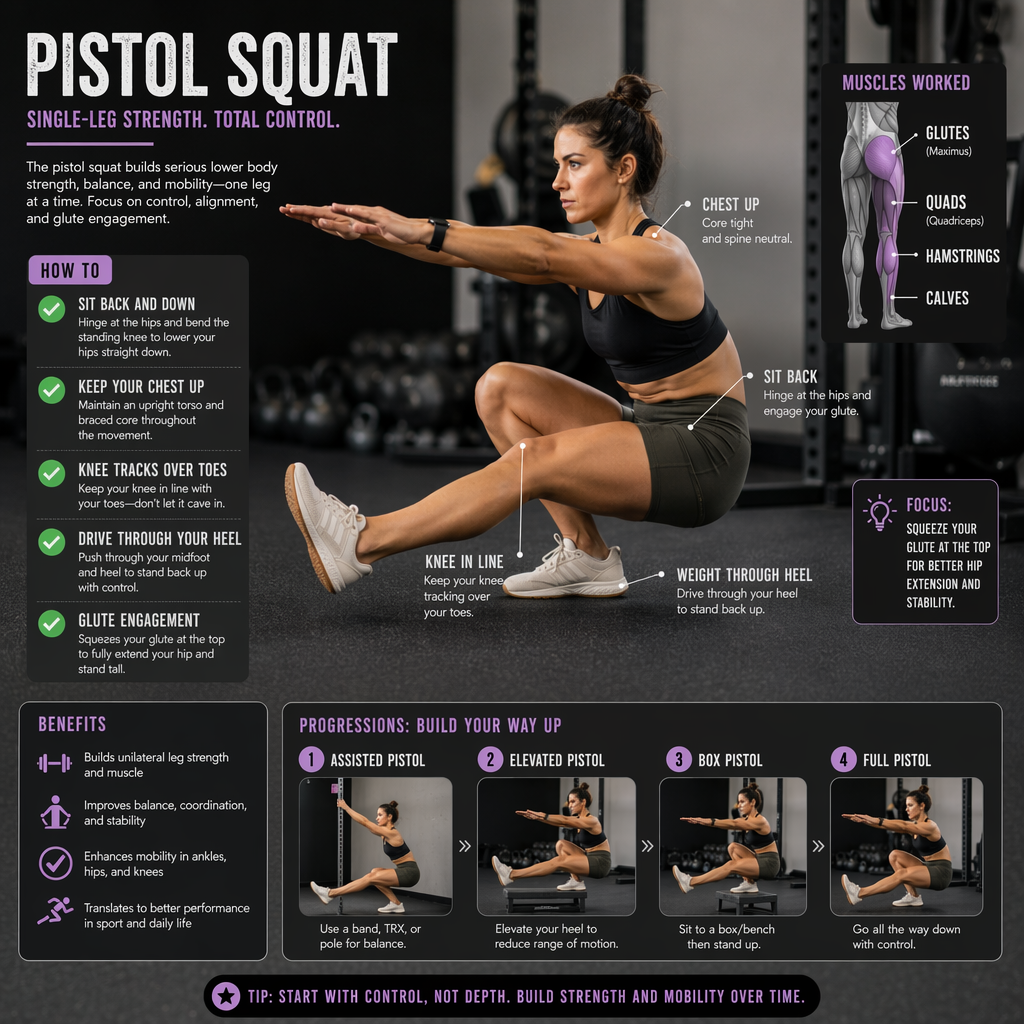
The pistol squat is an advanced squat variation that combines strength, control, and balance. You lower on one leg while keeping the other leg extended in front. That makes it much harder than a regular squat, even without added weights. Because one side works at a time, your lower body has to stabilize every inch of the rep.
This single-leg squat can support glute development, but the air squat is not the best first choice if your technique is still shaky. Most people need solid mobility and control before they can perform it well. Poor balance can turn the movement into a struggle rather than useful training.
- The pistol squat is best for experienced exercisers.
- It challenges balance and leg strength with very little equipment.
(ALSO READ: Why Do My Knees Hurt When I Squat? Expert Insights)
How Squat Technique Influences Glute Activation
Technique changes everything. Two people can do the same lower body exercise and feel it in completely different places. That usually comes down to squat form, especially how far the hips move back, how deep you go, and where your feet are placed.
Changing your foot position can affect glute activation because it changes hip rotation and how your knees track. A wider stance or slight toe turn often helps some people reach a better range of motion and use the glutes more. The next sections explain those details more clearly.
Stance Width and Foot Position for Greater Glute Engagement
Your best stance width depends on your anatomy, but a few patterns are useful. Many people do well with feet just outside shoulder width and toes pointed slightly out. That setup can create better glute activation by externally rotating the hips and making depth easier to reach without losing balance.
A wide stance, often used in the sumo squat, can push this effect further. It may reduce how far the knees travel forward and shift more work to the glutes and hips. The key is symmetry. Both feet should match, and the position should feel strong rather than forced.
|
Stance width or foot position |
Likely effect on movement |
|---|---|
|
Just outside shoulder width |
Balanced squat form for many people |
|
Toes slightly pointed out |
Can improve hip rotation and depth |
|
Wide stance |
Often increases hip focus and glute activation |
|
Feet uneven or mismatched |
Can reduce control and consistency |
Depth of Squat: Parallel vs. Full Range for Glute Growth
Depth has a big effect on glute activation. In general, the glutes work harder when you reach at least parallel and often more when you use a full squat, as long as your form stays solid. Short reps can still train the legs, but they may not challenge the hips as well.
That means squats really can help make your butt bigger when you use enough depth, the right mechanics, and enough resistance over time. Still, other exercises like the barbell hip thrust can target the glutes more directly. So the best plan is not choosing one or the other. It is using both wisely.
Go as low as your lower body allows without pain or lower back rounding. A strong range of motion matters more than forcing depth you cannot control.
Common Mistakes That Limit Glute Activation in Squats
Sometimes the problem is not the exercise. It is how the rep is done. If your squat form turns every set into a knee-dominant pattern, your glutes will not get the attention you want. Small errors add up fast, especially when the weight gets heavier.
One common issue is driving the knees too far forward without sitting the hips back. Another is letting the knees cave inward. That can reduce glute activation and may increase knee pain for some people. Losing a neutral pelvis can also place unwanted stress on the lower back.
- Cutting depth too short limits hip involvement.
- Letting the knees collapse inward reduces control.
- Arching or tucking too much through the pelvis can hurt alignment.
- Tips for Maximizing Glute Gains with Squats
If you want better glute gains, focus less on chasing random squat variations and more on how you perform them. The best workout routine uses a few useful moves done well, with enough effort and repeat practice. Your squat position should help the hips work, not let the quads take over every set.
Simple cues can improve glute activation right away. Think about pushing through your heels, keeping your knees tracking well, and squeezing the glutes as you stand. Those small details change how the main muscle groups share the load, which sets up the next sections.
Simple Cues to Increase Glute Engagement During Squats
Good cues make a big difference when you want better coordination and more glute activation. You do not need a long checklist during every set. A few clear reminders can improve your squat position and help you feel the right muscles doing the work. That is especially useful when your workout routine includes several squat patterns.
Begin by picturing yourself "sitting back" while descending, which directs the motion toward your hips; as you rise, focus on "pressing through your heels" and "engaging your glutes." To maintain good technique from the lowest point to standing, ensure your chest remains lifted and your spine stays neutral throughout the movement.
- Push the floor away through your heels.
- Keep your knees tracking out instead of collapsing inward.
These cues are simple, but they often help clean up a rep faster than adding extra weight.
How Many Squat Variations Should You Include for Glute Development?
You do not need every squat variation in one workout routine. For glute development, a smaller mix usually works better because it lets you practice form, recover well, and build muscle with steady progress. Most people do well with two or three squat-focused choices that cover different demands.
For example, you might pair one heavier bilateral move with one single-leg exercise and one lighter accessory pattern. That could look like a low bar back squat or sumo squat, followed by a Bulgarian split squat, then a resistance band or pulse squat. This keeps training balanced without turning leg day into chaos.
- Pick one main strength movement and one or two support exercises.
- Keep the selection consistent long enough to improve it.
Conclusion
In conclusion, incorporating a variety of squat exercises can significantly enhance your glute development. By experimenting with different squat variations, adjusting your technique, and being mindful of common mistakes, you can maximize your gains and effectively target your glutes. Remember, consistency is key, and finding the right balance in your workout routine will yield the best results. If you're keen to take your fitness journey further, don't hesitate to reach out for a free trial or consultation. Your glutes deserve the best care!
Frequently Asked Questions
Are front squats or back squats better for glute growth?
A front squat can create very high glute activation because of bar placement and deeper knee flexion, while a low bar back squat can also be strong for glute growth by increasing the hip hinge. The better choice depends on your squat form, comfort, and lower body mechanics.
How often should you do squats to see results in your glutes?
A practical target is 2 to 3 times per week, with rest days between sessions. That gives your workout routine enough frequency to improve glute activation while letting the exercise stimulate muscle groups without beating them down. Use more than one squat variation if it helps you train well.
REFERENCE:
https://www.ncbi.nlm.nih.gov/pmc/articles/PMC4262933/
https://www.ncbi.nlm.nih.gov/pmc/articles/PMC4967668/
https://www.ncbi.nlm.nih.gov/pmc/articles/PMC6670060/
https://www.ncbi.nlm.nih.gov/pmc/articles/PMC6622157/
https://www.ncbi.nlm.nih.gov/pmc/articles/PMC3588619/
https://pubmed.ncbi.nlm.nih.gov/30746289/