


Key Highlights
- The pendulum squat often feels harder because it keeps constant tension on your quads through a deep range of motion compared to a traditional barbell squat.
- Unlike the barbell squat, the machine reduces balance demands and shifts effort into fewer working muscles.
- That focused load can create faster muscle fatigue, especially near the bottom of each rep.
- The barbell squat remains the gold standard for total leg strength, but the pendulum squat is brutal for quad focus.
- Its guided path lets you train hard while placing less stress on your lower back.
Introduction
If you have ever tried a pendulum squat and wondered why it feels so demanding, you are not imagining it. This machine-based squat changes how the load hits your legs, often making your quads work harder than they do in a traditional squat barbell squat. At the same time, it can spare your lower back by keeping your torso more upright and guiding the movement. That mix of support and intensity is exactly why so many lifters find it surprisingly tough.
To make pendulum squats feel more manageable during your workout, try starting with a lighter weight until your body adapts to the movement. Focusing on slow, controlled reps and paying extra attention to your foot placement can help you build confidence and proper form. Also, warming up thoroughly and progressively increasing the resistance over time can help you overcome the initial difficulty.
(ALSO READ: What Is a Pendulum Squat? Form Tips and Techniques)
why is pendulum squat so hard
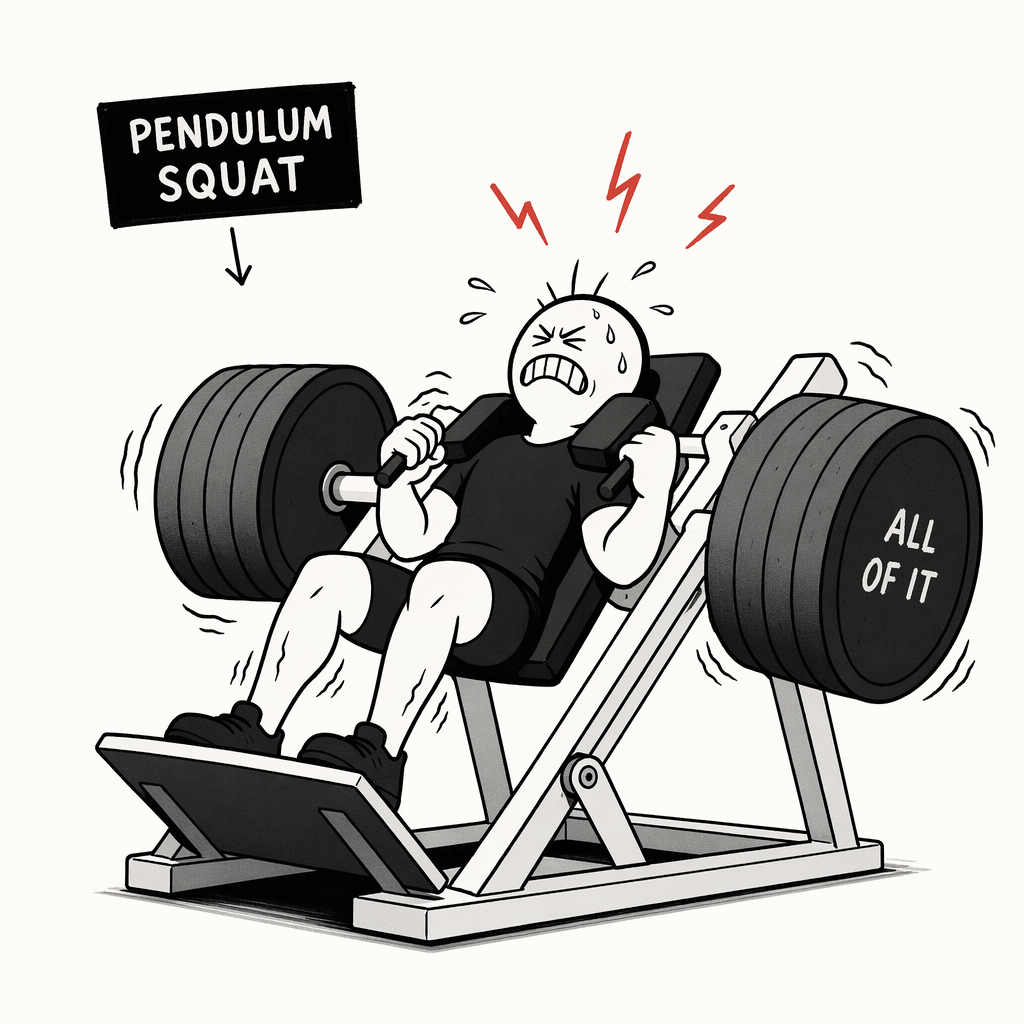
One big reason the pendulum squat feels harder than regular squats is load distribution. The machine guides you into a quad-dominant training style, so your legs cannot share as much work with stabilizers as they do in a classic barbell squat.
That creates fast muscle fatigue, especially when you reach deeper knee bend. Even with lighter loads, the effort feels sharp and direct. Instead of fighting balance, you are forced to keep producing force through the rep. To see why, it helps to look at the muscles doing the work first.
Muscles Activated During Pendulum Squats
The reason pendulum squats feel so tough starts with muscle emphasis. This exercise is built for quad hypertrophy development, and that means your quads take the brunt of the stress through a long, demanding rep. The machine keeps your torso upright, which helps shift work away from the lower back and into the front of your legs.
Here are the main muscles involved:
- Quads are the primary movers and do most of the work.
- The vastus lateralis is heavily challenged during deep knee flexion.
- Glutes assist during the drive out of the bottom.
- Hamstrings help stabilize and support the movement.
- Adductors and calves contribute to control and alignment.
- Because the quads stay under pressure for so long, they often fatigue before anything else. That is why the burn comes on quickly, even when the load does not look huge. Next, it is worth looking at the strength and technique demands that make the movement even more intense
(TO KNOW: Pendulum Squat Muscles Worked: Why They Matter)
Demands on Strength, Stability, and Technique
Pendulum squats don’t necessarily demand more overall strength than regular squats, but they call for a distinct type of exertion. Because the machine takes care of most of the balancing, your lower body quickly becomes the main point of fatigue. Maintaining control throughout each repetition also requires solid coordination.
A few technique points matter most:
- Control the eccentric phase instead of dropping too fast.
- Keep your whole foot planted rather than letting the heels lift.
- Avoid half reps that cut off depth and reduce control.
- Do not jump to heavier weights before the movement feels smooth.
This is not the best lift for stabilizer development compared with free weights, but it is excellent for focused leg output. Small mistakes make it feel much harder because the machine keeps tension where you are weakest. That brings us to the design itself, which plays a major role in the challenge.
The Unique Biomechanics of the Pendulum Squat
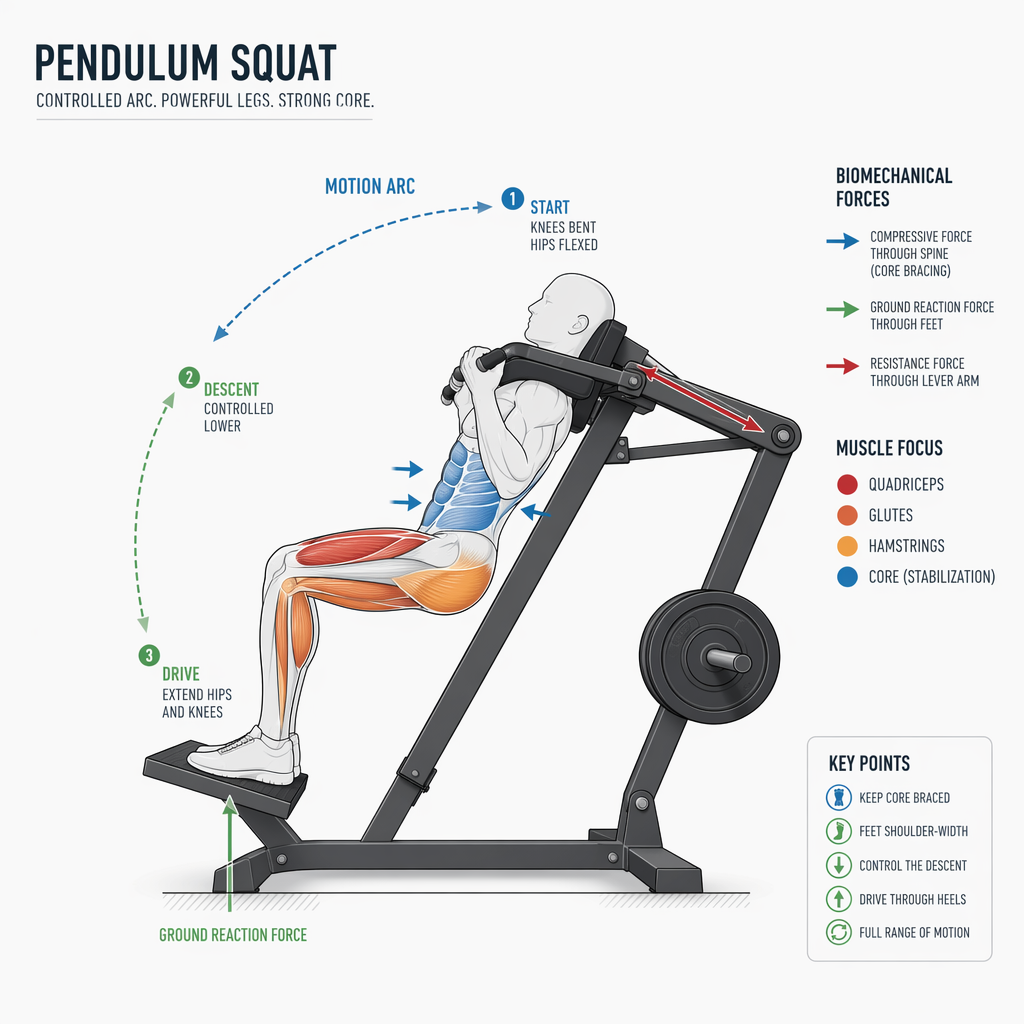
From a biomechanical view, the pendulum squat is not just another machine squat. Its guided movement follows an arc rather than the straight, vertical track you get on some other machines. That changes how force is applied across the rep.
Because the movement path is fixed, you cannot easily shift into a more comfortable groove. The machine keeps you locked into its pattern, which can make the hard part of the lift feel even harder. The next two sections break down how that arc and deeper positions raise the difficulty.
Arc Movement Path and Its Impact on Difficulty
The pendulum squat machine uses an arc movement instead of a straight up-and-down track. That guided path changes the feel of each rep. Rather than letting you naturally drift, the fixed path keeps pressure on the working muscles in a very consistent way, which is why many lifters say it feels harder than expected.
You can see the difference here:
|
Feature |
Pendulum Squat Effect |
|---|---|
|
Fixed path |
Reduces balance demands but limits chances to adjust mid-rep |
|
Arc movement |
Creates a different resistance feel than a vertical track |
|
Guided path |
Keeps reps consistent and places steady stress on the quads |
|
Bells of Steel Pandemonium Squat |
Adds versatility for lunges, split squats, and calf work |
That does not always mean it is harder than every squat variation in every way. A barbell squat taxes more stabilizers, while a hack squat uses a vertical track. Still, for direct quad stress, the pendulum often feels more unforgiving. The next factor is depth, which can make that tension even more noticeable.
Increased Range of Motion and Joint Angles
Another reason this lift feels so demanding is its range of motion. Many lifters can reach deeper knee flexion on a pendulum squat than on free-weight squats. That deeper travel changes the joint angles and increases the challenge where your legs are already under stress.
If you are new to the movement, a few simple adjustments can help:
- Start with light weight and learn the setup before chasing reps.
- Limit depth slightly if your heels lift or control breaks down.
- Slow the eccentric phase and stay tight in the bottom position.
Adjusting these aspects can help the workout feel less overwhelming while still preserving its effectiveness; the intention isn't to dodge effort, but rather to maintain stable form and develop confidence initially. Keeping this perspective, it's beneficial to contrast the pendulum squat with other squat variations you might currently incorporate.
(ALSO KNOW: Pendulum Squat Benefits: Why You Should Add This Move)
Pendulum Squat vs. Other Squat Variations: What Sets It Apart
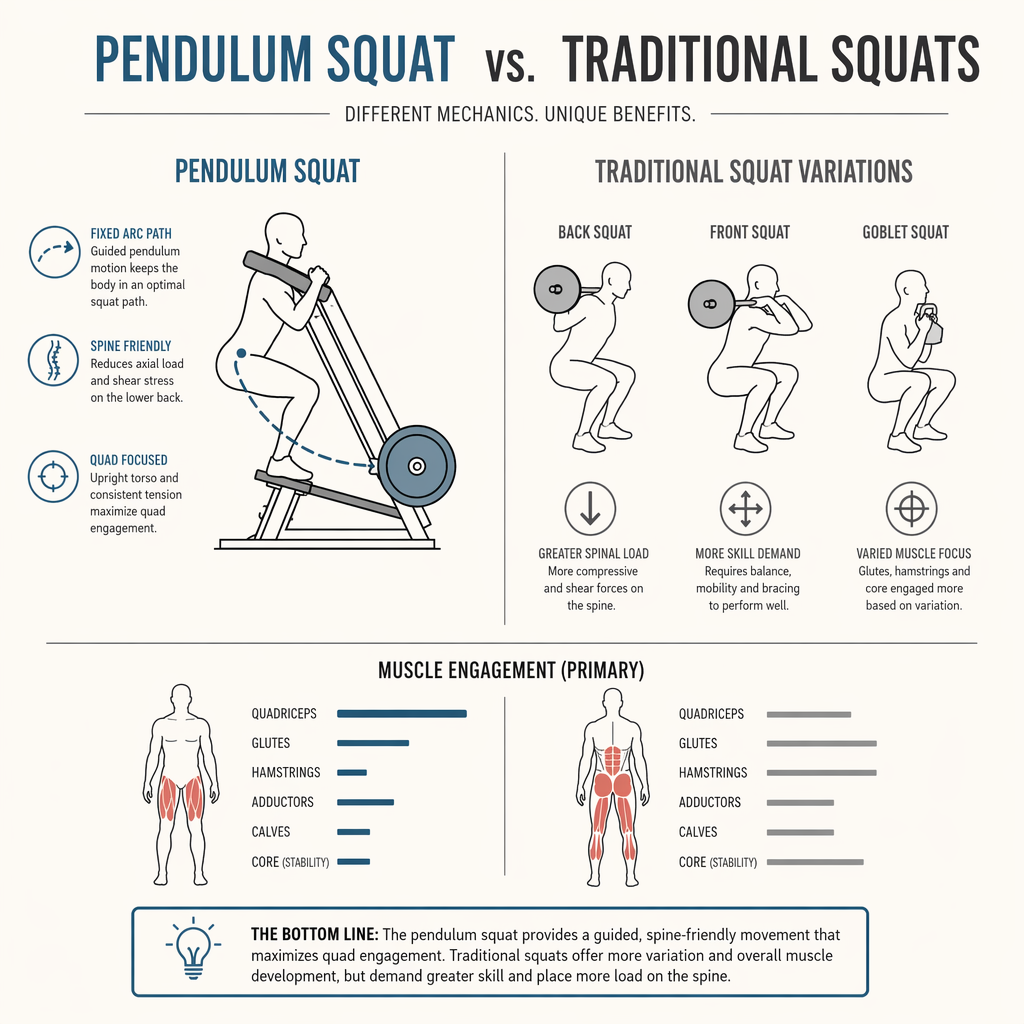
The pendulum squat stands out because it combines machine support with a very intense quad-focused feel. A barbell squat spreads effort across more muscle groups, while a hack squat uses a more linear machine pattern. Even a sissy squat shares some of that front-of-thigh burn, though it is harder to load safely.
What also makes the pendulum unique is versatility. Some setups allow lunges, split squats, and calf work on the same machine. That mix of focused training and guided support explains why many lifters keep it in rotation. To understand the difference better, look at movement pattern and design side by side.
(ALSO KNOW: Top 5 Pendulum Squat Alternatives for Stronger Legs)
Comparing Movement Patterns and Machine Design
The pendulum squat machine is built for guided movement, not free balancing. That is the key design difference. The barbell squat is still the gold standard for overall strength and full-body involvement, but the pendulum machine narrows the focus and makes your legs do more direct work.
Here is how the designs compare in practical terms:
- The pendulum squat machine guides the rep and reduces balance demands.
- A barbell squat allows natural movement but needs more skill and bracing.
- A hack squat uses a fixed, vertical-style track that feels different from the pendulum arc.
- For a home gym setup, a multipurpose option can offer more versatility.
Mistakes also show up differently on machines. On a pendulum setup, rushing depth or loading too aggressively can make the exercise feel harder right away because the machine does not let you hide weak positions. The last comparison worth making is how each squat shifts muscle emphasis and load distribution.
Key Differences in Muscle Emphasis and Load Distribution
When you compare squats, muscle emphasis is where the pendulum squat really separates itself. It places a larger share of the work on the quads, while the barbell squat and other barbell exercises spread load distribution across the glutes, hamstrings, core, and other stabilizers. That is why the pendulum often feels harsher on the front of your legs, even if the total load is lower.
The main differences look like this:
- Pendulum squats emphasize quads and direct knee-dominant effort.
- Barbell squats build overall leg strength with more shared muscle involvement, contributing to goal alignment in lower body training.
- Hack squats are also quad-focused, but the movement feel differs because of the track design.
This matters for progressive overload. If your goal is bigger quads, the pendulum gives you a clear, repeatable way to push that area. If your goal is balanced overall leg development, pairing it with barbell work makes more sense. That balance leads naturally to the big takeaway.
Conclusion
In conclusion, understanding the mechanics and challenges of the pendulum squat can greatly enhance your training routine. This unique exercise not only targets multiple muscle groups, including the quadriceps, but also requires significant strength, stability, and technique to execute correctly. By appreciating the specific biomechanics involved, you can improve your performance and reduce the risk of injury. Whether you are a seasoned lifter or just starting out, incorporating pendulum squats into your workout can lead to improved leg strength and overall fitness. If you're ready to elevate your training, feel free to reach out for a consultation to learn more about developing effective squat techniques tailored to your goals!
Frequently Asked Questions
Are pendulum squats suitable for beginners?
Yes, the pendulum squat can work well for beginners because the machine guides the motion and makes the setup easier to learn, contributing to a balanced lower body program. Start light, focus on control, and practice the pattern first. It is also useful in home gyms, especially when gear pros recommend beginner-friendly, guided lower-body options.
Why do I struggle with squats?
Struggling with squats can stem from various factors, including improper form, lack of flexibility, or insufficient strength in key muscle groups. Additionally, mental barriers and discomfort during the movement can hinder performance. Addressing these issues through proper warm-up, technique adjustments, and targeted strength training can significantly improve your squat ability